
The ugly part of Bellwright navigation hits when daylight is fading, your pack is half full, and you realize you walked to the wrong side of the map for the resource you need. The map does not hold your hand, so the fastest way to play it is to anchor every trip to a named village and travel by direction, not by hunting one exact icon.
Table of Contents (14)
The short version
- Peat and moss: the swamps in the western region, near and north of Blackridgepool. From Padstow, head south, cross the river west, then push north into the wetland.
- Iron, granite, and cotton: south of Blackridgepool.
- First serious base: the central-river flatland known as Whispering Ponds — flat ground, river, trees, nearby tin, and a wheat field.
- Late-game bases: Pebblebrook (below the brigand hideout), Redwood Forest (next to Cragshire), and Cottonwood Meadows (far south) — only once your supply routes can support them.
- Tin: available near the starting region but less common than copper. Do not turn it into an expedition.
How to read the Bellwright map without wasting trips
Anchor every trip to a known settlement, then search outward in a band instead of walking to one pin and assuming the resource is there. The seven village capitals are your fixed reference frame: Haerndean, Padstow, Bradford, Farnworth, Blackridgepool, Horndean, and Crasmere. Two of those names get confused constantly, so settle it now — Haerndean and Horndean are two different capitals. Haerndean is your starting capital in the lowlands; Horndean sits far to the south. If a guide tells you to go to one when it means the other, you can lose an entire in-game day.
- Padstow orients the western swamp approach.
- Blackridgepool is your heavy-resource anchor — swamp to its north and west, iron and stone to its south.
- Whispering Ponds is the central early-to-midgame build anchor.
- Cragshire orients the Redwood Forest fortress site.
- Horndean and the Brigands Prison frame the Cottonwood Meadows approach in the deep south.
Resource locations players search for most
Peat and moss: the western swamps near Blackridgepool
Peat and moss are in the western part of the map, in the swamps near and north of Blackridgepool — not east of Padstow, which is a common misdirection lifted from old forum threads. The route is specific: start at Padstow, head south, cross the river into the western region, then travel north into the swampy ground. Both materials sit in the same wetland, so farm them on one trip.
- Start at Padstow, go south and cross the river west.
- Push north into the swamp once you are in the western region.
- Work the quieter swamp pockets to avoid breaking formation against bandits.
- Harvest peat and moss together so the run pays for itself.
South of Blackridgepool: iron, granite, and cotton
When crafting demands heavier materials, shift focus to the land south of Blackridgepool. Iron, granite, and cotton all sit in that southern approach. Run it as a planned expedition, not a casual detour, because you want these in bulk. Use Blackridgepool as your checkpoint, then sweep south in a wide path rather than assuming all three sit on one line — if your first pass finds one but not the others, stay in the southern belt and keep scouting instead of resetting the trip.
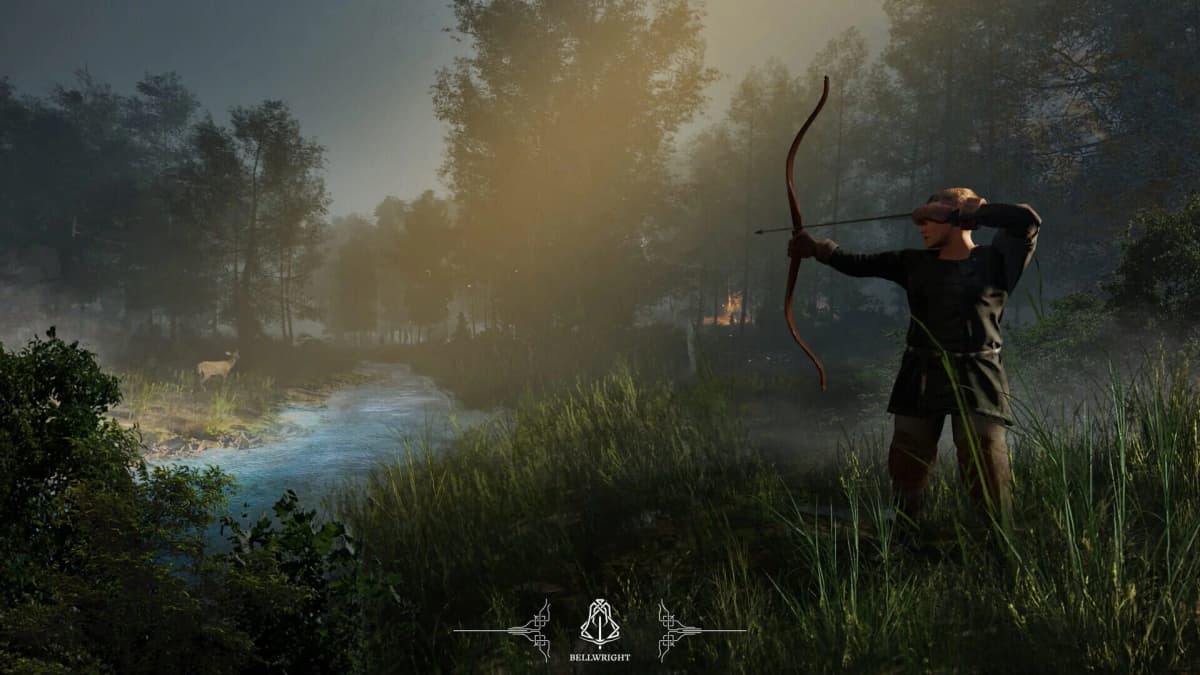
For a step-by-step on smelting and tools once you have the ore, see our Bellwright iron locations, tools, and uses guide.
Tin: do not overextend for it
Tin is available near the starting region — you will find it along the road from Haerndean toward Padstow and Bradford, and across the lowlands — but it is less common than copper and more location-specific, so do not treat it as widespread. Let tin support your early expansion rather than dictate it; do not turn it into a major expedition while you are still stabilizing your first settlement.
Best base locations and what each one is good for
Whispering Ponds: the early-to-midgame pick
For early and midgame building, the standout is Whispering Ponds, the central-river flatland (you will also see it written as Whispering Pines). The appeal is concrete: flat land, trees, river access, nearby tin, and a wheat field close enough to feed an early settlement. It is forgiving — room to place buildings cleanly, enough natural supply to avoid early logistics pain, and a central position so you are not running the whole campaign from a corner. For a first serious base, that beats chasing an extreme specialist spot.
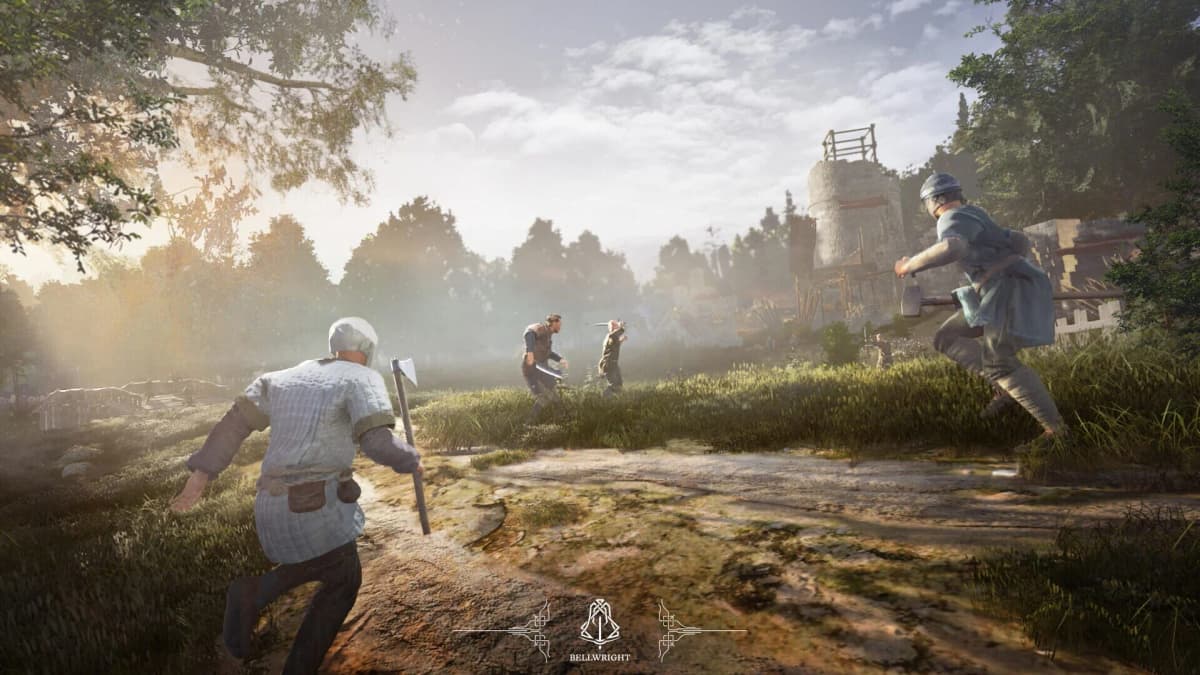
A river-side base also makes early farming easier — see our early wheat farming guide for getting that wheat field producing fast.
Pebblebrook and Redwood Forest: late-game settlement sites
Once your village is about scale rather than survival, Pebblebrook and Redwood Forest become attractive. Pebblebrook — the area just below the brigand hideout — is the best position for reclamation parties, where you want short lines to contested ground. Redwood Forest is a fortress-style build area right next to Cragshire (it is an official territory under Crasmere). Neither is a “rush here immediately” pick; they are destinations for players whose production, defenses, and travel planning already work.
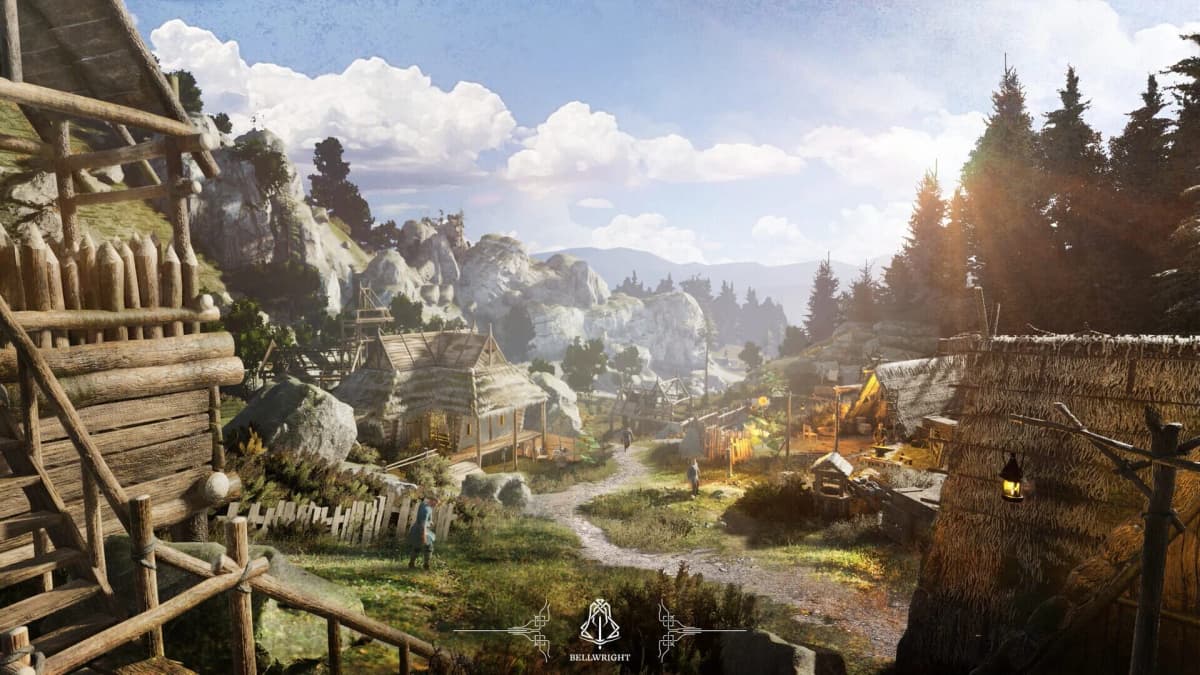
Cottonwood Meadows: powerful, southern, unforgiving
Cottonwood Meadows is one of the strongest permanent southern base sites, but it sits far south, between Horndean and the Brigands Prison. That position gives it strategic value and also means you are operating in a more exposed, more demanding part of the map. This is a late-game decision, not a beginner comfort pick — commit only when you can handle long supply lines and hostile pressure.
A note on the popular community base names
Names like Cedar Creek, Rocky Hollow, Brookside, Northwood Forest, Deerfield, Cragshire, and Pebblebrook come from player base-location guides, not official in-game labels. Treat them as area nicknames for the northern and central build zones and confirm the exact ground in-world before you commit. Brigands Prison and Redwood Forest, by contrast, are official map locations you can navigate to directly.
Bellwright roadmap: where to go first, second, and late
- Early game: stay in the central and starting-accessible lowlands, collect tin without overcommitting, and scout the central river around Whispering Ponds for your first proper build site.
- Early-midgame: make controlled western runs — south from Padstow, across the river, north into the swamp — for peat and moss once those materials start blocking progress.
- Midgame: pivot south of Blackridgepool for iron, granite, and cotton when your settlement needs heavier industry and better gear.
- Late game: expand by role — Pebblebrook for reclamation logistics, Redwood Forest near Cragshire for a fortress, or Cottonwood Meadows in the deep south for scale.
Common mistakes
- Heading east of Padstow for peat and moss. They are in the western swamps near Blackridgepool. Go south, cross the river, then north.
- Confusing Haerndean with Horndean. They are two separate capitals — Haerndean is your lowland start, Horndean is deep south near Cottonwood Meadows.
- Treating tin as widespread. It is near the start but scarcer than copper; do not build an expedition around it.
- Rushing Cottonwood Meadows or Redwood Forest early. These reward established supply lines, not beginners.
- Walking to one exact pin. Search the zone in an arc; resources are spread across a region, not stacked on a single tile.
The practical takeaway
Remember one layout: western swamps near Blackridgepool for peat and moss, south of Blackridgepool for iron, granite, and cotton, the central river at Whispering Ponds for your first serious base, and Pebblebrook, Redwood Forest, or Cottonwood Meadows for late-game scale. Anchor to a named capital, travel by direction, and keep Haerndean and Horndean straight — that saves more time than any single “secret” location ever will.
FinalBoss // Gear
Level up your setup
01Graphics cardson Amazon→02Gaming laptopson Amazon→03High-refresh gaming monitorson Amazon→04Discounted game keyson Kinguin→
Affiliate links · As an Amazon Associate, FinalBoss earns from qualifying purchases.
Want to Level Up Your Gaming?
Get access to exclusive strategies, hidden tips, and pro-level insights that we don't share publicly.
Ultimate Guide Strategy Guide + Weekly Pro Tips