

Bellwright is the kind of game that sounds exciting and exhausting in the same breath. A medieval survival sandbox with town-building, follower management, RPG progression, and a rebellion story hook can feel like a dream pitch if you love slow-burn systems. It can also sound like a second job if you want momentum, clarity, and quick rewards.
That split is the whole review. Based on the game’s current Early Access state, published reviews, store details, and long-form player impressions, Bellwright already has enough substance to matter. It is not some flimsy prototype with a neat trailer and empty guts. But it also keeps running into the same warning signs: deliberate pacing, quality-of-life friction, and a level of management overhead that makes the recommendation much narrower than its premise suggests.
Table of Contents (10)
Key takeaways
- Bellwright’s best idea is the way survival, settlement growth, and a rebellion narrative feed into each other.
- The village-building loop appears to be the main reason genre fans stick around for the long haul.
- Its biggest problems are not lack of ambition but slow pacing, rough Early Access edges, and fiddly management.
- This suits patient survival-builder players far more than anyone chasing constant combat or instant payoff.
Bellwright is more interesting than a basic survival game
The easiest way to misunderstand Bellwright is to treat it like another “punch trees, craft tools, build a shack” survival game. Those ingredients are in here, sure, but they are not the whole appeal. The hook that keeps coming up in coverage is that Bellwright frames your progression inside a broader rebellion story. You are not merely trying to stay fed in a hostile wilderness. You are an exile, tied to a larger political conflict, gradually building people, infrastructure, and military strength against an oppressive power.
That matters because it gives the usual gathering-and-crafting loop a sense of direction. A lot of survival games live or die on how much you enjoy self-generated goals. Bellwright still relies on that to some extent, but the narrative layer makes the climb feel less aimless. Helping villagers, expanding production, recruiting followers, and defending what you have built are not isolated chores. They are steps in a larger arc. Several reviews singled that out because story is not usually the genre’s strongest suit, and Bellwright at least tries to give its grind a political spine.
The result sounds less like a pure survival sim and more like a mash-up of open-world crafting, light RPG progression, and colony management. That blend is where Bellwright earns most of its goodwill. It is not trying to be the fastest or cleanest game in the field. It is trying to feel layered.
The village-building loop seems to be the real reason people stay
If Bellwright has a defining strength, it is the sense that building things actually changes your relationship with the world. Settlement growth is not just decorative. Expanding a base, improving production, and recruiting more people feeds directly into survival efficiency, exploration, and your ability to push outward. That visible cause-and-effect matters. In weaker crafting games, a bigger base is just a prettier storage box. In Bellwright, the settlement is the game.
Published impressions consistently point to the same appeal: you begin with the usual hand-to-mouth struggle, then slowly build toward something that resembles a functioning medieval community. That kind of progression has real power when a game gets the pacing right. It gives every early inconvenience a future payoff. A rough camp becomes a village. Manual labor turns into delegated labor. Basic survival becomes supply chains, recruitment, and defense.
That “small to large” arc is one of Bellwright’s best assets. It creates the feeling of scale that survival games often promise and rarely earn. Bellwright appears to earn it through accumulation rather than spectacle. No single mechanic sounds revolutionary on its own. Gather resources. Hunt. Craft. Build. Help NPCs. Explore. Recruit. Assign work. Defend territory. The trick is that Bellwright stacks those loops until the settlement starts to feel like a living machine instead of a backdrop.
Co-op helps that fantasy too. Bellwright supports up to four players, and that sounds especially important in a game like this because its workload naturally invites specialization. One player can focus on resource runs, another on construction, another on combat readiness, another on village logistics. Even without direct hands-on testing here, it is easy to see why co-op coverage treats this as a major selling point. A game built around shared labor often feels better when that labor is actually shared.
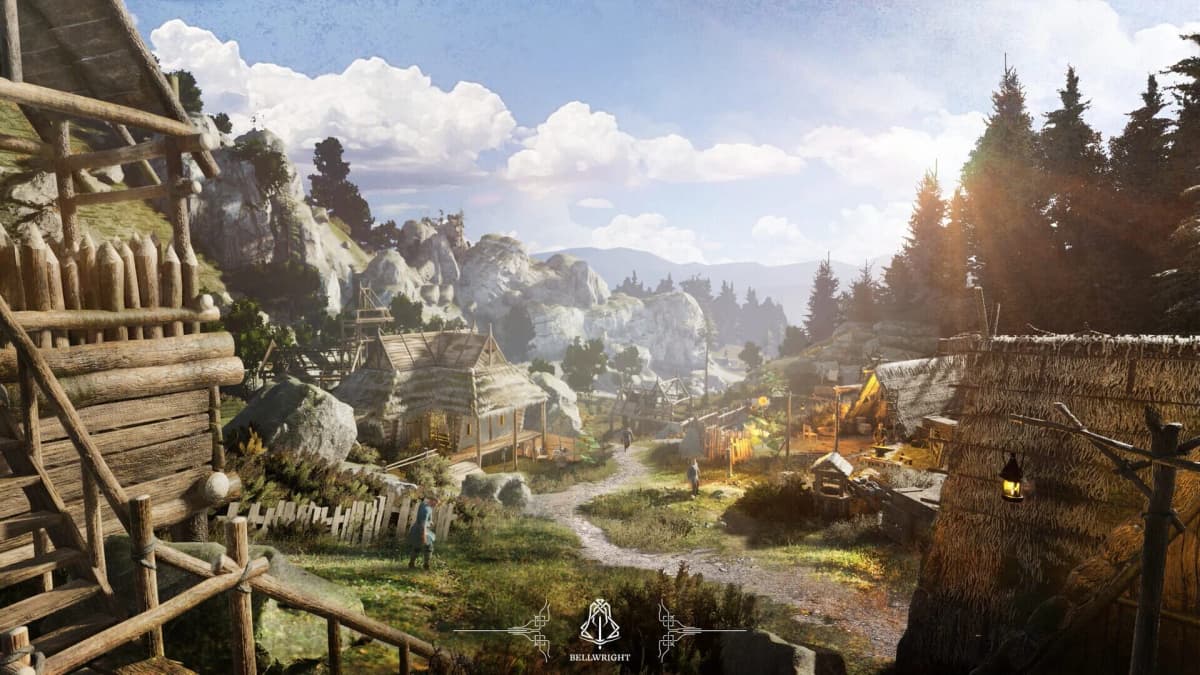
It looks and sounds like the world it wants to be
Even some of the more critical takes pause to praise Bellwright’s atmosphere. That is not a small compliment in this genre. Survival builders ask for a lot of repetitive action, so the world has to carry some of the emotional load. Bellwright seems to understand that. Reviewers repeatedly point to its medieval feel, natural lighting, and strong sense of place. One long-term player impression specifically called out the sunrise lighting, and that detail says a lot. People do not usually mention a sunrise unless the world has started to feel lived in.
The music also seems to do more than fill silence. When a game spends hours asking you to gather materials, organize production, and march through familiar roads, weak audio quickly turns the experience flat. Bellwright’s presentation appears to help sell the fantasy of rebuilding something in a troubled countryside. Timber buildings, daylight rolling over fields, villages that feel grounded rather than theme-park tidy, that kind of texture matters here. It softens the grind and gives the settlement management a bit of soul.
This is part of why Bellwright sounds attractive even to players who are not normally all-in on survival games. There is a romantic pull to the setting. Not fantasy fireworks. Not absurd power scaling. Just mud, wood, labor, and the long crawl from exile to resistance. When that lands, it lands hard.
The problem is that Bellwright asks for patience long before it earns trust
Here is the friction point that refuses to go away: Bellwright’s pace can be glacial. That will sound like praise to the right crowd and a deal-breaker to everyone else. Slow progression is not automatically bad. Some of the best builders and management games thrive on delayed gratification. Bellwright’s issue is that it appears to combine that slow progression with enough rough edges that the patience tax feels higher than it should.
This comes through in how often reviewers and players describe the experience as deliberate, demanding, or best suited for long-term planners. Those are polite ways of saying the game may take a while to reveal its full shape. If you need strong early hooks, fast combat escalation, or a clean stream of upgrades, Bellwright may feel sticky in the wrong way. Not dense with possibility. Dense with errands.
Inventory and storage complaints also keep surfacing, and that is one of those boring problems that can quietly poison a game built on repetition. One player impression noted turning to mods after around ten hours because storage and inventory felt too limiting. That kind of comment matters more than flashy complaints about balance because it hits the daily rhythm of play. In a systems-heavy survival builder, every bad interaction with inventory multiplies. What should feel like planning starts to feel like housekeeping.
There is also the broader Early Access caveat. Bellwright is easy to describe as promising, and that word is doing a lot of work. Promising means there is a good game here. It also means you are buying into ongoing improvement, missing polish, and design areas that may still shift under your feet. That bargain is normal for the genre, but Bellwright leans on it harder than something immediately breezy and intuitive would.
This is one of those games where “more systems” is both the feature and the warning label
Bellwright seems most appealing when described to players who already know they enjoy management-heavy survival games. If you like juggling production chains, assigning tasks, and watching a rough settlement become self-sustaining, the game’s layers are a selling point. If that sentence already sounds tiring, Bellwright is unlikely to charm you through personality alone.
That is why the broadest criticism is not that Bellwright lacks things to do. It is almost the opposite. It can feel so committed to systems and long-form planning that players outside its lane may simply find it dull. Not broken. Not empty. Dull. There is a huge difference. A messy but ambitious game can still be great for a certain audience. Bellwright sounds exactly like that kind of game.
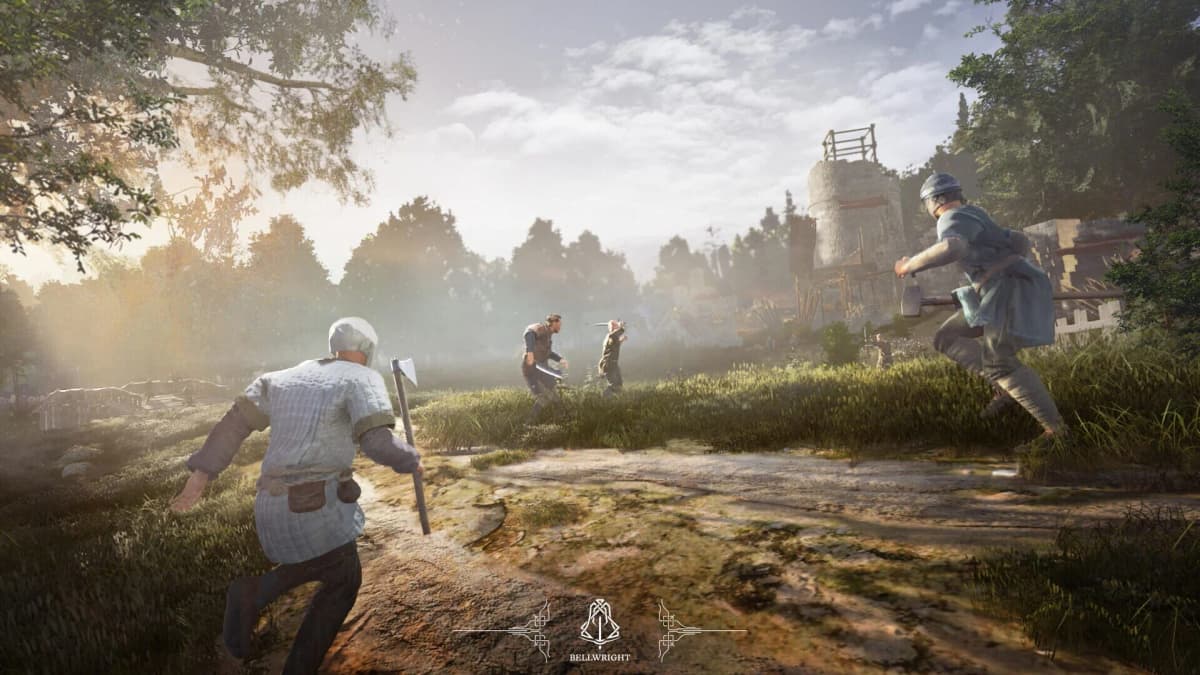
It also helps explain the game’s unusual reputation. People who click with Bellwright do not just say it is decent. They tend to talk about long sessions, detailed progression, or hundreds of hours spent inside the loop. People who do not click with it tend to bounce off the drag before the larger settlement fantasy pays off. That is not a minor split in taste. It is the central buying consideration.
Bellwright has grown since launch, but the “unfinished” label still matters
The more recent context around Bellwright does strengthen the case for paying attention. The game has continued to receive updates, later rolled out to consoles in Early Access form, and picked up additions such as new map content, faction-related systems, expanded gear, and gamepad-focused work. That tells a useful story: this is not a stalled project limping through abandonment fears. Bellwright is still evolving.
At the same time, that ongoing growth does not erase the core caution. Bellwright reaching more platforms while still carrying the Early Access tag underlines the same truth that older reviews already hinted at. This is a living project, not a settled 1.0 statement. For some players, that is exciting. For others, it means waiting is the smarter move. Both reactions are reasonable.
Who Bellwright suits, and who should probably stay away
Bellwright looks like a strong fit for players who enjoy survival games as logistics playgrounds rather than action rides. If you want to build a settlement over dozens of hours, recruit people, shape production, and slowly turn a vulnerable outpost into something sturdier and more politically meaningful, this has obvious appeal. The same goes for co-op groups that enjoy splitting labor and solving messy problems together. Bellwright’s structure seems naturally better with friends who are happy to inhabit different roles.
It is a weaker fit for anyone chasing instant action, streamlined onboarding, or that smooth 1.0 confidence where every interface feels settled and every system feels fully sanded down. If your tolerance for inventory friction is low, or if the phrase “slow-burn progression” often ends with you uninstalling a game after a weekend, Bellwright is likely to feel more admirable than enjoyable.
That makes the recommendation narrower than the premise suggests. Bellwright has broad ingredients, but its audience is not broad. It is for players who can find satisfaction in momentum measured by systems clicking into place, not just by bigger fights or faster loot drops.
Bottom line
Bellwright is a good Early Access game and a conditional recommendation. Its strongest qualities are clear: a layered settlement loop, a rare story-driven frame for the genre, a convincing medieval atmosphere, and progression that seems to build real scale over time. Its weaknesses are just as clear: pacing that can drag, management friction that can sour the routine, and the permanent asterisk that comes with judging an unfinished game.
TL;DR
- Best parts: deep settlement management, meaningful long-term progression, strong medieval atmosphere, and a narrative hook that gives the grind purpose.
- Weakest parts: slow pacing, inventory and storage friction, Early Access roughness, and a lot of management overhead.
- Play it if: you like survival games that drift into colony sim territory and do not mind a long runway.
- Skip or wait if: you want fast action, easy onboarding, or a polished finished product.
- Verdict: one of the more interesting medieval survival builders in Early Access, but still a genre-fans-first recommendation.
FinalBoss // Gear
Level up your setup
01Graphics cardson Amazon→02Gaming laptopson Amazon→03High-refresh gaming monitorson Amazon→04Discounted game keyson Kinguin→
Affiliate links · As an Amazon Associate, FinalBoss earns from qualifying purchases.
Want to Level Up Your Gaming?
Get access to exclusive strategies, hidden tips, and pro-level insights that we don't share publicly.
Ultimate Reviews Strategy Guide + Weekly Pro Tips