
Table of Contents (7)
Bethesda pledges artist control and optional DLSS 5 in Starfield – here’s what that actually means
Bethesda has walked back the optics around Nvidia’s much-hyped DLSS 5 visuals: the studio says the early Starfield demo was unfinished, that lighting and character looks will be “further adjusted,” and that any DLSS 5 effect will be under its artists’ control and “totally optional for players.” That matters because the tech shown at GDC produced what critics call a generative-AI “beautification” filter that can rewrite faces, lighting and materials in ways devs and players may not want.
- Studio promise: Bethesda says DLSS 5 use in Starfield will be artist-controlled and optional for players.
- Why people care: Early DLSS 5 demos altered faces and lighting – critics called it “AI slop” that erases deliberate art direction.
- Tech reality: Nvidia touts DLSS 5 as a generative, real‑time neural renderer that reworks lighting, materials and character detail, trained to “understand” scene semantics.
- Open question: “Artist control” is a promise, not a specification – how much veto power artists get is unclear.
Why Bethesda had to say something
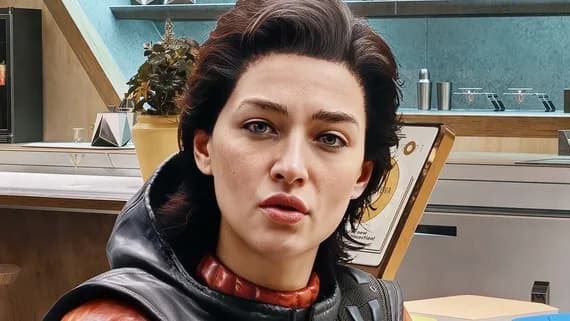
The timing was predictable. Nvidia’s GTC/GDC demos — Starfield among them — showed dramatic, photoreal lighting and sharper detail. But those same clips also flattened stylistic choices and subtly altered faces in ways many artists and players found unacceptable. Industry coverage from The Verge and PC Gamer captured that backlash: the word “slop” trended among developers and artists who saw DLSS 5 as a generative filter that could overwrite intent.
Todd Howard praised DLSS 5’s potential during the reveal, and Bethesda’s appearance atop Nvidia’s launch slate made the studio an easy focal point for criticism. The studio’s March 17 response feels less like a new position than damage control — a quick assurance to say those changes won’t be automatic, and designers will be involved.
The uncomfortable observation the PR release skipped
“Totally optional” and “under our artists’ control” are good slogans — they are not engineering guarantees. Optional can mean “user choice buried in menus” or “off by default.” “Artists’ control” can mean one artist tweaks sliders provided by Nvidia, or it can mean full, code-level veto on what the neural model outputs. The sources (IGN, Eurogamer, The Verge, PC Gamer) all quote Bethesda’s pledge verbatim, but none see the studio publish the implementation details developers actually need to trust the claim.
If I were interviewing the PR rep I’d ask: who signs off on the DLSS 5 model for character faces — the character art lead, the technical art director, or an external QA? Will Bethesda ship with DLSS 5 off by default? Will there be per-element toggles (lighting vs. skin vs. materials) and a visible change log for how the model was tuned?
If I were interviewing the PR rep I’d ask: who signs off on the DLSS 5 model for character faces — the character art lead, the technical art director, or an external QA? Will Bethesda ship with DLSS 5 off by default? Will there be per-element toggles (lighting vs. skin vs. materials) and a visible change log for how the model was tuned?
🎮 Get This Game at the Best Price
Compare prices instantly and save up to 80% on Steam keys with Kinguin — trusted by 15+ million gamers worldwide.
*Affiliate link — supports our independent coverage at no extra cost to you
How DLSS 5 works — and where the real risks are
Nvidia bills DLSS 5 as a “real-time neural rendering model” that analyzes single frames to infer scene semantics — characters, hair, fabric, subsurface scattering — and generates enhanced pixels. That level of intervention is a step beyond previous DLSS versions, which upscaled or reconstructed detail; DLSS 5 actively rewrites it. The Verge and PC Gamer both underline that the tech’s promise — dramatically better lighting and realism — is coupled with the risk of homogenizing a studio’s visual style.
There are practical questions too: Nvidia used two top-tier RTX 5090 GPUs in demos, which raises performance and adoption concerns for players without bleeding-edge hardware. And while Nvidia lists many major partners (Capcom, Ubisoft, Warner Bros., Bethesda among them), implementation will vary; publisher buy-in does not equal uniform safeguards.
What I’m watching next — specific signals that will tell us if this is meaningful control
- Updated Starfield footage or a patch note showing exactly what Bethesda changed in its DLSS 5 implementation (look for per-element toggles or default state).
- Performance and visual comparisons from independent outlets — not Nvidia’s channel — showing DLSS 5 on/off side-by-side across GPU tiers.
- Public statements from other major partners (Capcom, Ubisoft) explaining their artist workflows with DLSS 5.
- Patches to games that already shipped DLSS 5 demos (Resident Evil Requiem, Hogwarts Legacy) addressing facial/lighting complaints.
All four major outlets covering this story (IGN, The Verge, PC Gamer and Eurogamer) agree on the facts: DLSS 5 is real, the demos prompt backlash, and Bethesda promises artist oversight and optionality. What remains to be proven is how deep that oversight goes and whether developers will default to the safer, art-respecting options or ship the AI-driven look as the “best” default.
TL;DR
Bethesda says DLSS 5 in Starfield will be optional and artist-controlled after community backlash to Nvidia demos that altered faces and lighting. That reassurance is necessary but thin: “optional” and “artist control” need implementation details to be meaningful. Watch for independent DLSS 5 comparisons, explicit UI toggles or default settings, and other publishers’ responses — those will tell you if this is true protection of artistic intent or just a PR shield.
FinalBoss // Gear
Level up your setup
01Best-selling Xbox Series X|S gameson Amazon→02Xbox controllerson Amazon→03Top-rated gaming headsetson Amazon→04Discounted game keyson Kinguin→Affiliate links · As an Amazon Associate, FinalBoss earns from qualifying purchases.
Want to Level Up Your Gaming?
Get access to exclusive strategies, hidden tips, and pro-level insights that we don't share publicly.
Ultimate Gaming Strategy Guide + Weekly Pro Tips