
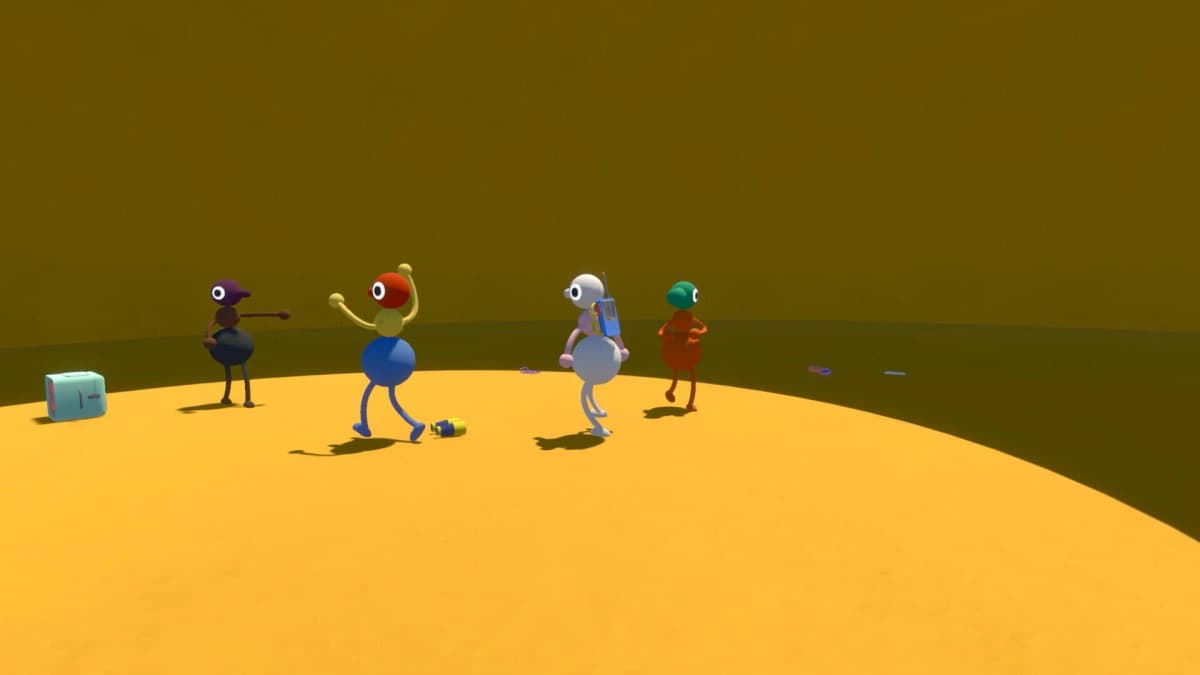
Big Walk makes bad communication exhilarating, and I rank it among the sharpest co-op ideas I have played in years. I watched a teammate vanish behind soundproof glass, tried to point out a sequence with my left arm, then resorted to scrawling blunt symbols on a whiteboard while the rest of the group turned a simple task into glorious nonsense. That mess is the game. House House has built an island where being unable to explain yourself cleanly becomes the whole reason to keep walking.
I also felt every inch of the design’s friction. Big Walk moves at the pace of a real group hike: somebody wanders off, somebody carries the wrong tool, somebody hears half an instruction through a tunnel and confidently does the opposite. I loved that when I was in the right mood with the right people. I felt it drag when we wanted momentum, especially when the Switch 2 version piled aggressive pop-in and an unstable 30fps cap onto a game already built around deliberate movement.
Table of Contents (8)
Key Takeaways
- I found Big Walk at its best with three or four committed players using its own proximity voice or proximity text systems.
- I could only start a session with at least two people, while the lobby cap reaches 12 players and turns the island into a more chaotic social space.
- I loved how directional audio, body language, radios, whiteboards, flares, binoculars, and megaphones became shared problem-solving tools.
- I felt the no-HUD structure made discovery exciting, though it also made travel, regrouping, and stalled puzzle attempts take longer than they needed to.
- I strongly recommend PC, find PS5 and Xbox Series versions far safer than Switch 2, and cannot recommend Switch 2 to anyone sensitive to unstable performance.
Communication Occupies the Center of Every Puzzle
I stopped treating proximity voice as a convenience within minutes. Voices faded as my friends moved away, direction mattered when I turned toward a speaker, walls muffled instructions, and enclosed spaces changed the sound of a shout. I had to physically close the gap before a useful conversation could happen. That tiny rule transformed the island from a place I merely travelled through into a place I had to listen to.
I particularly enjoyed the moments when Big Walk removed speech entirely. Soundproof barriers turned my arms into a rough sign language. I raised both hands to get attention, pointed at a distant object with one arm, and exaggerated every movement because a nod or a casual gesture would not cut it. The controls can feel clumsy in isolation, but I found that clumsiness purposeful once the group started improvising its own visual shorthand.
The communication gadgets carry the same playful weight. I used radios to bridge distance, megaphones to gather scattered players, laser pointers to mark faraway objects, and whiteboards to leave instructions for teammates I could not reach. I could only carry one item at a time, so even grabbing the right tool became a collective decision rather than an inventory chore. I enjoyed the small arguments this created: who takes the radio, who carries the light, and who keeps losing the binoculars while everyone else waits.
I would never run Big Walk through an external full-range voice channel. Doing that strips the game of its central tension, turns its carefully placed devices into decorative clutter, and erases the accidental comedy of a friend shouting the right answer from too far away to be understood. The in-game communication rules are not a novelty layer pasted over the co-op. I experienced them as the engine behind every memorable puzzle and every ridiculous failure.
The No-HUD Island Makes Discovery Feel Earned
I spent far less time staring at markers, quest logs, and map icons because Big Walk barely gives me any of that visual hand-holding. I followed strange structures on the horizon, noticed a tool sitting where it clearly did not belong, and relied on my group to remember where we had seen a useful route or object. That clean screen gave the island a rare sense of scale. I felt like I was learning a place with friends rather than clearing a checklist.
I liked the way puzzle situations emerged from the landscape instead of announcing themselves with a giant prompt. A peculiar chamber, a broken line of sight, a piece of equipment, or a distant signal was enough to pull my group into a new problem. Big Walk trusts players to investigate, test ideas, and make a bad plan before finding a better one. I respected that confidence.
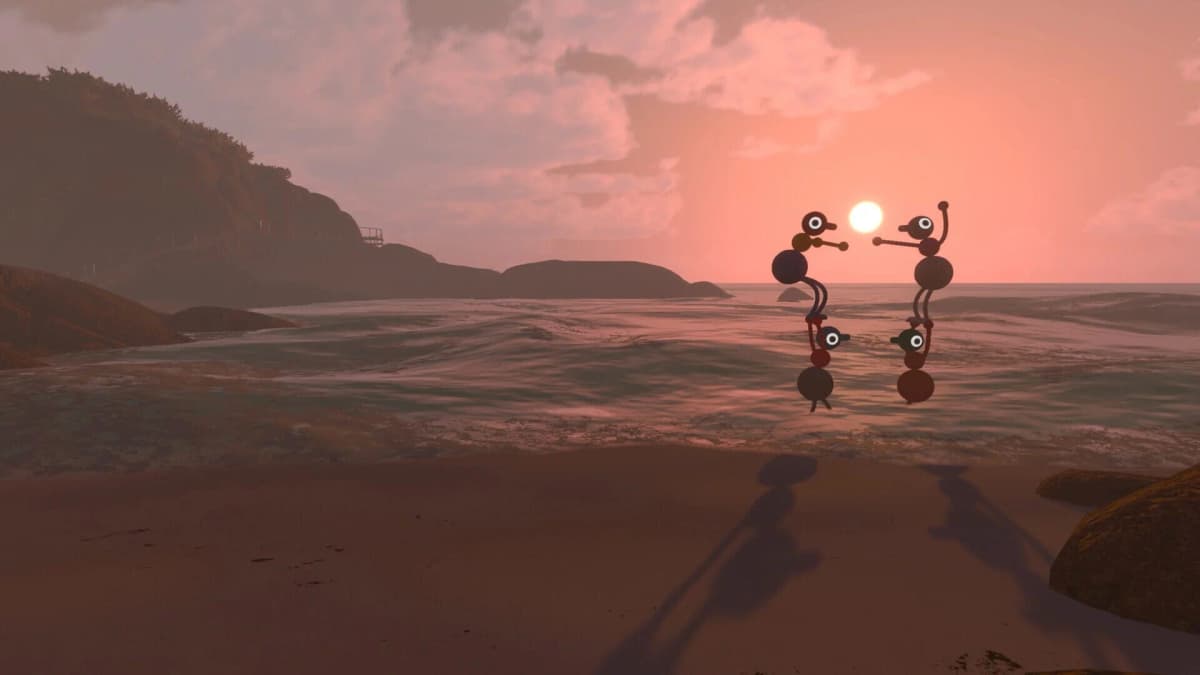
That freedom also exposes the game’s limits. I had stretches where the group knew roughly what we needed but lacked the clean information or immediate access to explain it. I watched progress turn into travel time: someone had to walk back, locate another person, retrieve a tool, then repeat a direction that had already been misunderstood once. Big Walk treats that delay as part of the experience, and I enjoyed it when the conversation stayed lively. I felt the pacing sag when the group had already solved the interesting part and was simply waiting for everybody to reconvene.
I found the puzzles more social than cerebral. The hardest obstacle was rarely a dense logic problem; I usually needed to build a shared understanding across distance, noise, missing context, and wildly different interpretations of “go left.” Big Walk thrives on that kind of cooperative improvisation. I would not bring it to a group that wants brisk missions, constant combat, or a tightly scripted campaign that moves forward every few minutes.
Text Chat Helps, but It Makes the Slow Parts Slower
I appreciated having proximity text chat available for sessions where voice was uncomfortable, inaccessible, or simply unwanted. Text bubbles obey the same distance rules as speech, so I still had to gather near someone or use the world’s tools to get a message across. That choice preserves Big Walk’s core idea rather than giving it an easy bypass.
I also felt the cost immediately. Typing out a color order, a route, or a multi-step instruction takes longer than blurting it into a radio, and a mistyped message can derail the same way a garbled shout can. I consider that an acceptable trade for the accessibility it provides, but I would set expectations before starting. A text-focused group should embrace the slower rhythm instead of treating it as a failure of the game.
I found Big Walk strongest when everyone agreed to meet it halfway. The group needs to use the in-game tools, stay patient during detours, and accept that a puzzle might become an improvised conversation before it becomes a solution. A lobby full of people chasing efficient completion will crush the charm out of it.
Four Players Is the Sweet Spot, Even Though Twelve Can Join
I could not play Big Walk alone, because it requires a minimum of two players, and I consider that restriction completely justified. The game depends on division of attention, partial information, and the delight of watching another person misread a situation. A solo mode would miss the point.
I found two players perfectly workable, particularly when we were willing to slow down and describe everything carefully. I had the most satisfying sessions with roughly four active people, where one person could scout, another could operate a device, a third could relay information, and a fourth could catch the detail everyone else missed. The puzzles breathe at that size without dissolving into noise.
I enjoyed larger groups as a hangout space more than a puzzle-solving machine. A 12-person lobby can create hilarious confusion, but it also magnifies every small coordination problem. Voices overlap, people scatter, tools disappear into somebody else’s hands, and the party can spend several minutes trying to discover who is actually working on the problem. I had fun with that chaos in short bursts. I would keep a serious puzzle session closer to four people.
Switch 2 Is the Version I Would Avoid
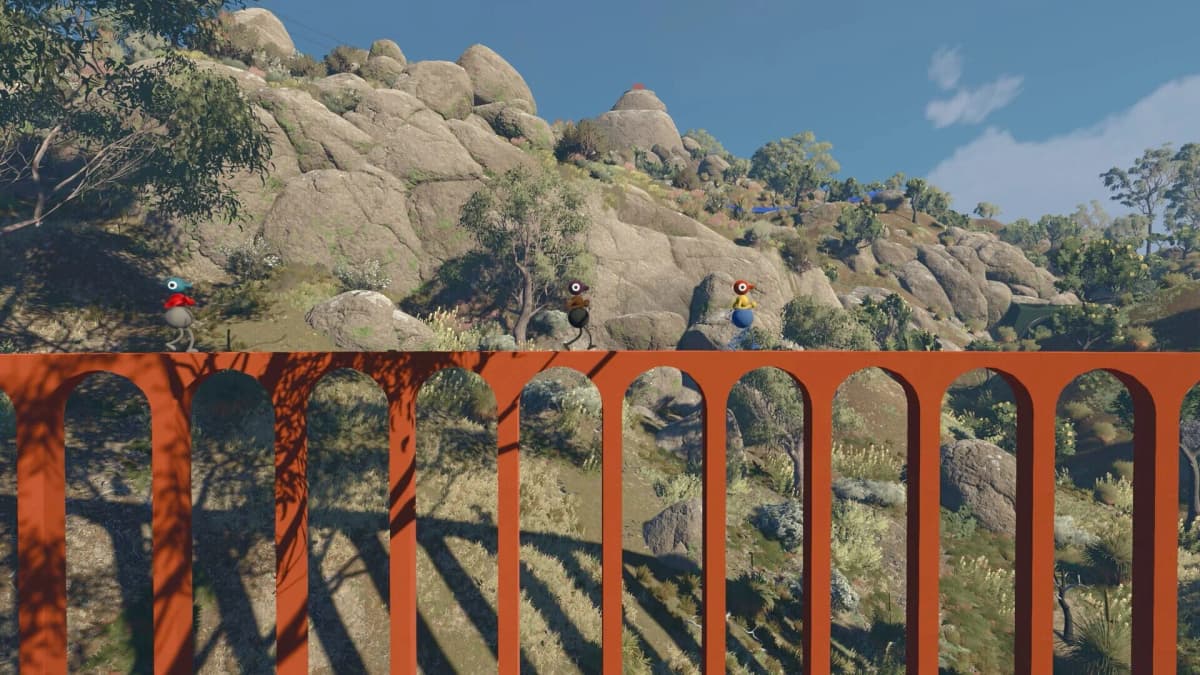
I judge Big Walk’s platforms harshly because this game depends on atmosphere, clear spatial awareness, and uninterrupted conversation. I can forgive modest visuals in a game with this much personality. I cannot shrug off performance hitches and heavy pop-in when I am trying to identify a distant landmark, keep track of a moving teammate, or maintain the relaxed rhythm that makes the walking worthwhile.
| Platform | What I experienced | My recommendation |
|---|---|---|
| PC via Steam or Epic | I got the cleanest presentation, the strongest performance, quick session re-entries, and the easiest route to configuring the in-game microphone properly. | I recommend PC first for groups that already play co-op there. |
| PS5 and Xbox Series | I found performance solid, arm controls intuitive on a controller, and the overall experience far less distracting than Switch 2. | I recommend these versions confidently, provided everyone uses Big Walk’s own voice system instead of overriding it with party chat. |
| Switch 2 | I ran into aggressive environmental pop-in, finicky movement moments, and a frame rate that struggled to stay steady around 30fps. | I cannot recommend this version until its technical problems stop interrupting the island’s flow. |
I found the Switch 2 flaws especially frustrating because Big Walk asks me to notice subtle things. A landmark appearing late, a rough camera moment while I am trying to point an arm precisely, or a framerate dip during a busy group scene chips away at the fragile illusion that we are freely wandering through one coherent place. The game remains playable there, but I felt it constantly fighting against its own laid-back mood.
Who I Recommend Big Walk To
I recommend Big Walk to friends who enjoy escape-room energy, relaxed exploration, absurd role-playing, and the kind of shared confusion that becomes a story afterward. I found enormous value in the moments between solutions: the accidental separation, the confused radio call, the frantic pointing, and the triumphant realization that a ridiculous idea was correct.
I would steer impatient groups away from it. I would also avoid recommending it to anyone who wants to mute the game’s own communication systems or keep a separate global voice channel running in the background. Those habits flatten Big Walk into a slower and less interesting open-world puzzle game.
I would also choose a platform before choosing a session. PC is where I would host it. PS5 and Xbox Series are where I would happily join. Switch 2 is where I would wait, because the technical compromises interfere too directly with a game built on mood, movement, and shared attention.
Bottom Line: A Brilliant Co-op Walk With One Bad Route
I rate Big Walk an 8/10. I loved its willingness to make proximity, silence, body language, tools, and imperfect instructions feel valuable. I rarely find a co-op game that understands how much entertainment lives inside a group trying to communicate badly, then slowly inventing a language that works.
I also felt its pacing drag whenever a solved idea turned into a long regrouping exercise, and I found Switch 2’s unstable 30fps and invasive pop-in difficult to excuse. Big Walk earns its best moments through fragility: players are separated, information is incomplete, and nobody has a clean answer. The unresolved question is whether its most technically fragile version can ever support that delicate design without breaking the spell.
FinalBoss // Gear
Level up your setup
01Best-selling Switch 2 gameson Amazon→02Switch 2 accessorieson Amazon→038BitDo controllerson Amazon→04Discounted game keyson Kinguin→
Affiliate links · As an Amazon Associate, FinalBoss earns from qualifying purchases.
Want to Level Up Your Gaming?
Get access to exclusive strategies, hidden tips, and pro-level insights that we don't share publicly.
Ultimate Reviews Strategy Guide + Weekly Pro Tips