
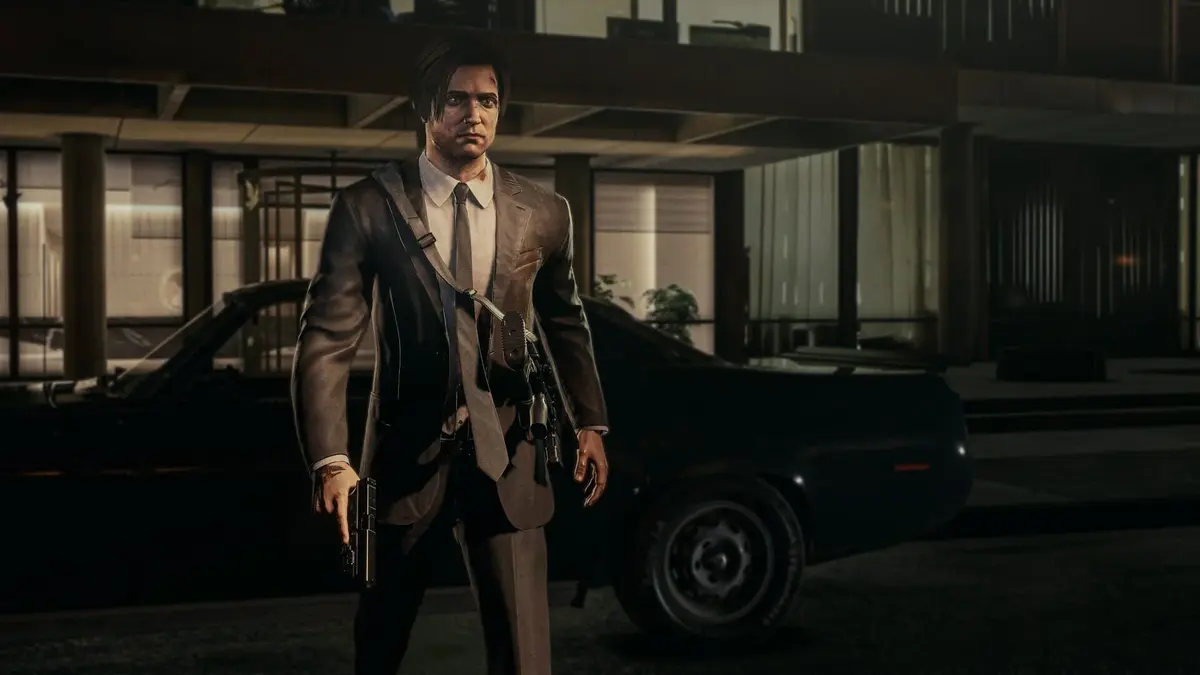
BLACKWOOD makes the wrong thing feel expendable. Its DVD-shop premise, its weapon tinkering, and its 2012 New York atmosphere all have enough identity to carry a great assassin game. The combat — the part that has to sell Anton Blackwood as a lethal professional — keeps breaking the spell.
Act 1 released on Windows PC through Steam on September 16, 2026, for $24.99. That launch purchase includes the later acts for existing owners, but it also buys only the first chapter today: four main missions, side activities, shop management, and an advertised six-plus-hour package that counts collectibles and extra content. For a game built around the fantasy of controlled, stylish violence, this is a rough opening act.
- The premise rules: Anton runs a DVD shop by day and works as a contract killer by night in 2012 New York.
- The customization has real depth: weapon modifications, ammunition, gear, optics, damaged guns, builds, and ammo management all matter.
- The daily-life loop has more purpose than expected: store income and contract income are separate economies, giving Anton’s double life mechanical weight.
- The combat is the problem: firearms lack the needed impact, melee is unreliable, and enemy behavior sabotages encounter flow.
- The roadmap is not a repair kit: Act 2 is planned for March 2027 and Act 3 for September 2027, but Act 1 still has to stand on its own.
Table of Contents (6)
The DVD shop gives BLACKWOOD its actual identity
Anton Blackwood’s double life is far more than a cute elevator pitch. The DVD store is where BLACKWOOD earns its personality. Anton can restock shelves, manage inventory, set prices, serve customers, automate operations, decorate the business, buy outfits, and customize his apartment. Those tasks give the game a rhythm that most assassin fantasies lack. Violence is not a menu selection between missions; it sits beside rent, shelves, stock, and the public-facing business Anton uses to maintain a respectable life.
The split economy sharpens that contrast. The shop earns clean money, while contracts pay dirty money for underground purchases. That is a smart structural decision because it makes Anton’s two worlds feel connected without turning either into empty dressing. A better version of BLACKWOOD could build an entire game around the tension between storefront routine and criminal escalation.
Even the saving structure fits the tone. Anton returns home to rest, listen to music, and sleep, while sleeping is required to protect progress made since the previous sleep. That detail creates a grounded routine around a game otherwise chasing John Wick-style action. BLACKWOOD understands that a hitman fantasy needs a place to come down from the violence. The shop and apartment provide it.
That civilian layer also distinguishes BLACKWOOD from Hitman. Both games use contract killing as a foundation, but BLACKWOOD aims for direct third-person action and a business-management loop rather than a social-stealth sandbox. The ambition is clear: Anton is meant to be a working man with an illegal second job, not a floating player avatar who only exists at the edge of a mission.
The weapon systems are smarter than the fights around them
Customization is Act 1’s strongest argument. BLACKWOOD gives Anton weapons, variants, modifications, attachments, upgrades, ammunition, gear, and tactical optics, then makes those choices feel part of a broader criminal economy. Most of the serious modifications — including military variants and illegal alterations — come through the black market. That market also supplies untraceable ammunition and damaged weapons that can be rebuilt, stripped for parts, or sold.
The civilian side has its own appeal. Anton can buy individual civilian weapons online, build a collection, display favorites in his basement, and organize different loadouts. Shooting drills provide a place to test configurations outside a mission. This is the kind of system that invites a player to think about a weapon as equipment rather than disposable loot.
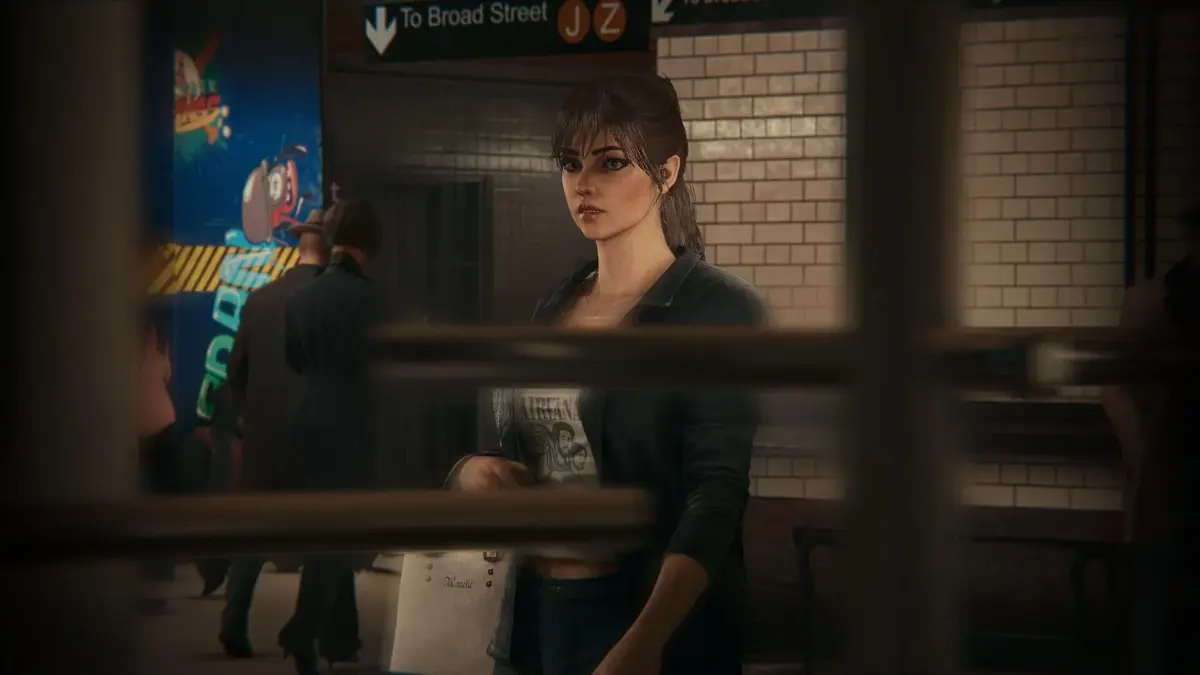
Small details do the heavy lifting. BLACKWOOD tracks rounds left in the chamber, so a reload with one round still loaded grants Anton an extra shot. Holding R checks the remaining ammunition, while the highest difficulty removes the usual reliable ammo display. Running fully dry can force Anton toward a close-range takedown to take an enemy weapon, and switching guns is faster than reloading. These are good rules because they make preparation, positioning, and timing matter.
The movement kit has the same promise. Dive distance scales with Anton’s momentum, and aiming during a dive briefly slows time. That is a clear Max Payne-inspired idea, but BLACKWOOD adds resource pressure rather than treating slow motion as a consequence-free stunt button. Takedowns restore some health, while health itself is divided into stages and recovery depends on reaching a health station. The game has the bones of a tactical action system with genuine stakes.
There are more than 30 contextual finishers, including environmental kills, but the best thing about this combat design is not the finishers themselves. It is the thought behind the rules. BLACKWOOD knows that an assassin game becomes more interesting when ammunition, positioning, weapon condition, recovery, and momentum pull in the same direction.
Combat fails the fantasy that customization builds
The problem is that BLACKWOOD’s best systems lead into combat that rarely has the authority to match them. Gunfire can become more satisfying after disabling aggressive auto-aim in the settings, but the shots still lack the hard punch this style of game needs. A weapon build can be carefully considered, a dive can be timed well, and a fight can still land with less force than its choreography promises.
Melee is worse. Dodge and parry mechanics are unreliable, hand-to-hand attacks lack dependable feedback, and close-quarters encounters do not create the confident rhythm required for a stylish assassin game. Takedowns are meant to be a tactical recovery tool because they restore health. Instead, the systems around them make going in close feel like a gamble rather than a calculated escalation.
Enemy AI compounds the damage. Enemies can shoot through cover or walls, react unpredictably, and appear in ways that disrupt encounter flow. Aggression alone is not intelligence. A room full of enemies can feel intense, but intensity needs readable spacing, comprehensible reactions, and rules the player can trust. When those foundations wobble, the game stops feeling dangerous in a satisfying way and starts feeling arbitrary.
Slow or awkward weapon pickups add another layer of friction. BLACKWOOD wants players to think quickly under pressure, especially when ammunition runs out and an enemy weapon becomes an immediate survival option. That is a solid idea. Fumbling with the interaction at the exact moment combat demands decisiveness is the opposite of the power fantasy Anton’s kit is built to support.
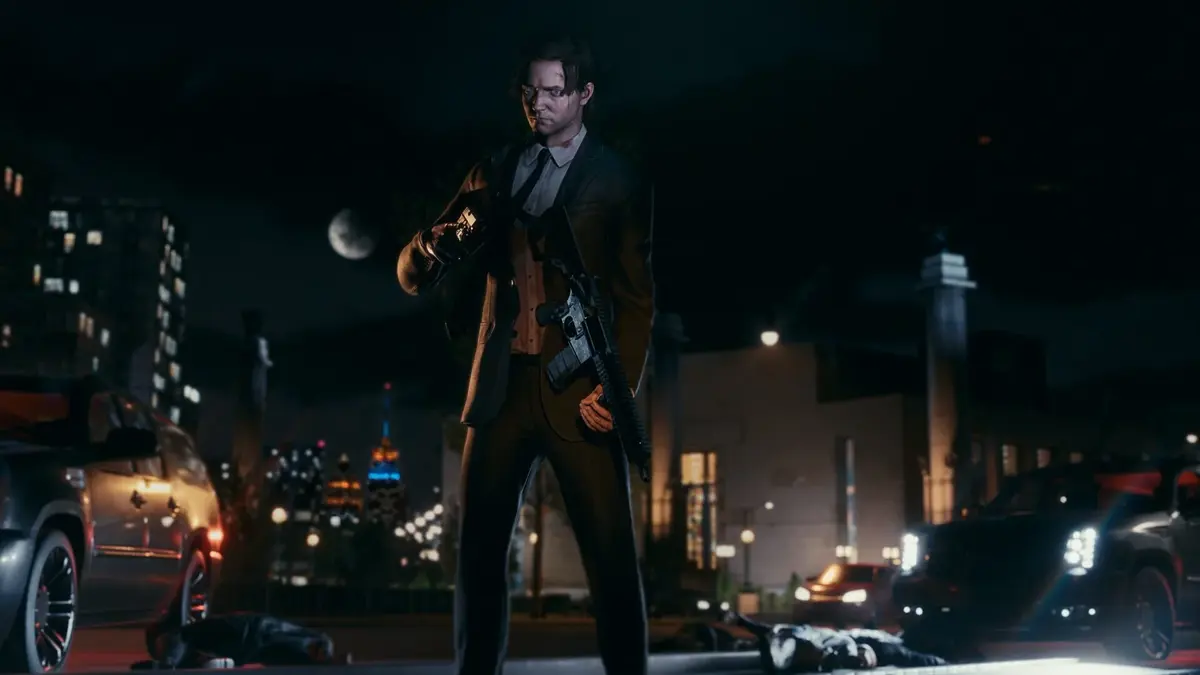
Act 1 is too rough to lean on future acts
BLACKWOOD’s first act includes “Discreet Retrieval Required,” “Good Work. Next Step.,” “Cars all patched up,” and “I got the info on Lantern.” The planned full structure expands that to four main missions in Act 2 and five in Act 3. Those future chapters are planned as free updates for existing owners, with Act 2 targeted for March 2027 and Act 3 for September 2027.
That roadmap improves the value proposition. It does not improve the current combat. A promise of more missions, weapons, enemy variations, and side content cannot make Act 1’s melee timing dependable or make erratic enemy behavior feel designed. The package needs to earn confidence before the next two acts arrive.
Driving missions do not help. Their controls are unresponsive, and they pull attention away from the stronger parts of Anton’s routine without supplying a satisfying alternative. Some missions also feel broken, which is particularly damaging in a game with only four core story missions available at launch. A short first act has no room for sequences that waste momentum.
BLACKWOOD has a compelling reason to exist, and that matters. The atmosphere works because the game does not treat the DVD store as a throwaway joke. The weapon systems work because they respect preparation and scarcity. Yet the actual moment-to-moment fighting remains the point where all of that potential has to prove itself. Right now, it does not.
Who should buy BLACKWOOD: Act 1
I would recommend Act 1 to players who value unusual structure over immediate polish: people drawn to the DVD-shop management, divided clean-and-dirty money loop, detailed weapon work, ammunition rules, and Anton’s double life. The $24.99 purchase includes the planned future acts, so there is a clear long-term proposition for anyone willing to buy into the concept early.
I would skip it for now if the priority is crisp melee combat, dependable dodge-and-parry timing, smart enemy reactions, or a complete campaign. Players buying solely for a John Wick-style action rush will find a game that understands the pose but cannot consistently sell the impact. There is no confirmed console release in the available material, either; BLACKWOOD is currently a Windows PC game on Steam.
The bottom line
BLACKWOOD: Act 1 has a better premise than many complete action games and better customization than its rough exterior suggests. Anton’s DVD-store life, the black-market weapon work, chambered rounds, momentum dives, and two-part economy give this game a real point of view. But the unreliable melee, weak combat impact, erratic AI, awkward pickups, unresponsive driving, and broken-feeling missions undermine the one fantasy that cannot afford to fail. Future acts may give this strange, stylish concept room to grow; Act 1 is an uneven foundation. 6/10
FinalBoss // Gear
Level up your setup
01Top-rated gaming headsetson Amazon→02High-refresh gaming monitorson Amazon→03Gaming chairson Amazon→04Discounted game keyson Kinguin→Affiliate links · As an Amazon Associate, FinalBoss earns from qualifying purchases.
Want to Level Up Your Gaming?
Get access to exclusive strategies, hidden tips, and pro-level insights that we don't share publicly.
Ultimate Reviews Strategy Guide + Weekly Pro Tips