
Table of Contents (9)
Booting Up the Boundary: My First Few Runs
My first hour with BlazBlue Entropy Effect X was a mix of “oh wow, this feels good” and “what on earth is going on.” I booted it up on a Switch OLED, picked Ragna because of course I did, and within minutes I was air-dashing, juggling enemies, and cancelling into flashy supers like I was back in BlazBlue: Central Fiction. Then the run ended, the game vomited a wall of icons, numbers, and jargon at me, and I just stared at the screen wondering what any of it meant.
That push-and-pull pretty much defined my time with Entropy Effect X. Across roughly 25 runs on Switch (mostly handheld, some docked), the core feel of the combat and movement kept pulling me back in. The systems, menus, and explanations did their best to shove me right back out.
If you’ve never touched the original PC version, this is a console-focused rework of 91Act’s 2D roguelike spin-off, published by Arc System Works and built entirely out of BlazBlue characters and lore. Think Dead Cells or Astral Ascent with anime fighters instead of silent protagonists, then layer on progression systems that look like someone spilled a design doc all over the UI.
How It Plays: BlazBlue as a Side-Scrolling Roguelike
The basic loop is straightforward in theory. You play as Ace, an amnesiac researcher diving into the Boundary as part of the DBS Project, using virtual “avatars” of classic BlazBlue characters. Before each run you pick an avatar (Ragna, Noel, Hakumen, etc.), then drop into a sequence of compact combat rooms.
Each room is a bite-sized arena of platforms and walls, stuffed with mobs that want you dead. Clear them out, pick your reward for the next room, move on. Along the branches you’ll hit shops, rest spots, risk-reward shrines that give you a buff and a debuff, and occasionally event rooms with dialogue or modifiers. Survive long enough and you’ll hit a boss, nab a “Shard of Possibility,” and push the story forward. Die and you’re back to the hub-but not quite back to square one.
Moment to moment, this feels fantastic in a way that only a game built out of fighting game DNA really can. You’ve got:
- Snappy dashes and air-dashes
- Launchers into air combos
- Special-cancel chains that feel lifted right out of the mainline fighters
- Distinct move sets for each avatar, not just cosmetic reskins
On a purely mechanical level, it’s crunchy and expressive. With Noel, I found myself weaving together gun strings, reload cancels, and mobility skills to keep enemies locked down. With Hakumen, runs turned into deliberate spacing exercises, using his huge normals and counters to delete threats in two or three hits. When everything clicks, you get that rare roguelike flow where you’re barely touching the ground and enemies are exploding in sync with your muscle memory.
That part works. Where things start to wobble is everything wrapped around that combat engine.
Characters and Combos: Fun, but the Balance Is All Over the Place
One of the big selling points here is the roster. You’re not just playing “Sword Guy” and “Bow Girl”; you’ve got a proper BlazBlue ensemble. On paper, that rules. In practice, the characters range from “run-destroying monster” to “why would I ever pick this again.”
Noel and Ragna are the clearest examples on the overpowered side. Even early on, Noel’s kit gives you absurdly safe damage with great mobility. Once I grabbed a couple of damage-boosting buffs and life-steal modifiers on her, normal enemies basically evaporated, and bosses turned into short, slightly messy shooting galleries. Ragna isn’t quite as brainless, but if you build around his lifesteal-centric universal and keep aggression up, he can bulldoze through content that other characters struggle with.
Hakumen sits in a different category. He felt rough for my first few attempts-slow, committal, a bit unforgiving in the tiny rooms. But once I got used to his timing and focused on upgrades that increased hit size and damage, he started casually chunking bosses in a handful of clean reads. When a character like that falls into place, it’s deeply satisfying.

The flip side is that some avatars never had that “aha” moment. Compared to Noel’s immediate power and safety, a couple of the more technical characters felt like sidegrades at best and trap picks at worst, especially before you’ve poured permanent upgrades into them. After a particularly rough Litchi run where I limped into the second boss only to get erased by chip damage, I caught myself automatically tabbing back to Noel for the next five attempts just to “make progress.”
Good roguelikes tempt you into trying everything. Entropy Effect X nudges you toward a small handful of comfort picks because the balance curve is so uneven. Once you realize certain characters will routinely carry you twice as far with half the effort, it gets harder to justify experimenting-especially when the game is already dense and demanding.
Progression and Inheritance: Deep Systems, Terrible Explanations
Between runs, you return to a hub where Ace and Dr. Mercurius monitor your dives into the Boundary. This is where Entropy Effect X tries to be clever with long-term progression, and also where it almost loses the plot entirely.
There are two main pillars:
- Mind Strength – a persistent upgrade tree that improves general survivability and base stats, unlocks extra options, and slightly smooths the early game.
- Avatar Inheritance – a system that lets certain traits, skills, or build paths “echo” across runs, so your prior choices influence what you’re likely to see next time.
Conceptually, I’m into this. One of my pet peeves in roguelikes is that early runs feel like a complete waste if you die to something dumb. Here, even failed attempts drip-feed permanent buffs and unlock new toys. Tweaking Mind Strength levels to get a little more health or an extra revive really did keep me queuing up “one more run” after midnight.
The problem is how badly the game explains any of it. End-of-area reward screens dump lines of dense text and icons on you with minimal context. Inheritance traits with fancy names pop up, but their tooltips read more like patch notes than player-facing descriptions. Sometimes I would pick something, then spend the next three rooms trying to figure out what it actually changed—if anything noticeable.
I had a run where I stacked a series of what I thought were defense-oriented perks, only to realize halfway through a boss fight that they were conditional counters that triggered off very specific states the game never properly highlighted. Once I finally understood them, they were cool. It just shouldn’t have taken me several hours, a fan wiki search, and another run to feel that way.
The irony is that once you do crack the code, the buildcrafting becomes the best part of the game. Piecing together a Noel build that leans on air control, reload cancels, and on-hit effects feels fantastic. Engineering a Hakumen run around gigantic counter hits and damage reflection is delicious. The systems are good; the onboarding is not. It’s like being handed a great toolbox with the labels scraped off every drawer.
Story and Atmosphere: More Connected, Still Confusing
On the narrative side, Entropy Effect X makes a clear effort to tie itself closer to the mainline BlazBlue universe than the original PC release. You’ve got Ace as your POV character, Dr. Mercurius as the suspiciously Kokonoe-adjacent project lead, and a supporting cast that feels like echoes of Sector Seven and other familiar factions. The Shards of Possibility you collect are framed as fragments of alternate realities, which is very on-brand for a series that’s always been a tangled mess of timelines.
Does it actually make sense? Not really. I’ve played most of the core games, and even I found the plot here more “vibe” than “coherent.” Dialogue sequences drag on, lore drops are buried in verbose logs, and a lot of the heavy story lifting comes from exposition rather than meaningful choices or events during runs. It feels like a lore side dish, not a main course.
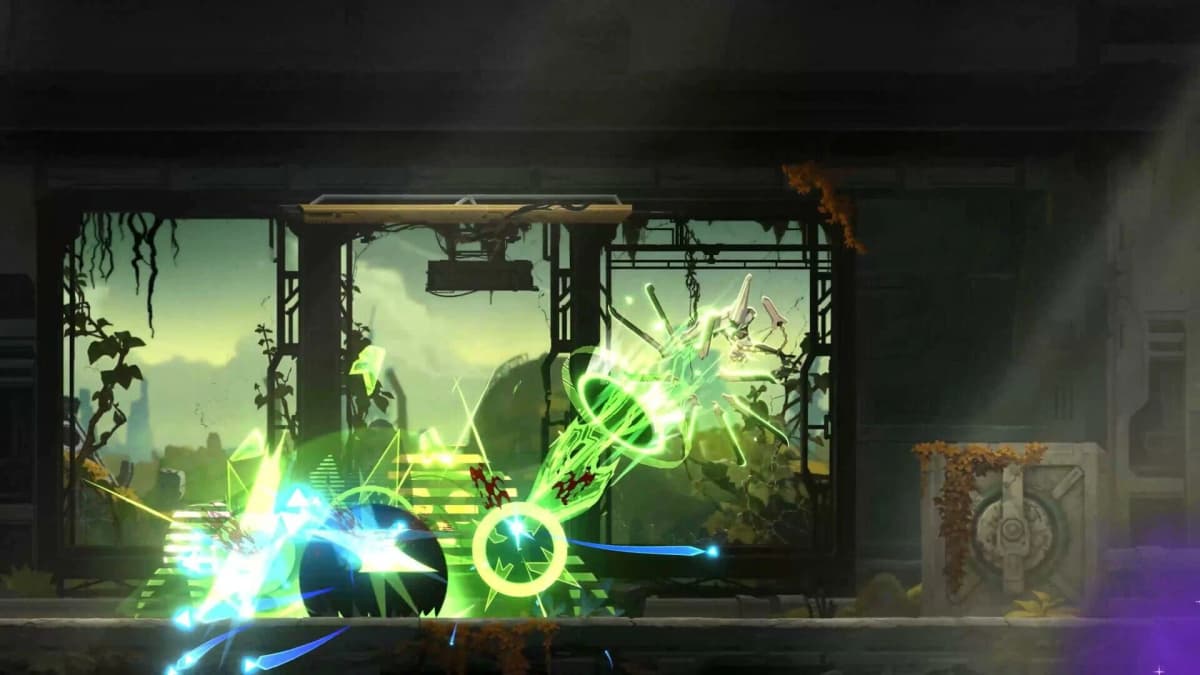
That said, I do appreciate the extra connective tissue. Seeing familiar names and concepts recontextualized in this roguelike framework is fun as a fan, even if the bigger picture is still foggy. The art direction helps too: backgrounds shift from sterile labs to glitchy, corrupted landscapes; the avatars are well-animated; and the music hits that punchy, electronic-anime vibe you’d expect from anything wearing the BlazBlue label.
If you’re coming in hoping this will answer big lore questions or feel essential to the series, temper those expectations. It’s more like a stylish non-canon side experiment that occasionally bumps up against proper canon, then scurries away before you can pin it down.
Switch Performance, UI Headaches, and Platform Differences
Most of my time was on the Switch version, and this is where the cracks really show. Under ideal conditions—standard combat rooms with a moderate number of enemies—the game runs fine. The issue is that it doesn’t always stay under ideal conditions.
I ran into a handful of visual glitches, including an especially immersion-breaking one: a bright fluorescent green box just hanging in the middle of an event room like some forgotten debug asset. It didn’t crash anything, but it absolutely screamed “you shouldn’t be seeing this.” I also hit sporadic hitches during the Arakune boss fight on two separate runs (once with Noel, once with Taokaka), where the game would momentarily stutter just as the screen filled with projectiles.
Not game-breaking, but they chipped away at the polish, especially because everything else about the presentation is so slick. The bigger problem, honestly, is the UI and text on Switch—particularly in handheld mode. This game leans hard on small fonts, dense tooltips, and layered menus. On the OLED’s smaller screen, some of the descriptions border on unreadable unless you’re squinting or holding the console uncomfortably close.
Docked on a TV, things are better but still busier than they need to be. Icons for buffs, debuffs, and Inheritance traits crowd the edges of the screen, and the game rarely slows down to walk you through them. When a roguelike is this reliant on stacking subtle modifiers, not being able to parse them quickly is a real problem.
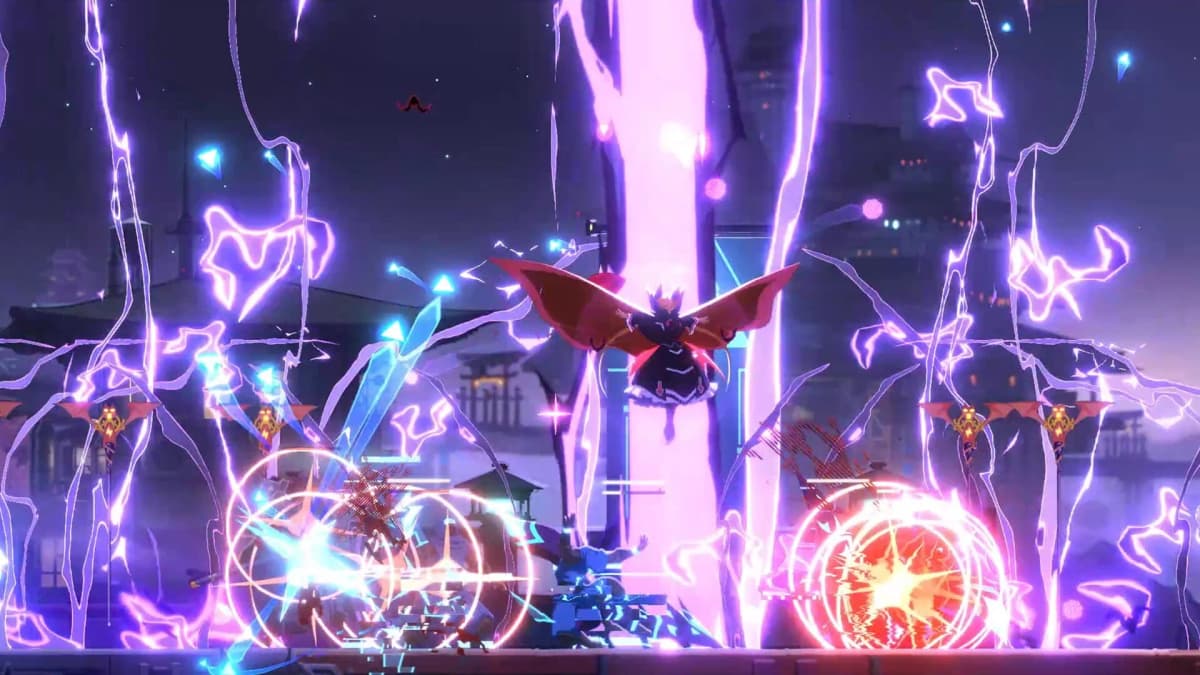
I had the chance to briefly try the PS5 version, and it felt noticeably cleaner in terms of resolution and text clarity. I didn’t see the odd green debug box or hit the same stutters in the limited time I had. Based on that, if you own multiple platforms and don’t absolutely need a handheld option, I’d lean toward a console version with stronger hardware. The Switch port isn’t unplayable, but it’s clearly the roughest way to experience the game.
Who Will Actually Enjoy This?
BlazBlue Entropy Effect X is one of those games that feels tailor-made for a very specific kind of player—and borderline hostile to anyone outside that group.
- If you love crunchy, technical roguelikes and don’t mind spending several hours just understanding how the systems interlock, there’s a genuinely rich game hiding under the noise.
- If you’re a BlazBlue fan who’s always wanted to take those characters into a different genre, the way their move sets and personalities translate into action-platforming is legitimately cool.
- If you enjoy slowly breaking a game over your knee with overpowered builds, the uneven character balance might actually be a feature, not a bug.
On the other hand, if you’re coming in fresh from something like Hades or Dead Cells, where every upgrade is clearly explained and the UI bends over backwards to help you, this is going to feel like a regression. The opacity of the systems, the jargon-heavy descriptions, and the occasionally rough performance on Switch make it a tough sell for more casual players.
I also wouldn’t recommend it as a first exposure to BlazBlue as a series. The references and characters will mean more if you’ve at least dabbled in the fighters, and the story leans on familiarity without doing much to welcome newcomers.
Bottom Line: A Smart, Messy Roguelike That Needs a Better Manual
After a couple dozen runs, my feelings about BlazBlue Entropy Effect X never settled into a simple “good” or “bad.” The combat is the real deal—fast, expressive, and packed with the kind of nuanced movement and combo options that most roguelikes can only dream about. The long-term progression, once you decode it, adds a satisfying layer of tinkering that kept me experimenting with builds long past when I probably should have gone to bed.
But the road to that enjoyment is bumpier than it should be. The game explains itself poorly, buries interesting ideas under murky UI, and saddles its most complex systems with some of the least readable tooltips I’ve seen in a while. Character balance is wildly uneven, nudging you toward a small subset of overpowered favorites. And on Switch, technical hiccups and cramped text pull you out of the flow just when the combat is starting to sing.
When Entropy Effect X is firing on all cylinders, it feels like a dream crossover between an anime fighter and a modern roguelike. When it isn’t, it feels like homework. If the developers can keep patching the console versions—smoothing out the rough edges, clarifying some of the systems, maybe nudging a few characters up or down—the ceiling here is sky-high. For now, it’s a fascinating, frustrating niche gem.
TL;DR
- Combat absolutely slaps – Responsive controls, deep combo potential, and faithful translations of classic BlazBlue move sets.
- Progression is rich but opaque – Mind Strength and Avatar Inheritance are smart ideas wrapped in confusing UI and jargon.
- Balance is inconsistent – Characters like Noel, Ragna, and (once mastered) Hakumen feel far stronger than much of the cast.
- Story is more connected but still messy – Lots of nods for fans, not much clarity for anyone else.
- Switch version has rough edges – Occasional glitches, small text, and a cluttered interface make handheld play harder than it should be.
- Recommended if you love complex roguelikes and BlazBlue, and you’re patient enough to wrestle with confusing systems.
FinalBoss // Gear
Level up your setup
01Top-rated gaming headsetson Amazon→02High-refresh gaming monitorson Amazon→03Gaming chairson Amazon→04Discounted game keyson Kinguin→Affiliate links · As an Amazon Associate, FinalBoss earns from qualifying purchases.
Want to Level Up Your Gaming?
Get access to exclusive strategies, hidden tips, and pro-level insights that we don't share publicly.
Ultimate Reviews Strategy Guide + Weekly Pro Tips