
Blizzard is poking one of World of Warcraft’s oldest sacred cows, and that matters a lot more than a side raid with fungus on the walls. Patch 12.0.7 looks set to introduce Sporefall, a single-boss raid built around Rotmire, but the real headline is the test attached to it: Mythic raiding with flexible group sizes from 15 to 25 players instead of the usual hard-locked 20. If you’ve spent years watching guilds die not to bosses, but to roster math, you already know why this is the interesting part.
That’s the story here. Not “Blizzard added a boss.” Blizzard is testing whether one of WoW’s most rigid systems has outlived the reason it was rigid in the first place.
Table of Contents (5)
Flexible Mythic is the experiment that could outlive the patch
Patch 12.0.7’s marquee system test is straightforward on paper. Sporefall supports Mythic groups of 15 to 25 players, a clear break from the 20-player standard that has defined Mythic raiding for years. Blizzard is running a PTR test for it, and the point is obvious: find out whether encounter integrity survives when roster convenience finally gets a seat at the table.
For high-end raiders, fixed-size Mythic has always had a real argument behind it. Tight tuning is easier. Mechanics are more predictable. Competitive parity matters. That all sounds reasonable until you’ve watched a guild bench good players because it has 23 signups, or cancel raid because it has 18. The dirty little secret of Mythic raiding isn’t that the bosses are too hard. It’s that maintaining exactly 20 humans with stable attendance is often harder than the encounter design.
That’s why this test is bigger than Sporefall itself. Blizzard didn’t choose a full raid tier for this. It chose a controlled environment: one boss, one contained stress test, one patch that can be framed as a “special case” if the results get messy. Smart. Also revealing. If Blizzard were fully confident, this wouldn’t look so much like a laboratory setup.
The obvious uncomfortable question is the one PR would rather leave blurry: is this a genuine first step toward broader flexible Mythic, or a deliberately limited experiment Blizzard can walk back if tuning gets ugly? Because those are very different futures.
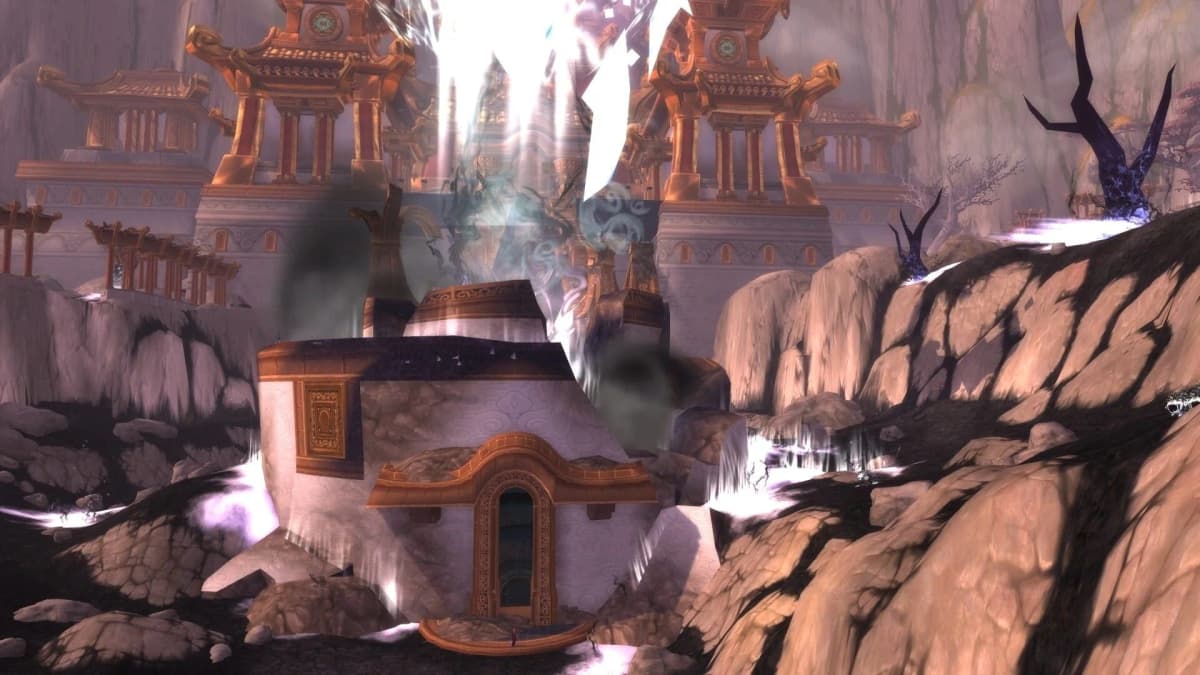
Sporefall looks like content, but it’s really cover for a systems test
The single-boss format is doing a lot of work here. By making Sporefall a one-encounter raid rather than a full Mythic tier, Blizzard gets to test flexible Mythic without immediately detonating the race, progression ladder, or months of top-end encounter assumptions. It’s a sandbox, not a revolution. At least not yet.
There’s another tell in how the raid is positioned. Research around the patch points to Sporefall being aimed as post-Heroic or post-Ahead-of-the-Curve content, which makes this feel less like a replacement for core Mythic progression and more like a bridge. That has benefits. More players can see “hard” content without committing to the full logistical nightmare of a Mythic roster. Guilds stuck in Heroic limbo get a new aspirational target. Friends-and-family groups with inconsistent attendance can stop pretending their raid calendar is an air traffic control problem.
But let’s not oversell it. One flex Mythic boss does not automatically mean the death of fixed-20 Mythic raiding. Blizzard has spent too long treating Mythic as its precision tool to throw that out casually. If anything, this patch reads like a company testing whether accessibility gains are worth the balancing headaches. And balancing headaches are guaranteed. A 15-player setup and a 25-player setup do not stress mechanics the same way, no matter how clever the scaling tech is.

This is the same studio, after all, that has spent years making encounter-specific exceptions because one elegant ruleset rarely survives contact with real players. Flexible Heroic works because Heroic is allowed to be a little messy. Mythic traditionally isn’t.
The loot change says Blizzard already heard the first round of complaints
PTR details suggest another quiet course correction that matters more than it first appears. Early builds reportedly listed Sporefall gear as “Warbound Equipped,” which would have made these rewards compete for limited slot usage in a way that immediately felt wrong for raid drops. That has apparently been updated to standard Bind-on-Pickup raid gear, now carrying a “Sporefused” tag at high item levels and supporting bonus rolls.
That’s not a minor tooltip cleanup. That’s Blizzard realizing pretty quickly that players do not want raid loot tangled up in an awkward experimental restriction system just because the patch also wants to push new account-friendly item language. Standard raid rewards are easier to understand, easier to value, and less likely to trigger the familiar “why are you making this more complicated than it needs to be?” reaction.
It also tells you something about the studio’s priorities for 12.0.7. If the whole point of Sporefall is testing flexible Mythic participation, the last thing Blizzard needs is the test being drowned out by players arguing that the loot model feels annoying or second-rate. Clean up the rewards, preserve the experiment.
The real release clue may be the PTR calendar, not the patch notes
One of the more useful breadcrumbs isn’t in the feature list at all. It’s in the PTR event schedule. The current calendar reportedly places Turbulent Timeways from June 16 through August 25 in Europe one day later, which strongly hints at Patch 12.0.7 landing around June 17 and Patch 12.1 following in early August. Blizzard hasn’t locked that down publicly in the kind of ironclad language you’d tattoo on a roadmap, but it’s exactly the sort of scheduling tell veteran WoW players know to watch.
That timing matters because it changes how 12.0.7 should be read. This doesn’t look like a random in-between patch. It looks like a pressure-release patch before 12.1, with enough new activity to keep players engaged and enough systems testing to feed a larger design decision. Add in the Omnium Folio borrowed-power style progression and assorted PTR quality-of-life work, and the shape becomes clearer: Blizzard is using this patch to trial ideas without asking the full expansion cadence to carry all the risk.
What I’d watch before declaring this a win
- Whether the PTR test produces meaningful feedback on encounter fairness between 15- and 25-player comps, not just general enthusiasm.
- Whether Blizzard starts describing flexible Mythic as a one-off feature for Sporefall or as a broader philosophical test for future raids.
- Whether reward tuning makes this boss feel mandatory for serious raiders. Optional challenge content is one thing; “do this or fall behind” is another.
- Whether the likely June release window holds, because if it slips, that can indicate the tuning problems are bigger than Blizzard expected.
Blizzard deserves some credit for testing this at all. The 20-player Mythic lock has been defended for so long that even nudging it feels like institutional progress. But the interesting part isn’t the existence of one flex-enabled boss. It’s whether Blizzard is finally admitting that roster friction has become a design problem, not just a guild problem.
If Sporefall works, players will ask the obvious next question immediately: why should Mythic’s most punishing barrier be headcount discipline instead of the boss itself? If it doesn’t work, Blizzard gets to say it tried, keep fixed 20 intact, and move on. That tension is what makes Patch 12.0.7 worth watching. Not because it adds another thing to kill, but because it might reveal how much of WoW’s hardest content is still built around habit instead of necessity.
FinalBoss // Gear
Level up your setup
01Top-rated gaming headsetson Amazon→02High-refresh gaming monitorson Amazon→03Gaming chairson Amazon→04Discounted game keyson Kinguin→Affiliate links · As an Amazon Associate, FinalBoss earns from qualifying purchases.
Want to Level Up Your Gaming?
Get access to exclusive strategies, hidden tips, and pro-level insights that we don't share publicly.
Ultimate Gaming Strategy Guide + Weekly Pro Tips