
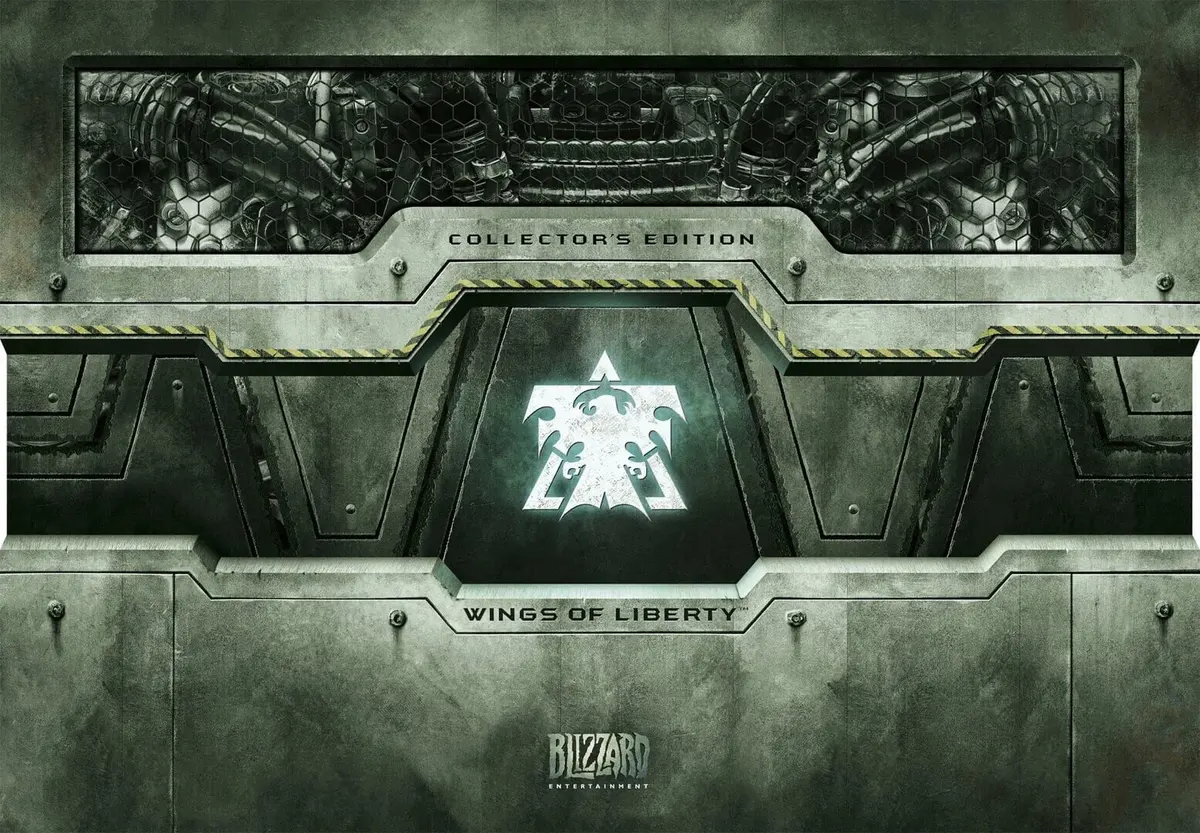
On April 8, 2010, Blizzard put a US$99.99 price tag on StarCraft II: Wings of Liberty Collector’s Edition before it had locked in a public release date. That could have been a mess. Instead, the final July 27 launch date arrived within weeks, and the game shipped on PC and Mac 110 days after that Collector’s Edition pricing announcement. The old Blizzard playbook sold players a product that was close enough to touch: a retail box, a 176-page art book, and a flash drive loaded with the original StarCraft and Brood War.
Blizzard’s BlizzCon 2026 strategy carries a far more complicated promise. Diablo V is targeting Spring 2029. The new open-world, story-driven StarCraft shooter is targeting 2030 at the earliest. I understand why Blizzard made those calls, and I even think breaking years of franchise silence has real value. But a logo and a target year are not enough to earn three or four years of player patience. Blizzard wants these announcements to convey confidence. Fine. Then it needs to show us the evidence behind that confidence.
Table of Contents (4)
Blizzard is selling certainty before it can sell a game
Johanna Faries has been plain about the intention. Blizzard is announcing its biggest bets early because it wants to convey confidence: these projects exist, they are funded, and the company intends to deliver them on schedule. That is a sensible business message after years when beloved Blizzard franchises could vanish into a fog of “maybe someday.” A public window makes it harder for a company to pretend a project was never serious.
There is also a basic emotional truth here. People care about StarCraft enough that leaving it dormant for another decade would create its own kind of resentment. Giving the series a new direction under Dan Hay, with an open-world shooter built around story and framed with the hard-edged tone of HBO’s Deadwood, is a huge swing. I would rather see Blizzard take that swing than keep treating StarCraft as a museum piece whose best days are safely locked in the past.
But the more radical the pivot, the higher the burden of proof. “Open-world shooter” tells me the genre. “Story-driven” tells me the pitch. A 2030 target tells me how long Blizzard wants my attention. None of that tells me what I will actually be doing with friends, how much of the game is built around a campaign, whether cooperative play is central or optional, or what part of the project has already survived the brutal process of turning a great presentation into a playable build.
That missing middle is why the BlizzCon reaction has been so tense. Players are not angry simply because 2030 is far away. Players are reacting because Blizzard has asked them to carry the weight of a promise while revealing very little of the machinery holding that promise up.
| Project | Public timing | What players can anchor to |
|---|---|---|
| StarCraft II: Wings of Liberty Collector’s Edition | Priced April 8, 2010; launched July 27, 2010 | A defined US$99.99 retail product, physical extras, and a launch date announced within weeks |
| World of Warcraft: Forever | Beta begins September 17, 2026; launches November 4, 2026 | A near-term beta and release date, plus the Skyborne race |
| Diablo V | Spring 2029 | A distant release window and the premise of Sanctuary after its fall |
| New StarCraft shooter | 2030 at the earliest | An open-world, story-driven shooter direction led by Dan Hay |
The Collector’s Edition shows what a healthy runway looks like
The 2010 rollout was commercial, obviously, but it was grounded. The standard version of Wings of Liberty cost US$59.99. The Collector’s Edition cost US$99.99 and was retail-only. Players knew the object, the price, the platforms, and soon enough the date. Blizzard was asking people to decide whether that art book and flash drive justified forty extra dollars, not to make an emotional investment in a game sitting somewhere beyond the next console cycle.
I am not demanding that every game wait until it is three months from launch before it can be announced. That would be ridiculous, especially for projects as large as Diablo V and a full reinvention of StarCraft. Development takes time. The audience deserves to know that Blizzard is still willing to make expensive, ambitious games instead of endlessly polishing its safest existing corners.
Still, Blizzard has moved from selling a finished-edition fantasy to selling an institutional promise. That is a much more fragile transaction. A Collector’s Edition can disappoint because the contents feel cheap. A four-year announcement can disappoint every single time a showcase passes without gameplay, a development update gets vague, or a target year starts looking like an optimistic line in a slide deck.
Early reveals need milestones that players can actually judge
Blizzard does not need to dump a giant design document on stage, and it absolutely should not fake certainty about features that are still in flux. What it needs is a clear accountability system. If it is comfortable attaching “2030 at the earliest” to StarCraft, it should be comfortable attaching a smaller, more meaningful promise to the next twelve months.
- A dated vertical-slice target that tells players when Blizzard will show a representative mission, combat loop, and exploration structure.
- A direct statement on cooperative play. The company does not need to reveal every mode, but it should say whether co-op is a core pillar, a supporting feature, or absent from the plan.
- A feature-lock checkpoint. If Blizzard has a campaign structure, class direction, or core progression model that it considers stable enough to build around, identify it and identify when it becomes locked.
- A plain-language risk update whenever a major assumption changes. If a target window moves, say what changed rather than hiding behind another cinematic trailer.
That last point matters most. Players can handle bad news far better than they can handle years of polished silence. A delay is frustrating. A delay after three years of confidence messaging feels personal, because the company has made fans defend a schedule that it never backed with visible progress.
World of Warcraft: Forever already demonstrates the difference between a franchise announcement and a usable player commitment. It has a September 17 beta date, a November 4 launch date, and a clear Classic-adjacent identity that turns the clock back in Azeroth through a different branch. Blizzard has given that project a runway people can see. The Skyborne race is a detail players can debate, test, praise, or hate with actual release dates attached.
Diablo V and the new StarCraft game need their own equivalents. They need something sturdier than mood, lore, and a distant season on a calendar. Diablo’s announcement has the dramatic hook of a fallen Sanctuary. StarCraft has the surprise of becoming an open-world shooter. Those are reasons to pay attention. They are not yet reasons to trust the timeline.
Blizzard should keep the big reveals, then do the hard part
I do not want Blizzard to retreat into silence because a few years of waiting makes people uncomfortable. Silence is the coward’s version of expectation management, especially with legacy series whose communities have already spent years wondering whether anyone inside the company still cares. The September 12 BlizzCon announcements put real stakes on the table. That is better than another decade of empty nostalgia.
Yet Blizzard has chosen the most demanding version of transparency. Once it tells the world that Diablo V is coming in Spring 2029 and StarCraft is coming in 2030 or later, it does not get to treat those years as distant abstractions. They become a public contract. Every year between reveal and release must provide something tangible: a build target met, a feature explained, a scope decision clarified, or a risk honestly disclosed.
My verdict is simple: announce the huge games early, but stop asking players to confuse confidence with proof. Blizzard earned excitement with the return of StarCraft and the next era of Diablo. It will earn trust only by making the long wait visible, measurable, and impossible to hide behind.
FinalBoss // Gear
Level up your setup
01Top-rated gaming headsetson Amazon→02High-refresh gaming monitorson Amazon→03Gaming chairson Amazon→04Discounted game keyson Kinguin→Affiliate links · As an Amazon Associate, FinalBoss earns from qualifying purchases.
Want to Level Up Your Gaming?
Get access to exclusive strategies, hidden tips, and pro-level insights that we don't share publicly.
Ultimate Gaming Strategy Guide + Weekly Pro Tips