
Blue Prince is the rare game that made me go out and buy an actual notebook. Not a notes app, not screenshots, not a Google Doc. A cheap spiral pad, already warped from being shoved into my bag next to my Switch 2. Every page is crammed with arrows, sigils, wild theories and room names like “ANGEL / EAST???” and “DO NOT ENTER ON DAY 7”. And somehow, that mess of ink is where Blue Prince really lives.
On paper, it sounds simple: your creepy baron relative dies, leaves you his manor, but you only inherit if you can find the secret 46th room in what’s supposedly a 45-room house. In practice, that premise hides one of the most obsessive, systems-heavy puzzle roguelikes I’ve played in years – and the Switch 2 port has basically turned it into my personal pocket-sized conspiracy board.
Table of Contents (9)
My first night in Mount Holly: confusion, dread, fascination
I’d already put a chunk of time into Blue Prince on PS5 last year, so firing it up on Switch 2 felt more like “returning to the scene of the crime” than starting fresh. You play as Simon, the newly appointed heir, wandering the halls of Mount Holly with a weirdly official-looking blueprint binder in hand. The game drops you in with minimal fanfare – a short will reading, a brief explanation of the rules, and then you’re standing in the foyer with a handful of steps and no idea what’s behind any door.
The first thing that hit me again on Switch 2 was how opaque everything feels initially. You walk into a room, your step counter ticks down, and when you come to the next door you don’t just open it – you draft what’s behind it. A little UI pops up with three possible room “cards”. You pick one, confirm, and that’s now what exists on the other side.
That’s the core trick: you’re not just exploring a pre-built mansion, you’re building your run, one door at a time, from a procedurally shuffled deck of rooms. When your limited step count hits zero, the day ends, you go to bed, and the whole house shuffles. Same deck, new order. Day two is a different labyrinth wearing the same wallpaper.
My first 30 minutes back in Mount Holly were almost entirely “What the hell did I just do?” moments. I wasted steps looping back on myself, accidentally drafted dead-end rooms, and ignored half the weird details because I assumed they were just dressing. By the end of that first in-game week, I realised almost nothing here is “just dressing” – it’s all feeding into some rule set I didn’t understand yet.
Blueprints, step limits, and the slow art of playing stingy
The loop sounds roguelike-standard on paper: limited resource (steps), randomised layout (room deck), permanent upgrades between runs. But Blue Prince nudges all of that away from traditional “get stronger, go farther” power creep and into something more cerebral.
Every in-game “day” gives you a fixed number of steps. For most rooms, entering costs one step; some special situations might mess with that, but that’s the baseline. You choose doors, you choose which room gets drafted behind each door, and you try to snake your way through Mount Holly without running out of steps in a useless cul-de-sac.
There are permanent upgrades. Over time you’ll unlock things like slightly more steps per day, new rooms added to your deck, currency to buy odd items, and a few other gentle buffs. But compared to most roguelikes, they feel almost polite. The real upgrade is the ugly tangle of notes and half-remembered patterns in your head.
After a handful of runs on Switch 2, I could feel my priorities shifting. It stopped being “How do I get deeper this time?” and became “What’s the cheapest way to test this theory?” I’d burn an entire day just to confirm whether a certain type of room only appears after another one. I’d intentionally fail a run early because I’d drafted the “wrong” room and didn’t want to waste my remaining steps on bad data.
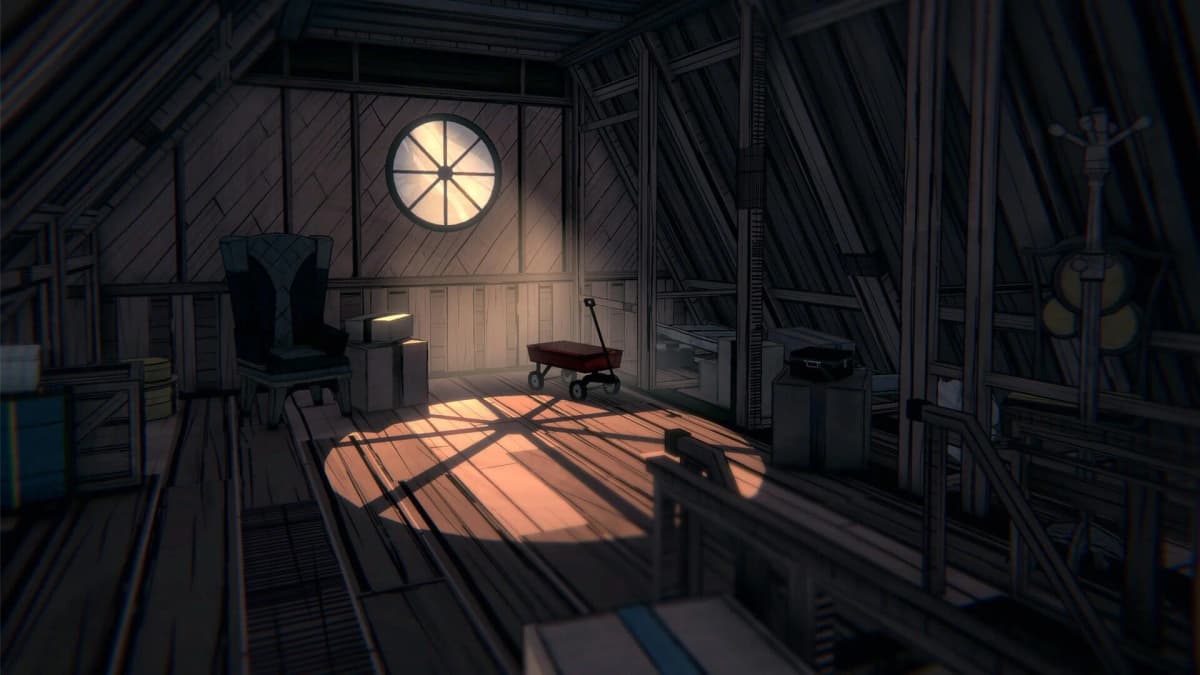
That stinginess is where the blueprint-drafting really bites. Every time you open a door, you see three candidate rooms drawn from your shuffled deck. You can’t just brute-force a solution; sometimes the combination you know you need simply won’t show up that day. I had streaks where I went three or four in-game days in a row knowing exactly the chain of rooms I wanted and never being able to line them up. It’s frustrating – clearly, intentionally frustrating – but it also forces you to explore side paths you’d otherwise ignore.
A roguelike that secretly wants you to play detective
The reason Blue Prince stuck with me, though, isn’t the randomness. It’s what’s hiding under it.
After about 10 hours on Switch 2, I had the same feeling I got with Outer Wilds and more recently Animal Well: this isn’t really about “beating” a run. It’s about slowly reverse-engineering a logic system that the game never explains outright. The mansion looks like a labyrinth, but it behaves like a puzzle box.
The game practically begs you to grab a pen. There’s even a specific room early on that all but winks at you and says, “You’re going to want to write this down.” At first, my notes were useless. Stuff like “chess?? why” and “angel statue facing east??” with no context. Within a few in-game weeks, those turned into messy family trees, hand-drawn room layouts, made-up symbols for recurring motifs, and big ALL-CAPS reminders like “DON’T FORGET DAY ORDER MATTERS.”
What’s wild is how much the game respects that effort. Blue Prince is full of tiny, layered systems that only show themselves after you’ve seen the same room in enough different contexts. Maybe a painting changes depending on which door you entered from. Maybe a certain corridor only shows its “true” function on specific days. Maybe you realise that an innocuous piece of flavor text is actually a rule encoded as lore.
Those slow-burn revelations are electric. I had one moment, somewhere around my third or fourth deep run on Switch 2, where a pattern I’d been half-noticing for hours finally clicked. I put the console down, picked up the notebook, and just started circling stuff I’d written the night before. That “I’m a genius… wait, why didn’t I see this earlier?” swing is basically the whole reason to play Blue Prince.
The trade-off is obvious: if you don’t enjoy this kind of detective work – long-term pattern recognition, testing theories, cross-referencing your own scribbles – Blue Prince will probably feel like a tedious, unfair maze. There are mechanical upgrades, sure, but this isn’t a power fantasy. It’s a slow, nerdy, deeply satisfying homework fantasy.
Back to day one on Switch 2: no cross-save, new angles
Here’s the one thing that stung: there’s no cross-save. My original PS5 file, with its slowly-grown deck and permanent upgrades, is marooned on the living room console, untouched. On Switch 2, I had to start over on Day One.
I won’t pretend I wasn’t annoyed. I’d put dozens of hours into Mount Holly already. A tiny, unhinged part of me was hoping to just pick up where I left off and use my commute to solve the really deep endgame mysteries I’d been chewing on. That’s not an option.
But starting fresh turned out to be… kind of great?
Knowledge absolutely carries over. I knew which early rooms are worth fishing for, which dead ends to avoid, and which supposedly “flavor” details are secretly crucial. My first few in-game weeks on Switch 2 were dramatically more productive than they’d been on PS5. Runs that once felt meandering suddenly looked like clean, surgical routes.
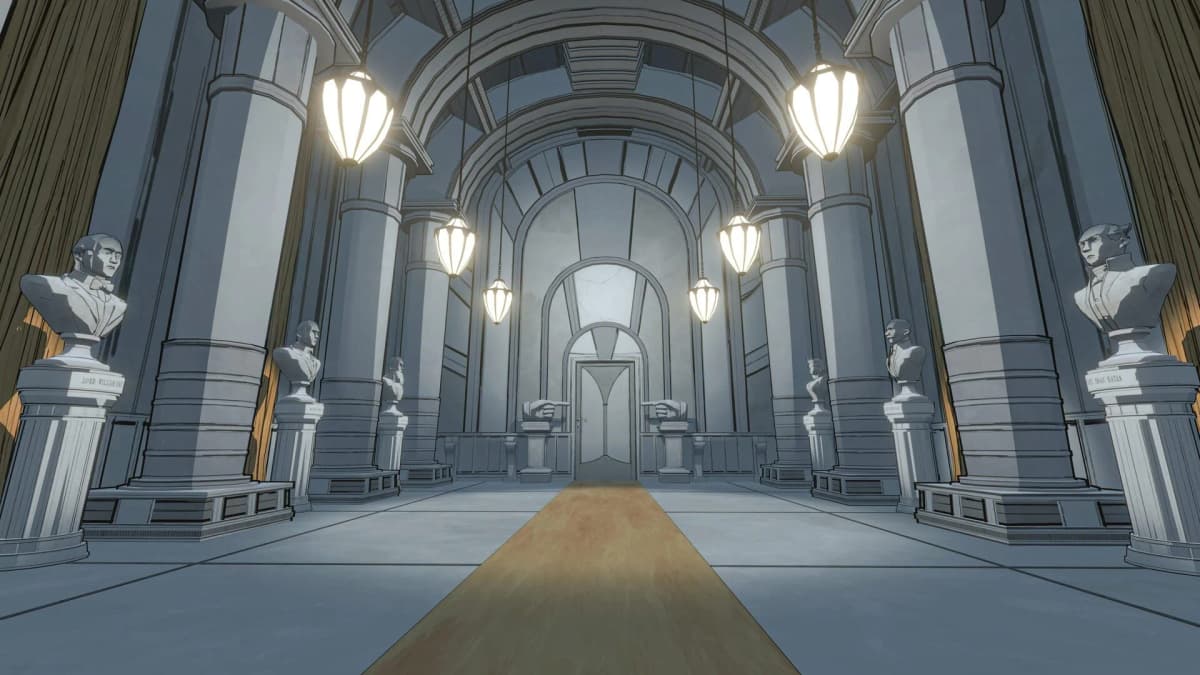
At the same time, the randomness meant I saw new combinations and room orderings that I’d never bumped into before. One of my favourite moments on the Switch version came from a room I definitely saw on PS5, but this time it spawned much earlier in a run and in a totally different context. A throwaway detail I’d dismissed months ago suddenly made sense because I was encountering it “out of order.” If I’d just imported my save, I might never have had that realisation.
So yes: lack of cross-save is a bummer, especially for anyone who 100%’d the game elsewhere and just wants a “victory lap” playthrough on the go. But if you’re still mid-mystery, or you bounced off it once and are curious to try again, the forced clean slate on Switch 2 isn’t the disaster it looks like. Blue Prince is built to reward playing it again from the ground up.
Why Blue Prince absolutely sings on a portable
Portability does more for Blue Prince than it has any right to. This is not an action-heavy game – there’s no timing window to hit, no combat, nothing that “needs” handheld responsiveness. But the structure of the runs fits the Switch 2 like it was designed for it.
A single in-game day is the perfect length for a quick session. I’d play one or two days on the train, jot down anything interesting, and then spend the rest of the ride just staring at my notes, trying to see patterns. In bed, it’s dangerously easy to say “one more day” and suddenly realise you’ve done an entire in-game week.
The vibe helps, too. The clean, slightly comic-book art style – flat block colours, bold outlines, crisp shadows – looks fantastic on the Switch 2 screen. It’s got a hint of classic Telltale in the line work, but with a sharper, more architectural focus that really sells the “blueprint” angle. It’s legible and stylish rather than flashy, which is exactly what you want when you’re mentally tracking a dozen room types and puzzle hooks at once.
And the soundtrack deserves a mention. Trigg and Gusset’s muted, jazzy score loops in this understated way that makes the manor feel alive without ever getting in the way of your thinking. I caught myself humming one of the main motifs while making coffee, which instantly snapped my brain back to some half-finished theory about a particular corridor. Blue Prince really does take over your headspace like that.
Performance, controls, and the strange allure of Mouse Mode
Technically, the Switch 2 version is mostly where it needs to be, with a couple of caveats.
The game targets 30fps on Switch 2, both docked and handheld. For the most part, it hits that without drama. When the mansion layout gets particularly wild – multiple complex rooms chained together, lots of moving bits – I did see some brief dips. Nothing that affected playability, but you can feel the frame rate sag for a second or two as the engine catches its breath.
Because Blue Prince isn’t twitchy or timing-based, those drops never cost me anything meaningful. You’re usually standing still, thinking, when they happen. But if you’ve played it at a higher frame rate on PC or PS5, you will notice the difference. It’s a trade you make for portability, and here I think it’s worth it.
Controls are otherwise solid. Standard dual-stick first-person movement, shoulder buttons for interacting and pulling up your blueprints, face buttons for menus and notes. The dead zones feel tuned well enough that precise door selection isn’t a pain, even in handheld mode. I never fought the camera, which is pretty much the baseline for a game like this.
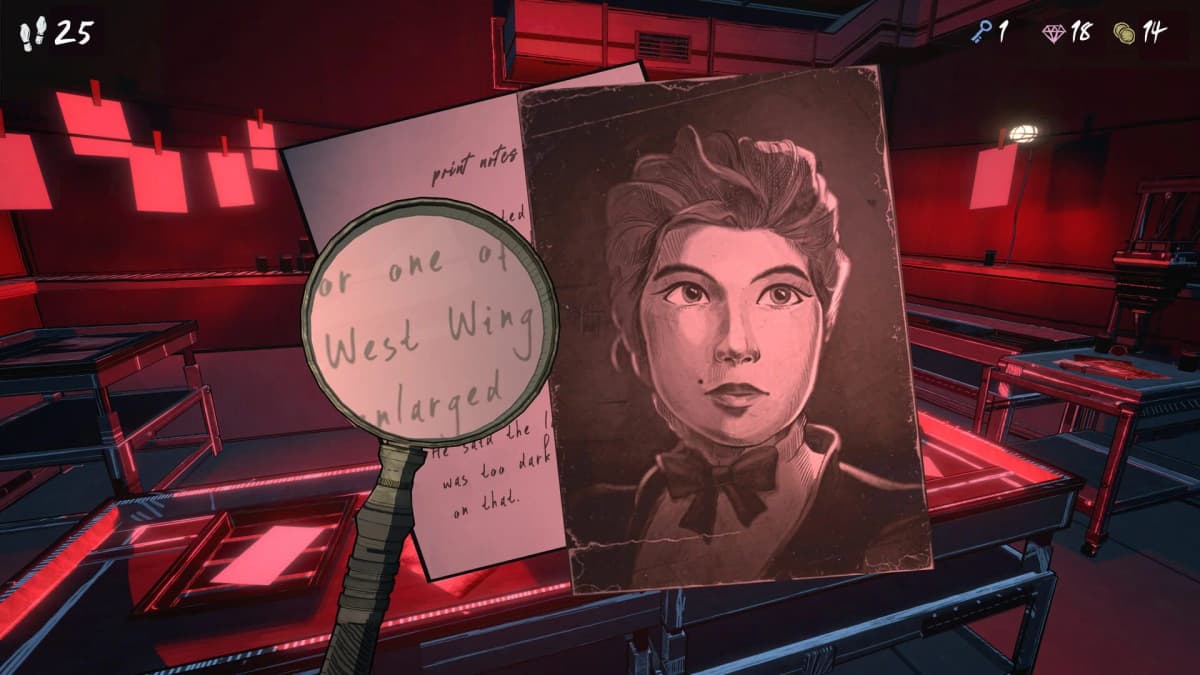
The weird extra is Mouse Mode. Switch 2 lets certain games use a mouse, and Blue Prince has leaned into that. Plug a mouse into the dock or a USB-C adapter, flick on Mouse Mode, and suddenly you’re pointing and clicking like it’s a PC game. Selecting room drafts with a cursor feels great, and navigating menus that way is snappy.
The catch is ergonomics. In docked mode, juggling a mouse on the coffee table and a detached Joy-Con in the other hand feels a bit awkward, especially over longer sessions. In handheld, Mouse Mode technically works with the tiny sensors and touch-ish controls, but the Joy-Con are still narrow enough that my hands started cramping if I tried to get too clever with it. After the novelty wore off, I mostly went back to sticks. Still, it’s a nice bonus for anyone who fell in love with the PC version and can’t stand using a pad.
Bug-wise, my Switch 2 playthrough has been remarkably clean. I’ve seen reports of oddities – minor visual glitches in certain rooms, the occasional interaction prompt not triggering until you re-enter – but I didn’t hit anything that broke a run or corrupted progress. Given how differently each player’s layout can evolve, it’s entirely plausible you’ll bump into something I didn’t, but nothing feels fundamentally shaky here.
Who Blue Prince is really for
After living with Blue Prince across two platforms, it’s very clear who this game is aimed at – and who it might drive up the wall.
If any of the following makes you nod, this game is probably going to own you:
- You loved the “knowledge-as-progress” structure of Outer Wilds, Tunic, or Animal Well.
- You get a weird thrill from drawing maps, scribbling theories, and decoding patterns.
- You’d rather pour 20 hours into understanding a single elegant system than grind for better stats.
- You like the idea of a roguelike where the most powerful thing you unlock is insight, not gear.
On the flip side, Blue Prince will test your patience if:
- You hate repetition and having to revisit familiar spaces with new information.
- Randomness blocking you from executing a plan makes you furious instead of intrigued.
- You want a strong, overt narrative with big cutscenes and character moments.
- Note-taking feels like homework, not fun.
Personally, the combination of blueprint-drafting randomness and deep, underlying rules hits a sweet spot I didn’t realise I was craving. It’s a roguelike that treats you more like a detective than a warrior, and the mansion really does start to feel like a living puzzle you’re slowly solving across dozens of lives.
The bottom line
Blue Prince on Switch 2 is exactly the kind of port I want for a game like this. The 30fps cap and occasional dips are noticeable but never ruinous, the visual style looks fantastic on the hardware, and the optional Mouse Mode is a fun nod to its PC roots. The big miss is the lack of cross-save, which will disappoint anyone hoping to pick up their old investigation on the go.
But once I got over the annoyance of starting from scratch, I realised I didn’t actually mind doing the work again. If anything, seeing Mount Holly from a fresh angle – armed with prior knowledge but no mechanical progress – made me appreciate just how carefully its systems are layered. This is still one of the smartest, most obsessively designed puzzle-roguelikes I’ve played in years, and having it on a portable just makes it easier to fall back down the rabbit hole.
If all you want is to find the fabled 46th room, you’ll get a clever, memorable puzzle box out of Blue Prince. If you’re willing to fill a notebook, redraw your theories, and let the mystery gnaw at you for weeks, there’s a whole other game waiting underneath – one that absolutely justifies the hype it had on PC and PS5, and feels right at home on Switch 2.
TL;DR
- Brilliant puzzle-roguelike hybrid where you draft rooms from blueprints and navigate a constantly reshuffled mansion.
- Knowledge is the real progression – note-taking, pattern recognition, and long-term theory-crafting matter more than stats or gear.
- Deep, layered mysteries that reward replaying, restarting, and approaching familiar rooms with fresh eyes.
- Switch 2 perks: great portable fit, strong visual clarity, optional Mouse Mode, and quick “one more day” sessions.
- Technical downsides: 30fps cap with occasional dips, no cross-save with PC/PS5, and some reported minor bugs.
- Best for players who loved games like Outer Wilds and Animal Well and aren’t scared of a real-world notebook.
FinalBoss // Gear
Level up your setup
01Best-selling Switch 2 gameson Amazon→02Switch 2 accessorieson Amazon→038BitDo controllerson Amazon→04Discounted game keyson Kinguin→Affiliate links · As an Amazon Associate, FinalBoss earns from qualifying purchases.
Want to Level Up Your Gaming?
Get access to exclusive strategies, hidden tips, and pro-level insights that we don't share publicly.
Ultimate Reviews Strategy Guide + Weekly Pro Tips