
Boom Karts VR is free on Quest Dec 11 — I’m excited, but wary of one thing
Game intel
Boom Karts VR
Kart racing finally gets a new free VR contender – here’s why I care
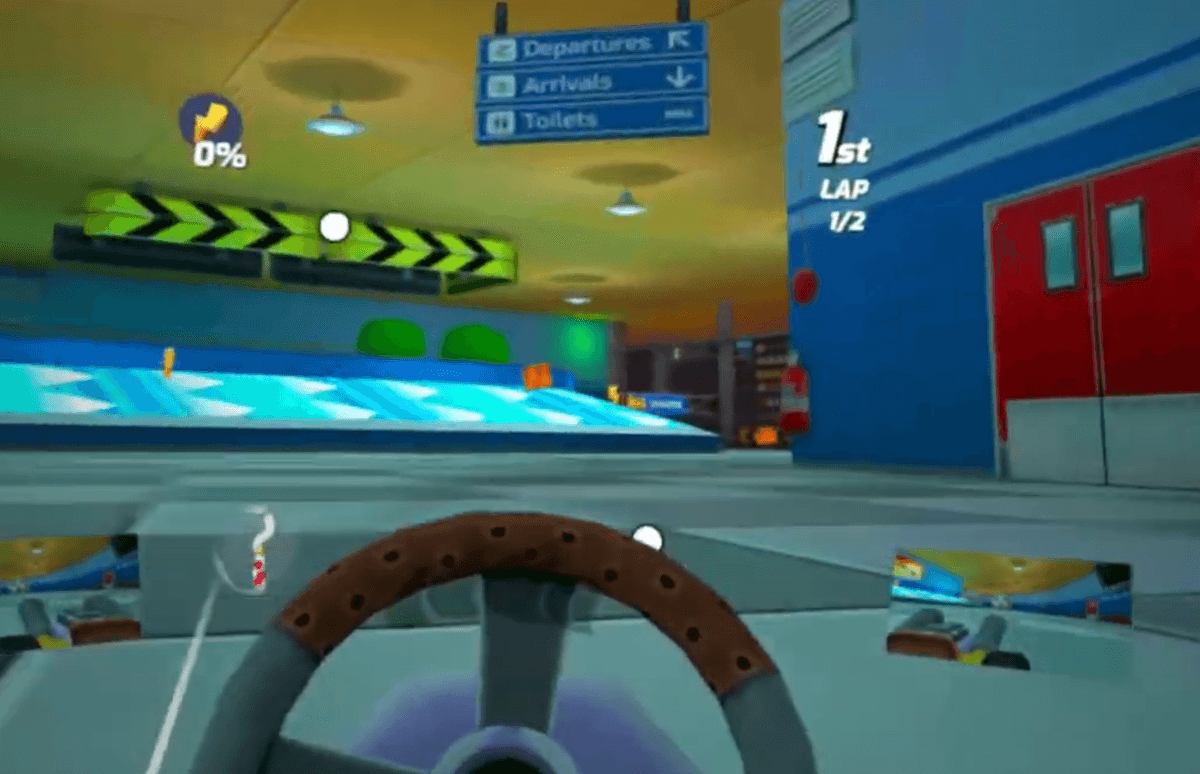
VR has been crying out for a go-to, pick-up-and-play kart racer on Quest. We’ve had some solid efforts, but nothing that’s easy to convince your entire friend group to jump into on a Wednesday night. That’s why Boom Karts VR grabbed my attention: it’s free-to-play, it’s cross-platform with mobile, and it hits Meta Quest 2, Quest 3, and the new 3S on December 11, 2025. If Zaibatsu Interactive sticks the landing, this could be the social VR racer that finally finds a broad audience.
Coming off nearly 8 million mobile downloads, Zaibatsu is porting the chaos-power-ups, traps, customizable karts-into a “VR-first” package with multiple control schemes, full Meta Quest controller support, a theater mode, and social systems like Teams and game-specific friends lists. That combination matters because VR multiplayer lives or dies by concurrency; cross-play with mobile dramatically increases the pool of players.
Key takeaways
- Free-to-play launch on Quest 2/3/3S on December 11, with cross-play against mobile players.
- New VR features: theater mode, game-specific friends, and Teams (clan-style groups and group quests).
- Multiple control options: one- or two-handed schemes and even USB controller support.
- Red flag to watch: upgrades and a “Boom Pass” in a competitive racer can tip toward pay-to-win if not handled carefully.
Breaking down the announcement
Boom Karts VR promises new maps, ranked leagues and matches, an adventure mode, quests, objectives, and a pass system. The studio also highlights a “deep metagame” with unlockable upgrades and cosmetics. Senior Producer K1-dev says, “We wanted to bring Boom Karts to VR because it’s the most fun way to experience the chaos of multiplayer kart racing. When you feel every drift and crash around you, it’s pure energy.” I buy the premise—cockpit racers tend to be more comfortable in VR than open locomotion games, and karting thrives on spectacle.
The big differentiator here is cross-platform play. Your mobile friends can join the same lobbies as Quest players, which is huge for keeping races full. Theaters and arenas are only fun when they’re packed; the same goes for VR lobbies. If matchmaking is snappy, it’ll already beat half the category.
The big question: free-to-play vs fair play
Let’s address the banana peel on the track: free-to-play kart racers often slide into stat-boosted upgrades that distort competition. The announcement mentions upgrades that “improve your karts,” plus ranked leagues. That combo is a minefield. I don’t mind a battle pass (here, the “Boom Pass”) or cosmetic swag; I do mind speed or handling advantages you can essentially buy your way into, especially in ranked modes.
VR has two strong models to learn from. One: cosmetics-first economies (think Gorilla Tag) that keep skill-based play intact. Two: “earn it or buy it” unlocks that don’t affect performance. If Boom Karts VR gates competitive viability behind upgrades, players will smell it immediately—and bounce. If Zaibatsu keeps performance progression separate from ranked (or normalizes stats in competitive), we could be in business.
Controls, comfort, and cross-play balance
The control setup is promising: one- or two-handed driving, plus USB controller support if you prefer a more traditional pad feel. That flexibility matters in VR, where comfort and precision can vary wildly between players. The mention of a theater mode is interesting too—likely a flat-screen view inside a virtual space—which can be a lifesaver for folks sensitive to high-speed motion.

Comfort-wise, I’ll be looking for the usual must-haves: cockpit stabilization, adjustable FOV vignettes, horizon lock, and granular comfort toggles. Kart racers live and die on snappy steering and readable track cues; those comfort tools help keep your lunch where it belongs. Zaibatsu didn’t mention hand tracking or wheel support, and that’s fine—solid controller feel should be priority one.
Cross-play introduces another challenge: fairness across inputs. Mobile tilt/touch versus VR motion or USB pad are very different beasts. Ideally, ranked matchmaking should consider input and platform, or at least offer toggles and separate queues. If mobile aim assist or handling aids exist, they need transparent tuning so VR players don’t feel punished for picking the headset version.
Want to Level Up Your Gaming?
Get access to exclusive strategies, hidden tips, and pro-level insights that we don't share publicly.
Ultimate Gaming Strategy Guide + Weekly Pro Tips
Content and social hooks that could make it stick
New maps at launch are a smart move; veterans from the mobile version get fresh lines to learn. Teams, group quests, and game-specific friend lists are the right social glue for VR, where friction kills momentum. An adventure mode gives solo players a way to progress without braving sweaty lobbies, and daily/weekly objectives should keep you popping the headset on for a quick race. That’s the loop this genre needs.
Why this matters now
Quest 3 has enough power to make colorful, readable tracks shine, and the cheaper 3S expands the audience. A truly cross-platform, free racer launching into that install base could become VR’s de facto party game—if the economy stays fair and the handling feels tight. Zaibatsu isn’t a household name, but almost 8 million mobile downloads isn’t nothing. The studio just needs to prove it can translate that success into a VR feel that’s intuitive, comfortable, and competitive.
TL;DR
Boom Karts VR lands free on Quest 2/3/3S on December 11 with cross-play, Teams, theater mode, and multiple control schemes. I’m in for the social racing vibes—so long as ranked play isn’t skewed by stat upgrades. If Zaibatsu nails comfort and keeps competition clean, this could become VR’s go-to kart night.