
Table of Contents (6)
Why this matters right now
Brandon Sanderson announced in his latest “State of the Sanderson” update that videogame adaptation rights for his Mistborn series are free to negotiate again – and he’s already in early talks with “triple-A developers.” That one line changes the conversation for fantasy gaming: Mistborn’s metal-based magic isn’t just book-friendly, it’s tailor-made for interesting gameplay. This could be the next big fantasy RPG, or it could fizzle into another licensed cash-grab. The difference will come down to who signs the deal and how much control Sanderson actually keeps.
- Author reclaimed videogame rights previously tied up with film deals.
- Sanderson says he’s talked to “triple-A” developers and is retaining control over videogame rights.
- No studio, release window, or format announced – it’s still conversations, not contracts.
Breaking down the announcement
The concrete facts are short: Sanderson told fans he’s getting “real interest” from large developers and that videogame rights were entangled with film rights for the past six or seven years. Having those rights back on the table is the main hook – it allows him to shop Mistborn to studios on its own merits instead of as a package with movie plans. Crucially, he says he’s trying to “retain control” of the videogame rights, and even invited decision-makers at major studios to contact his reps.
This is very early-stage. Sanderson frames it as a step on his familiar multi-step process for adaptations: conversations first, deals later. He’s not announcing a publisher, a platform, or even whether it will be single-player, multiplayer, or episodic. So what we have is potential and a lot of questions.
Why this caught my attention (and why it should catch yours)
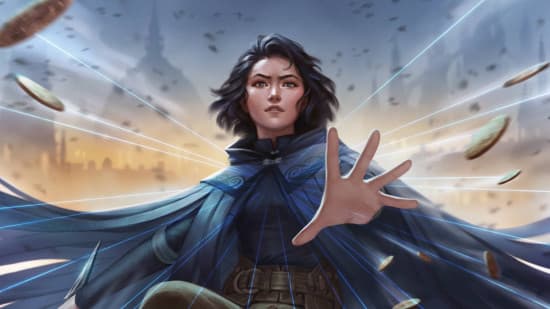
This caught my attention because Mistborn isn’t just a popular IP — its core mechanics are gameplay gold. Allomancy, Sanderson’s metal-driven magic system, maps neatly to systems designers love: resource management, vertical movement, physics-based interactions, and emergent combos. Imagine pulling yourself through a city with pewter-enhanced jumps, or launching enemies by flaring metals. Put the right physics and enemy design in place and you have moments players will remember.
Also, Sanderson’s track record of meticulous worldbuilding means there’s a huge lore sandbox for quest design, factions, and long-form RPG systems. And unlike many authors who sell rights and disappear, Sanderson has signaled he wants to keep oversight — that could protect the IP from being butchered. It could also make negotiations slower and more conservative.
What a Mistborn game could actually be
- Open-world action RPG: Big, exploratory cities (Luthadel-style) with parkour and Allomantic traversal.
- Immersive sim: Sandbox mechanics that let players combine metals and tools to solve encounters creatively.
- Soulslike/Action: Tight combat where timing “flares” and countering rival Allomancers is key.
- Strategy/RPG hybrid: Manage crews, politics, and heists — Sanderson’s heist-y beats fit surprisingly well with tactical gameplay.
Sanderson’s stated favorite games — Civilization 6, Bloodborne, Final Fantasy X, and Star Wars: X-Wing — don’t point to a single obvious direction. They do, however, suggest he appreciates systems depth, combat intensity, and strong narrative. That’s an encouraging mix for players who want a deep single-player RPG rather than a grind-heavy live-service product.
The risks — what could go wrong
Licensed games have a mixed history. Big IP plus big budgets can either produce classics or churn out shallow tie-ins. The existing red flags: long development times, the temptation toward microtransactions if a publisher pushes a live-service model, or watered-down mechanics that don’t capture Allomancy’s nuance. Sanderson keeping creative control is a positive signal, but it can also lead to compromises if studios balk at constraints.
And we should be realistic about timing. Modern AAA projects take years; even “conversations” like these rarely yield a product in less than three to five years. If you were planning to jump into Mistborn right before a game launches, you’ll have time to reread the trilogy and maybe tackle Stormlight too — which Sanderson cheekily suggested in his update.
TL;DR — What gamers should take away
Mistborn videogame talks are real, and Sanderson is keeping the keys. This is exciting because the source material has gameplay-ready systems and deep lore — but it’s early, and the final product will depend entirely on which developer signs on and how much creative freedom Sanderson allows. For now, be hopeful but cautious: this could be a genre-defining RPG, or just another license that never quite clicks.
FinalBoss // Gear
Level up your setup
01Top-rated gaming headsetson Amazon→02High-refresh gaming monitorson Amazon→03Gaming chairson Amazon→04Discounted game keyson Kinguin→Affiliate links · As an Amazon Associate, FinalBoss earns from qualifying purchases.
Want to Level Up Your Gaming?
Get access to exclusive strategies, hidden tips, and pro-level insights that we don't share publicly.
Ultimate Gaming Strategy Guide + Weekly Pro Tips