
Bubsy 4D has no business being this interesting. That’s not me doing the cheap nostalgia dunk, either. Bubsy has spent so long as the industry’s favorite punching bag that “surprisingly competent” already feels like a minor miracle. But the early review spread isn’t saying this thing is merely competent. The weird, genuinely fascinating takeaway is that Bubsy 4D apparently gets the hardest part of a 3D platformer right: it feels good to move.
And honestly? That changes the whole conversation. I can shrug off a bad mascot. I can even tolerate corny self-aware jokes if the actual game underneath them has some juice. What I can’t ignore is a platformer that finally finds a real movement identity and then runs headfirst into the oldest problem in the genre: levels and runtime that may not fully deserve that movement system.
That’s the split running through the reviews. Noisy Pixel praises Bubsy 4D’s movement as “expressive and interconnected” and calls traversal “consistently exhilarating,” which is not faint praise. Nintendo World Report says its “myriad of movement mechanics” make it “a joy to play.” Video Chums frames it as the kind of game where the challenges let the “messy gameplay really shine.” But then the criticism starts repeating too: it ends too soon, the best ideas feel underexplored, the levels can feel sparse or overly linear, and the whole thing may leave players hungry in a way that isn’t entirely flattering.
My take is pretty simple: Bubsy 4D sounds like a flawed platformer worth taking seriously, but only if you understand what kind of flaw this is. This is not a broken game being propped up by cope. This sounds like a movement-first platformer trapped inside a campaign that may stop just when it should be getting dangerous. For some players, that’s absolutely enough. For others, it’s going to feel like paying for the prototype of a game they really wanted to love.
Table of Contents (4)
The best thing about Bubsy 4D seems to be the thing most platformers still screw up
I don’t think non-platformer fans always appreciate how rare this is. Good movement is not the default. A lot of 3D platformers have a decent jump, a predictable double jump, maybe a dash, maybe a glide, and that’s enough to get them through a checklist of obstacles. That is not the same thing as having a move set with flow. The difference is whether movement feels like transportation or expression. Based on the reviews, Bubsy 4D lands on the right side of that line.
The kit being described across outlets is exactly the kind of thing that makes movement sickos like me perk up: running, jumping, gliding, wall-climbing, rolling, hairball-style movement, and the ability to chain actions together instead of treating each obstacle like a separate command prompt. That matters. It means the fun isn’t just “clear the gap, hit the switch, move on.” The fun is routing. It’s carrying momentum. It’s recovering from a mistake with style instead of dropping dead because the move set is too stiff to improvise.
GamesRadar compares parts of it to Super Mario Odyssey-style platforming, and that’s a dangerous comparison because Odyssey is one of the clearest modern examples of what happens when movement and level design are both operating at a ridiculous level. Still, even invoking that comparison tells me what Bubsy 4D is aiming at. Not old mascot clunk. Not “retro difficulty” as an excuse for bad feel. It wants to be a game where the controller in your hand is the main event.
That alone makes Bubsy 4D more respectable than a depressing number of bigger releases. I’ve played plenty of glossy platformers that looked expensive and felt dead. They had good lighting, cute costumes, cinematic intros, and absolutely no rhythm in the actual movement. If Bubsy 4D really does let players build speed, improvise lines, and turn familiar stages into personal playgrounds, then Fabraz understood the assignment better than teams with ten times the brand power.

And that is exactly why the criticism stings. Because once a platformer proves it can move, I stop grading on a curve. I’m not going to pat it on the head just because the cat used to be a joke.
The problem isn’t that Bubsy 4D is short. The problem is what shortness means here
I’m already allergic to the lazy “more hours equals better value” argument. Some of the most exhausting games I’ve touched in the last few years were overstuffed with meaningless collectibles, recycled arenas, and dead-air side content that existed purely to inflate a feature list. So when one review calls Bubsy 4D “perfectly sized” and another says it “ends far too soon,” I don’t immediately side with the longer-is-better crowd. The real issue is more specific than that.
If a game is built around expressive movement, then every level has a job: test that movement, evolve it, surprise it, or break your habits with it. A short campaign can absolutely do that. But a short campaign that mostly establishes a great move set without pushing it hard enough is a different story. That’s where Noisy Pixel’s note about the strongest ideas feeling “slightly underexplored” hits harder than the runtime complaint by itself. Underexplored is the dangerous word here. It suggests not elegant restraint, but unrealized potential.
Push Square’s criticism cuts in a similar direction from another angle. It praises the move set and the speedrunning tools, but says the levels are often linear, sparsely populated, and not especially rewarding to explore. That doesn’t directly contradict the more positive takes calling the stages inventive or semi-open. It actually points to the same core tension. There may be enough space to route through a level in interesting ways, but not enough density or variety to make that space feel rich. That’s a big difference. A playground is not the same thing as a world.
That’s where I plant my flag: great movement systems create appetite. They make players want escalation. They make us want the nasty final-world remix, the optional challenge that forces mastery, the stage that combines three mechanics we barely noticed earlier, the cruelly brilliant gauntlet that makes the entire campaign snap into focus. When reviews keep circling back to a sense that Bubsy 4D’s best ideas don’t go far enough, I don’t hear “short but sweet.” I hear “the meal ended just when the kitchen finally got hot.”
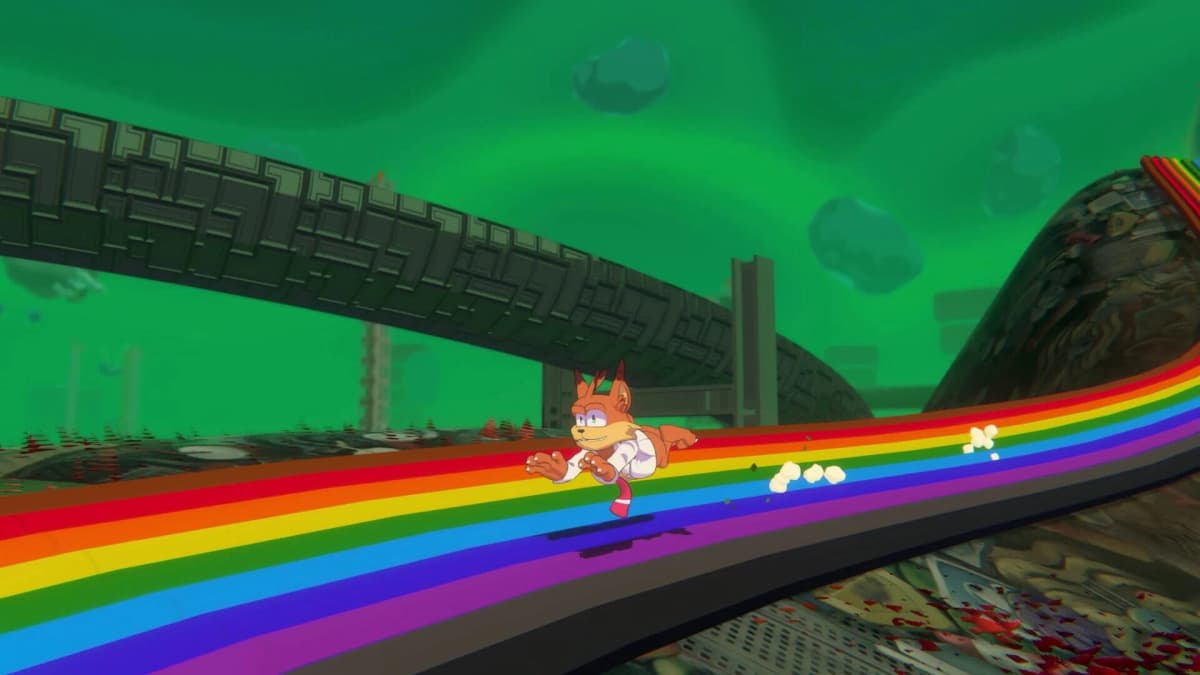
That doesn’t mean the game fails. It means the praise and disappointment are coming from the same source. Nobody complains that a boring move set didn’t get enough room. They complain because the move set was worthy of more.
This looks like a great buy for one kind of player and a trap for another
The most useful thing to do with this review split is stop pretending every platformer fan wants the same thing. They don’t. Bubsy 4D sounds like a game that becomes much easier to judge once you strip away mascot baggage and ask what kind of player actually benefits from what it’s offering.
- If you treat movement itself as the reward, Bubsy 4D sounds promising. Timers, leaderboards, replay-focused progression, collectibles, and route optimization all make sense in a game like this. For players who replay levels to shave seconds, chase cleaner lines, and squeeze elegance out of a move set, a shorter campaign is not automatically a dealbreaker. It can even be a strength if the stages are readable and built for repetition.
- If you want a dense, discovery-heavy 3D platformer with memorable worlds, enemy variety, and the sense of a full adventure unfolding, the warnings are much louder. Fifteen levels across three themed worlds can be enough, but only if those levels are doing real work. Several reviews suggest they may not always do that.
- If you’re here for Bubsy himself, I’d be careful. The self-aware humor works for some critics and annoys others. PC Gamer found the ’90s nostalgia and fourth-wall style more exhausting than charming. That tells me the star of this package is not the character. It’s the handling.
That last part matters more than people want to admit. There’s a temptation with any revival to ask whether it “redeems” the mascot. I don’t really care. Mascots are packaging. What matters is whether the game gives me a reason to keep hitting retry besides brand loyalty or irony. Bubsy 4D seems to do that for players who like mastery. That’s not nothing. In fact, it’s the whole argument for why this game might outlive the first wave of novelty.
But if someone is coming in expecting a breezy one-and-done platformer with a chunky campaign and lots of spectacle, I think the reviews are quietly telling them to pump the brakes. This doesn’t sound like the kind of game you buy because the mascot finally got a decent outing. It sounds like the kind of game you buy because you’re interested in a well-tuned toolset and are willing to accept that the world wrapped around it may be thinner than you want.
What frustrates me is that Bubsy 4D seems to have solved the hard problem first
There’s something almost infuriating about that. Getting movement right in 3D is incredibly hard. It’s why so many platformers either feel stiff, overdesigned, floaty, or terrified of letting the player build real momentum. Bubsy 4D, by most accounts, avoids that trap. It gives a formerly cursed mascot a control scheme people actually want to praise. Then it bumps into the content question: okay, now what do we do with this?
This is a broader problem in modern game design, especially in projects that clearly have one killer system at their core. Studios get the central verb right, and then the surrounding structure either overextends it with filler or underfeeds it with restraint. Bubsy 4D appears to lean toward the second mistake. I’ll take that over filler every day of the week, but let’s not pretend it isn’t still a mistake. A “movement-first” platformer lives and dies by the quality of its spaces, because spaces are what give movement meaning.

That’s why I find the split verdict more exciting than discouraging. Not because I enjoy games leaving good ideas on the table, but because the argument around Bubsy 4D is finally the right argument. We are not debating whether the controls are a disaster or whether the camera belongs in prison. We’re debating whether a legitimately fun movement system got enough game built around it. For a Bubsy title, that is an absurd upgrade in conversation quality.
And I’ll say something even blunter: I would rather play a compact, uneven platformer with real mechanical personality than another polished, focus-tested mascot game that feels like nothing. Bubsy 4D sounds closer to the former. That means it’s easier for me to respect, even while I side-eye the complaints about stage depth and campaign length. At least those complaints suggest there was something worth wanting more of.
FinalBoss // Gear
Level up your setup
01Top-rated gaming headsetson Amazon→02High-refresh gaming monitorson Amazon→03Gaming chairson Amazon→04Discounted game keyson Kinguin→Affiliate links · As an Amazon Associate, FinalBoss earns from qualifying purchases.
Want to Level Up Your Gaming?
Get access to exclusive strategies, hidden tips, and pro-level insights that we don't share publicly.
Ultimate Gaming Strategy Guide + Weekly Pro Tips