
Table of Contents (10)
Marathon’s Server Slam Sold Me on Its Vision in a Single Day
Extraction shooters are everywhere right now, but very few stick. You drop in, you hoover up a few guns, you get third-partied near the exit, and after a night or two the whole thing fades into the “That was fine, I guess” part of your brain. Marathon’s server slam feels different. It takes the basic Tarkov-esque idea – jump into a hostile zone, loot, fight, escape, repeat – and wraps it in what might be the sharpest feeling gunplay Bungie’s shipped since peak Destiny 2, then layers on a progression loop that keeps dangling just one more run in front of you.
This isn’t a full review of the live service beast Marathon will eventually become. The server slam only opened two zones, a limited set of runner shells, and a slice of its contracts and lore. But as a snapshot of how it feels to actually exist in this world for a day – sneaking through neon-lit corridors, listening for footsteps, arguing over whether it’s worth pushing that last loot cache – it’s a hell of a statement.
The short version: Marathon already nails the two hardest parts of an extraction shooter – the moment-to-moment gunfights and the compulsion to queue again the second you die. The only real question now is whether Bungie can sustain that over months and years.
Gunplay: Classic Bungie Magic in a Colder, Meaner World
Trying to explain what makes a Bungie gun feel good always sounds like describing a magic trick. On paper, Marathon’s weapons are just sci-fi rifles, hand cannons, and shotguns. In your hands, they’re instruments.
Every trigger pull has a kind of rhythm to it. Rifles have a crisp crack that slices cleanly through the ambient hum of the map; hand cannons bark with that exaggerated, theatrical kick Bungie loves, but never so much that your crosshair flies completely off target. The recoil climbs in a predictable pattern you can ride rather than wrestle. Shots land with these wonderfully hollow, armored thumps, turning time-to-kill into a staccato beat you start to internalize after a fight or two.
What really sells it is how the world reacts. Shields flare and fracture in angry geometric patterns. NPCs stagger or crumble in ways that make it absolutely clear whether you’ve just tagged armor or meat. Bungie has always been unreasonably good at aim assist and bullet magnetism, and you can feel that same invisible hand at work here – not so strong that it plays the game for you, but just enough that snappy, aggressive play feels rewarded instead of punished.
It sounds small, but extraction shooters live or die on these micro-moments. You will die a lot; you will lose gear. If every death is attached to limp-feeling guns that sound like airsoft toys, frustration piles up fast. Marathon’s weapons feel so tactile and responsive that losing a beloved rifle stings, but the thought of getting back in there and firing something – anything – again takes the edge off.
Lethal PvP That Actually Feels Worth the Risk
Extraction games always walk a tightrope with PvP. Make encounters too rare and the mode turns into a weird, lonely looter. Make them too frequent and it dissolves into a glorified team deathmatch with extra steps. Marathon leans harder into lethal, high-stress PvP than a lot of its peers, and that decision fits Bungie’s strengths almost perfectly.
Time-to-kill is fast. If you run full sprint down a hallway, silhouetted in a doorway like an action movie extra, you’re going to get erased before you even realize what’s happening. There’s a real Hunt: Showdown vibe to the best fights here – slow, methodical movement; moments where you stop dead just to listen; the metallic echo of footsteps or the crack of a distant shot telling you another crew is close.
When fights finally do break out, they’re over in seconds but feel longer because of how much is at stake. You’re not just gambling your current loadout, you’re gambling the last 20 minutes of creeping through corridors, completing objectives, and stuffing your backpack with rare loot. Winning one of these messy, close-range brawls in a stairwell or an elevator lobby feels enormous – not just because of the survival high, but because you essentially get paid twice: once from what you scavenge and again from what you strip off the corpses of the team you just outplayed.
Revives add a layer of tactical depth. Because the game is so lethal, being able to pull a teammate back from the brink in a half-secured room becomes this mini-set piece – one player holds the angle, another clambers over bodies to get the rez, all while you’re praying no third-party team heard the commotion. On the flip side, over-committing to that revive can easily get your entire squad wiped, so there’s always that extraction-shooter paranoia about how greedy you’re willing to be.
The main thing to know going in is that Marathon doesn’t really care if you think the PvP is “fair” in the usual arena shooter sense. Catch someone unaware and they just evaporate; get caught, and you’re the one melting. That brutality suits the mode, but players expecting Destiny-style duels with generous time to react are in for a shock.
The Extraction Loop: Fast, Sticky, and Surprisingly Forgiving
Beneath all the Bungie gunplay is a classic extraction loop that’s been tuned to be much more approachable than some of its more hardcore competitors. Runs start with a deployment into one of the available zones, either solo or as part of a three-person crew. Once you’re boots-on-ground, you’re juggling several competing priorities: hit faction contracts, hunt specific materials for upgrades, scavenge gear better than what you brought in, and – ideally – get out alive.
On paper that sounds like every other looter, but a couple of things make Marathon’s flavour of it more compelling. First, the objective design naturally pulls you across the map instead of letting you turtle in one corner. Contracts point you toward particular sectors and caches, encouraging you to push deeper into hostile territory instead of beelining for the nearest exit after a single decent drop.
Second, progression comes at you quickly in these early hours. Even failed runs feed into some form of advancement – unlocking new purchase options in the shop, nudging faction reputations forward, or ticking off pieces of larger quest chains. Losing a bag full of rare guns still hurts, but you rarely walk away from a match with absolutely nothing to show for it.
That balance is crucial. If every failure means getting punted back to the Stone Age with starter gear and zero upgrades, a game like this bleeds players fast. Marathon instead takes the edge off without completely undercutting the genre’s tension. You still feel that spike of adrenaline when you’re loaded down with loot and hear shots near the extraction point, but the knowledge that you’re not losing everything softens the blow just enough to make queuing up again feel exciting instead of exhausting.
Buildcraft, Shells, and Those Quiet Permanent Upgrades
Where some extraction shooters focus almost entirely on disposable gear, Marathon layers in a slower, more deliberate sense of personal growth through its shells (basically your character bodies) and small but meaningful unlocks.
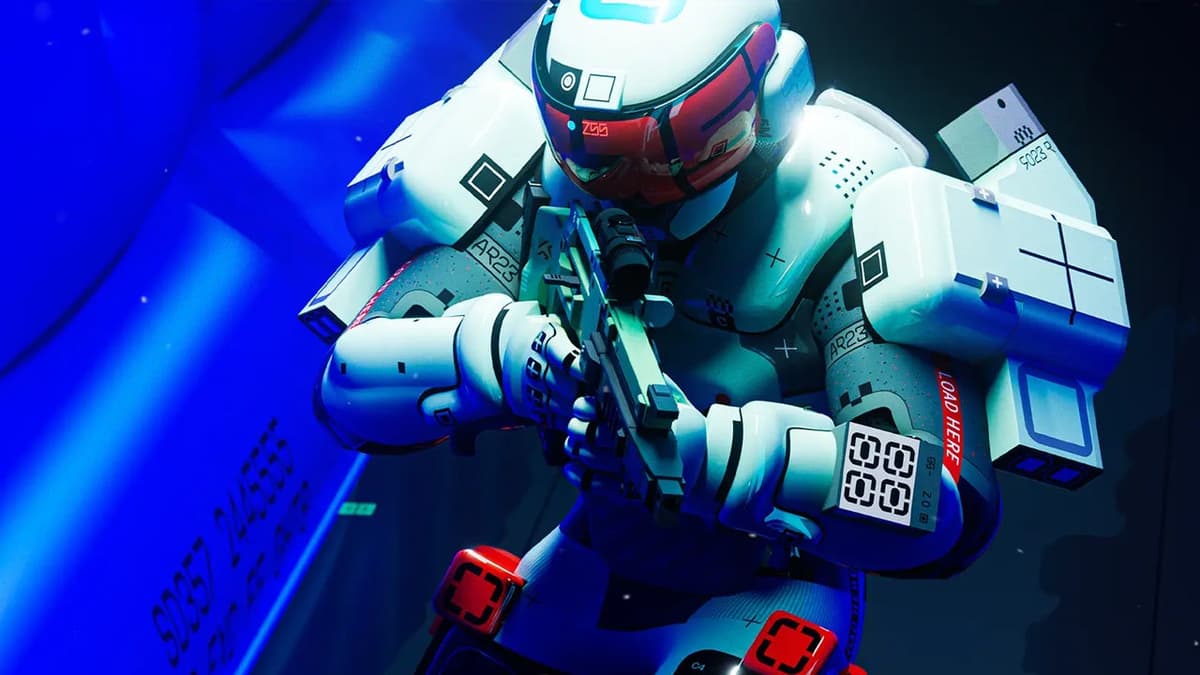
Each runner shell leans into a different playstyle, whether that’s more mobility, extra durability, or support utility. There’s also the scavenger-style option – a sort of budget body that’s perfect for low-risk, high-chaos runs when you don’t want to risk your good kit. Swapping shells meaningfully changes your mindset before a match; going in with something fragile but fast makes you think like a vulture, picking your fights carefully and swooping in after other squads clash, while a tankier shell encourages you to anchor fights and soak damage for your crew.
Weapon mods and attachments add another layer. Silencers, sights, mags, and more all tweak how your guns behave in ways that actually matter. A long-barrel mod turning a basic rifle into a near DMR changes the kind of engagements you look for; a faster-handling setup might push you toward aggressive flanks and close-quarters brawls. This isn’t the overwhelming spreadsheet hell of something like Escape From Tarkov, but it’s deeper than the simple “slap on more damage” systems you see in lighter looters.
Then there are the small permanent upgrades that quietly glue everything together. Unlocking the ability to buy a bigger backpack when you’ve lost your last one, or gaining access to better armor tiers in the vendor pool, doesn’t sound glamorous on paper. In practice, those unlocks keep bad streaks from becoming death spirals. Even after a brutal run that leaves your stash looking anemic, there’s comfort in knowing you can at least buy back into the game with semi-respectable gear and not be stuck begging the loot gods for a basic shield drop.
This structure also means that early-game progression feels fast and satisfying without simply showering you in legendaries. You’re constantly nudging some system forward – a faction tier here, a new unlock node there – which feeds directly into that “Okay, one more run and I’ll finish this upgrade” mindset.
Lore, Atmosphere, and That Strange Marathon Mood
Marathon could have gotten away with being a fairly anonymous sci-fi shooter and still found an audience on gunfeel alone. The fact that it actually tries to do something weirder with its world is a pleasant surprise.
Between missions you’re pulled into brief cutscenes, faction interactions, and bite-sized lore drops that hint at a much stranger universe under the surface. AI voices casually talk about runners like they’re disposable meat assets; corporations barter over your services with the kind of sterile indifference that makes every deployment feel like a gig job from hell. There’s a sterile, neon-soaked cyberpunk aesthetic to the stations and menus, then you load into a zone and the vibe shifts to eerie, derelict industrial complexes humming with hidden danger.
The key is that none of this gets in your way. Lore is there if you want to drink it in – logs to read, character snippets to follow – but the actual run flow doesn’t grind to a halt so someone can monologue at you for five minutes. It’s all delivered in little hits between matches, or in environmental design as you work through your objectives.
Bungie’s track record with story in live service games is a bit uneven, so there’s no guarantee all these threads will pay off long term. But the foundation is intriguing enough that it’s easy to imagine Marathon eventually becoming one of those games where everyone has their favorite faction, their pet conspiracy theory, their most hated NPC. For an extraction shooter, that’s already more narrative ambition than you usually see.
PC Performance and Match Flow in the Server Slam
On PC, the server slam build felt reassuringly solid for something stress-testing its online infrastructure. Matchmaking into trios or solo runs was snappy during peak hours, and reconnects after disconnects didn’t seem to be a constant horror story the way early live-service launches can be.
Visually, Marathon leans hard into sharp, clean rendering and detailed materials rather than chasing ultra-stylized hyper-saturation. Metal has a convincing sheen, wet concrete feels clammy, and the lighting does a lot of heavy lifting for the atmosphere – dark corners actually feel dangerous, and pushing into a bright, overexposed corridor after skulking through shadows is a genuine tactical consideration since it makes you an easy silhouette.
From a purely competitive angle, the most important thing is clarity, and the game does well there: enemy silhouettes pop clearly against most backdrops, and the UI lays out health, armor, and ammo in a way that’s easy to parse under pressure. Audio is just as critical. Footsteps are distinct enough that paying attention genuinely matters, and you get a good sense of vertical positioning in multi-story areas, which is essential when deciding whether to rotate or stand your ground.
Obviously this is all based on a pre-release snapshot, and real launch conditions are a different beast. But if the server slam is any indication, PC players shouldn’t be fighting the engine or netcode while they’re busy fighting other runners.

Early Concerns and Open Questions
For all the things Marathon already does well, a single weekend slice can’t answer some of the most important questions about a live-service extraction shooter.
The biggest unknown is longevity. Fast early progression feels amazing, but the curve after the first few dozen hours is where these games often stumble. If upgrades start to feel glacial, or if the best rewards are locked behind repetitive grinds, that “one more run” impulse can fizzle out fast. Bungie will need to carefully manage how quickly players hit soft caps, and how satisfying it is to keep playing once you’ve got a stable of well-geared shells.
Match pacing is another question. The maps in the server slam can feel sparse at times, especially if squads are playing cautiously. That empty tension is part of the genre’s charm, but Marathon’s gunplay is so good that too many completely quiet runs would feel like a waste. Tuning player density, objective placement, and extraction timings will be critical to making sure most matches contain at least one or two memorable encounters instead of ten minutes of creeping and then a single, instant-death mistake.
The aggressive time-to-kill also won’t be for everyone. Extraction fans coming from slower, PvE-leaning experiences may find Marathon’s lethality punishing at first, even with revives and some forgiving progression systems softening the blow. There’s a fine line between “brutally tense” and “cheaply frustrating,” and Marathon occasionally toes that border, especially when you get one-shot from an angle you never saw.
Finally, there’s the looming specter of monetization. The server slam obviously doesn’t show the full extent of stores, battle passes, or cosmetics. Bungie has been through several cycles of player backlash around monetization in the past, and an extraction shooter where gear and cosmetics are central identity markers will need a particularly delicate touch. Nothing in the preview felt egregious, but it’s something to watch once the full release and season structure are live.
Bottom Line: A Brutal, Compelling Start for Bungie’s New Era
Even with all those caveats, the core of Marathon is already in an impressive place. The gunfeel is exceptional in that uniquely Bungie way – tactile, readable, and satisfying in every tiny detail. The extraction loop hits the sweet spot between punishing and approachable, offering real stakes without turning every death into a rage-quit moment. PvP encounters are some of the tensest I’ve seen in the genre, and when you walk away from a fight with your squad intact and backpacks full, the high is real.
Add in the moody presentation, the intriguing drip-feed of lore, and a build system that gives you meaningful decisions without burying you in spreadsheets, and Marathon already feels like it belongs in the top tier of extraction shooters rather than just being another curiosity in the pile.
Whether it stays there will come down to Bungie’s ability to keep that progression meaningful, evolve the maps and contracts, and avoid self-sabotage with grindy systems or heavy-handed monetization. But judged purely on the server slam slice, Marathon is a viciously entertaining foundation with a ton of potential.
Early verdict (Server Slam impression): 8.5/10. If the full launch builds smartly on what’s here, that number could easily climb.
TL;DR
- Gunplay is phenomenal – some of Bungie’s best-feeling weapons yet, with crisp audio and satisfying impact feedback.
- PvP is lethal and tense, emphasizing positioning, audio awareness, and quick decision-making over drawn-out duels.
- Extraction loop hits a sweet spot between punishing and forgiving, with fast early progression and meaningful minor upgrades.
- Buildcraft is deep without being overwhelming, thanks to distinct shells, weapon mods, and practical permanent unlocks.
- Lore and atmosphere are surprisingly strong, offering a strange, cyberpunk-tinged world that begs to be explored.
- Biggest questions are long-term – progression pacing, match density, and monetization will decide whether it lasts.
- Server slam takeaway: a standout early entrant in the extraction-shooter space that’s absolutely worth watching at launch.
FinalBoss // Gear
Level up your setup
01Top-rated gaming headsetson Amazon→02High-refresh gaming monitorson Amazon→03Gaming chairson Amazon→04Discounted game keyson Kinguin→Affiliate links · As an Amazon Associate, FinalBoss earns from qualifying purchases.
Want to Level Up Your Gaming?
Get access to exclusive strategies, hidden tips, and pro-level insights that we don't share publicly.
Ultimate Reviews Strategy Guide + Weekly Pro Tips