
Cache is back in Counter-Strike 2, and the important part is not nostalgia. The important part is that Valve did not simply preserve a museum piece. It brought back one of the game’s most understood maps, cleaned up its readability, adjusted a key angle in mid, and shipped it in a broader update that looks increasingly like a quiet stabilization campaign for CS2’s competitive identity.
The headline fact is straightforward: Cache went live in CS2 on April 28, 2026 as a Source 2 remaster, ending a long absence after the map left CS:GO’s active competitive pool on March 28, 2019. That gap matters. Seven years is long enough for a map to become mythology, and mythology is usually where remasters get into trouble. Players remember flow, timings, and iconic holds; they do not always remember the visual clutter, uneven legibility, or old assumptions that stop making sense once an engine changes. Valve’s version appears to understand that.
Table of Contents (5)
This is less a throwback than a competitive maintenance patch
Most outlets will stop at “Cache is finally back.” Fine. True. But that undersells what this release signals. CS2 has spent much of its life being measured against late-era CS:GO muscle memory. Every animation oddity, audio issue, visibility complaint, or map quirk has been judged against a version of Counter-Strike that players had already optimized into instinct. In that context, bringing back Cache is not just fan service. It is Valve reintroducing a known quantity into an ecosystem that still needs more known quantities.
That also explains the timing. Valve spent the last stretch of updates dealing with systems-level friction, including animation work and smaller quality-of-life fixes. Cache arrives alongside further tweaks such as Dust II changes and C4 sound fixes. None of this is glamorous. It is the maintenance side of live-service stewardship: reduce ambiguity, tighten feedback, restore trust one patch note at a time. If you were looking for the flashy interpretation, this is not it. This is Valve doing plumbing.
And to be clear, Counter-Strike lives or dies on plumbing. A hero shooter can bury problems under content cadence. Counter-Strike cannot. If a footstep sounds wrong, a shadow reads poorly, or an angle feels inconsistent, players notice immediately because the whole game is built on thin margins and repeatable information.
The visual overhaul matters because readability matters more than fidelity
The Source 2 pass gives Cache the expected technical upgrades: improved lighting, cleaner ambient shadowing, sharper textures, and more environmental detail. Reports also point to a notable shift in tone. The old “green, overgrown, slightly muddy” look has been pulled toward a cleaner industrial presentation with more explicit Chernobyl-style character. That sounds cosmetic until you remember what a competitive map actually needs to do.
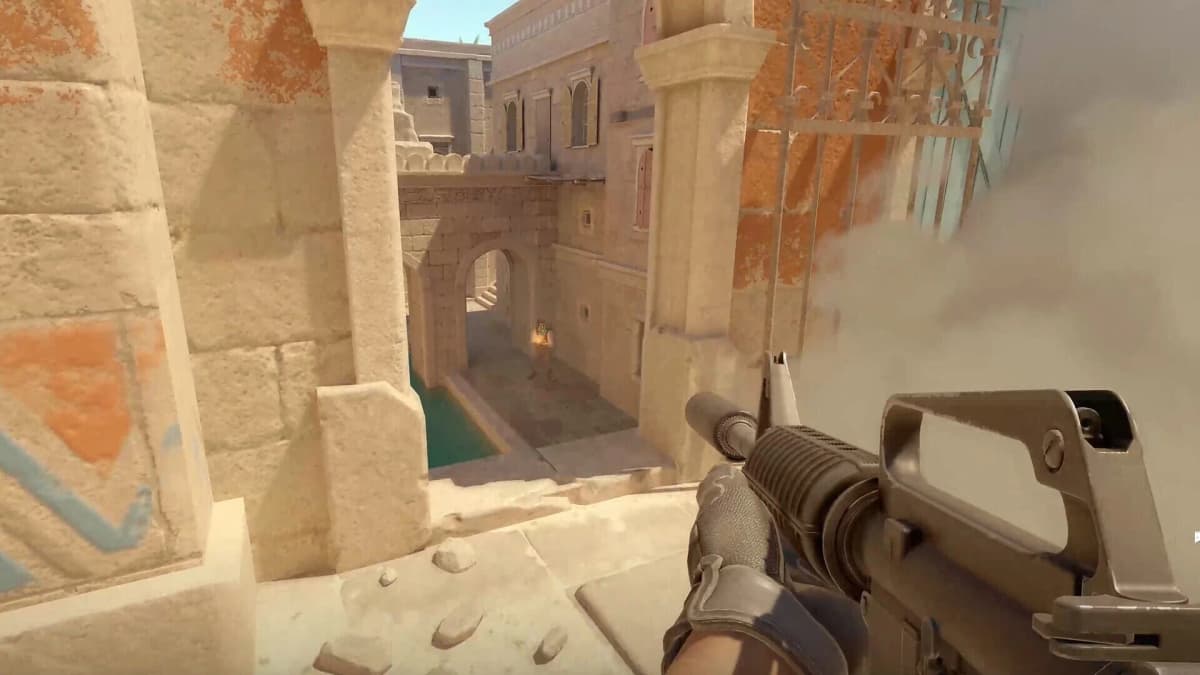
A good Counter-Strike map is not impressive because it is dense. It is impressive because it is legible under pressure. Players need to parse depth, cover, contrast, and movement options in fractions of a second. Source 2’s rendering features can easily become a trap here. More detail is not automatically better; more detail can just mean more noise. By most early accounts, Cache avoids that problem. Clutter has been reduced rather than celebrated. Surfaces are richer without becoming messy. The map appears to have been rebuilt with the understanding that beauty in Counter-Strike is subordinate to information.
That may sound obvious, but the industry keeps relearning this lesson. Modern remaster culture loves to sell “more” as a universal good: more particles, more props, more lighting drama, more cinematic grime. Competitive games need something harsher and less marketable. They need clean reads. Cache working in CS2 depends less on whether the concrete looks expensive and more on whether the game state remains instantly readable after the conversion to Source 2.
There is one side effect worth noting. Some of the old visual identity has reportedly been stripped back, including the removal of certain symbols and the disappearance of the famous s1mple graffiti. That will irritate players who treat maps as living esports memorials rather than active play spaces. Fair enough. But Valve’s bias here is obvious: standardize the battlefield first, preserve folklore second.
The mid change is the real story, because it alters how Cache breathes
The most consequential gameplay note is the reported CT-window change in mid, widely described as a removal of the old window position or a meaningful rework of that defensive look. That is not a footnote. Cache’s mid has always been one of the map’s central pressure valves. Change how CTs can contest or gather information there, and you change the rhythm of defaults, the confidence of fast splits, and the cost of utility.
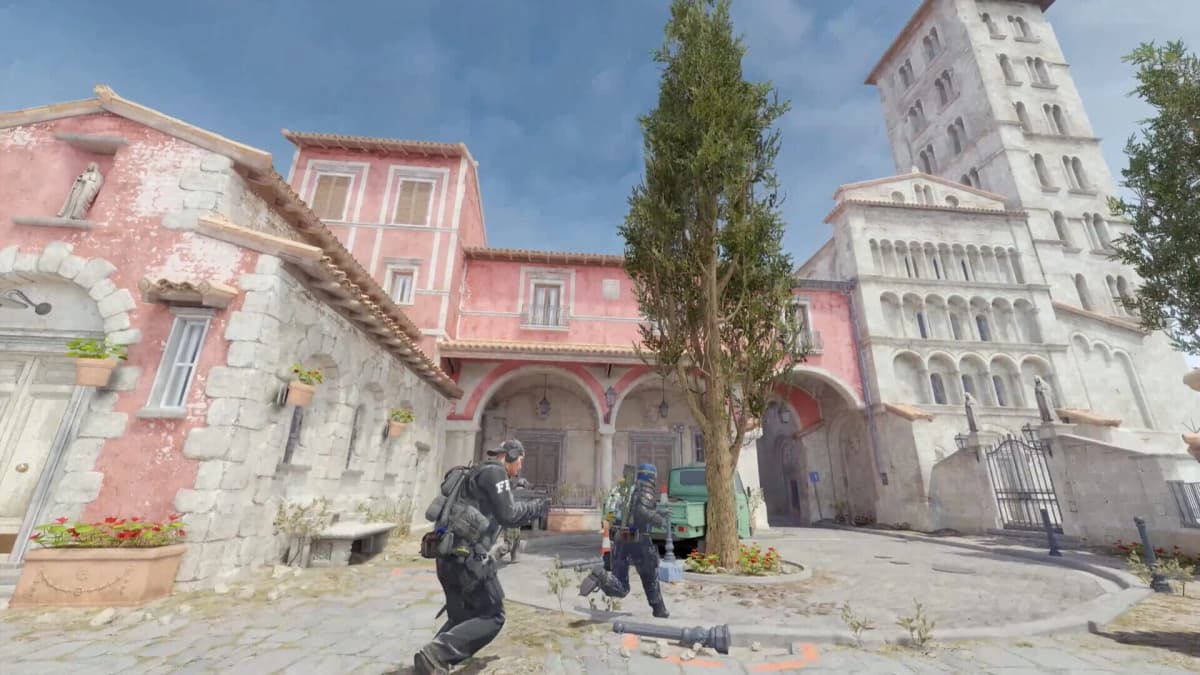
This is the kind of adjustment that separates a real remaster from a preservation project. Valve did not need to touch that area if the goal was just to let players post old clips with better reflections. The decision to modify mid suggests a map being tuned for present-day Counter-Strike rather than ceremonially restored for memory. That is the correct instinct. CS2 is not just CS:GO with shinier puddles. The engine, movement feel, visual language, and player expectations are different enough that strict one-to-one reproduction would have been the lazier choice.
It also raises the obvious competitive question: is Valve aiming Cache at “available to play” status, or at real map-pool relevance? Those are not the same thing. A map can be beloved in matchmaking and still fail the active duty test if its updated geometry produces stale protocols, overpowered sightlines, or utility interactions that collapse under pro scrutiny. FACEIT moving quickly to add the map is a useful early sign of confidence, but third-party adoption is not the same as Valve committing it to the highest-stakes rotation.
If there is an uncomfortable observation here, it is this: Cache’s return is also a reminder that Counter-Strike’s map pool management still depends heavily on Valve choosing when to act, not on any transparent competitive philosophy. Players can infer a lot from teases, social posts, and timing. They still get very little explicit explanation about long-term pool planning. The question a PR rep should have to answer is simple: what specifically qualifies a remastered map for active duty in CS2, beyond player affection and a successful port?
Valve’s teaser campaign was small, but the message was not
The rollout was restrained by normal industry standards. Valve teased Cache with profile and header imagery, followed with a highlight clip captioned “What are you doing next week?”, then dropped first visuals showing the upgraded concrete and environmental treatment before launch. That was enough. Counter-Strike does not need a stage show for a map return because the audience already understands the object being discussed.
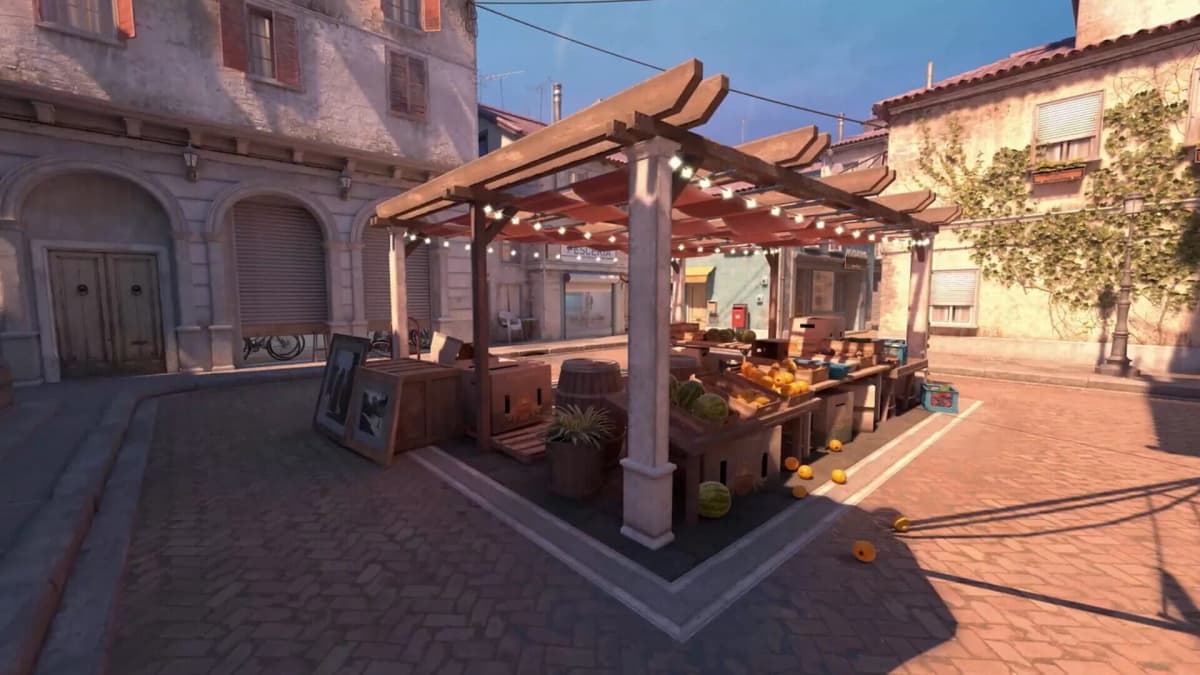
More interesting is what those teases communicated about Valve’s current posture. This was not positioned as a revolutionary new direction. It was positioned as a correction. A familiar map. Sharper presentation. Smaller structural edits. Immediate playability. That is a very different tone from a studio trying to distract from instability. It is the tone of a studio trying to reassert a baseline.
That makes Cache a useful test case for Valve’s broader CS2 method. The company still prefers to speak through updates rather than roadmaps, and that habit is as frustrating as ever. But in a narrow sense, the map says something coherent: bring back trusted spaces, modernize them carefully, trim friction elsewhere in the patch, and let competitive communities stress-test the result in public.
What to watch next is not sentiment, but placement
The next meaningful signal is not whether players say they “love” Cache. They were always going to be happy to see it again. The meaningful signal is where Valve puts it and what it is willing to remove. Earlier speculation around Cache’s return naturally led to questions about Mirage and the wider active-duty rotation. That is where this story becomes consequential instead of merely pleasant.
- Watch whether Cache remains limited to casual and competitive availability or moves toward formal top-tier map-pool status.
- Watch how quickly pro teams and tournament operators treat the mid changes as solved, contested, or problematic.
- Watch for follow-up patches touching visibility, grenade lineups, collision, or timing windows. Those are the normal tells that a “finished” map is still being tuned.
- Watch whether Valve frames Cache as a one-off restoration or the start of a broader map-pool recalibration in CS2.
For now, Cache’s return looks like one of Valve’s better recent moves because it is modest in the right way. The map has history, but the update does not seem trapped by it. That is usually the difference between a remaster that survives and one that exists mostly to make old screenshots trend for 48 hours.
FinalBoss // Gear
Level up your setup
01Graphics cardson Amazon→02Gaming laptopson Amazon→03High-refresh gaming monitorson Amazon→04Discounted game keyson Kinguin→
Affiliate links · As an Amazon Associate, FinalBoss earns from qualifying purchases.
Want to Level Up Your Gaming?
Get access to exclusive strategies, hidden tips, and pro-level insights that we don't share publicly.
Ultimate Gaming Strategy Guide + Weekly Pro Tips