
Cairn is one of those games that looks tranquil in screenshots and feels anything but once you’re actually clinging to its rock faces. It’s just you, a mountain called Kami, and a woman named Aava trying to get to the top for reasons that are quietly, slowly revealed. No enemies. No skill trees. No loot treadmill. Just fingers shaking over the controller as you wonder if this next reach is going to erase the last hour of your life.
Table of Contents (9)
Cairn’s opening: clumsy hands, loud heartbeat
The first thing that jumps out is how “wrong” the controls feel in the best possible way. Instead of just pushing up on a stick to magically scurry up a wall, Cairn asks you to think in limbs. Each move is about where Aava’s hands and feet actually are on the rock, and how her weight hangs between them. You’re not just moving a character upward; you’re constantly adjusting her body so that gravity doesn’t casually peel her off the face.
The early tutorial climb is short and relatively safe, but it instantly sets the tone. You stretch for a promising handhold, only to realize your foot is still on a bad angle. You overextend, swing out a little, and feel the physics model tug at you. You correct, inch back in, and that tiny success lands harder than most “ding, level up” pop-ups in other games.
What struck me quickly is how instinctive it all feels, even while it’s awkward. You don’t need a wall of text to understand that Aava needs three points of contact, or that overreaching is bad. It taps into the same part of your brain you used as a kid to climb trees and playground frames. You’re not learning button combos; you’re relearning your own body, translated into a gamepad.
Limb-based climbing that actually feels like climbing
Cairn sits in a weird little niche between something like QWOP or Getting Over It and a full-on simulation. It has that same limb-by-limb specificity, but it isn’t going for slapstick or rage-bait. The physics are grounded, predictable, and just unforgiving enough that you respect them instead of laughing at them.
You always see Aava’s body, not just a glowing reticle. The game nudges you to think like a climber: “If I move that left foot up first, will I still have the leverage to bring the right hand across?” Holds aren’t color-coded or gamified. They’re just cracks, ledges, and barely-there bumps in the rock. Half the challenge is training your eye to recognize what’s usable and what’s suicide.
The camera is a huge part of this. You can pull back and study big chunks of the mountain, but you can’t freely zoom in on distant sections. From afar, sections often look like clean, impassable walls. It’s only when you’ve committed and dragged yourself close that tiny, crucial protrusions come into view. Sometimes they save you, offering a sneaky detour; sometimes you realize there’s nothing there and you’ve gambled wrong, and now you need to reverse a sketchy route with tired arms and frayed nerves.
This learning process isn’t really tutorialized. There are hints, sure, but no exhaustive list of “advanced techniques.” You experiment. You fall. You start seeing patterns: pairs of holds that suggest a dyno, cracks that will take a toe but not a hand, little scoops that only work if you twist your hips just so. That absence of explicit guidance is exactly what makes Cairn feel “organic” in the way a lot of so-called simulations never quite manage.
Resources, checkpoints, and the slow squeeze of survival
If Cairn were just a climbing toybox, it would already be pretty fascinating. What turns it into something genuinely stressful is the survival layer wrapped around the ascent.
Aava has four main concerns: food, water, warmth, and stamina. The game compresses an in-game day into roughly half an hour of play, and within that window those needs drain at an alarming pace. You chug through bottles of water faster than feels reasonable. Rations vanish one nibble at a time. Temperature drops as the sun dips, forcing you to think about where you can shelter or when you should push hard versus conserve strength.
On the default difficulty, this pressure is relentless. Even modest climbs can end with you crawling onto a new ledge, completely spent and almost out of supplies, staring at the next vertical nightmare while Aava shivers and pants. It’s not a gentle mood-piece hike; it’s a constant, gnawing calculation: “Do I have enough in the tank to commit to this next stretch, or do I backtrack to that stash I saw 15 minutes ago and lose precious time?”
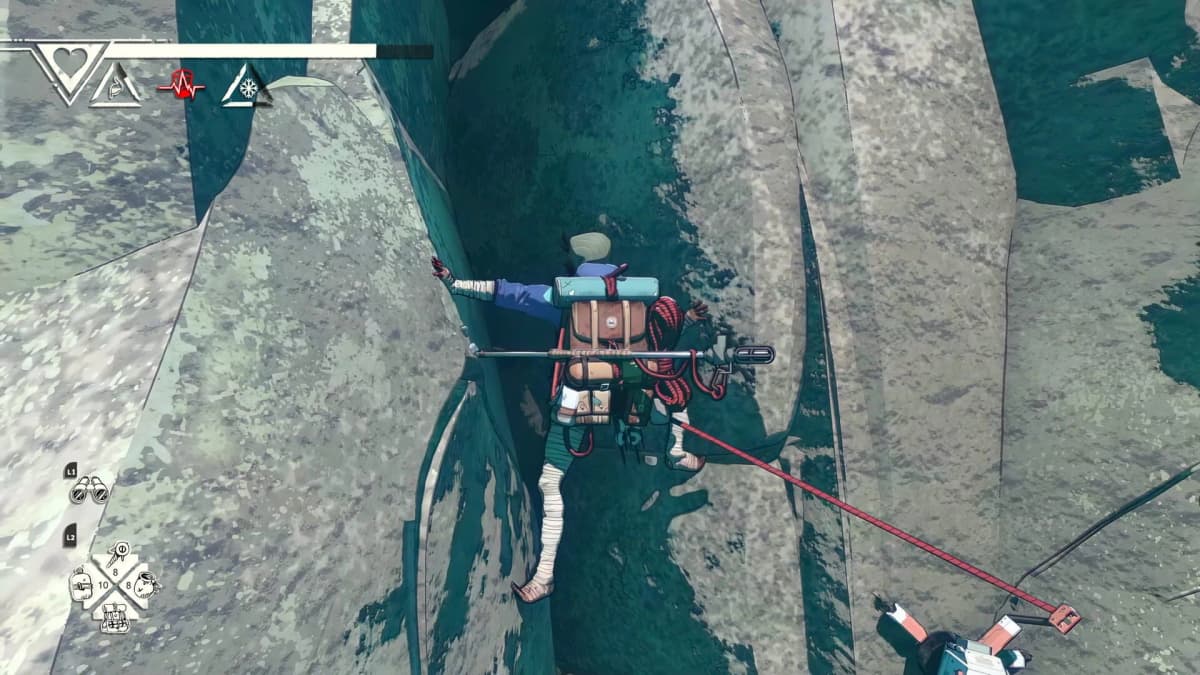
Checkpoints are sparse. The game’s title isn’t just poetic: the actual cairns you reach are your rare safe harbors, the moments where you can finally save properly and exhale. The sections between them can stretch on for an absurd length of time. You’ll spend long, uninterrupted spans in a kind of elevated focus, slowly building a tower of risk above the drop that waits below.
That’s where the survival system really clicks. It isn’t there to add crafting fluff or busywork. It’s there to sync up your mental state with Aava’s. Watching the last sip of water go down as your fingers are barely clinging to some hateful overhang is the closest thing the game has to a boss fight. It’s just that the boss is the clock, the cold, and your own impatience.
Difficulty as endurance, not execution
A lot of “hard” games hit you with sharp, high-intensity spikes: a brutal boss, a nasty platforming gauntlet, ten minutes of sweating followed by a big payoff and a breather. Cairn plays a different game. Its difficulty is stretched out. Instead of three minutes of perfection, it asks for 45 minutes of focus.
Imagine a climb where, if you slip badly enough, you’re not just losing a bit of progress-you’re losing most of an hour. No mid-way bonfire. No mid-route autosave. You can grab a quick-hold here or there to rest, but the “real” checkpoint is far above, past all the small mistakes you’re going to make along the way.
This design taps into a very different kind of tension. You’re aware, the whole time, of how much you stand to lose. That awareness sits in the back of your head, growing louder the higher you go. Your hands get tighter on the controller. Your movements become cautious, then too cautious, and that’s when you start wasting stamina or misjudging a reach because you’re second-guessing yourself.
It reminded me a little of Death Stranding’s hardest treks, where you’re not dodging bullets so much as hoping you don’t trip on the 37th rock after 20 minutes of careful walking. Or of survival games like Subnautica, where a deep dive can feel like a single, continuous held breath. Cairn taps that same vein, but with the fine-motor anxiety of literal handholds layered on top.
What’s clever is that the “difficulty” rarely comes from pixel-precise inputs or hidden, arbitrary rules. You can almost always see a path. It’s your confidence, your planning, and your ability to stay locked-in over time that are being tested. Cairn ends up less about “Can you press the right buttons in time?” and more “Can you keep going when every part of you wants to bail?”
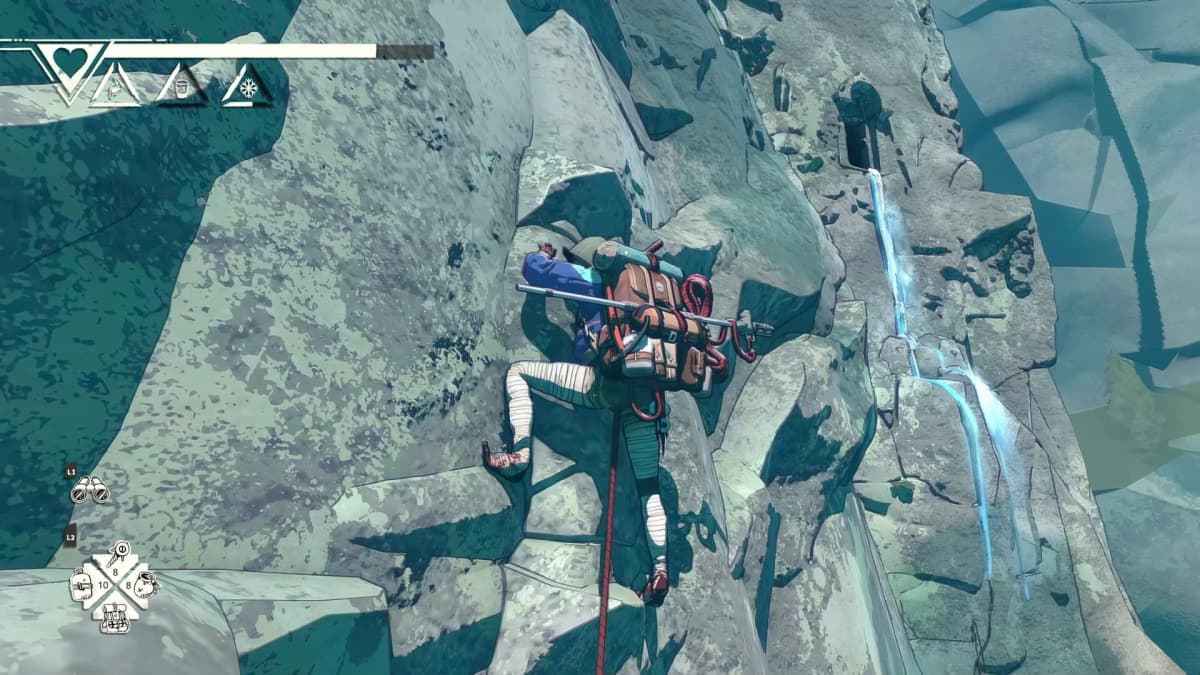
A quiet story about why you climb at all
Underneath the mechanics, The Game Bakers have wrapped Cairn in a surprisingly intimate story. You play as Aava, attempting to summit Mount Kami, but it’s not some heroic fantasy of conquering nature. It’s slower, more introspective, and ultimately about cutting ties rather than building them.
The mountain isn’t just a backdrop. As you climb, you pick up fragments of its history: traces of other climbers who came before, memorials, abandoned equipment, hints at the way this place has claimed people over time. There’s a sense that Kami doesn’t care whether you make it or not, and that indifference gives the whole journey a melancholy weight.
The storytelling is restrained. Dialogue is limited, cutscenes are rare, and a lot of the emotional punch lands through small environmental details rather than big speeches. That restraint fits perfectly with the deliberate pacing of the gameplay. Nothing here screams for your attention, but if you’re willing to sit with the silence, the themes around grief, isolation, and letting go land harder than you might expect from “just” a climbing sim.
I appreciated that Cairn doesn’t romanticize the climb as some triumphant power fantasy. It feels more like a ritual, or a reckoning. The top of the mountain isn’t a victory screen; it’s an answer to a very personal question Aava is asking herself, and the game is better for keeping that focus.
How it looks, sounds, and runs on the mountain
Visually, Cairn goes for clarity and mood over raw spectacle. Rock textures are readable more than they’re flashy, which matters a lot when you’re scanning for viable holds. The way light shifts across Mount Kami through the day-night cycle is subtle but effective: sunrise glare can make it harder to see certain angles, while dusk wraps everything in this cold, blue hush that makes you feel genuinely higher and more exposed.
Aava’s animations sell the strain. She doesn’t float; she scrambles, hangs, and sometimes awkwardly flails when you push her into a bad position. The little physical details-her breathing, the shake in her limbs when you’ve been hanging too long-do more to immerse you than any number of particle effects ever could.
Audio is similarly restrained but sharp. The crunch of boots on rock, the soft grind of fingers on a narrow ledge, the wind picking up as you climb higher—these sounds end up being your companions for long stretches. Music stays mostly in the background, flaring up during key beats but otherwise giving space to the natural ambiance. It suits a game that wants you to feel alone with your thoughts and the mountain.
On the technical side, Cairn is not trying to be a cutting-edge tech showpiece, and it doesn’t need to be. That’s good news for performance. With its relatively clean visuals and focused environments, it holds steady, letting the only stutters be the ones in your pulse when your grip slips.
Where Cairn pushes too far — and who it’s really for
For all the praise, there are parts of Cairn that will absolutely rub some players the wrong way, and it’s better to be blunt about that.
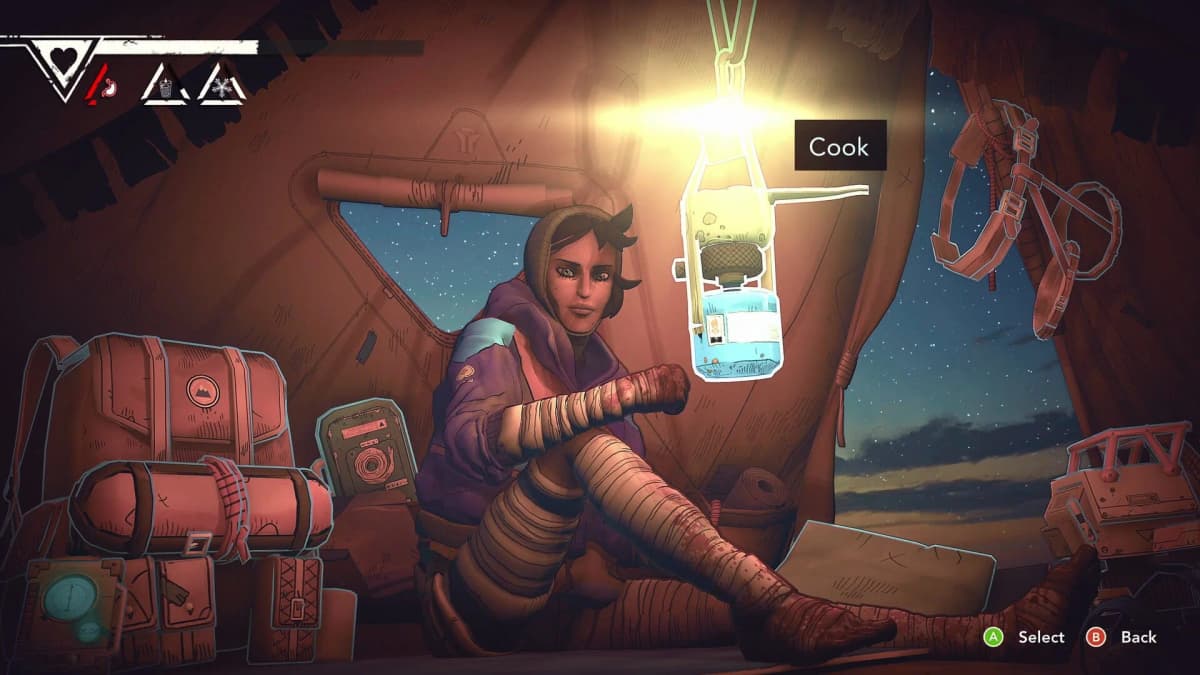
First, the climb lengths and checkpoint spacing are not messing around. Losing 30-60 minutes of progress because you misread a hold or misjudged your supplies isn’t a rare edge case; it’s baked into the structure. If that kind of setback feels more insulting than motivating to you, this game will probably feel cruel rather than compelling.
The resource drain on the default settings can also feel borderline ridiculous. Watching Aava down bottle after bottle just to stay functional in a half-hour slice of game time can pull you out of the realism and remind you that this is, at the end of the day, a system tuned to keep the pressure on. It’s effective, but it’s not subtle.
Then there’s the controls. As intuitive as the limb focus becomes, there is still an initial wall of clumsiness. Expect to fumble, accidentally overreach, or forget which limb you meant to move more than once. If you’re the kind of person who bounces off games that feel “awkward” in the first hour, you might never get far enough for Cairn’s brilliance to reveal itself.
That’s why I’d say Cairn is aimed squarely at a particular mindset. If you enjoyed the methodical traversal of Death Stranding and wished it went even deeper, or if you like the tension of survival games where preparation and patience matter more than twitch reflexes, this is absolutely worth your time. If you want snappy runs, constant rewards, and frequent checkpoints, there are many other mountains you’ll be happier climbing.
The bottom line: a small, quiet breakthrough
Cairn feels like a quiet revolution hiding in plain sight. It takes something most games treat as a throwaway animation—climbing—and builds an entire experience around doing it thoughtfully, physically, and emotionally. By tying limb-based controls to a grounded physics model and layering in genuinely oppressive survival and checkpoint design, it creates climbs that don’t just challenge your dexterity, but your resolve.
It’s not big, loud, or flashy. It’s not trying to be everyone’s game. But it’s the kind of design that other developers are almost certainly going to study: how to make movement itself the narrative, how to use long-form tension instead of short, sharp spikes, how to bring players into a headspace that feels uncomfortably close to the real thing.
Cairn stuck with me after the credits rolled—not because of some shocking twist, but because I could still feel the ghost of those climbs in my hands. That’s rare. And it’s exactly why this unassuming indie about a woman and a mountain deserves the attention it’s starting to get.
TL;DR
- What it is: A limb-based climbing and survival sim about Aava’s ascent of Mount Kami, focused on long, risky climbs and sparse checkpoints.
- Why it’s special: Climbing feels genuinely physical and “organic,” with realistic physics and route-finding that rely on your eyes and instincts, not glowing handholds.
- What it feels like: Less like an action game and more like enduring a real expedition—extended focus, constant resource pressure, and the ever-present fear of losing a huge chunk of progress.
- Best for: Players who enjoy slow, methodical traversal, survival tension, and introspective stories; fans of Death Stranding, Subnautica, or other high-stress, low-noise experiences.
- Potential dealbreakers: Harsh resource drain, very long sections between checkpoints, and an intentionally awkward early learning curve.
- Final verdict: If you’re willing to suffer through its demands, Cairn offers some of the most memorable, nerve-fraying climbs you’ll find in any game.
FinalBoss // Gear
Level up your setup
01Top-rated gaming headsetson Amazon→02High-refresh gaming monitorson Amazon→03Gaming chairson Amazon→04Discounted game keyson Kinguin→Affiliate links · As an Amazon Associate, FinalBoss earns from qualifying purchases.
Want to Level Up Your Gaming?
Get access to exclusive strategies, hidden tips, and pro-level insights that we don't share publicly.
Ultimate Reviews Strategy Guide + Weekly Pro Tips