
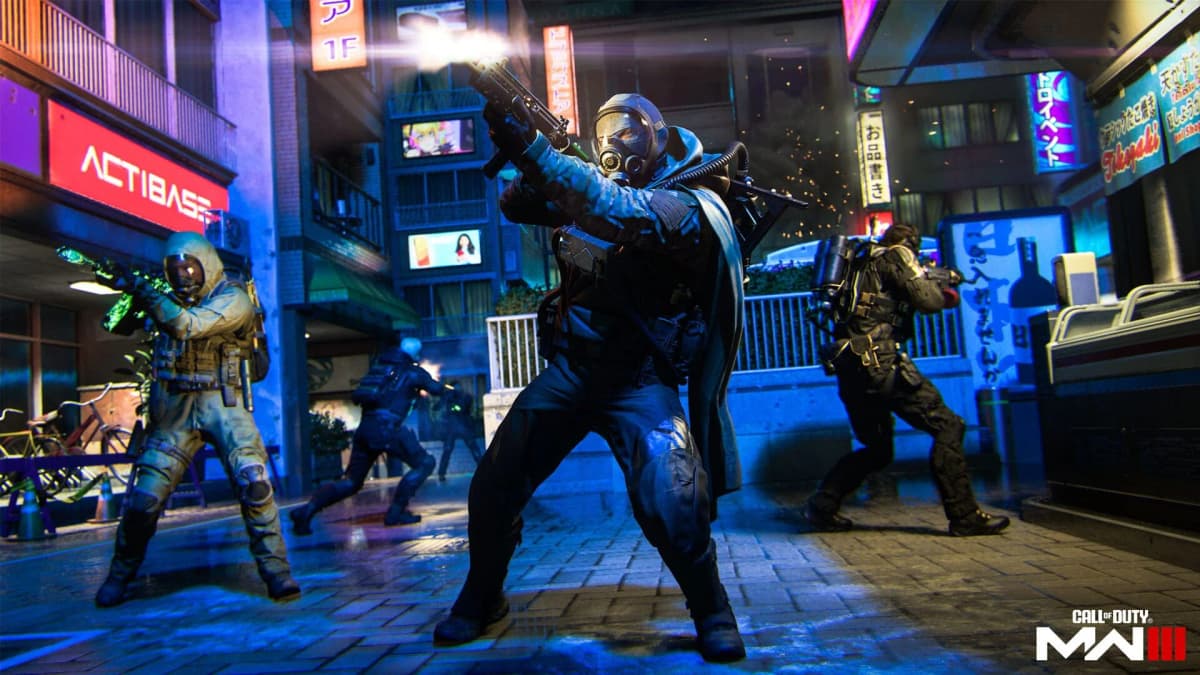
The doorway duel that used to be a free tactical-sprint slide into a hipfire spray is where Call of Duty: Modern Warfare III Season 4 changed the rhythm. Tactical sprint is slower, controller hipfire no longer receives aim assist, and rushed routes are easier to punish when an opponent is holding hard cover. The winning plan is to spend speed only to reach safety, enter close fights with your crosshair already centered, and build Gunsmith loadouts around the engagement range you can reliably control.
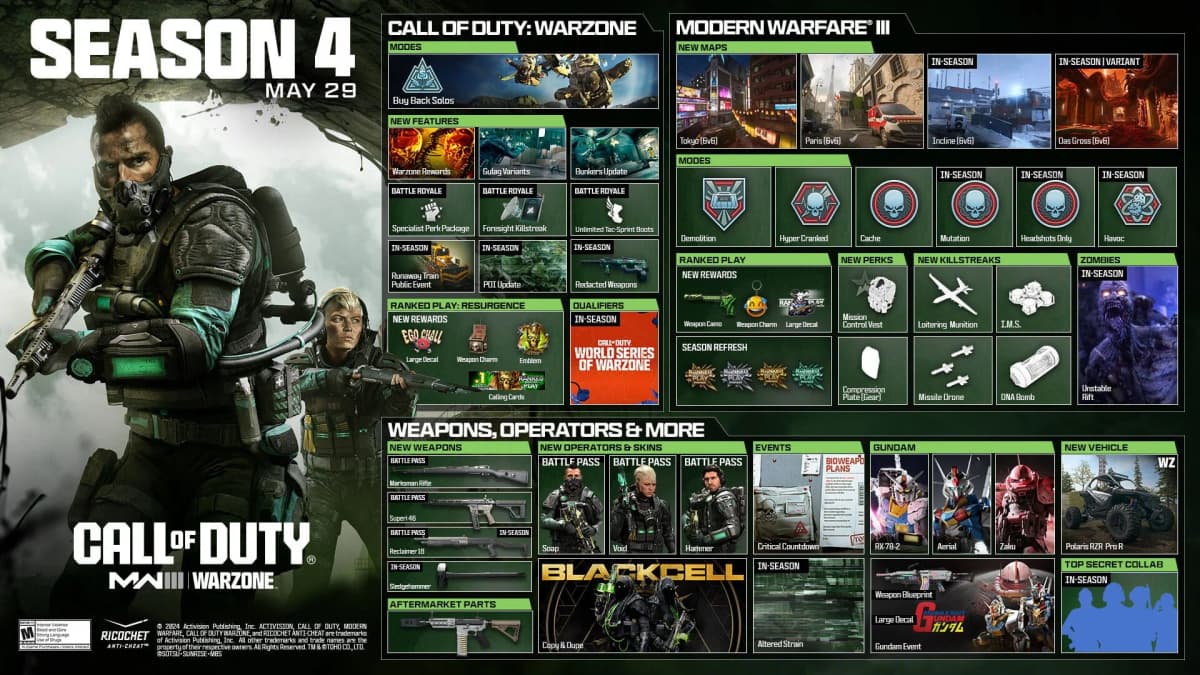
One important correction before getting into the playbook: the live, documented rules here are for Modern Warfare III Season 4 and Season 4 Reloaded, released in May and June 2024. “MW4” material around mantle cancels, pipe climbing, Gunny presets, Apex items, and the shifting Kill Block map comes from preview coverage of a future Modern Warfare title. Use the Season 4 sections for current MWIII multiplayer; treat the Kill Block and MW4 systems as a preparation guide rather than a confirmed MWIII playlist feature.
Table of Contents (11)
The Season 4 multiplayer plan in one match
Season 4 reduced base movement from 5.0 m/s to 4.8 m/s, standard sprint from 5.7 m/s to 5.5 m/s, and tactical sprint from 7.0 m/s to 6.8 m/s. Those look like small cuts on a stat sheet, but they matter whenever a route requires crossing a lane before the enemy can reacquire you. Slide chains still have value, yet they no longer rescue a bad push as consistently as they did before the update.
| Movement state | Before Season 4 | Season 4 speed | Match implication |
|---|---|---|---|
| Base movement | 5.0 m/s | 4.8 m/s | Strafes and short repositions cover less ground. |
| Sprint | 5.7 m/s | 5.5 m/s | Open-lane rotations need more cover planning. |
| Tactical sprint | 7.0 m/s | 6.8 m/s | Use short bursts to reach a position instead of chaining it across exposed space. |
Work through the eight habits below in this order. They fit together: movement gets you to cover, ADS strafing wins the gunfight at that cover, and Gunsmith gives your weapon a clear job instead of trying to make it perfect at everything.
8 multiplayer tips for Modern Warfare III Season 4
1. Tactical sprint to a destination, then reset behind cover
The strongest Season 4 movement habit is simple: start tactical sprint only when you can name the piece of cover you are reaching. A doorway, head-glitch, vehicle, low wall, or corner gives you a clean point to stop, recover your camera, and begin the fight on your terms.
Do not burn tactical sprint while crossing a lane with no cover at the end. The 6.8 m/s tactical-sprint speed is still fast, but the reduced pace leaves more time for a posted enemy to track the route. A short burst into cover followed by an ADS strafe is safer than a long slide chain that ends in the middle of a sightline.
- Use tactical sprint for the first burst out of spawn, a rotation between hard cover, or a confirmed flank.
- Release the push before entering a hot doorway so your weapon is ready sooner.
- After a slide, pause long enough to identify the next angle instead of automatically sliding again.
- When a UAV or teammate callout reveals an enemy holding a lane, change the route rather than trying to outrun their pre-aim.
2. Build slide and mantle chains around information, not style
Sliding and mantling remain useful because they alter your height and timing, but Season 4 rewards a chain only when it creates a real positional change. Slide into a corner, mantle into a window line, or use a ledge to break an enemy’s expected crosshair placement. A chain that leaves you in the same lane at the same height only makes your movement predictable.
Footstep volume was reduced globally during Season 4, which makes audio less dominant and gives movement players more room to approach a power position. That does not make sound irrelevant. It means visual checks, UAV information, and teammate coverage now matter more than assuming a quiet lane is empty.
Preview material for the future MW4 label describes mantle cancel as a way to back out of a climb and pipe climbing as a way to hang, ADS, and drop back into safety. Those tools should be used as scouting and bait options if they arrive in the final ruleset. Peeking above a climbable surface for a fraction of a second is valuable; fully committing before confirming the lane is how a traversal play turns into a free death.
3. Prioritize ADS movement speed for close and mid-range lanes
Season 4 made ADS strafing more important than raw sprint stacking. Some attachment tuning raised an ADS movement-speed benefit from 9% to 12%, while other components carry a 3% ADS movement-speed penalty. That difference is large enough to feel in a tight rifle or SMG duel, especially when both players are already aiming down sights.
For a close-to-mid-range primary, favor attachments that preserve ADS movement when they do not ruin the recoil pattern you need. The goal is not to zigzag wildly. Strafe in short, irregular steps while keeping your reticle around upper torso height. You force the opponent to make a tracking correction without throwing your own recoil control away.
- Use high ADS movement speed on weapons meant to contest doorways, short lanes, and objectives.
- Keep recoil control on longer-range builds where sustained accuracy matters more than lateral speed.
- Check every equipped attachment for a hidden mobility cost before copying a fast-build template.
- Consider boots that support your preferred route instead of automatically equipping Covert Sneakers every match.
With quieter footsteps, Covert Sneakers are less mandatory than they were before the patch. Boots that improve slide distance, tactical-sprint duration, or movement in ADS can better fit an aggressive objective route. Match the boots to the map and mode rather than treating one perk as the permanent answer.
4. Retrain hipfire for raw center-screen tracking
Season 4 Reloaded removed hipfire aim-assist properties for controller input in MWIII multiplayer and Warzone. That change went live on June 26, 2024, at 9:00 AM PT. Hipfire still has a place, particularly when an enemy is almost on top of you, but the reticle must already be on target. There is no longer an assist layer helping correct a loose hipfire spray.
Use hipfire as an emergency close-range option at roughly 0-5 meters with an SMG or shotgun-style setup, then transition to ADS once the fight stretches beyond that immediate space. The exact break point changes by weapon, attachments, movement, and spread, but the practical line is clear: when the enemy has room to strafe across your screen, ADS gives you more dependable tracking.
- Practice entering close rooms with your crosshair at chest height before the enemy appears.
- Hipfire only when the target fills a large part of the screen or the ADS animation would lose the duel.
- ADS immediately after clearing the first close corner; the next enemy is often farther down the lane.
- Avoid turning close-range fights into panic spins. Small stick corrections keep the center of the screen useful.
5. Stop building around the old Kar98k hipfire trick
The Kar98k no longer has the path to perfect standing-still hipfire spread that existed through a specific JAK attachment interaction. That attachment can no longer be equipped on the rifle, and the weapon also lost hipfire aim assist while receiving lower ADS aim assist aligned with sniper-rifle values.
Run the Kar98k as a precision ADS weapon. Hold a lane, pre-aim predictable crossings, and use cover to reset after each shot. Treating it like a point-blank hipfire shotgun or relying on aggressive quick-scope assistance is a losing habit under the Reloaded rules.
6. Use Gunsmith’s detailed stats before chasing a “meta” build
Gunsmith is most useful when every attachment answers a specific question: Does this weapon need tighter recoil for a long lane, faster ADS movement for a contested objective, or better close-range handling for a fast flank? A weapon filled with random mobility, range, and recoil parts can look impressive in the menu while feeling awkward in every real gunfight.
Season 4 Reloaded fixed the Detailed Stats display for weapons converted from burst-fire to full-auto, so the listed fire rate now matches their in-match behavior. Check that value when deciding whether a conversion suits your build. A full-auto option may make a weapon more forgiving in a hipfire-to-ADS scramble, but it can also change recoil demands and the role you want the gun to fill.
Also discard old build screenshots that rely on attachment combinations the game now blocks. Gunsmith fixes removed several incompatible combinations, so an early-season loadout can be impossible to recreate or based on performance that no longer exists.
7. Unlock mobility parts first, then make one reliable build
Season 4’s best movement-oriented setups are naturally gated by weapon progression because the useful ADS-movement and handling attachments sit behind weapon levels. Instead of spreading time across every gun, level the primary you intend to use for close and mid-range fights until its meaningful mobility and recoil options are available.
Start with one dependable configuration: enough recoil control to keep the first burst on target, enough ADS movement to strafe a doorway fight, and no attachment that destroys sprint-to-fire handling. Once that build is stable, create a second version for longer lanes with more range or control. Swapping between two deliberate roles is faster and more effective than endlessly rebuilding one “universal” class.
The future MW4 preview material uses the terms Gunny and Apex. Gunny is described as a preset system that applies attachments for a chosen play style, can be rerolled, and can still be modified afterward. Apex attachments and items are described as progression-gated. If those systems survive into release, use presets as a starting point and inspect each attachment before taking it into a competitive match. A preset is convenience, not a substitute for knowing what your weapon gives up.
8. Treat Kill Block as a scouting map, not a memorization test
Kill Block is previewed as a constantly changing map where blocks and sightlines reconfigure during a match. It is planned to support 2v2 Gunfight, 3v3, and 10v10 Gunfight at launch, with more core multiplayer support intended later. Static-map instincts will get punished here because a route that was protected moments earlier can become a long, open sightline after the geometry changes.
The correct first move after any layout change is to scan the new cover, identify which lane has opened, and move only to the nearest defensible position. In 2v2 and 3v3, call the altered lane and hold the crossfire rather than both players diving into the fresh opening. In 10v10, expect close-range chaos around newly formed choke points, but enter those spaces pre-aimed instead of trusting hipfire to correct the fight.
- Recheck mid-lane after every visible block movement or sightline change.
- Keep one teammate watching the old route while the other checks the newly opened angle.
- Save tactical sprint for the escape path after a layout shift, not the first blind push into it.
- Use hard cover immediately; tracking tools are less reliable through cover after Season 4 changes.
What to avoid in Season 4 multiplayer
- Slide-spamming across open ground: lower sprint speeds make long, exposed chains easier to read.
- Hipfiring at medium range on controller: the June 26 Reloaded update removed the aim assist that used to make those sprays more forgiving.
- Equipping every speed attachment: too many penalties can leave an otherwise mobile weapon unstable during the gunfight.
- Using outdated Kar98k hipfire advice: the zero-spread setup is gone, and the rifle is better handled as an ADS precision weapon.
- Memorizing a single route for Kill Block: its changing layout demands a new read every time sightlines shift.
FinalBoss // Gear
Level up your setup
01Top-rated gaming headsetson Amazon→02High-refresh gaming monitorson Amazon→03Gaming chairson Amazon→04Discounted game keyson Kinguin→
Affiliate links · As an Amazon Associate, FinalBoss earns from qualifying purchases.
Want to Level Up Your Gaming?
Get access to exclusive strategies, hidden tips, and pro-level insights that we don't share publicly.
Ultimate Guide Strategy Guide + Weekly Pro Tips