
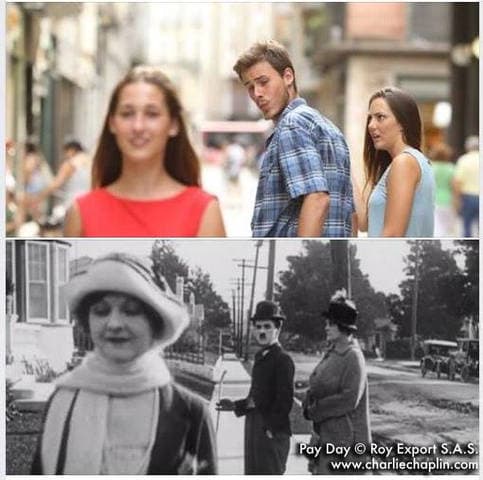
Nearly everyone online has seen the “Distracted Boyfriend” meme—a man glancing at another woman while his partner looks on in disbelief—but its origins stretch far beyond modern internet culture. As a gaming and pop culture enthusiast, I find it striking that this iconic setup echoes a comedic routine from over a century ago.
In 1922, Charlie Chaplin’s short film Jour de Paye includes a scene almost identical to today’s stock photo: Chaplin strolls with his companion, turns to admire a passerby, and endures a sharp rebuke from his partner. Fast forward to 2015, when photographer Antonio Guillem captured a very similar moment for a stock library. By 2017, users on Reddit and Twitter had transformed that photo into the “Distracted Boyfriend” meme, applying it to everything from schoolwork to global politics.
From my perspective, the enduring power of this format reveals why so many gaming and internet jokes stick: they rely on simple, universal templates that anyone can remix. Whether it’s “Press F to pay respects” or “The cake is a lie,” these memes work because they tap into shared experiences and recognizable setups.

Understanding a meme’s lineage highlights how “new” digital humor often repackages timeless comedic tropes. For gamers and meme aficionados, tracing these connections adds depth to our conversations and reminds us that creativity often builds on what has proved entertaining across generations.
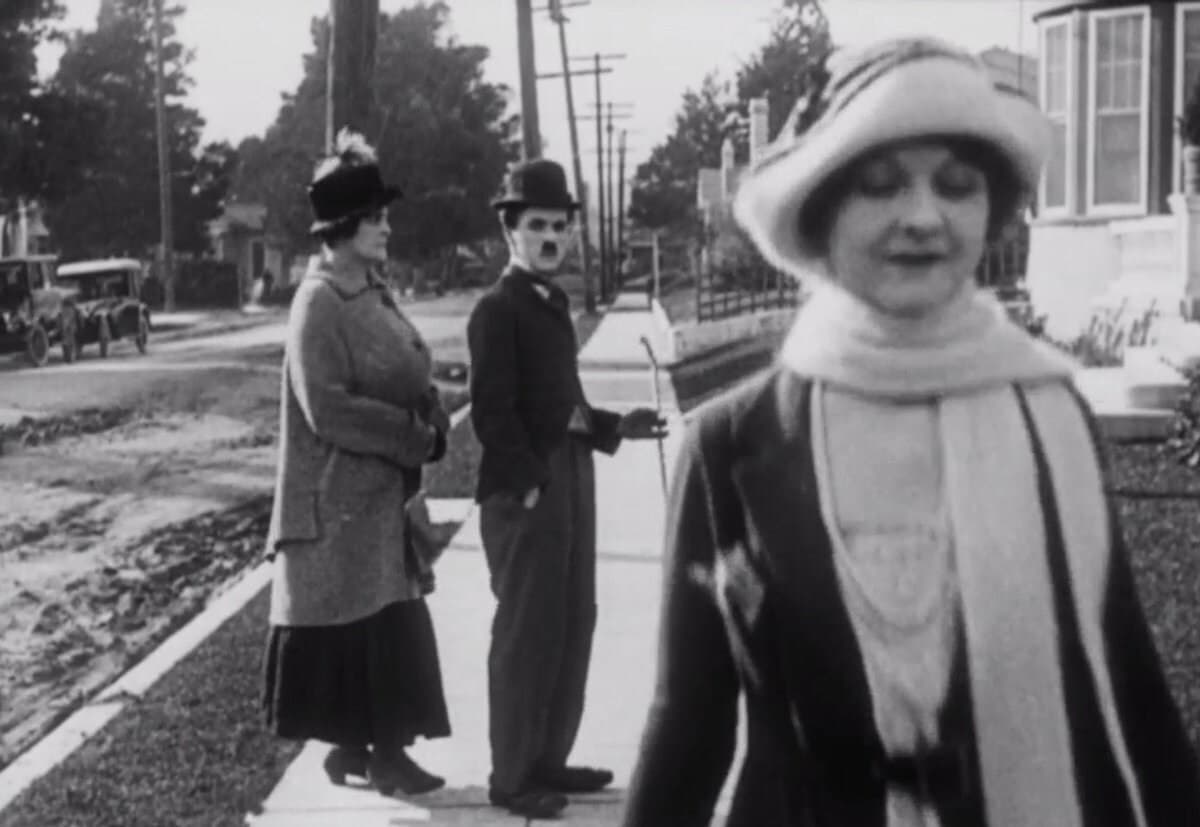
The “Distracted Boyfriend” meme may feel fresh, but its blueprint dates back to Charlie Chaplin’s 1922 slapstick. Internet culture thrives by remixing these time-tested frameworks into new viral moments.
Get access to exclusive strategies, hidden tips, and pro-level insights that we don't share publicly.
Ultimate Gaming Strategy Guide + Weekly Pro Tips