

When Christopher Nolan revisited his celebrated Batman trilogy, he didn’t just drop a few director shout-outs—he named Richard Donner’s 1978 Superman as the very blueprint for his darker, grounded take on Gotham’s vigilante. As someone who remembers the garish Batsuit era and cheered on Nolan’s gritty reboot, this admission lands like a bombshell. Nolan’s candor offers a rare peek into how two landmark films, released nearly three decades apart, share DNA that still influences movies and games today.
Long before the first trailer for Batman Begins rolled out, Nolan was charting a new course for superhero cinema. Rather than referencing campy predecessors, he looked back to the one film that treated its hero’s journey with seriousness: Donner’s Superman. By focusing on Clark Kent’s vulnerabilities and delaying his first flight sequence, Donner set a storytelling pace that prioritized character over spectacle. Nolan adopted that same principle for Bruce Wayne, establishing a trend where audience investment in the hero’s psyche came before high-octane action.
By mirroring Donner’s pacing, Nolan ensured that the emotional stakes were firmly rooted. Viewers had to care about the man beneath the mask before they could cheer his transformation into a legend.
Nolan’s turn toward realism reflected the era’s appetite for serious storytelling. Post-9/11 anxieties and a craving for authenticity fueled the “dark and gritty” renaissance in Hollywood. While Batman Begins was celebrated for grounding Gotham in brown hues and practical effects, it also rode that broader cultural wave. Nolan’s films succeeded because they paired thematic depth with blockbuster scale, whereas many later imitators trimmed the character work to chase box-office thrills.
It’s worth noting that this stylistic shift wasn’t purely Nolan’s invention—it was an evolution of Donner’s willingness to treat a costumed hero as a lived-in character. Together, the two filmmakers demonstrated that emotional resonance can coexist with genre spectacle, a lesson that still challenges comic adaptations on both the big screen and in interactive entertainment.
For the gaming community, Nolan’s Batman trilogy has become a benchmark for “realistic” superhero worlds. The Arkham series, for instance, adopts the trilogy’s brooding atmosphere and methodical pacing, letting players inhabit Bruce Wayne’s detective side as much as his crime-fighting persona. Similarly, story-driven titles like The Last of Us emphasize character journeys before unleashing their set-piece moments—an approach that echoes Donner’s and Nolan’s shared blueprint.

Even outside of Arkham, developers often cite the importance of letting players build an emotional bond with protagonists. Whether you’re swinging through a photorealistic New York or navigating a post-apocalyptic terrain, the underlying principle remains the same: invest time in character depth, and the payoff when action arrives will be far more satisfying.
Nolan’s public credit to Donner isn’t just a tip of the hat—it’s a call to respect cinematic lineage. Today’s superhero films and their game tie-ins sometimes treat origin stories as box-checking exercises, racing through trauma beats to get to the explosions. Nolan and Donner showed us that patience and layered character work can transform routine origin arcs into enduring mythology.
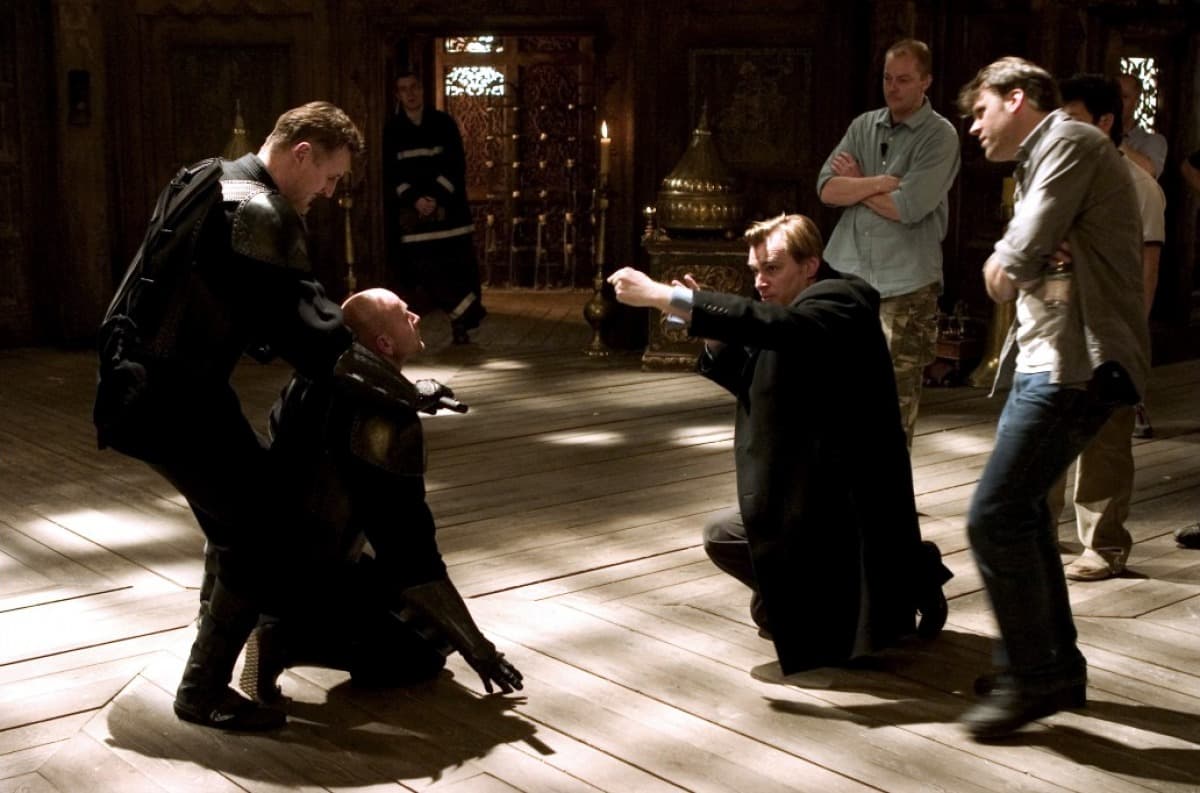
For creators hungry to recapture that spark, two questions stand out:
Answering these is a starting point for any modern adaptation—be it on screen, in comics, or in games.
By tracing Batman Begins back to Superman, Nolan acknowledges that innovation often means building on solid foundations. His trilogy proved that elite storytelling can coexist with blockbuster ambition, influencing nearly every serious superhero effort in the decades since. As the industry evolves, remembering these roots—and demanding substance before spectacle—might be the best way to keep the genre from circling back to its neon-tinted, nipple-helmet days.
Get access to exclusive strategies, hidden tips, and pro-level insights that we don't share publicly.
Ultimate Gaming Strategy Guide + Weekly Pro Tips