
Table of Contents (6)
Why This Split Matters Now
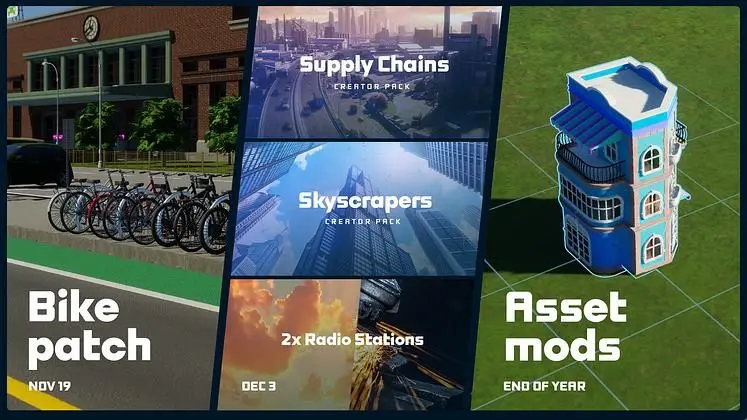
Paradox is moving Cities: Skylines II to a new developer in 2026, and that’s a big deal if you’ve been waiting on performance fixes, mod tools, or the console edition. Colossal Order-the team that built this series into the city-builder gold standard-will finish the promised bike patch and Old Town buildings by year’s end, then step away. After that, Paradox’s internal Iceflake Studios takes the wheel. As someone who’s poured hundreds of hours into Cities, this caught my attention because developer handovers rarely go smoothly, especially for systems-heavy sims where “feel” and design instincts matter as much as code.
Key Takeaways
- Colossal Order exits after delivering the bike patch and Old Town content; Iceflake assumes development in 2026.
- Paradox says the “core identity” of Cities: Skylines II remains unchanged-but expect a transition period.
- Iceflake’s track record is mixed, with limited city-builder pedigree beyond Surviving the Aftermath.
- The real test will be performance, traffic AI, Editor/mod tools, and a fair DLC cadence.
Breaking Down the Announcement
In a joint note on Paradox’s forum, Colossal Order thanked fans and said it’s “excited to channel our experience, creativity, and passion into new projects that align with our long-term vision.” Paradox’s deputy CEO called the partnership “remarkable” and promised to keep delivering content to the Cities community. The handoff plan is straightforward: CO ships the bike patch and Old Town buildings this year. Starting in 2026, Iceflake will handle patches, polish for the current version, continued work on the Editor and console editions, plus future expansions and content packs. Paradox also emphasized that “the core identity of Cities: Skylines II will remain unchanged.”
That last line is doing heavy lifting. CS2’s launch was rocky: performance woes, delayed console plans, and a modding pipeline that’s taken longer than anyone hoped. CO had begun turning the ship, but the trust dent was real—especially after the early paid asset pack dust-up while fundamentals were still shaky. A studio change can be a chance to reset and focus, or it can prolong the waiting game. Which way this goes depends on how quickly Iceflake gets up to speed on CS2’s simulation guts and toolchain.
The Real Concern: Iceflake’s Fit for a Mega City Sim
Let’s talk resumes. Iceflake’s catalog skews small-scale and mobile-friendly: Pirates Don’t Run, Ice Lakes, Premium Pool Arena, Race Arcade. The one relevant datapoint is Surviving the Aftermath, a post-apocalyptic colony builder that sits around 69 on Metacritic and recently hovered near 53% positive on Steam. Not a disaster, but not the kind of slam-dunk pedigree that calms a fanbase already anxious about CS2’s performance and pathfinding. City sims are brutally complex under the hood—traffic AI, agent simulation, services, zoning feedback loops. It took Colossal Order a decade of iteration (from Cities in Motion through Cities: Skylines) to nail the rhythm.
There’s also the bigger Paradox context. The publisher’s had a turbulent run: Surviving Mars: Relaunched and Vampire: The Masquerade – Bloodlines 2 both struggled to win over players in recent reviews, while Europa Universalis 5 landed better. Moving Cities in-house to an internal studio looks like a control play after a rough couple of years—bring the franchise closer, steer DLC strategy directly, and centralize tech decisions. That’s not inherently bad; franchises have survived studio handovers (think Halo post-Bungie), but it changes the creative DNA and often results in a year of “learn the system” churn.
Paradox promises continuity. I’m cautiously hopeful about two things: first, an internal team can align engine work, console porting, and DLC planning without the cross-company friction. Second, a fresh pair of eyes might make bolder calls on performance and traffic logic that CO, understandably, approached conservatively. But the risks are obvious—Iceflake needs senior simulation engineers, traffic/AI specialists, and dedicated tools devs to deliver on the Editor and console tasks while stabilizing the core game. If hiring and leadership aren’t nailed early, 2026 becomes another year of “almost there.”
What Players Should Expect Next
Short term, keep your expectations measured. CO’s final drops—the bike patch and Old Town buildings—will likely be the last content you see with their touch. Through 2025, anticipate a quieter period as Iceflake builds knowledge, hires, and sets a roadmap. Paradox says Editor and console work continues, which is crucial. CS1 lived and breathed via mods; CS2 won’t truly click until the Editor is robust, documented, and stable. Console players, meanwhile, need a version that runs well and isn’t a feature afterthought compared to PC. If Iceflake prioritizes those two pillars before chasing expansions, the community will feel that respect immediately.
- Watch for a transparent roadmap from Iceflake in early 2026: fixes first, DLC second.
- Look at who they hire—simulation, AI/pathfinding, and tools engineers are the key roles.
- Judge the Editor on usability and performance, not just checkboxes.
- For DLC, asset packs can wait; meaningful systems expansions will rebuild goodwill.
One more note: Paradox says the “core identity” won’t change. That should mean CS2 remains a modern, realistic city sim—not a colony survival pivot or a mobile-lite direction. Still, identity isn’t the same as execution. The identity players want is a smooth 60 FPS downtown, residents who don’t gridlock over a single roundabout, and tools that let creators unleash the weird and wonderful. If Iceflake delivers on that, skepticism fades fast.
TL;DR
Colossal Order wraps its final CS2 updates this year; Iceflake Studios takes over in 2026. Paradox promises continuity, but the real story will be whether Iceflake can fix performance, elevate the Editor, and treat DLC as dessert—not dinner. Cautious optimism, with a side of show-us-first.
FinalBoss // Gear
Level up your setup
01Top-rated gaming headsetson Amazon→02High-refresh gaming monitorson Amazon→03Gaming chairson Amazon→04Discounted game keyson Kinguin→Affiliate links · As an Amazon Associate, FinalBoss earns from qualifying purchases.
Want to Level Up Your Gaming?
Get access to exclusive strategies, hidden tips, and pro-level insights that we don't share publicly.
Ultimate Gaming Strategy Guide + Weekly Pro Tips