
Table of Contents (8)
The night City of Heroes reminded me everyone else was playing catch‑up
The moment it really hit me wasn’t back in 2004, or during the NCsoft shutdown protests, or even when the secret servers blew up. It was a random Tuesday night on Homecoming a couple of years ago, running a scrappy pick-up group in Talos Island.
We had no “proper” team comp. A Sonic/Sonic Defender with a meme build, a Fire/Fire Blaster who refused to slot anything but recharge, a Tank whose costume was basically a walking dad joke, and me on a Trick Arrow / Archery Controller that any min-maxer would have called a crime against efficiency.
We were overpulling spawns, chain-wiping, laughing our asses off in team chat, and at some point I realised: this felt more like a superhero comic than any slick, modern live-service game I’d touched in years. Not because the numbers were good or the combat was tight. Because it was chaotic, improvised, and gloriously inconsistent. It felt like we’d fallen head-first into issue #237 of some long-running series with way too much baggage and zero concern for internal logic.
That’s when it clicked: City of Heroes is still the gold-standard superhero MMORPG, and it kind of pisses me off that no one else has managed to beat a game that literally died in 2012.
And I don’t mean “gold-standard” in the lazy, nostalgic way. I mean that whenever I touch a new superhero MMO or an “inspired by CoH” project like Ship of Heroes or City of Titans, I end up measuring it against Paragon City’s corpse… and the corpse keeps winning.
By all logic, City of Heroes should have been dethroned years ago
Let’s be brutally honest: games that shut down don’t stay the reference point. That’s not how this industry works.
NCsoft pulled the plug on City of Heroes in November 2012. In MMO years, that’s a lifetime ago. Since then we’ve had DC Universe Online slowly grind away, the rise and death of Marvel Heroes, endless superhero ARPGs, hero shooters, online brawlers, and now the whole “live-service showcase” circus. By rights, CoH should be a fondly remembered curiosity, like an old Master of Epic-style relic people write wistful retrospectives about.
Instead, what happened? Unsanctioned private servers start appearing around 2019, Homecoming and friends explode, the IP holder eventually shrugs and lets it ride, and suddenly a 2004 MMO with PS2-era geometry is more alive than half the overfunded “forever games” choking Steam’s charts.
Meanwhile, Ship of Heroes and City of Titans spend years promising to carry the torch. They weren’t pitched as “new superhero MMOs that happened to be vaguely similar.” They were pitched, explicitly or implicitly, as the evolution of CoH. Better tech. Cleaner systems. Fresher start. “Like City of Heroes, but modern.”
And yet here we are: the into super-verse: city game that still dominates the conversation is the one that got shut down, resurrected by fans, and patched by volunteers. That shouldn’t be possible. But it absolutely is, and it tells you those successors fundamentally misunderstood what they were trying to replace.
It was never about perfect balance (and pretending otherwise is nonsense)
Whenever someone tries to explain CoH’s staying power with “tight combat” or “great balance,” I have to stop myself from laughing out loud. I played live from the cap of 50 being a big deal to the dark age of Enhancement Diversification to the IO set power creep arms race. At no point was this a well-balanced MMO.
Scrappers and Brutes taking turns being gods. Controllers going from “why do you exist” to “demigods of perma-lockdown.” Perma-Hasten builds that turned you into a hummingbird on crack. Regen Scrappers soloing content that was never designed to be soloed. The devs were constantly whack-a-moling problems they’d mostly created themselves. It was beautiful.
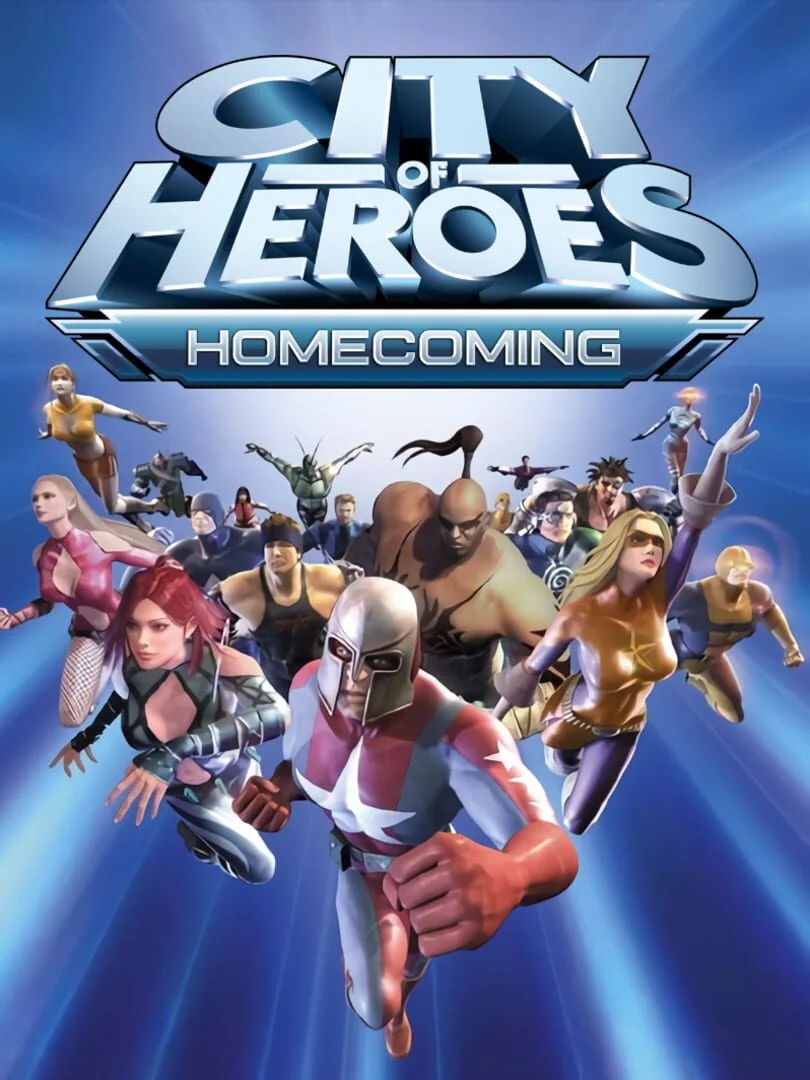
Modern design brains look at that and immediately reach for the nerf bat and the spreadsheet. “We’ll keep the fantasy, but we’ll do it right this time.” No, you won’t. Because that mess was the point.
CoH’s real magic wasn’t some perfectly tuned trinity combat. It was the feeling that the rules were barely holding together while everyone tried increasingly stupid ideas, and half of them actually worked. You could break the game in hilarious ways. You could build a concept character that made no numerical sense and still find a niche. You could be “wrong” on paper and still have fun because the game wasn’t constantly slapping your wrist for non-meta play.
Successor projects looked at that chaos and saw a problem to fix instead of a feature to lean into. They obsessed over being “more solid” and “more modern,” and in the process they lost the one thing City of Heroes had in spades: a willingness to be structurally stupid in service of player fantasy.
Superhero logic doesn’t make sense, and CoH is the only MMO that embraced that
Strip the nostalgia away and think about superhero fiction for a second. It is nonsense.
You’ve got Daredevil, a blind lawyer whose powers basically make him not blind and whose main skill is “punching guys in alleys.” In the same city, you’ve got Iron Man, a billionaire who could end most street crime overnight by dropping an army of drones. The Avengers operate out of a flying base while Spider-Man worries about paying rent. None of this fits together. That’s the charm.
Superhero universes survive on tone, momentum, and emotional stakes, not logical coherence. The more you try to iron out the contradictions, the more you drift into vague “cinematic universe” sludge where everything is “grounded” and nothing is actually fun.
City of Heroes accidentally nailed that “comic book nonsense” energy better than anything before or since.
Look at what the game actually lets you do:
Look at what the game actually lets you do:
🎮 Get This Game at the Best Price
Compare prices instantly and save up to 80% on Steam keys with Kinguin — trusted by 15+ million gamers worldwide.
*Affiliate link — supports our independent coverage at no extra cost to you
- Reskin your radiation powers to look like hellfire or toxic sludge and roleplay a demon or a bioterrorist even though the underlying numbers are identical.
- Level from 1-50 almost entirely in custom player-made missions, task forces, seasonal events, or farming maps where you literally herd enemies into an XP blender.
- Jump from street-level gang busting to fighting in a mystical island, then time travel to an ancient Greco-Roman dimension where fascists are teaming up with toga-wearing warlords, and nobody stops to ask if this tracks with the setting bible.
- Sidekick or exemplar yourself up and down so your level doesn’t really matter unless you want it to.
None of this is “clean.” The lore is a patchwork quilt. Systems feel bolted on – crafting, bases, mission architect – because they literally were bolted on. And yet the whole into super-verse: city thing somehow coheres because that’s how long-running superhero comics feel: you can always tell when the writers just made some shit up two weeks ago and decided it’s canon now.
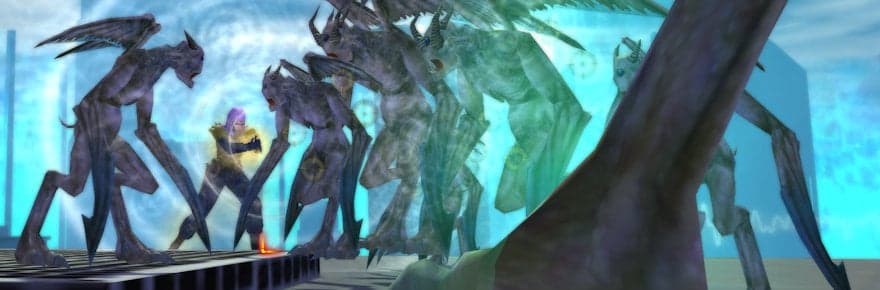
Ship of Heroes and City of Titans both claim the same inspiration, but they come at it like archivists, not co-conspirators. They’re building museums to CoH’s ideas instead of embracing the underlying philosophy of “it doesn’t have to make sense; it just has to rip.”
Ship of Heroes & City of Titans: respectful, earnest… and missing the joke
I don’t enjoy dunking on small, passionate teams, but I’ve followed these projects for years, backed some, played betas, and I’m tired of pretending the emperor’s costume editor is enough.
Ship of Heroes looked, on paper, like the smarter bet. Unreal Engine, a weird generation ship setting, faster combat. When I finally got hands-on time, the first thing I thought was, “Huh, this does feel like CoH… but just CoH.” Archetypes that are basically Tanker/Scrapper/Blaster analogs. Power picks that feel like shuffled versions of old sets. A city that could be Atlas Park’s conservative cousin that goes to bed at 9 PM.
Mechanically, it’s not terrible. Animations are snappier, frame rates better, the devs clearly care. But the whole thing feels like someone carefully tracing over their favourite comic panel instead of drawing a new one. It’s reverent. It’s respectful. It’s also safe as hell.
The monetization talk – the buy-in price, the sub fee – didn’t help, but that wasn’t what killed the excitement for me. It was logging out after a test session and realising I hadn’t had a single moment of “what the hell is this and why do I love it” the way I do running some cursed farm map in Paragon City where the mobs con purple and the skybox is on fire.
City of Titans goes the other direction: slow, earnest, painfully transparent about being volunteer-driven. I respect the hustle. The character creator is legitimately solid. The retro aesthetic is closer to CoH than SoH’s clean sci-fi vibes, and there’s clearly heart in it.
But after a decade-plus of development, “we have a nice creator and a testbed city” doesn’t cut it when your spiritual predecessor’s private servers are giving people full campaigns, incarnate progression, and holiday events. CoT feels less like a living world and more like a fan-made museum piece dedicated to a game that refused to stay dead.
Both games, in their own ways, treat City of Heroes like a puzzle to be solved. “People loved X, Y, Z, so we’ll replicate X, Y, Z and fix the rough edges. Surely they’ll come.” But CoH’s appeal was never a bullet-point list. It was the messy intersection of wild systems, half-baked ideas, and players being trusted to do stupid things with them.
The community fervor you can’t fabricate in a design doc
Here’s a really simple litmus test: when City of Heroes shut down, people staged in-game protests, spammed costume contests, wrote letters, made videos, and kept that anger simmering for years. Secret servers ran behind closed doors, and when the dam finally burst, the response was explosive.
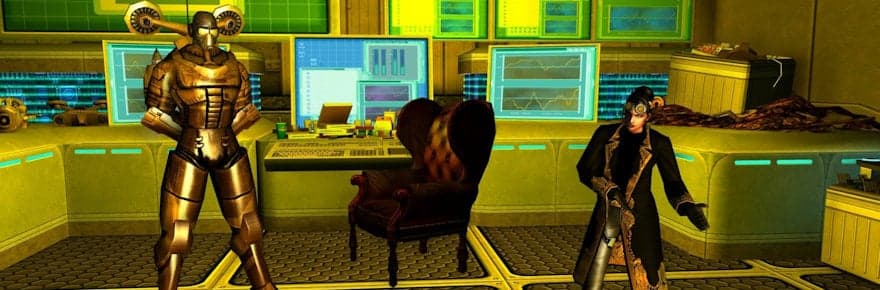
Name another superhero MMO that inspires that kind of deranged loyalty. If DC Universe Online closed tomorrow, you’d see sadness, sure. But a decade of organised yearning? I don’t buy it.
And it’s not just nostalgia. New players still wander into CoH in 2026 and find static zones, janky animations, ancient UI… and stay. Because under all that age is a design ethos that says, “Here’s a toybox. We trust you not to hurt yourself too badly. Go nuts.”
When I look at recent live-service disasters – the heavily marketed “forever games” with battle passes, roadmaps, and investor decks – the contrast is depressing. They’re built from the top down, metrics-first: retention curves, day-7 engagement, cosmetics pipelines. CoH came from the “throw systems at the wall and see what players do with them” school of design that’s almost extinct at the triple-A level.
That’s why, two decades on, a weird, dead, resurrected superhero MMO still feels more alive than games with Marvel and DC money behind them. You can buy polish. You can’t buy the feeling that the devs are winging it alongside you and sometimes letting you win.
What future superhero MMOs need to steal from City of Heroes (and what they should leave)
I don’t want another 1:1 clone of CoH. Honestly, I don’t even want a “City of Heroes 2” unless someone resurrects the old team and gives them the kind of carte blanche modern publishers simply don’t offer.
What I want – what I need if I’m going to take a new superhero MMO seriously – are devs who understand why City of Heroes still owns my brain in 2026:
- Embrace conceptual freedom over mechanical purity. Let me make “bad” builds that are thematically sick and still viable in 90% of content. Don’t funnel me into three meta archetypes and call that choice.
- Lean into tonal whiplash. Street crime next to cosmic horror next to magic castles next to Nazi robots. Superhero universes are mash-ups. Let your into super-verse: city game be a mess of genres with personality, not a sterile cinematic universe.
- Let systems stack weirdly. Sidekicking, exemplaring, set bonuses, travel powers, temporary powers, accolades – CoH is a Frankenstein monster of overlapping mechanics. Some of them break in glorious ways. That’s good. Give players levers to pull.
- Respect player-run chaos. Architect farms, costume contests, ridiculous base builds – CoH thrived because players could turn the game into something the devs didn’t fully anticipate. Stop locking everything behind curated queues and balance passes.
- Accept that not everything needs to be “fixed.” If the only thing you take from CoH is “we can do this, but balanced,” you’ve already lost the plot.
Ship of Heroes and City of Titans aren’t failures because they’re ugly or buggy or underfunded. They’re failures – so far, at least – because they don’t seem willing to be as irresponsibly playful as the game they’re desperately trying to succeed.
City of Heroes is still my gold standard not because it’s perfect, but because it never let perfection get in the way of being joyful. It captured the full, contradictory, nonsensical spirit of superhero stories – the guilt and the grandeur, the street brawls and the cosmic nonsense, the serious roleplay and the guy named “Punch Man” in bright neon green.
Until a new MMO is brave enough to stop treating that chaos as a bug and start treating it as a mission statement, I’ll keep logging into Paragon City, janky mittens and all. Because in a crowded market of sterile live services and nostalgia bait, City of Heroes is still the only one that actually feels like stepping into a comic book – not just posing for the cover.
FinalBoss // Gear
Level up your setup
01Graphics cardson Amazon→02Gaming laptopson Amazon→03High-refresh gaming monitorson Amazon→04Discounted game keyson Kinguin→Affiliate links · As an Amazon Associate, FinalBoss earns from qualifying purchases.
Want to Level Up Your Gaming?
Get access to exclusive strategies, hidden tips, and pro-level insights that we don't share publicly.
Ultimate Gaming Strategy Guide + Weekly Pro Tips