
Civ 7’s 1.2.5 Patch Swings Hard: New Maps, Anti-Snowball Balance, and a Real Napoleon
Game intel
Civilization 7
Add the Tonga civilization to your collection for the Antiquity Age in Sid Meier's Civilization VII!
Civ 7’s biggest course correction yet actually targets the right problems
Civilization 7’s 1.2.5 update is the kind of patch you cross your fingers for when a series icon ships a little wobbly. This one doesn’t just tweak numbers; it takes a swing at the foundations-map generation, city decision-making, snowball economics-and even rewrites Napoleon from the ground up. Firaxis recommends starting a new game to feel it all, and for once that’s not PR hedging; too many core systems change here to judge it off an old save.
Key takeaways
- New world generator and two hybrid map types aim to break the “samey” Civ 7 start.
- City development UI finally surfaces the info you need without handholding.
- Stacking percentage yields are largely gone; flat bonuses and rising build costs slow the snowball.
- Two new city-state types and a full Napoleon rework reshape diplomacy and war tempo.
Maps that don’t play themselves
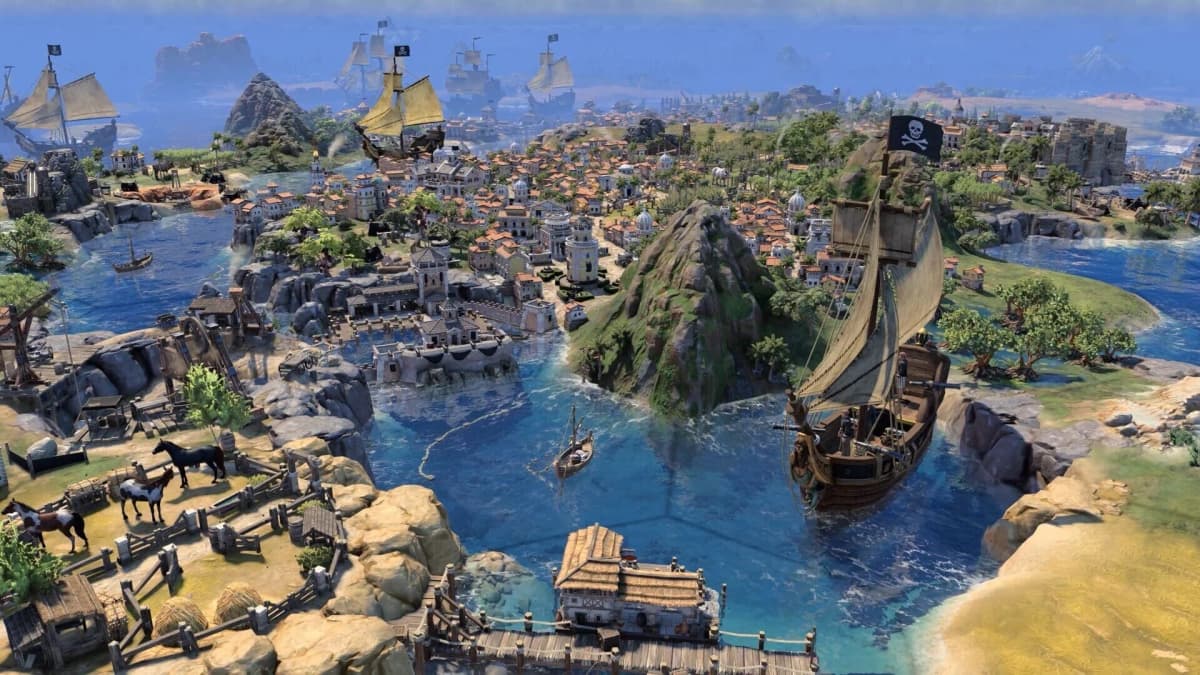
The new world-generation algorithm is the headline, and it should be. Civ 7’s early game has felt predictable: scout a corridor, hit the same resource clusters, execute the same opener. Firaxis ditched the old script and added two hybrid types-Continents and Islands (now the default) and Pangaea and Islands—promising “significantly less predictable map shapes.” That could be the difference between a naval non-factor and a midgame where a couple of well-timed frigates decide a continent’s fate.
There’s a trade-off: less predictability means less competitive “fairness.” If you play MP lobbies or care about mirrored balance, you’ll probably slide back to the classic options. But for single-player variety—the soul of Civ for many of us—this is the right call. It reminds me of how the best Civ V map scripts (shoutout to Communitas veterans) kept you guessing without devolving into chaos.
City development UI: less guesswork, more strategy
I didn’t expect the city development overhaul to be my favorite change, but here we are. Production menus, building placement, and growth events now surface the “why” behind choices without funneling you into one “optimal” pick. If you’ve bounced off Civ 7’s opaque tooltips, this feels closer to modern strategy standards—think Old World’s clarity—where the interface respects your time instead of turning basic planning into homework.
In practice, the benefit is obvious: deciding between a Workshop versus housing now weighs visible short- and long-term returns. You can actually plan a specialization path for a city instead of building whatever happens to light up green. It’s an overdue quality-of-life upgrade that makes the new balance pass click.
Killing the snowball (or at least slowing it)
Firaxis has ripped out “almost every stacking percentage bonus” for yields, leaving most % effects to leaders and civs and replacing the rest with flat bonuses “that are still meaningful but don’t snowball uncontrollably.” Their line nails it: “When you snowball, it should be because of smart decisions, not repeated 3% bonuses.” If you ever watched midgame numbers spiral from a pile of small modifiers, you know exactly what they’re aiming at.
Buildings now carry cost progression: every non-warehouse you add in a city makes the next structure pricier, and costs climb further in cities beyond your capital. The counterweight is higher base yields on most buildings. Translation: wide empires can’t brainlessly fill every slot in every settlement, and tall play gets real leverage if you commit to a city’s identity. Pick the commercial hub city and double down; stop painting the map with identical “jack-of-all-trades” burbs.
The economy takes its own check. Base production in towns is reduced, unit maintenance is bumped and rebalanced, and gold won’t feel like monopoly money anymore. Armies now carry genuine opportunity cost; you’ll think twice before keeping that extra line of archers idle. Social policies, resources, city-state effects, modern tech costs, and civ abilities get tuning passes to fit the new pacing. The big question is whether the AI understands this leaner economy. If it does, Deity could finally play less like a math exploit and more like a knife fight.
Want to Level Up Your Gaming?
Get access to exclusive strategies, hidden tips, and pro-level insights that we don't share publicly.
Ultimate Gaming Strategy Guide + Weekly Pro Tips
City-states and Napoleon get real roles
Two new city-state types, diplomatic and expansionist, add meaningful forks. Suzeraining diplomatic states boosts happiness and influence, plus you get a new diplomatic option each age. Expansionist states juice food and growth to fuel either tall investment or calculated wide play. Crucially, the best bonuses now sit behind focusing on a type—no more scattershot envoy spam for “a bit of everything.” This nudges you toward an identity each run, which is exactly what Civ 7 has been missing.

Napoleon’s rework finally matches the name on the tin. Emperor Napoleon leans into sanctions, with rewards scaling as he targets more leaders—an economic warfare angle we don’t see often. Revolutionary Napoleon stacks military bonuses and gets nastier if you can bait opponents into declaring on you. That last bit is going to be spicy in multiplayer: provoke, posture, profit. Either way, Napoleon now asks you to play the table, not just slam swords.
Is Civ 7 back on track?
Firaxis calls this “the first step,” and it reads like one—foundational, not flashy. The map changes promise replay value, the UI stops fighting you, and the new economy curbs tedious snowball loops without strangling power fantasies. I’m cautiously optimistic. Cost scaling can feel punitive if overtuned, and unpredictable maps can produce lopsided starts, but these are the right problems to be solving in 2025.
One practical note: mods and old saves won’t show the full effect. Start fresh to judge the patch fairly, and give Deity a spin to see if the difficulty spike is real. If Firaxis keeps iterating at this level—targeting identity, clarity, and pacing—Civ 7 has a path from “rough launch” to “worthy heir.”
TL;DR
Update 1.2.5 rebuilds the map generator, overhauls city UI, slashes stacking % bonuses in favor of flats, adds two new city-state types, and reworks Napoleon. It’s a foundation patch that slows the snowball and pushes real choices—start a new game to feel the difference.