
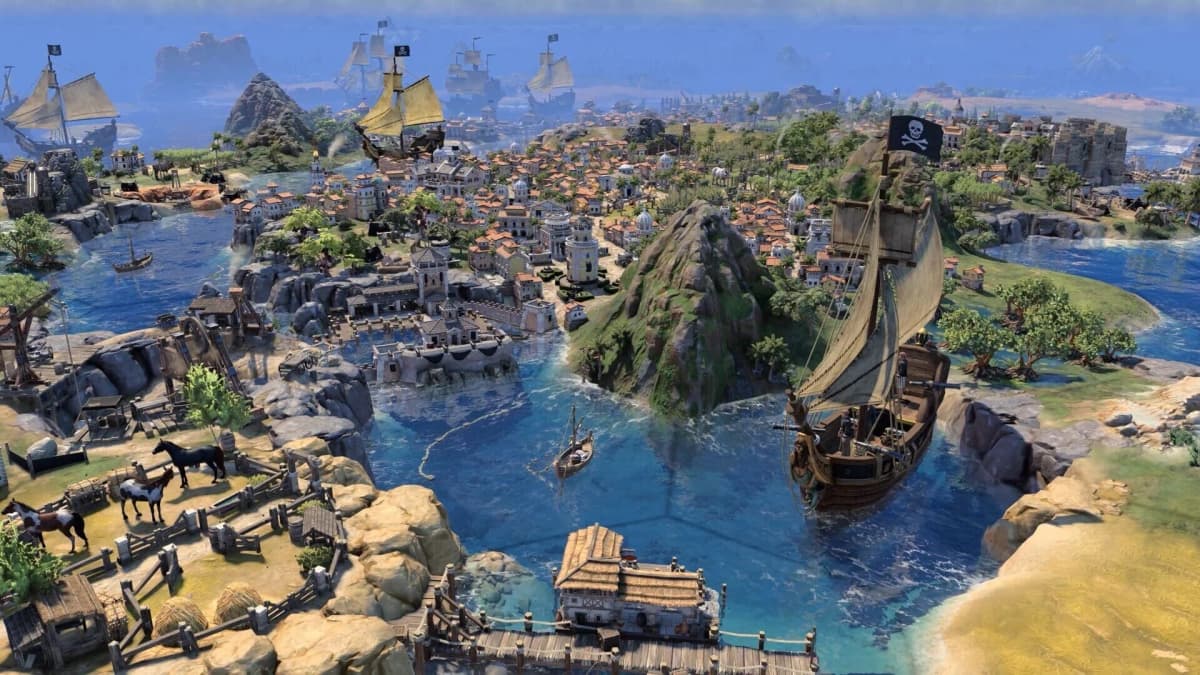
Civ 7’s Naval Combat 2.0 Aims to Make the Oceans Dangerous Again
Game intel
Civilization 7
Add the Tonga civilization to your collection for the Antiquity Age in Sid Meier's Civilization VII!
Sea Change: Why This Patch Actually Caught My Eye
I’ve stuck with Civilization 7 through its uneven launch and the recent UX clean-up, but the seas always felt like busywork-necessary for scouting, rarely decisive. Update 1.3.0’s “naval combat 2.0” finally targets the core issue: every ship behaved like a melee brawler, so heavier hulls simply out-traded everything. Firaxis now says the goal is “more strategy, less ambiguity, and fleets that feel like fleets,” and for once the design changes back that promise up.
Key Takeaways
- True ranged naval combat is back, splitting the roster into light (melee, scouting) and heavy (ranged, siege) roles.
- Privateer returns as an all-civ raider unlocked via a civic, able to ignore borders and plunder without formal war.
- Submarines become glass cannons-the strongest naval strike, but fragile and positional.
- Tides of Power collection is free to claim for two months, adding leaders, civs, and wonders themed around the high seas.
Breaking Down Naval Combat 2.0
Firaxis has split ships into two clear archetypes. Light units are fast melee hulls with better vision-your galleys and quadriremes in Antiquity, then Privateers in Exploration, and Ironclads/Cruisers/Destroyers in the Modern Age. These screen, scout, and finish. Heavy units are slower, see less, and finally fire from range: Cogs, Carracks, and Galleons in Exploration; Frigates, Dreadnoughts, and Battleships later. The studio says melee and ranged strengths have been rebalanced to match the roles.
This matters because Civ 7 previously blurred naval identities. Even ships that visually shelled from a distance still took reciprocal damage like melee. If you played Civ V or VI, you remember the opposite: frigate lines softening coasts while caravels screened. Update 1.3.0 brings that clarity back. Early ages should still play like skirmishing knife fights, but the Exploration Age is where the meta flips—heavy hulls start dictating sea lanes and sieges.
The newly added Privateer is the spice. Unlocked by the Heraldry civic for every civ, it ignores borders, plunders trade for instant cash, and can smack military units regardless of formal war. Yes, you’ll still take diplomatic hits, but this is the harasser that forces neighbors to patrol. It’s the unit that makes “just one fishing village” a liability on the wrong coastline.
Then there’s the submarine—now explicitly framed as a ranged glass cannon with the strongest naval strike in the game. That’s a double-edged torpedo: massive impact if you control vision and timing, catastrophic if you get spotted in the open. The designers call out “keep it hidden and out of enemy range” for a reason; expect subs to reward ambushes and punish sloppy pathing.
Why This Could Change Your Game (If Firaxis Sticks the Landing)
Ranged heavies make coastal cities vulnerable in a way they haven’t been in Civ 7. A line of Galleons or Frigates behind a screen of light ships means real sieges from the sea. Trading companies and wonder-stacked coastal capitals suddenly need escorts and coastal batteries, not just a beefy melee ship parked nearby.
Vision and tempo become the currency of naval dominance. Light hulls with extra sight feel purpose-built for pickets and flankers, while the slow, high-impact heavies punish you for overextending. That interplay is what Civ’s oceans have been missing: reasons to build mixed fleets instead of spamming whatever has the biggest number in the production panel.
Real talk, though: the AI has to understand this. Civ’s naval AI has historically struggled with screening, focus fire, and zone control. If the computer sails heavies into melee range or fails to protect transports, the seas will still feel like free real estate. If it plays to the new roles, multiplayer and single-player both get nastier, smarter coastlines.
I also want to see how detection and counterplay shake out. Destroyers traditionally hunt subs, but Firaxis hasn’t spelled out new visibility rules here. Without reliable counters, subs might swing from meme to menace overnight. The studio’s claim of “more strategy, less ambiguity” lives or dies on UI clarity: attack ranges, sight lines, and threat indicators need to be legible at a glance.
Want to Level Up Your Gaming?
Get access to exclusive strategies, hidden tips, and pro-level insights that we don't share publicly.
Ultimate Gaming Strategy Guide + Weekly Pro Tips
Tides of Power: Free Content That Actually Fits the Moment
Alongside the patch, the Tides of Power collection is free to claim for owners of the base game from Tuesday November 4, 2025 through Monday January 5, 2026. It adds leaders Edward “Blackbeard” Teach and Sayyida al Hurra; new civs Tonga, Republic of Pirates, Ottomans, and Iceland; and four wonders: the Great Lighthouse, Nan Madol, the Great Blue Hole, and the Mapu’a Vaea Blowholes.

That lineup screams synergy with the naval overhaul. A Republic of Pirates playthrough raiding trade networks with Privateers feels obvious but fun. Ottomans historically love bombardment—pair them with ranged heavies and you’ve got a flavorful siege machine. Wonders like Great Lighthouse and Nan Madol naturally incentivize coast-first strategies. It’s smart marketing, sure, but it also gives players reasons to test the new systems immediately.
The Bigger Picture: A Potential Turning Point
Civ 7 hasn’t had that one killer patch that flips sentiment. Recent city menu overhauls helped, and Firaxis has floated plans to let us play full campaigns as a single civ through the ages—another big request. But combat identity is foundational, and naval has been the flattest part of the game. If 1.3.0 delivers readable roles, meaningful counters, and AI that respects the seas, this could be the moment momentum finally turns.
TL;DR
Civ 7’s update 1.3.0 splits ships into light melee scouts and heavy ranged bruisers, brings back proper naval bombardment, adds a raiding-focused Privateer, and retools subs into high-risk nukes. Pair that with a two-month free Tides of Power pack and the oceans might finally matter—if the AI and UI keep pace.