
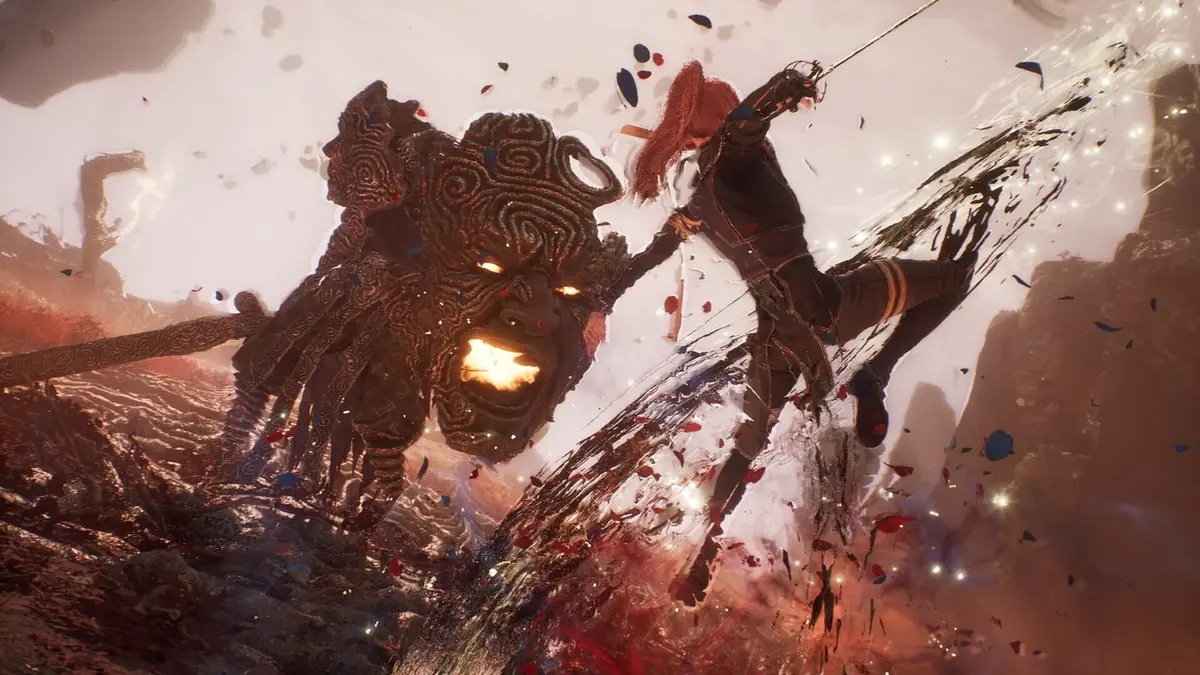
“Turn-based RPG” is a useful label, and for Clair Obscur: Expedition 33 it would have been a lousy lead. That contradiction sits at the heart of Shuhei Yoshida’s advice to Sandfall Interactive and Kepler Interactive: the game deserved to be understood through the tension of its battles, not dismissed through the baggage attached to a genre tag.
At Busan Indie Connect Festival 2026, the former PlayStation executive recalled trying Clair Obscur: Expedition 33 roughly two years before release. He was impressed enough to warn the team away from calling it a “turn-based RPG,” because some players had learned to read that phrase as a warning label for slow menus, low urgency, and dusty design. His preferred wording, “reactive turn-based battles,” was far more useful because it described the part players would physically feel: selecting actions while staying alert for dodges, parries, and counters.
Yoshida was right. He was also pointing at an ugly habit in game marketing that deserves more heat than it gets. Publishers keep treating genre as the pitch, then act surprised when players make a snap judgment from three sterile words. Genre tells someone where a game sits on a shelf. It rarely explains why they should care about spending 40 hours inside it.
Table of Contents (6)
An accurate label can still be terrible marketing
I value genre labels. They save players time, help people filter storefronts, and prevent the kind of purchase regret that turns a reasonable complaint into a week of online screaming. Anyone who specifically wants a turn-based RPG deserves to know that Clair Obscur: Expedition 33 uses turn order, Abilities, Ability Points, melee attacks, ranged attacks, and deliberate party decisions.
But a label-first pitch creates a brutal problem: it asks the audience to fill in the interesting details themselves. In this case, the details are the whole appeal. Expedition 33 gives the player turns to plan, then demands active defensive timing when attacks come back their way. A dodge can save a character. A well-timed counter can flip momentum. A parry is not decorative animation layered over a menu; it changes the emotional texture of an encounter from passive command selection into sustained engagement.
That distinction matters because players do make fast judgments. I do it constantly while scrolling storefront pages and trailers. “Turn-based RPG” can be enough information when I am actively searching for the genre. When I am deciding whether a new game has a fresh combat identity, though, it tells me almost nothing. It leaves out the pressure, the timing, and the skill expression that separate Expedition 33 from the tired stereotype Yoshida was trying to avoid.
The phrase “reactive turn-based battles” earns its keep because it solves that problem in four words. It preserves the tactical promise of turns while immediately telling an action-minded player that their hands will stay involved. That is a pitch. “Turn-based RPG” is filing information.
The sales numbers make this more than a cute marketing anecdote
Clair Obscur: Expedition 33 launched on 24 April 2025 for PlayStation 5, Windows PC, and Xbox Series X/S, with day-one availability through Xbox Game Pass. Sandfall Interactive and Kepler Interactive then watched it explode at a speed that should make every publisher paying attention rethink how it introduces turn-based combat.
- 500,000 copies sold in its first 24 hours.
- 1 million copies sold in three days.
- 2 million copies sold in 12 days.
- 3.3 million copies sold in 33 days.
- 8 million copies sold by 24 April 2026, its first anniversary.
Anybody claiming that one smart phrase sold eight million copies is selling consulting fumes. Great positioning cannot manufacture satisfying combat, memorable art direction, or a game players want to recommend to friends. Expedition 33 had to deliver after the marketing earned its first click.
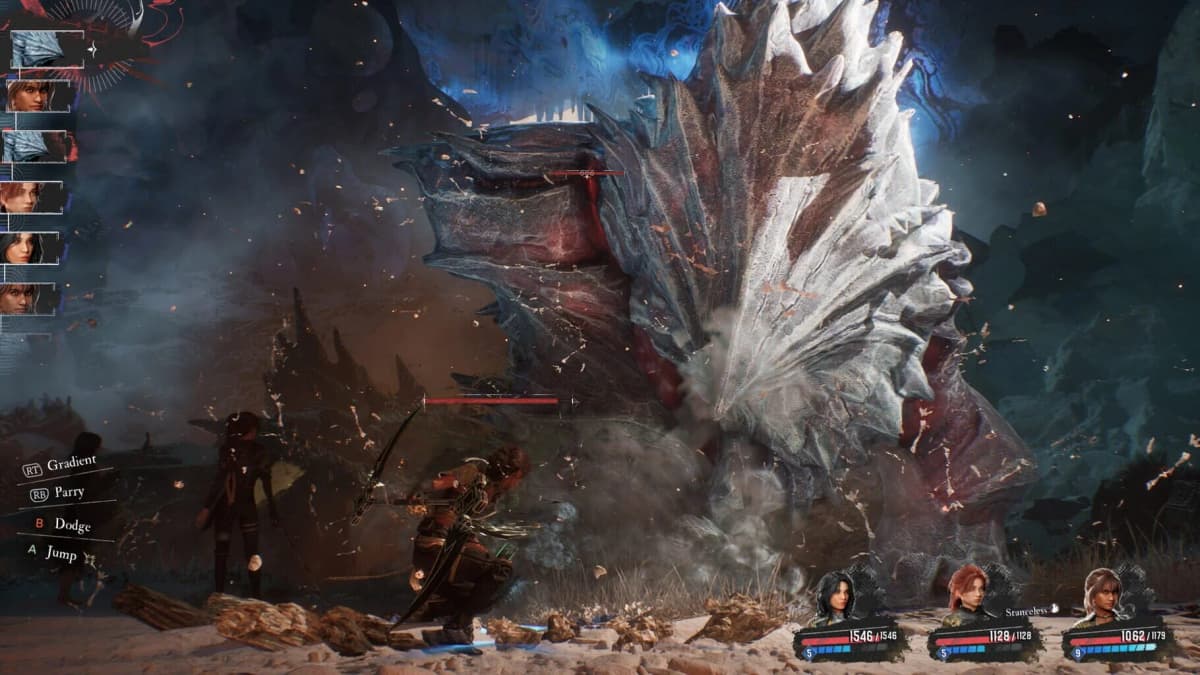
Still, those numbers matter because they prove that turn-based combat did not cap the game’s audience. The lazy industry assumption says that a modern hit needs to sand down turns, hide them, or replace them with full real-time action. Expedition 33 took the better route: it made the turn structure feel immediate, then gave players language for understanding why.
That is the real lesson. The commercial ceiling was never “turn-based.” The ceiling was the stale mental picture that the words “turn-based RPG” trigger when no one bothers to explain the actual battle loop.
“Reactive” works because the game can back it up
Marketing people love to grab a word that worked once and spray it across every pitch deck in the building. “Reactive” will become meaningless fast if studios use it for combat where a timed button press barely matters. Players are far better at detecting empty language than publishers like to admit.
Expedition 33 earns the word. Its battles ask players to think through their turns, spend resources, choose attacks, and respond under pressure. The game does not abandon the strategic rhythm that makes turn-based combat satisfying. It adds interaction density inside that rhythm. That is the part a trailer needs to show in the first few seconds, because a player can understand a successful dodge or counter immediately.
There is a crucial distinction here. Real-time inputs do not automatically make combat deeper, smarter, or more prestigious. Plenty of turn-based systems should stay fully deliberate and never apologize for it. A studio with slow, cerebral, menu-driven combat should sell the pleasure of planning, party-building, and consequences. It should not borrow “reactive” as camouflage because the word happens to test well.
Sandfall had a system with a genuine split identity: tactical selection on one side, timed physical response on the other. Yoshida saw that the usual label flattened the game into only one half of itself. His advice was not anti-genre. It was anti-lazy description.
How developers should pitch this kind of combat
The first rule is brutally simple: lead with the mechanic a player will remember after watching 10 seconds of footage. Put the genre in the description, the store tags, the feature list, and the lower half of the pitch. Let the top line communicate the sensation of play.
| Pitch surface | Lead with | Keep secondary |
|---|---|---|
| Storefront headline | Timed defensive responses, active counters, and tactical action selection | Broad genre classification |
| Trailer opening | A visible dodge, parry, or counter that changes an encounter | Abstract promises about depth |
| Social post or feature graphic | One clear player decision and the immediate consequence of executing it well | Vague combat adjectives with no proof |
The second rule is to give players a reference frame built from actions rather than heritage. “You choose a turn, then you must read an incoming attack.” That sentence tells a player more about Expedition 33 than an entire cloud of genre jargon. It also respects the audience enough to show the friction point upfront. People who want that pressure lean closer. People who hate timing-based defense know exactly what they are getting.
The third rule is to stop treating clarity as a compromise. A clean explanation does not weaken a game’s mystique. It protects the game from being judged as something it is not. Players should never need to buy a game, dig through a tutorial, and discover its central hook by accident because the marketing team hid behind a familiar category.
Genre tags still belong in the conversation
I refuse to let the Yoshida story turn into a smug funeral for the term “turn-based RPG.” That would be just as shallow as using it as the whole ad campaign. Genre remains a promise between developer and player. It signals pacing, expectations, and a huge chunk of mechanical identity. Removing it entirely would make discovery worse for the people who already know what they like.
The problem is hierarchy. In the case of Clair Obscur: Expedition 33, “turn-based RPG” belonged in the metadata and supporting copy. “Reactive turn-based battles” belonged in the spotlight. One gives the player a category; the other gives them a reason to care.
That ordering also respects the people Yoshida was worried about: players who had drifted away from turn-based games because they associated them with waiting. Expedition 33 did not need to argue that those players were wrong or uncultured. It needed to demonstrate that the thing they feared was not the whole experience.
Sandfall’s success should embarrass lazy pitches
The coming wave of copycat messaging is inevitable. Plenty of games will call themselves “reactive” in the hope that a fashionable adjective can do the work of actual combat design. Most of them will expose themselves quickly. A word cannot create impact where there is none.
But Sandfall Interactive and Kepler Interactive have handed developers a better standard. Show the loop. Name the decision. Make the player understand what their hands are doing during a fight. Then add the genre label where it helps rather than letting it become the entire elevator pitch.
Shuhei Yoshida’s advice was the right call because Clair Obscur: Expedition 33 needed to sell its energy before its taxonomy. Eight million copies later, developers still pitching turn-based games with nothing but a genre tag have no excuse. Sell the combat people will play, not the filing cabinet you put it in.
FinalBoss // Gear
Level up your setup
01Top-rated gaming headsetson Amazon→02High-refresh gaming monitorson Amazon→03Gaming chairson Amazon→04Discounted game keyson Kinguin→
Affiliate links · As an Amazon Associate, FinalBoss earns from qualifying purchases.
Want to Level Up Your Gaming?
Get access to exclusive strategies, hidden tips, and pro-level insights that we don't share publicly.
Ultimate Gaming Strategy Guide + Weekly Pro Tips