
Table of Contents (9)
The night Clair Obscur’s ending snapped me out of its spell
Near the end of Clair Obscur: Expedition 33, I was completely in. I’d bought into the hype, the “generational masterpiece” buzz, the whole grim fairytale of a world painted into a doomed loop. I’d suffered through the brutal early expedition massacre, adapted to the parry-or-die combat, and actually cared about this found family staggering toward the Paintress at the edge of oblivion.
And then the final “choice” hit, and the spell broke.
On paper, it’s everything I want from a modern RPG ending: two deeply messy paths, both soaked in grief. Either side with Verso and destroy the Canvas, forcing the Dessendre family to accept reality and loss… or side with Maelle/Alicia and keep the painted refuge intact, letting everyone stay in a beautiful lie a little longer.
That should be agonising. I wanted it to be agonising. I love endings that hurt in the right way. But standing there on that flower-strewn battlefield, with Renoir’s war on the Canvas about to come crashing down, I didn’t feel torn; I felt railroaded. Not because of the dialogue, but because the entire structure of Clair Obscur: Expedition 33 had already decided which side I was “supposed” to pick.
What made that sting even more is that I’d played another “constructed refuge” RPG not long before – The Caligula Effect: Overdose – that tackles almost the same emotional territory and actually lets staying in the illusion feel like a morally complicated, painfully human decision. After that, seeing how Clair Obscur handles Maelle, Aline and the “stay inside” path left me frustrated in a way I haven’t stopped thinking about.
Massive spoilers for both games from here on out.
Two games, one idea: grief as a world you build to survive
Stripped down, both Clair Obscur: Expedition 33 and The Caligula Effect: Overdose are about people so crushed by pain that they create new worlds to hide in.
In Clair Obscur, Lumière and the yearly expeditions exist inside the Canvas, a painted world born from Aline Dessendre’s grief. Her son Verso died in a fire, saving his sister Alicia. Broken and furious, Aline dives into one of Verso’s paintings, becomes the Paintress, and starts rewriting reality itself – freezing her family in an endless cycle where she can keep a version of her son alive, no matter how many times that rickety expedition gets wiped out.
The twist is that the “Maelle” we’ve been following is Alicia herself, remade inside the painting. The immortal Verso we travel with is a construct, too. When we finally beat the Paintress, Aline is ejected back into the “real” world, while Renoir decides the only way to end this sickness is to destroy the Canvas entirely. That’s the conflict the finale builds around: save the painting or smash it to pieces.
In Caligula Effect: Overdose, the refuge is Mobius: a digital high school dream crafted by an AI idol, μ (Mu), who wants to rescue miserable people from their trauma. Everyone inside is stuck reliving their “ideal” youth, looping pop songs on repeat while their real bodies rot somewhere in the real world. It’s Persona by way of Vocaloid and therapy, except the therapy’s gone completely off the rails.
Where the overlap hits hard is in the details: fires that kill siblings, bodies that don’t work properly anymore, parents who can’t deal with what’s left. Alicia and Kuchinashi both drag burned lungs and damaged voices through their respective refuges. Both are literally built around the idea that there is a place — painted or digital — where the pain is at least muffled enough to breathe.
The difference is in how those games treat the desire to stay.
Clair Obscur’s finale talks about choice, but plays like it picked a side hours ago
The developers have said publicly they see the two Clair Obscur endings as “two sides of the same coin,” and they’ve even called the result a Schrödinger’s ending — no canon, both valid, future stories built around that uncertainty. On a PR level, fine. As an idea for a universe that keeps spinning regardless of which save file you have, sure.
But as someone who actually sat with that controller in hand, the game itself did not feel neutral.
From the moment Gustave dies early on (in a gut-punch that genuinely worked), Verso becomes the spine of the entire experience. He’s the lead in cutscenes, he’s the character the camera loves, and even when you swap the field leader model, the story very clearly orbits him. This isn’t “an ensemble RPG” with two balanced protagonists; it’s Verso’s redemption quest that Maelle happens to be attached to.
The systems double down on that bias. Clair Obscur: Expedition 33 is outright hostile if you don’t internalise its parries, dodges and gradient counters — even on lower difficulties. The combat is tight as hell, a cool hybrid of action timing in a JRPG skeleton, but it also quietly carries a message: survival belongs to those who master the rules, push through, keep going. Verso is the poster child for that mentality. He’s the immortal soldier literally trying to die because he’s done his time.
By the time you reach that final standoff in the Canvas core — young Verso painting, Maelle clinging to the one place she can “speak” freely — the entire game has coached you to see things his way. It isn’t just the script. It’s the accumulated weight of structure, camera, and mechanics.
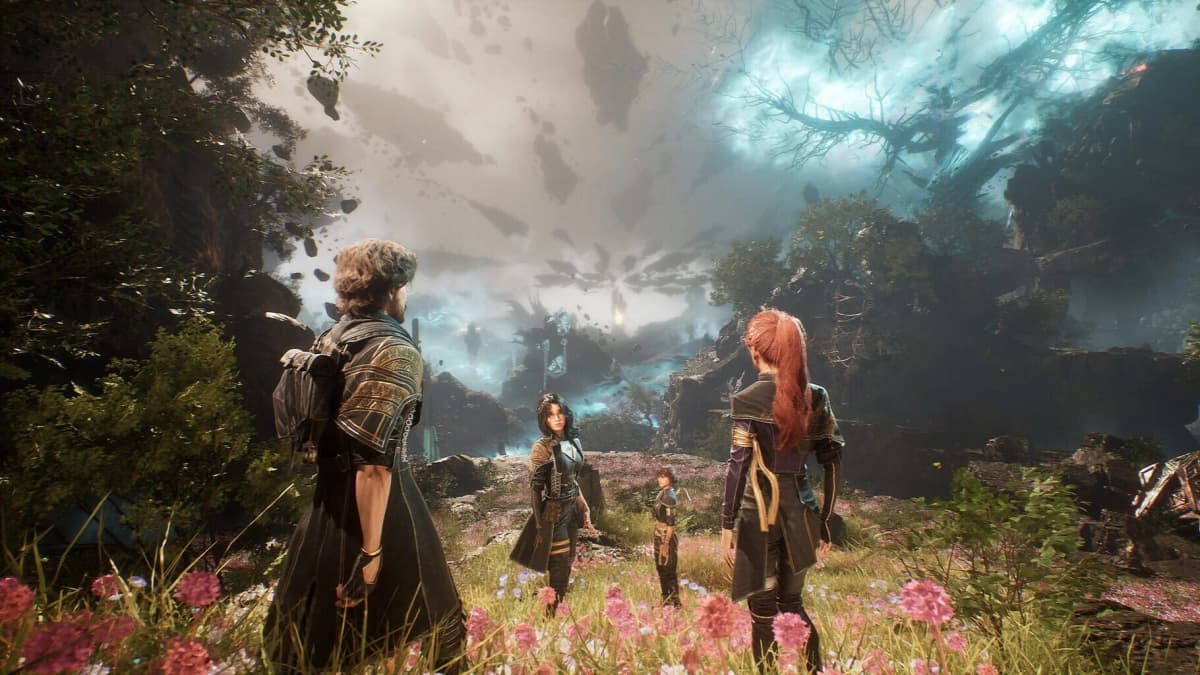
The Maelle/Alicia side simply doesn’t get the oxygen it needs. Her argument comes out in a rush: outside the painting, she’s mute, scarred, suffocating in a body and world that treat her as broken. Inside, she can fight, affect things, be heard. The game shows this external reality in the briefest flashes — a moment where her sister responds to her ‘unspoken’ words, a hint of the medical horror she lives with — then shoves her back into Verso’s story.
Aline, the original architect of this whole mess, fares even worse. We’re told she was once kind, that she saved Renoir from paintings before she lost herself in grief. We’re shown her in monstrous form, consumed by the Paintress persona. What we never really get is her inner life: the arguments she had with Renoir, the moment she decided the Canvas was better than reality, the specific ways she justified sentencing an entire city to this beautiful, decaying prison.
So when Maelle stands there mirroring her mother’s choice — choosing the Canvas over the world outside — the game frames it less as a tragic, understandable impulse and more as a selfish relapse into generational delusion. And then it twists the knife with that horror beat: Maelle piloting the false Verso’s corpse like a puppet, locked in eternal play-acting. It’s memorable, sure, but it underlines how the “stay” route exists mostly as a cautionary tale.
Mechanically, it’s even more blatant. The final boss fight if you side with Verso mirrors the opening tutorial, closing the loop in a way that screams “this is the proper route.” It literally echoes your onboarding into the game, as if the design itself is winking and nudging: remember how we started? Time to end it correctly.
So the clair obscur expedition game sells the fantasy of choosing between two equally valid responses to grief — smashing the painting or clinging to it — but the actual experience feels like it’s grading you. Pick Verso and you’re tragic but mature. Pick Maelle and you’re indulging a wrong, even monstrous choice the game couldn’t be bothered to fully justify.
Caligula Effect: Overdose actually lets staying be the empathetic answer
This is exactly where The Caligula Effect: Overdose surprised me.
Caligula Effect: Overdose actually lets staying be the empathetic answer
This is exactly where The Caligula Effect: Overdose surprised me.
🎮 Get This Game at the Best Price
Compare prices instantly and save up to 80% on Steam keys with Kinguin — trusted by 15+ million gamers worldwide.
*Affiliate link — supports our independent coverage at no extra cost to you
On the surface, it hits a lot of similar beats: you wake up in Mobius, learn it’s a fake world designed to protect traumatised people, and join the Go-Home Club to break the illusion and return to reality. JRPG 101: band of misfits, villainous musicians called the Ostinato Musicians, catchy battle themes, overdesigned high school uniforms. You know the drill.
Except the game constantly drags you back to one uncomfortable truth: the “villains” are just as broken as your friends, and they are not wrong for wanting to stay.
Overdose leans into this by letting you defect and join the Ostinato Musicians instead of the Go-Home Club. When you do, you get full character episodes for people who, in any other RPG, would be mini-bosses with a sad speech before they die. Here, they’re people who were chewed up and spat out by reality — and who finally found a place where they can breathe without choking on their history.
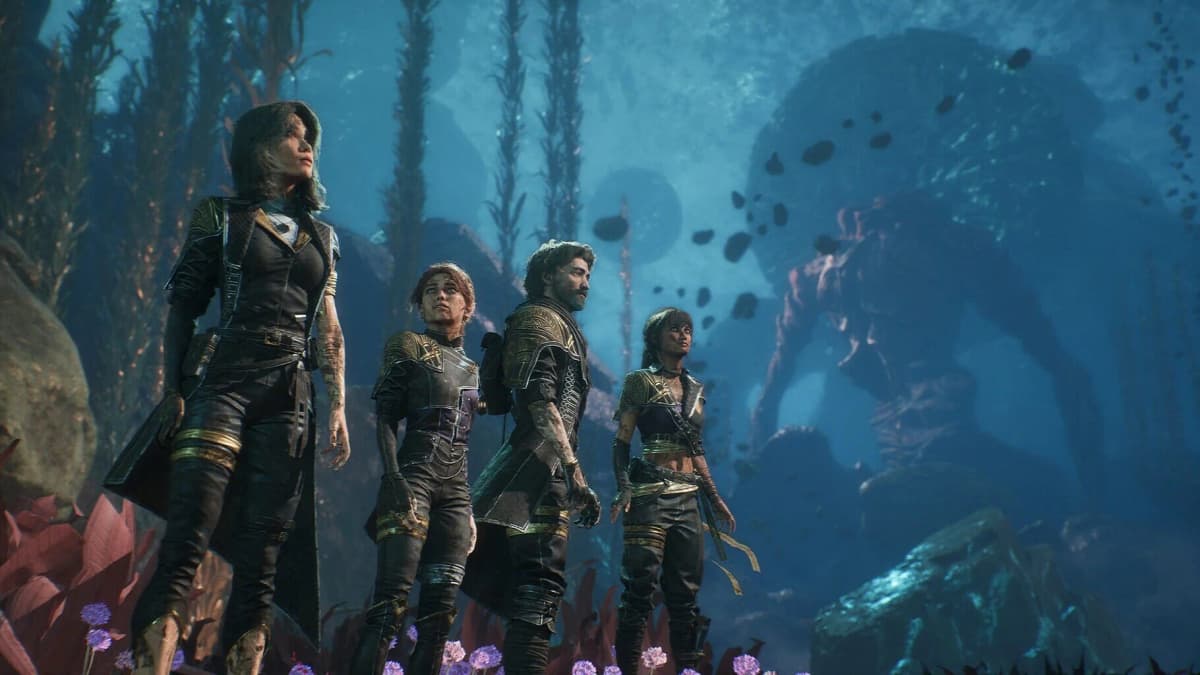
Kuchinashi’s arc is the one that really stuck to my ribs. Yumino Kurumi, her real name, lost her entire family in a fire and had to identify her sister’s body. The smoke destroyed her lungs and voice, leaving her dependent on a device to speak even inside a fantasy where μ can rewrite anything. Mobius could have simply “fixed” her, but it doesn’t, because her trauma isn’t just physical; it’s in the way she remembers her family, the guilt she carries for surviving.
Her big episode is a birthday party. A fake one. Her “family” are mannequins, literally constructed NPCs going through the motions of a warm domestic scene. It’s deeply, intentionally uncomfortable. The game makes you sit there far longer than feels polite, as the facsimiles laugh and chat and Kuchinashi clings to this grotesque simulation of normality.
Other musicians are unnerved. Even inside this already artificial refuge, they can tell she’s gone a step further, that this is a delusion inside the delusion. But the episode never just points and laughs or says “look how pathetic she is.” It asks the harder thing: of course she did this, how else was she supposed to live with that fire?
Overdose gives you tools to gently push her, to show her other ways to exist, but it never presents “staying in Mobius” as obviously the wrong endpoint. In some routes, you really do side with the musicians and keep the dream going. Maybe you decide that certain characters simply can’t survive the real world as it is. Maybe you decide they shouldn’t have to.
Mechanically, the game backs this up with flexibility: adjustable difficulty, systems that let you plan and experiment instead of forcing perfect execution, playstyles that accommodate people who aren’t here for pain. It’s telling that Caligula is comparatively forgiving, while Clair Obscur is punishing. One says “we’ll work with your limitations”; the other says “adapt or suffer.” That philosophical split bleeds straight into how their endings feel.
Two fires, two girls, one game that actually believes them
Maelle/Alicia and Kuchinashi are so closely mirrored it almost feels accidental: both survived fires that killed loved ones, both carry permanent damage to their breath and voice, both step into artificial worlds where they can finally exert some control again.
One of them gets a whole, messy, empathetic arc that invites understanding even when you disagree with her choices. The other gets a rushed monologue in the last chapter and a horror sting.
That’s what really rankles me about the way Clair Obscur: Expedition 33 lands. The bones are right there. The idea that Maelle might reasonably want to keep the Canvas — not because she’s a cartoon villain, but because the outside world has written her off as broken — is powerful. It fits the themes of generational grief, it rhymes with Aline’s original plunge into the painting, and it could have been the emotional centre of the whole endgame.
Instead, it’s a heel turn. She barely discusses it beforehand. The supporting cast, the very people she invokes in her arguments, are nowhere to be seen in that final choice. Renoir’s perspective is thoroughly aired; Maelle’s and Aline’s are treated like dangerous thoughts that should be kept off-screen until it’s time to slap the player with a bad ending.
Meanwhile, in this weird, cult-hit Vita RPG, staying in the fake world is not just a trap to escape. It can be an act of self-preservation. It can be compassion, even cowardice in a way that still makes sense. Caligula Effect: Overdose doesn’t flinch from the horror of endless delusion, but it also doesn’t pretend the “real world” is some morally superior default everyone has an obligation to return to.
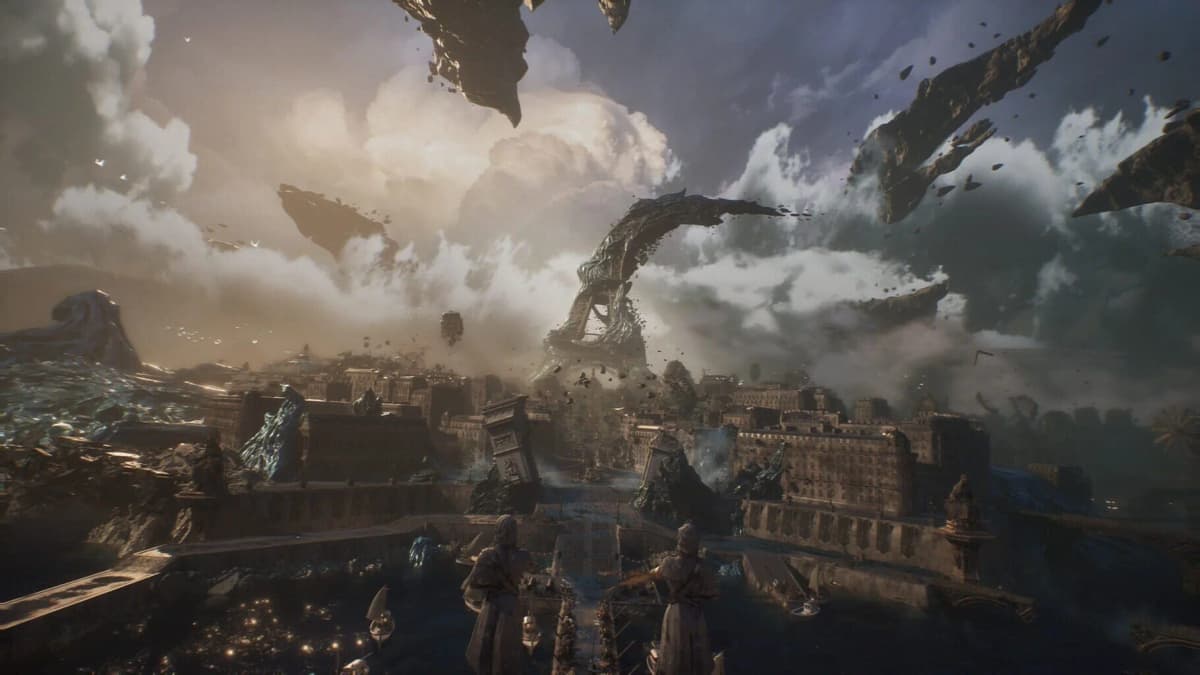
Choice isn’t real if the game is quietly grading your morality
I’m not arguing that every RPG needs to treat “stay in the illusion” as equally valid. Sometimes, a bad ending should be bad. Sometimes, you absolutely want a path that exists to tell players: this is what happens if you give in to the worst instincts in these characters.
What I am saying is that when a game markets that choice as balanced — when interviews talk about two endings like two beloved children, when marketing leans on “every path is valid” — the actual text needs to back that up. And in Clair Obscur, it really doesn’t. Not in how long it sits with Maelle’s pain, not in how it treats Aline, and definitely not in how its systems prop Verso up as The Guy You’re Here For.
The result is an RPG that, for all its brilliance in combat design and worldbuilding, gets conservative right when it needed to be brave. It builds a world where people literally paint themselves a refuge from unbearable loss, then, at the eleventh hour, decides that the only real grown-up answer is to burn the refuge down and move on.
That’s one answer. It’s Verso’s answer. It’s Renoir’s answer. It is not the only answer, and it sure as hell isn’t the only one worth taking seriously.
What I want future “grief RPGs” to learn from both
None of this makes Clair Obscur: Expedition 33 a bad game. I still think it’s one of the most interesting RPGs of the last few years, and I get why people are calling it a masterpiece. The way it fuses turn-based planning with real-time inputs is electric. The art direction is ridiculous. The mood of Lumière and the expeditions is going to stick with me for a long time.
But if studios are going to keep tackling grief and trauma through these constructed refuges — painted worlds, digital heavens, dream cities — they need to stop flinching at the point where staying actually starts to make sense.
Caligula Effect: Overdose is messy as hell. It’s clunky, the UI is dated, some of the writing is rough. But it believes its Kuchinashis. It believes that people who build dollhouse families and loop themselves through fake birthdays aren’t just obstacles for the protagonist to overcome, they’re people whose survival strategies deserve to be examined instead of dismissed.
That’s the bar I want more grief-driven RPGs to clear. If you’re going to sell me a world born from loss, don’t just pat me on the head and tell me that “moving on” is correct and anything else is a teachable mistake. Show me why the refuge exists. Let me taste the relief as well as the rot. Give the people who want to stay just as much narrative muscle as the people forcing themselves to leave.
Because when a game like Clair Obscur reaches its painted-world finale and pretends I’m making a free choice, after hours spent quietly stacking the deck in Verso’s favour, I feel it. And after living through Kuchinashi’s birthday party in Caligula Effect: Overdose, I know it doesn’t have to be that way.
I don’t need every game to agree with me. But I do need them to take the other side of grief seriously, not just punish it with a cool horror cutscene and call that nuance.
FinalBoss // Gear
Level up your setup
01Top-rated gaming headsetson Amazon→02High-refresh gaming monitorson Amazon→03Gaming chairson Amazon→04Discounted game keyson Kinguin→Affiliate links · As an Amazon Associate, FinalBoss earns from qualifying purchases.
Want to Level Up Your Gaming?
Get access to exclusive strategies, hidden tips, and pro-level insights that we don't share publicly.
Ultimate Gaming Strategy Guide + Weekly Pro Tips