
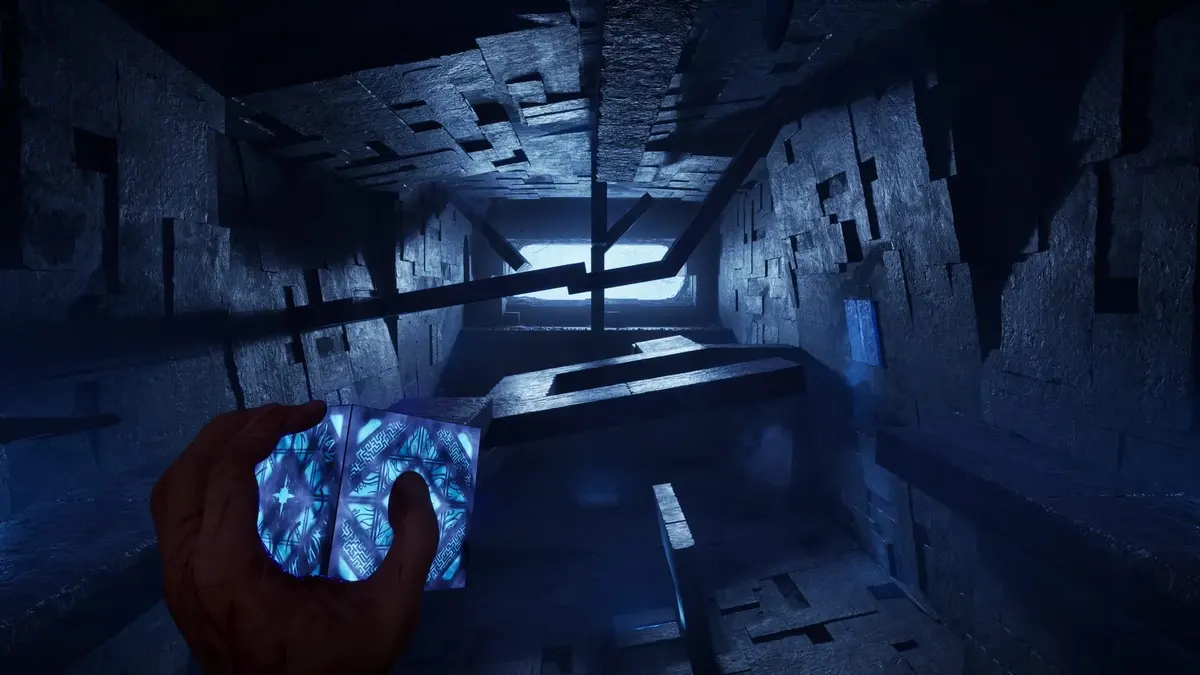
The Hellbound Heart, Clive Barker’s 1986 novella, is the foundation for Revival. Its connection between pain and desire gives this adaptation a demanding brief: the grotesque imagery needs a purpose beyond making every corridor unpleasant. I value the game most when its systems engage with that idea.
Developed by Saber Interactive, Clive Barker’s Hellraiser: Revival launched on October 8, 2026, for PC, PlayStation 5, Xbox Series X/S and Nintendo Switch 2, priced at $40 / €40.
Table of Contents (4)
The Genesis Configuration is the strongest idea
Aiden Lynch enters the Labyrinth to rescue his girlfriend Sunny after the Genesis Configuration is activated during intimacy. That premise puts the relationship between desire and danger at the centre of the story, giving the puzzle box significance before its gameplay abilities enter the picture.
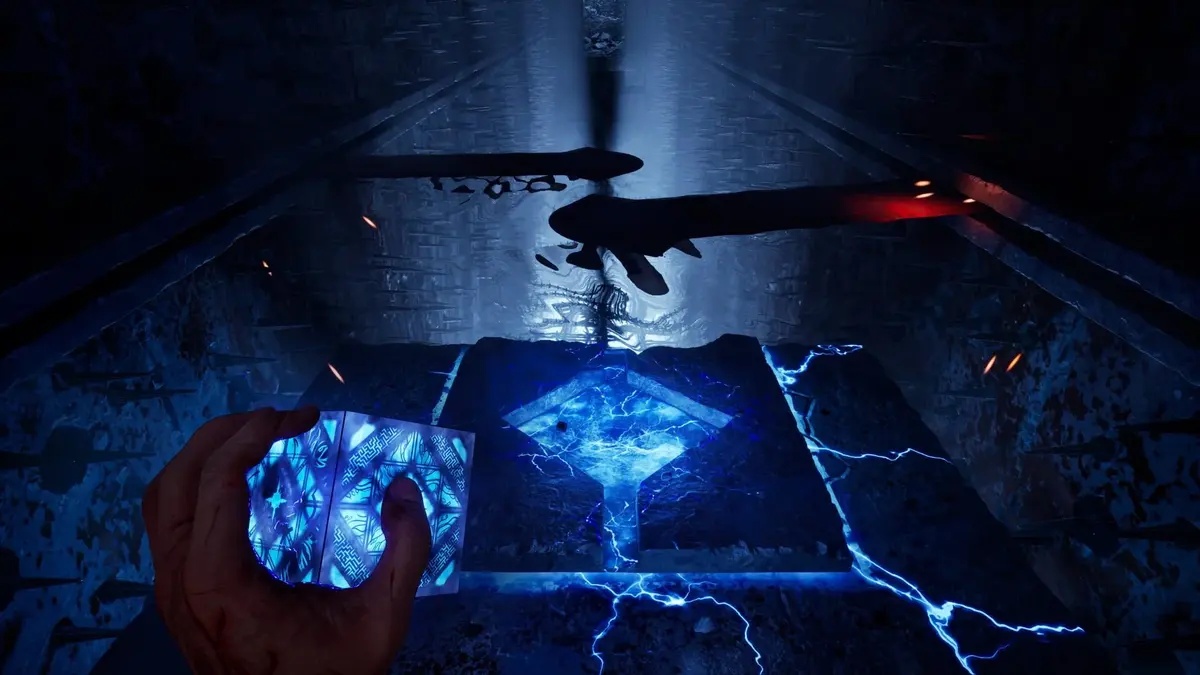
The box grants telekinesis and further abilities as the game progresses. Its power draws on Suffering, a meter filled by damaging enemies. That is Revival’s best connection between theme and action: dealing pain becomes the means of accessing Cenobite power. The license influences what the player does, rather than merely furnishing the surroundings.
In the Labyrinth, the Genesis Configuration can move cubes and change shape to fit pedestals. These puzzles give the box a role beyond combat, and I prefer their use of space and transformation to the game’s ordinary exchanges of bullets and melee blows. The mechanic gives Revival a distinctive identity, even when the surrounding action struggles to support it.
Combat turns survival pressure into frustration
First-person shooting and melee lack weight, aiming is awkward, and cramped encounters make precision harder to sustain. The result is a combat loop that asks for repeated engagement without making that repetition satisfying. The puzzle box remains the more interesting tool, but it cannot rescue every fight from those basic weaknesses.
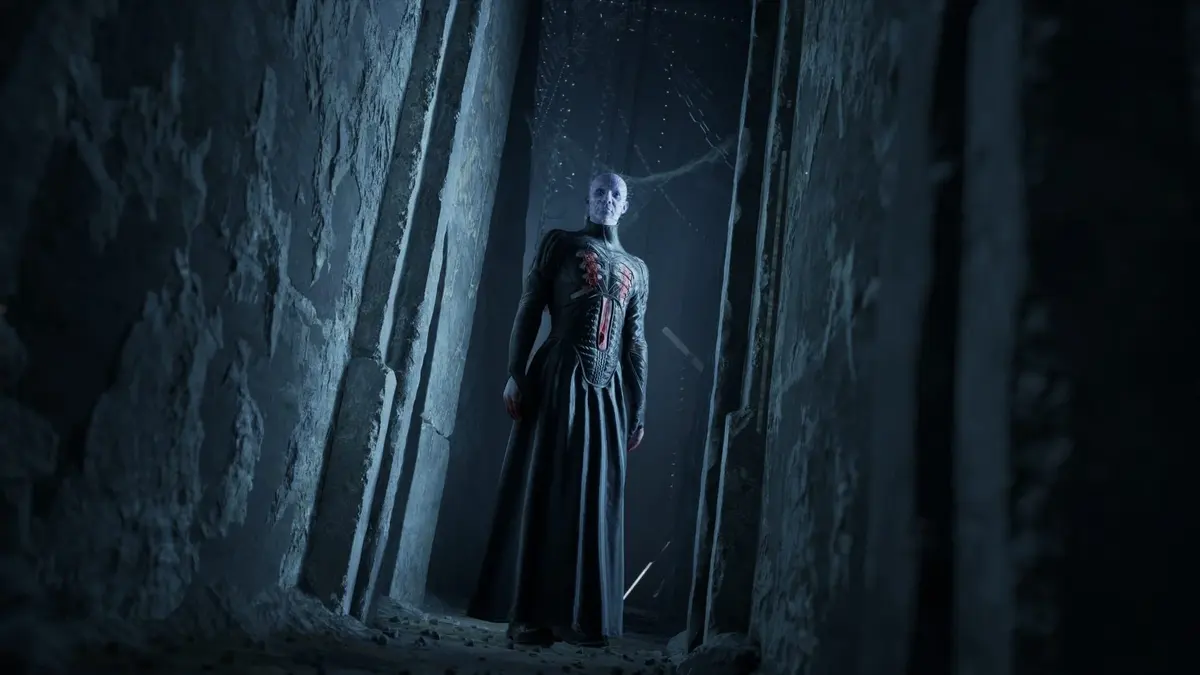
Resource pressure compounds the problem. Ammunition and inventory space are tight, while crafting materials for bandages, health packs and ammunition are scarce. Weapons, including melee weapons, have limited durability and can break during fights; repairs restore them only partially. Scarcity can create worthwhile decisions, but here it also prolongs dependence on combat that already lacks impact.
Armored cultists require heavy or blunt attacks to break their armor before blades can damage them. That is a useful encounter rule to learn, yet it does little to address imprecise controls. Frustrating boss fights, clunky platforming, one-hit environmental kills and unforgiving checkpointing add further friction. Too often, the challenge comes from managing the game’s rough edges rather than enjoying its threats.
The Labyrinth gives the horror its identity
Non-Euclidean spaces and the Cenobites give the Labyrinth a character the dull sewer and forest areas lack. Chatterer teleports through chase sequences, while Pinhead is voiced by Doug Bradley, returning to the role. Those encounters are the clearest reason to choose Revival for its connection to Hellraiser.
Atmosphere, gore and sound design carry substantial weight, and the treatment of BDSM themes is mature. I appreciate that seriousness: it gives the grotesque material context rather than using sexuality as an easy shock. The story’s ties to the films strengthen the sense that these creatures belong to an existing world.
The more linear sections concentrate the scares and ideas; expansive areas introduce bloat and expose simplistic enemy AI. Constant tension also becomes desensitizing, which weakens the effect of imagery that should command attention. A predictable story and an overly action-focused final hour further blunt the payoff. The pacing needs more contrast, not simply more violence.
Strong high-end PC performance comes with caveats
Environmental pop-in, flickering characters or objects and late-game instability undermine the visual work. A game so dependent on grotesque spaces needs those spaces to remain convincing; visible technical distractions cut directly into its main strength.
High-end PC performance is more encouraging: an RTX 5080 reaches more than 100 frames per second at 4K ultra settings without frame generation. The figure is specific to that high-end hardware, so I would not use it to judge a lower-end machine. Strong frame rates also cannot compensate for assets flickering out of view.
Pre-launch PS5 performance problems include performance-mode dips. I would hold off on the base PlayStation 5 version if stable performance is essential, rather than assume the high-end PC result applies to consoles.
FinalBoss // Gear
Level up your setup
01Top-rated gaming headsetson Amazon→02High-refresh gaming monitorson Amazon→03Gaming chairson Amazon→04Discounted game keyson Kinguin→Affiliate links · As an Amazon Associate, FinalBoss earns from qualifying purchases.
Want to Level Up Your Gaming?
Get access to exclusive strategies, hidden tips, and pro-level insights that we don't share publicly.
Ultimate Reviews Strategy Guide + Weekly Pro Tips