
Table of Contents (8)
The Night Concrete Genie Made Me Fall Out Of Love With Modern PlayStation
The night I earned the Platinum in Concrete Genie, I felt two completely different things at once. On one hand, that familiar little dopamine spike that every trophy tragic recognises. On the other, this heavy, stupid sadness that would not go away. Because finishing Ash’s story and watching those end credits roll did not just wrap up a five-or-six-hour adventure. It felt like saying goodbye to the version of PlayStation that still gave a damn about weird, art-driven experiments.
Looking back on it now, knowing PixelOpus got shut down and Concrete Genie will forever be their last game, that feeling hits even harder. This is a small, scrappy PS4 exclusive about painting friendly monsters on crumbling walls, tackling bullying with empathy, and letting players create instead of just consume. It is also one of the rare games where earning the Platinum Trophy felt like an extension of the game’s soul rather than a spreadsheet of chores.
That combination is exactly why Concrete Genie still sticks in my head years later. The Platinum did not just land in my lap, but it flowed out of the experience so naturally that it almost felt wrong to stop before it popped. Then you remember Sony canned the studio that made it, while shovelling money into live-service clones that nobody asked for, and the whole thing turns a little bittersweet.
From Entwined To Denska: PixelOpus Growing Up In Public
I played Entwined when it dropped in 2014, and that game was rough around the edges but genuinely interesting. Two spirits, two analog sticks, flying through abstract tunnels with rhythm-game DNA bleeding through the whole thing. It was the kind of experimental, slightly pretentious art project that used to live comfortably in the PS3 and early PS4 indie space. A promise more than a destination.
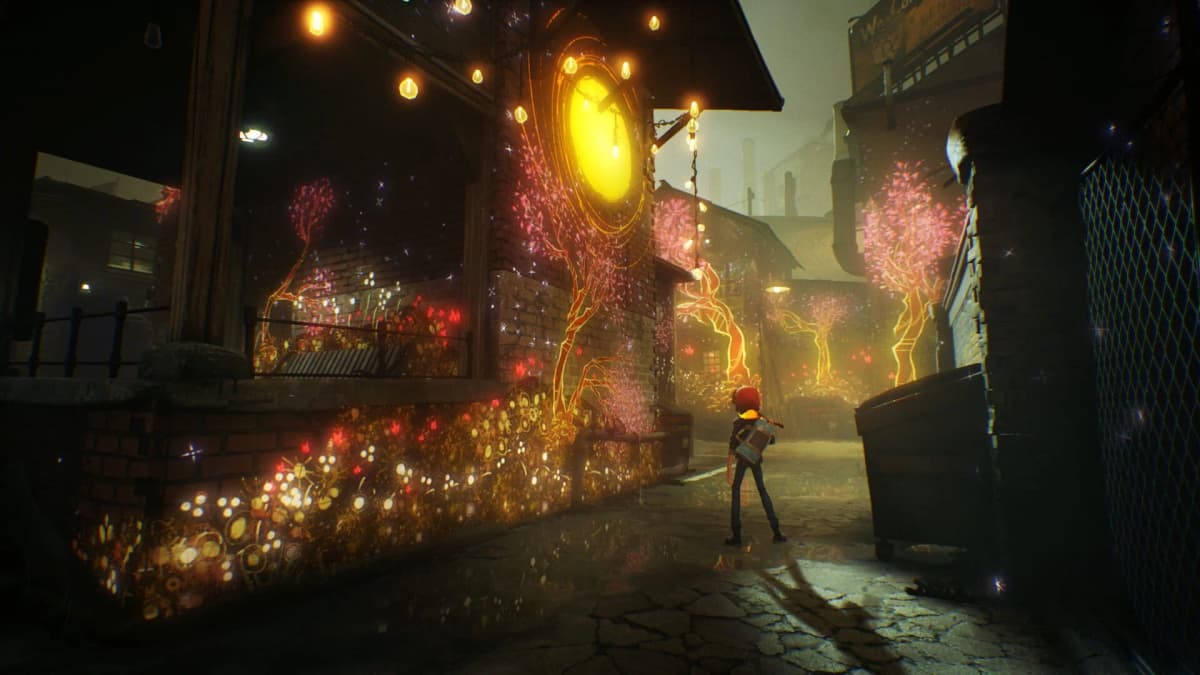
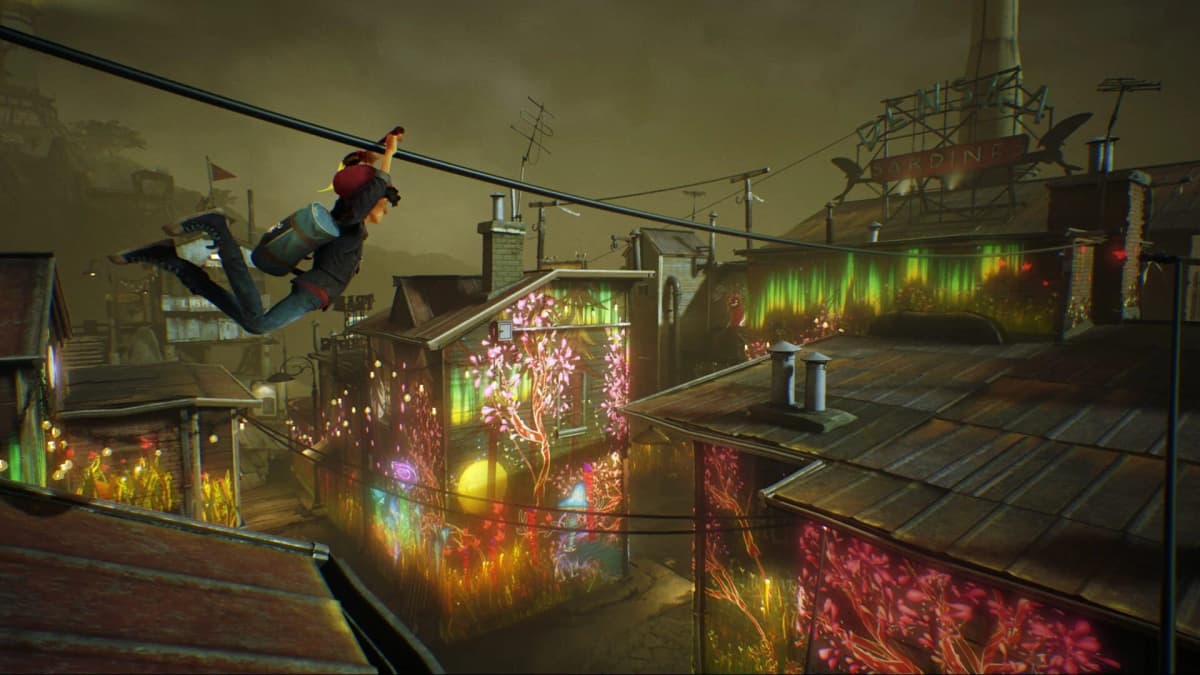
Concrete Genie is what happens when the same kind of team grows up and aims that energy at something grounded and human. Instead of neon tubes and symbolism, you get Denska, a rotting seaside town that feels like it fell out of a forgotten Dreamcast era but painted over with watercolour melancholy. You play as Ash, a kid whose sketchbook is the one bright spot in a life full of bullies and boarded-up shopfronts, until he finds a magical paintbrush and the literal art comes to life.
The genius of it is that the painting is not some gimmicky mini-game bolted to a platformer. The DualShock 4 motion controls, the way you flick the controller to drag long ribbons of light across concrete, the way Ash’s notebook scribbles turn into moveable stamps that you can combine into living Genies; all of it is the spine of the game. Those Genies help you solve puzzles – burning away tarred-up vines, zapping broken machinery, gusting wind into sails – but the game never really judges the quality of what you make.
That is such an important design decision. No scoring system, no leaderboard for who made the most technically impressive mural. PixelOpus clearly understood that the moment you start ranking art, you destroy the safe space that shy players like Ash actually need. The point is that you drew something and that it smiled back at you, not that anyone else clapped.
Painting The Town For A Platinum That Actually Feels Earned
I have Platinum’d enough games to recognise when a trophy list was made by someone who only thinks in bullet points. Kill 10,000 enemies. Open 500 chests. Beat the game three times on increasingly masochistic difficulty modes. Those lists are not about celebrating the game. They are about stretching fragile engagement metrics and punishing people with completionist brainworms.
Concrete Genie is the complete opposite. Its Platinum is not a freebie, but it is also not interested in wasting anyone’s time. The majority of trophies fall into three buckets: progression, gentle experimentation, and light exploration.
- Story completion trophies drop at key chapters as Ash faces his bullies and the town’s corrupted darkness.
- Interaction trophies encourage messing around with your Genies: high-fiving them, playing games, chaining particular elemental abilities to see what happens.
- Collectible trophies push you to search Denska for Ash’s sketchbook pages and optional doodles, which double as more painting tools.
The crucial part is that all of this aligns perfectly with what the game is already begging you to do. You are supposed to fill those dead walls with colour. You are supposed to test whether that snowstorm pattern interacts with that fire-breathing Genie in a surprising way. You are supposed to wander off the path and poke at alleys because the town looks like a half-finished diorama waiting for your brush.

By the time my first playthrough credits rolled, I had unlocked almost everything without even looking at a guide. The leftover pieces did not feel like scraps left purposely out of reach either. They were specific interactions I had simply not stumbled across, or a couple of sketch pages tucked behind geometry that my eye skipped over. Jumping back in to mop those up felt like an excuse to paint a little more, not an obligation.
Compare that to some other first-party lists on PS4, where the optional stuff often turns into a second job. In Concrete Genie, the Platinum is essentially a slightly more deliberate version of how anyone who loves the game will naturally play it. That is trophy design done right. It respects your time, it reinforces the mechanics, and it never asks you to break character as Ash just so a backend analytics dashboard can register another hundred hours.
The PSVR Detour That I Gladly Ignored
The one part of the trophy ecosystem that did not hook me is the PSVR side. PixelOpus built two VR modes: a short story-flavoured Experience where you follow a tiny paint sprite called Splotch, and a Free Paint mode that basically drops you into Denska’s spaces with full head-tracked immersion. They are charming and give the painting another layer of magic, but crucially they sit off to the side.
The Platinum lives in the base game. The VR trophies are additional percentage padding for the profile obsessives chasing 100 percent completion. Normally, leaving that slice unfilled on my list would itch like hell. Concrete Genie was different. The arc of the story, the joy of turning trashed streets into glowing canvases, and the organic feel of the base trophy list left me satisfied in a way most games struggle to hit even when I do everything.
There is a kind of quiet confidence in that decision. No forcing anyone into buying hardware they do not own or stomaching motion-sickness just to see a platinum notification. VR is framed as bonus context for people who want to live inside their paintings a bit longer, not a hostage negotiation with completionists.
The Combat Turn That Betrays What The Game Is Best At
For all this praise, there is a reason Concrete Genie never crossed over into universal-classic territory. After five or so hours of gentle painting, environmental puzzles, and emotionally grounded storytelling about bullies and trauma, PixelOpus suddenly throws in combat. Not playful little scuffles either, but full-on Dark Genie boss fights with elemental attacks, dodging, and stunned allies.
It lands hard and not in a good way. The game has spent its entire runtime teaching players to think in terms of placement, colour, and collaboration with their Genies, then abruptly demands reflex-based fights that barely exist beforehand. The mechanics themselves are fine in a vacuum, almost like someone at the studio was desperate to prove they could do an action climax because that is what a “real” PlayStation game looks like on a pitch deck.
The result is a final act that undercuts a lot of the tone. The idea behind it makes some sense; the dark, twisted versions of the Genies mirror how bullying and loneliness corrupt otherwise gentle kids, and Ash helping to purify them fits the emotional arc. Execution-wise, it feels like a note from a completely different game jammed into the script at the eleventh hour. Combat remains shallow, it never evolves, and then it is suddenly over.
This swerve fortunately does not ruin the Platinum experience because the trophies do not really lean into the combat. You are not forced to replay fights on higher difficulties or grind out arbitrary kill counts with specific elements. The game almost seems embarrassed of this late addition from a trophy perspective. Still, it stands out as the one place where PixelOpus blinked and tried to conform to the kind of cinematic third-person template that dominates Sony’s slate.
PixelOpus, Sony, And The Corporate Amnesia About Why PlayStation Was Special
What really stings about revisiting Concrete Genie today is not just the game itself. It is what PixelOpus represented inside the PlayStation ecosystem. Here was a tiny internal studio making mid-budget, creatively risky projects with heart. First an abstract rhythm-flight hybrid. Then an anti-bullying, art-driven adventure with PSVR support and no monetisation hooks. No battle pass, no cosmetic store, no daily login bribes.
And Sony shut them down.
PixelOpus is not some isolated story either. Japan Studio, the group that helped build the foundation of PlayStation’s weird and wonderful identity with games like Ape Escape and Gravity Rush, was disbanded. Other acquisitions have stumbled or been quietly redirected into cynical live-service experiments that never see the light of day. The pattern is depressingly clear. Anything that does not fit the prestige blockbuster or GaaS revenue model is considered expendable, no matter how much soul it injects into the catalogue.
Concrete Genie launched in 2019 and did not set sales charts on fire. It reviewed well, got decent word of mouth, and sat in that comfortable AA space that used to be the lifeblood of console ecosystems. Instead of nurturing that role, Sony slowly squeezed the oxygen out of it. The company loves trotting out sizzle reels full of artsy indies during showcase season, but when push comes to shove, the actual creators who make that magic wind up sacrificed on the altar of “strategic realignment”.
That is the bullshit part. A platform built its reputation in no small part on supporting offbeat ideas like Journey, Tokyo Jungle, The Unfinished Swan and dozens more. Then, in a moment where the industry feels more risk-averse than ever, it shuts down one of the few internal teams still operating in that tradition. Every time I scroll past Concrete Genie in my library, that corporate amnesia hits like a brick.
Why This Little Platinum Means More Than Most
On a raw numbers level, the Concrete Genie Platinum does not belong in any hall of fame. It is not brutally difficult. It is not obscenely rare. It does not demand mechanical mastery on the level of a Soulsborne, nor the patience of 200-hour grindfests. It is a modest trophy list for a modest-length game.
Yet it sits closer to my heart than a lot of the shinier icons on my profile. Because this Platinum captures a snapshot of a certain philosophy of game design and platform curation. A six-ish-hour canvas of bright murals in a dead town, where the “endgame grind” is simply taking a little extra time to finish the murals you wanted to paint anyway. A trophy journey that respects curiosity and creativity instead of trying to break players into cattle.
Most importantly, it represents a studio swinging for something sincere. The anti-bullying message in Concrete Genie is not subtle, but it is handled with more care than plenty of bigger budget narratives. Ash’s bullies are not cartoon villains; they are hurt kids lashing out. The town of Denska is not just a sad backdrop; it is a reflection of that shared rot. Painting over it does not magically solve systemic issues, yet it gives these characters a tangible way to push back against their own hopelessness.
That matters. It matters that a first-party game aimed at a broad audience dares to say that empathy and creativity can be tools for healing, not just flavour text between shotgun sequences. It matters that the game trusts players enough to give them tools and let them play, without constant nagging, gating, or microtransaction pressure. Wrapping that in a trophy list that quietly nudges players to engage with the best parts of the experience turns the Platinum into a kind of emotional bookmark.
Holding Onto The Version Of PlayStation That Greenlit Concrete Genie
Earning the Concrete Genie Platinum did not just add a line to my profile. It locked in a personal reminder of what I still want from this hobby, and from PlayStation in particular. I want mid-sized, weird, beautiful games made by small teams that are allowed to miss a little in the name of ambition. I want trophy lists that complement the design instead of sabotaging it. I want first-party line-ups with room for heartfelt experiments alongside the bombastic tentpoles.
PixelOpus is gone. The industry marches on, ever more obsessed with “engagement” spreadsheets and cross-media synergy plays. Yet Concrete Genie remains installed on my console, a tiny protest icon masquerading as a save file. Whenever another studio closure makes the news, that sad little boy with the magic paintbrush feels more and more like a mascot for the part of PlayStation that the decision makers have conveniently forgotten.
For anyone who cares about trophies, art direction, or just games with an actual heart beating under the hood, Concrete Genie is worth revisiting. Not as a historical curiosity, but as proof that a major platform holder once backed a game where the most powerful thing you could do was paint a monster on a wall and watch it smile back. My Platinum might be virtual metal, but the feeling that game left behind is very real.
FinalBoss // Gear
Level up your setup
01Top-rated gaming headsetson Amazon→02High-refresh gaming monitorson Amazon→03Gaming chairson Amazon→04Discounted game keyson Kinguin→Affiliate links · As an Amazon Associate, FinalBoss earns from qualifying purchases.
Want to Level Up Your Gaming?
Get access to exclusive strategies, hidden tips, and pro-level insights that we don't share publicly.
Ultimate Gaming Strategy Guide + Weekly Pro Tips