
The co-op horror game that turned an April Fools joke into a Steam phenomenon just repeated the trick on consoles – only this time, Content Warning is arriving as a fully cross-play, multi-platform ecosystem play, not a throwaway stunt.
Landfall’s “friendslop” scarecam sim has shadow-dropped on basically everything: PS5, Xbox Series X|S, Xbox One, Nintendo Switch, and Switch 2, with full cross-play between all those versions and the existing PC release. Underneath the surprise timing and the memes, this is a very deliberate attempt to turn a viral PC hit into an evergreen co-op staple at a $10 price point instead of going full live-service.
Table of Contents (10)
Key takeaways
- Content Warning has quietly become a full ecosystem game – PC, Xbox, PlayStation, Switch, and Switch 2 all talk to each other via cross-play.
- The $9.99 price tag is a strategic choice: low enough to feel throwaway, high enough to avoid free-to-play baggage.
- This console launch is effectively a second debut for a game that already pulled in over 8.8 million players on PC.
- The real test now is population and support – cross-play means nothing if updates drift or player numbers dip on weaker platforms.
This isn’t just a port — it’s a second launch
On paper, the headline is simple enough: Content Warning is now available digitally on PS5, Xbox Series X|S, Xbox One, Nintendo Switch, Switch 2, and PC storefronts (Steam plus the Microsoft Store). It’s priced at $9.99 / €9.49 / £8.99 on consoles, with the Steam version currently sitting a little cheaper at $7.99 after its original 24-hour free period back in 2024.
But treating this as just a “console version now out” misses what Landfall is actually doing. This is their second big April 1 play with the same game. The first time, Content Warning was a one-day free PC launch that rode the algorithm, streamer visibility, and “you had to be there” FOMO to millions of downloads. That stunt worked so well the game went on to sell millions afterward at a low price.
Two years later, the shadow drop has a different job: not generating instant virality, but cementing the game as a co-op ritual across whatever hardware your group owns. The timing — again April 1 — keeps the brand’s “April Fools, but actually real” identity intact, while the broader rollout quietly repositions Content Warning from meme launch to ongoing staple.
If you remember Totally Accurate Battle Simulator doing something similar years ago (joke that turned into a real, supported product), this is Landfall doubling down on that formula. Only now it’s happening in a much more crowded co-op horror space dominated by games like Phasmophobia and Lethal Company.
Cross-play done the practical way (and why it matters)
The piece that actually matters here isn’t the shadow drop; it’s the cross-play. Indie multiplayer lives or dies on whether you can reliably get four people into the same lobby without arguing about platforms. Content Warning now supports full cross-play between:
- PC (Steam and Microsoft Store)
- PlayStation 5
- Xbox Series X|S
- Xbox One
- Nintendo Switch
- Nintendo Switch 2
The implementation is refreshingly low-tech: friend codes. You enable cross-play in the settings, share a code, and people on any platform can join. That’s not glamorous, but it’s the kind of friction that’s annoying once, not forever.
This also sidesteps one of the nastier pitfalls for small studios: global, public matchmaking across wildly different performance profiles. By making cross-play friend-based, Landfall focuses on the kind of play that actually made the game pop on PC — four friends yelling at each other while trying to film a monster for in-game “SpookTube,” not strangers grinding quickplay lobbies.

Xbox storefronts even explicitly flag “cross-platform multiplayer” and “cross-platform co-op,” which signals Microsoft is happy to surface this as a proper cross-play title rather than burying it in the indie pile. That visibility matters when your game doesn’t have a giant brand name on the box.
A $10 horror toy, not another forever-service
The other smart move is the price. At roughly ten bucks, Content Warning is squarely in “pick this up for a weekend with friends” territory. That’s not accidental.
Where a lot of co-op horror games have drifted toward pseudo-live-service models — battle passes, endless cosmetics, slow content trickles to keep you logging in — Content Warning leans into being a compact, repeatable toy:
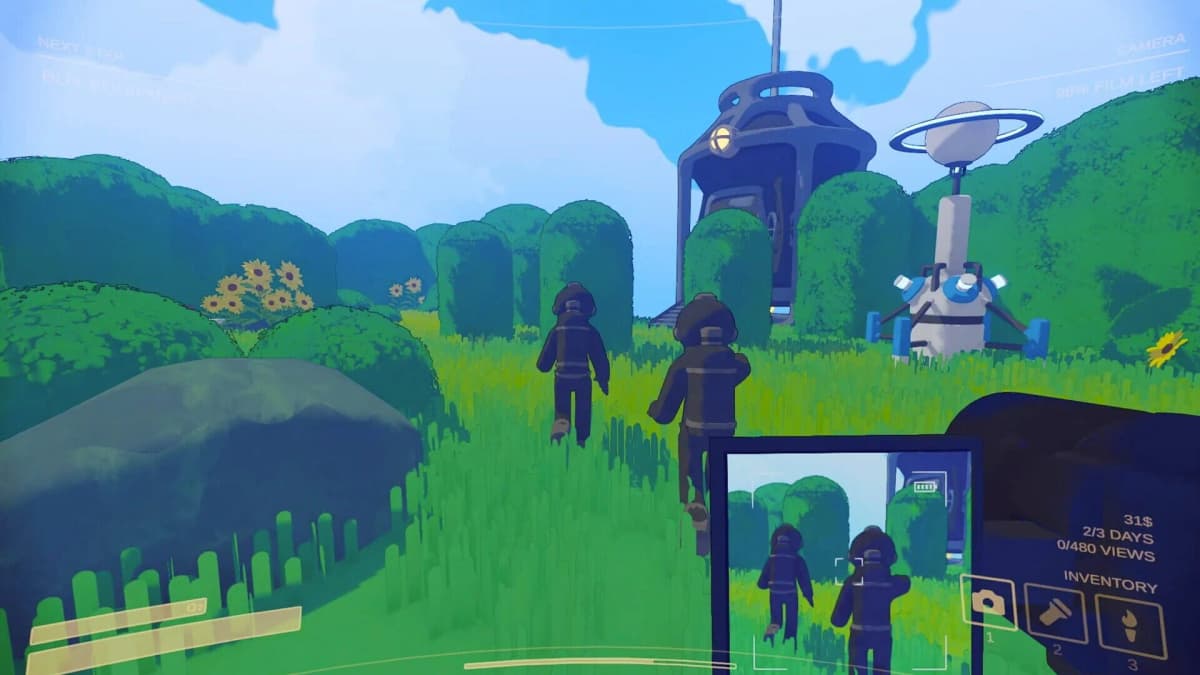
- Four players drop into The Old World via a diving bell.
- You’ve got a short window to film scary stuff before your oxygen and sanity run out.
- You head back up, upload the footage to “SpookTube,” and hope it goes viral.
- Views translate to in-game payout, which buys better gear for the next run.
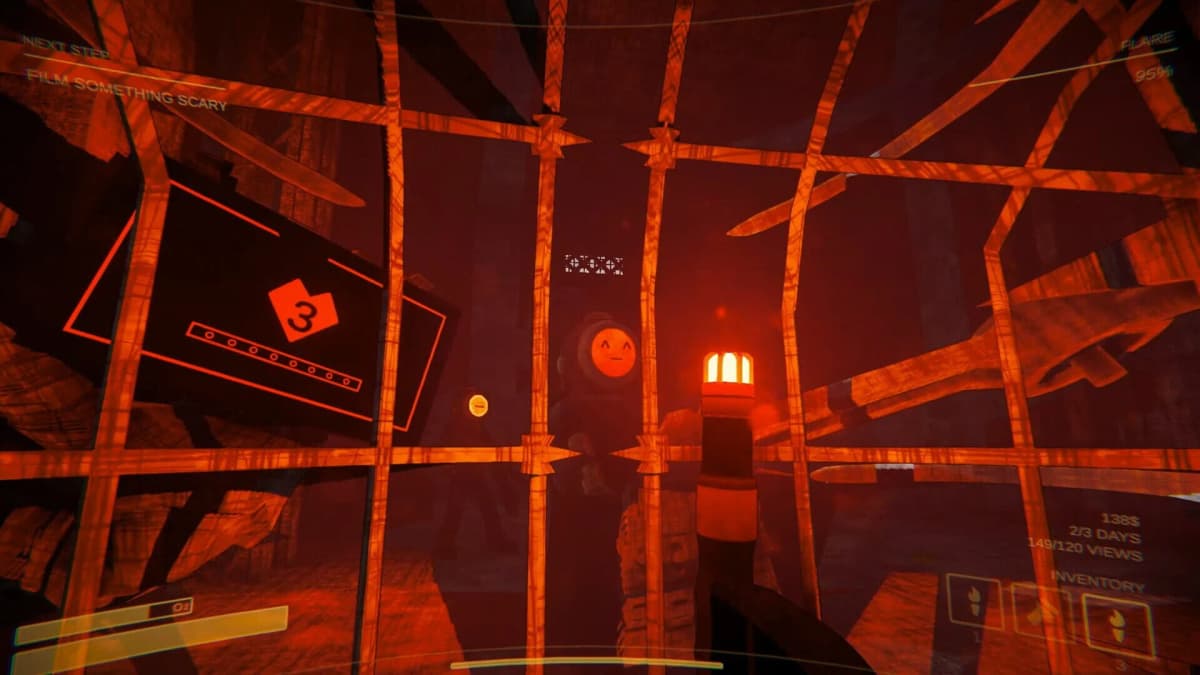
Your characters are deliberately janky, with an ASCII face customizer that turns everyone into cursed emoji nightmares — perfect for thumbnails and reaction clips. The entire loop is tuned less like a traditional horror campaign and more like a YouTube highlight generator.
At this price, the pitch is straightforward: you and three friends get a box of horror toys that’s fun to break out on voice chat, even if you never min-max the meta. No skins shop, no premium currency, no “log in this week or you miss the event” timer. It’s closer to buying a party board game than subscribing to a service.
That doesn’t mean Landfall won’t add more content. It does mean the business model isn’t relying on stretching you out over months. For a genre that often burns players out on repetition, that’s refreshing.
Landfall fixed some PC problems on the way to console
The console launch isn’t just a straight lift of the 2024 PC build. Alongside the new versions, the game has picked up a decent patch pass:
- Improved localization for different regions.
- Aspect ratio fixes, so ultra-wide and various display setups behave properly.
- Fixes for Unicode and video-recording bugs that were messing with saved footage.
- Cross-platform friend codes added and integrated into the UI.
- Steam Deck verification/support, officially blessed for Valve’s handheld.
Steam Deck support is quietly important. A huge chunk of Content Warning’s appeal is “just one more run” with friends, and handheld play makes that easier to justify. Between Deck, Switch and Switch 2, the game now covers the couch-and-handheld end of the spectrum as thoroughly as the desk-and-monitor one.
It also tells you something about Landfall’s priorities: they’ve chosen to ship a reasonably polished, cross-play-aligned build before chasing massive new content drops. That’s the right order if your biggest risk is your player base fracturing across platforms and versions.
The thing the PR doesn’t say: population and patch parity
For all the good moves here, there’s one problem no trailer is going to mention: sustaining a healthy player population across this many platforms.
Cross-play helps, but only if parity holds. The second PC gets a big update that consoles don’t, or Switch 1 starts lagging behind Switch 2 in performance, you get version splits, bad word-of-mouth, and groups that can’t quite sync up. That’s not hypothetical; we’ve watched it happen to plenty of indie multiplayer games that tried to be everywhere at once.
Content Warning at least has two advantages here:
- It already has over 8.8 million players from its PC life, so this isn’t a cold start.
- It’s built around pre-made groups more than random matchmaking, so it doesn’t require giant concurrent numbers to feel alive.
But this is still the pressure point. If I were sitting across from Landfall’s PR, the question I’d ask isn’t “Why a shadow drop?” It’s: What’s your update cadence across all platforms, and how are you guaranteeing that my PS5 and my friend’s Switch 2 stay compatible?
If the answer is “we patch everyone at once, even if that means smaller, more incremental updates,” great. If it’s “PC first, consoles later,” that’s the moment console players should pause before buying in.
What console (and new PC) players are actually getting
Stripping out the marketing, here’s what this shadowdrop actually delivers if you’re coming in fresh — or returning on PC:
- The full core game: 2-4 player co-op dives into The Old World, filming monsters and weird phenomena under time pressure.
- SpookTube meta-progression: in-game videos earn views, views buy gear, gear lets you push deeper and take greater risks.
- ASCII face character creator: small thing, big personality hit; this is where a lot of the meme value comes from.
- Chaos-first co-op design: “friendslop” is accurate — it’s built for pratfalls, miscommunication, and spectacular failures on camera.
- Platform parity features: cross-play via friend codes, updated UI, bug fixes, and handheld support from Switch and Steam Deck.
Content Warning still isn’t a narrative horror epic or a deep mechanical sandbox. It’s a compact, repeatable co-op machine that generates stories and clips more than it delivers traditional campaign beats. If that expectation is set correctly, the $10 price makes a lot of sense.
And yes, if you care about the phrase “content warning shadows onto consoles with full cross-play” for SEO bingo purposes: that is exactly what just happened. The game that once lived on Steam wishlists and Twitch clips is now structurally set up to be the thing you ping in the group chat when everyone’s free on a Friday night, regardless of what box sits under their TV.
So, is it worth jumping in now?
At this price point, the calculus is pretty simple.
- If you’ve got a regular co-op crew scattered across PC, Xbox, PlayStation, and Switch, this is an easy recommendation. Cross-play plus short, self-contained runs make it a great “backup game” for nights when nobody can agree on what to play.
- If you’re mostly a solo player, be realistic: this is not a single-player experience. You can technically brute-force some runs, but you’re buying into a game designed for voice chat chaos. Without that, you’re missing most of what you’re paying for.
- If you already grabbed it on PC in 2024 and bounced off because of bugs or rough edges, the console/Deck update might be the excuse to try again — but don’t expect a totally transformed game. It’s a smarter, cleaner version of what you already saw, not a sequel.
The more interesting question isn’t “is it worth ten bucks?” It’s whether Landfall can keep this cross-play ecosystem tight enough that people feel safe investing their group’s time into it over months. Early signs are good — the fact they waited to roll out consoles until cross-play and Deck support were in place is a promising bit of discipline.
What to watch next
- Next major patch: The first post-console-update patch will tell you how seriously Landfall is taking multi-platform parity. Watch whether PC, Xbox, PlayStation, and Switch notes line up.
- Player numbers after the first month: Steam charts and console store “popular” tabs will show whether this is a brief nostalgia spike or a second-life success.
- Content cadence vs. monetization: If new monsters, tools, or maps show up as free updates rather than paid DLC packs, that will confirm the “toy, not service” positioning.
- Performance on older hardware: Xbox One and the original Switch are the potential weak links. If stutter, crashes, or cut-down features appear, that’s where cross-play starts to feel theoretical instead of real.
TL;DR
Content Warning has shadow-dropped on PS5, Xbox Series X|S, Xbox One, Switch, and Switch 2 with full cross-play alongside the existing PC version, standardized at about $10 on consoles. It matters because Landfall is turning a one-day April Fools PC stunt into a proper cross-platform co-op staple, betting on low price, chaos-first design, and friend-based cross-play instead of live-service grind. The one thing to watch now is whether they can keep all platforms updated in sync — if they do, this could quietly become one of the default “everyone owns this” co-op horror toys of the generation.
FinalBoss // Gear
Level up your setup
01Top-rated gaming headsetson Amazon→02High-refresh gaming monitorson Amazon→03Gaming chairson Amazon→04Discounted game keyson Kinguin→Affiliate links · As an Amazon Associate, FinalBoss earns from qualifying purchases.
Want to Level Up Your Gaming?
Get access to exclusive strategies, hidden tips, and pro-level insights that we don't share publicly.
Ultimate Gaming Strategy Guide + Weekly Pro Tips