
Table of Contents (11)
Control Resonant’s PC tech pitch only makes sense once you separate the stack
The useful answer is this: Control Resonant is not interesting on PC because it has a long list of RTX labels attached to it. It is interesting because Remedy and NVIDIA are describing a stack where each layer solves a different problem. Northlight handles the world, lighting logic, and overall rendering direction. RTX Mega Geometry is there to help with dense scene complexity in ray-traced content. DLSS 4.5 is the performance and image-upscaling layer. Ray Reconstruction 4.5 is a separate cleanup pass for ray-traced and path-traced lighting quality.
That distinction matters a lot, because NVIDIA marketing has a bad habit of turning separate technologies into one giant alphabet soup. If players hear “DLSS 4.5, ray reconstruction, frame generation, Mega Geometry” and mentally file it all under one magic switch, expectations get weird fast. Suddenly people expect one setting to fix performance, sharpen the image, remove ghosting, and make a brutalist fantasy-Manhattan easier to render. That is not how this works.
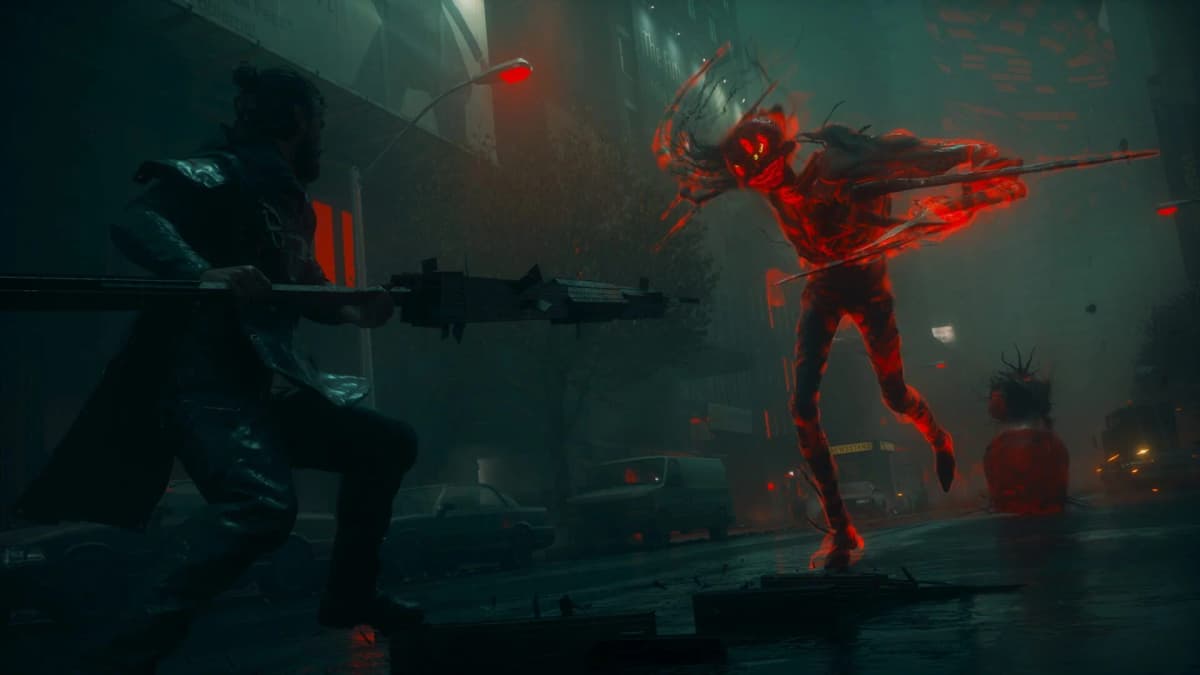
What Remedy appears to be building is more grounded than that and, honestly, more impressive. The Northlight upgrades discussed around Control Resonant point toward a larger, stranger, more dynamically lit world than the original Control, with ray-traced rendering doing real scene-building rather than showing off in a photo mode. If that lands, the payoff is not “nicer reflections.” It is a city that feels physically coherent even when reality is bending in half around the player.
The buyer question this actually answers
If you are reading this as a PC player, the real question is not whether the technology sounds advanced. Of course it does. The real question is simpler: will this stack make Control Resonant meaningfully better to play and look at, or is this one more case of demo-stage buzzwords outrunning the shipping game?
Based on the current guidance, the answer leans positive, with an asterisk. The parts that sound most credible are the ones with clear jobs. DLSS 4.5 can create performance headroom and improve the quality of upscaling. Ray Reconstruction 4.5 is aimed at reducing the usual ray-tracing messiness like unstable lighting response, ghosting, and temporal break-up. Mega Geometry is about making more detailed geometry practical inside ray-traced scenes. Northlight’s own upgrades tie the whole thing together with more dynamic lighting and a bigger-world workflow.
The asterisk is implementation. This is not one magic checkbox; it is a stack of separate interventions. A strong stack can still ship with bad presets, poor CPU behavior, or a rendering mode that asks too much of mainstream hardware. That is why the exciting part here is the design logic behind the stack, not the existence of the stack itself.
Northlight is doing the heavy lifting, which is exactly why this is worth watching
The part of this conversation that deserves more attention than the flashier NVIDIA terms is Northlight itself. Remedy’s engine has always been unusually good at selling physical mood: concrete, glass, smoke, debris, darkness, and artificial light all tend to feel like they belong to the same space. That was already true in the original Control, where the whole Federal Bureau of Control felt like a haunted office block designed by people who feared daylight.
Control Resonant appears to scale that philosophy outward. Instead of a mostly interior-heavy labyrinth, the discussion around the game points toward a larger Manhattan setting, more traversal complexity, and a lighting setup that removes more dependence on baked direct lights. That is a big deal. Once direct lighting becomes more dynamic, scene changes stop feeling pre-approved by a level bake from six months ago. Moving objects, effects, environmental shifts, and weird reality events can interact with light in a way that feels more honest.
This is where bespoke engine work still matters. NVIDIA is clearly positioning Unreal Engine and NvRTX integration as the easiest adoption path for DLSS 4.5, ray reconstruction, and related features. That makes sense. Plugins are easier to sell than custom rendering surgery. But Control Resonant is more interesting precisely because Remedy is not taking the easy path. Northlight has to absorb these features into a rendering identity that was already distinctive before the newest RTX rollout.
There is also a developer-side detail that sounds boring until you think about what it means in production: the talk around the game mentioned USD-based live world editing. That is pipeline plumbing, not a back-of-box feature, but it matters. Large ray-traced worlds do not become shippable because someone finds a magic optimization button. They ship because artists and engineers can iterate quickly enough to keep lighting, geometry, traversal, and performance from fighting each other. Faster world iteration often ends up being the hidden difference between a glorious demo and a coherent game.
RTX Mega Geometry fits Control Resonant better than the name suggests
“Mega Geometry” sounds like the sort of phrase that should come with a fog machine and an extremely shiny keynote stage. The annoying part is that the idea underneath it is actually useful. Dense geometry is expensive for ray-traced rendering because lighting, reflections, and visibility all become harder to manage as the world gets more detailed and less willing to cheat.
That matters more in a game like Control Resonant than it would in a simpler corridor shooter. A brutalist cityscape is full of hard edges, recessed structures, repeating forms, reflective materials, and surfaces that look wrong the moment lighting shortcuts become obvious. Add paranormal debris, reality warping, and fast traversal, and the scene complexity problem gets ugly in a hurry. Mega Geometry matters only if the world is dense enough that cheaper shortcuts would have become visible. Control’s whole visual identity suggests that is exactly the kind of problem Remedy wants to avoid.
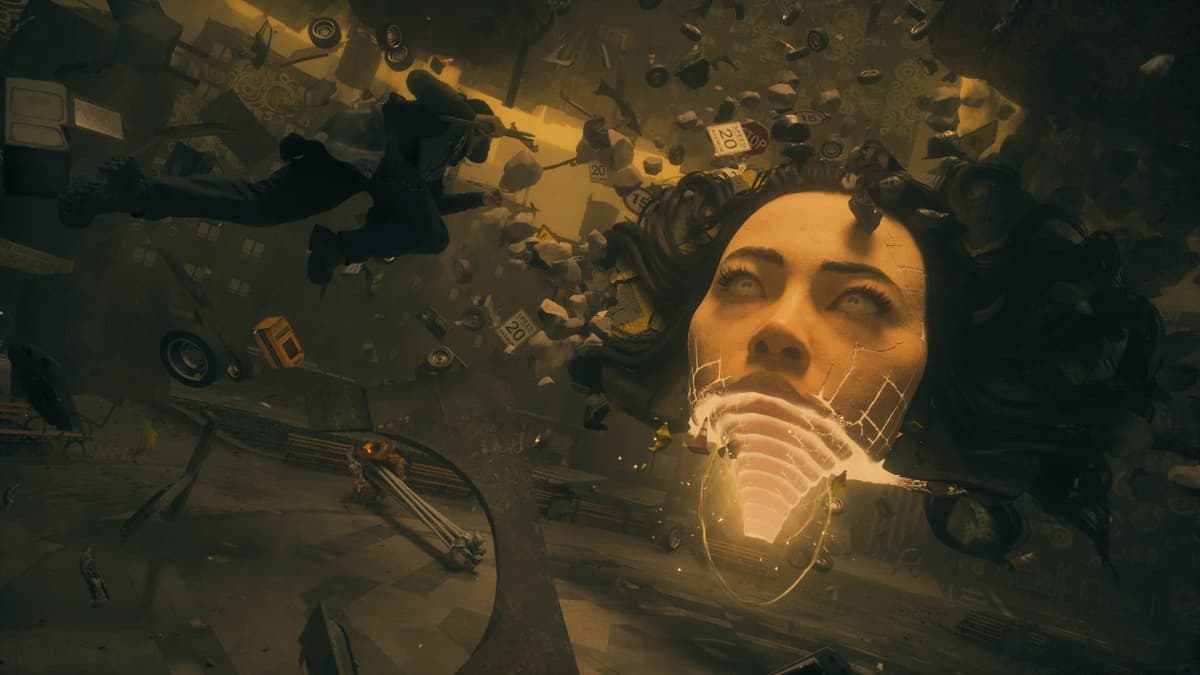
The important thing here is not polygon vanity. More geometry is not automatically better art, and it definitely is not free performance. The value is that a ray-traced scene can behave more like the actual scene artists built, rather than a heavily simplified version that exists mainly to keep RT costs sane. In a world defined by concrete mass, floating objects, and aggressive architectural shapes, that can be the difference between “nice tech demo” and “this place feels real enough to be unsettling.”
It also pairs logically with the move toward a larger Manhattan. Interiors are easier to control. Exteriors are ruthless. View distances increase, scene density goes up, and players have more time to notice weird lighting breaks or geometry simplifications. If Remedy wants exterior spaces to hold up under ray-traced scrutiny, geometry efficiency is not a side quest. It is foundational.
DLSS 4.5 is probably the part most players will feel first
For all the attention that path tracing and geometry tech attract, DLSS 4.5 is likely to be the most tangible player-facing upgrade in the stack. NVIDIA has framed DLSS 4.5 as more than a minor quality patch. The rollout includes a second-generation transformer model for Super Resolution, an official Unreal deployment path, and new frame-generation options including Dynamic Multi Frame Generation and a 6x mode.
Put simply, the Super Resolution side is the broadest practical win. A smarter reconstruction model helps players who are trying to hold higher settings without turning the image into a smeary compromise. In a game like Control Resonant, where lots of rigid geometry, sharp edges, particle effects, and reflective surfaces can expose reconstruction weaknesses, image stability matters almost as much as raw frame rate. A dense scene that flickers or crawls in motion stops feeling expensive and starts feeling broken.
The frame-generation side is more glamorous and more dangerous. Yes, bigger frame-generation multipliers can create headroom for heavier RT settings. Yes, the numbers sound absurd in a satisfying way. But players should keep one basic rule taped to their monitor: generated frames can make motion look richer, but they cannot make a sluggish game feel fundamentally responsive. If the base frame rate is too low, all the frame generation in the world will still leave the game feeling late on input, mushy on camera movement, or strangely detached during combat and traversal.
That is especially relevant for Remedy games, which tend to rely on atmosphere and spectacle but still need their shooting, dodge timing, and movement to feel exact. Frame generation is great when it amplifies an already solid baseline. It is much less convincing when it is asked to rescue a base performance target that was never comfortable to begin with.
Ray Reconstruction 4.5 is a separate story, and that split matters
One of the more important details in NVIDIA’s recent messaging is that Ray Reconstruction 4.5 is being treated as its own upgrade, not just a footnote attached to DLSS 4.5. NVIDIA says it is coming in August 2026 for GeForce RTX gamers, and the stated goal is cleaner ray-traced and path-traced image quality with better lighting response, less ghosting, and stronger temporal stability.
That may sound technical to the point of abstraction, but the practical effect is easy to understand if you have spent time with aggressive RT modes in modern games. The usual problems are familiar: shimmering on movement, unstable reflections, lighting that looks gorgeous in a still image but falls apart in motion, and a kind of ghostly smear that makes the whole image feel less trustworthy than the native scene underneath it. Ray Reconstruction exists to make that whole experience look less like a fragile trick.
For Control Resonant, that could be huge. Remedy’s art direction thrives on lighting transitions, reflective materials, volumetric effects, and scenes where surfaces need to respond convincingly as reality twists. If ray-traced lighting breaks down temporally, the whole spell weakens. A stronger reconstruction model is not just a quality-of-life feature. In this type of game, it is the difference between atmosphere that feels authored and atmosphere that feels algorithmically approximate.
The other reason the split matters is timing. Ray Reconstruction 4.5 has its own rollout schedule. That means players should not treat every mention of DLSS 4.5 as automatic proof that the full final image-quality package is there on day one. Depending on how the game’s release and updates line up, the exact feature state could evolve. That is not a red flag. It is simply the kind of detail that gets flattened when everything is marketed under one giant RTX umbrella.
What the ray-tracing feature set probably means in actual play
The easiest mistake to make with this kind of presentation is to assume “path tracing” means that the whole experience is built around a fully path-traced baseline. That is almost never the practical read. When developers and GPU vendors talk about path tracing around a game reveal, they are usually describing the visual ceiling, a showcase path, or a top-end rendering mode that defines what the art can become on the right hardware.
So what should players expect in real terms? Most likely a tiered RT approach where the core experience leans on hybrid ray tracing for the features that matter most visually, while heavier path-traced options define the upper end. In a game like this, the biggest wins are usually reflections, indirect lighting quality, shadow coherence, and the general sense that materials inhabit one believable lighting system instead of several competing fakes. That is what players notice when they move, not just when they stop for screenshots.
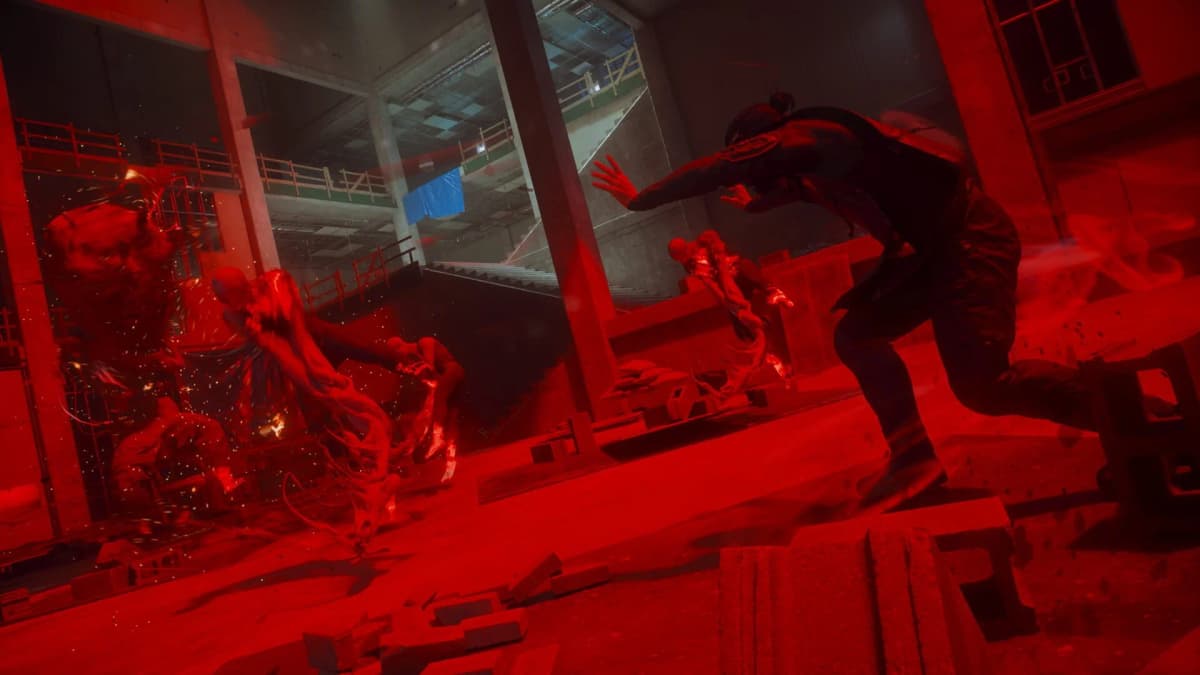
And that is why the Northlight and NVIDIA pairing makes sense on paper. Northlight provides the scene language. RTX tech provides ways to keep that language from collapsing under cost. The goal is not to slap RT onto a conventional image. The goal is to make the whole world pipeline less dependent on old cheats while still keeping the game playable on something short of a lab machine.
This is the kind of stack that can make a surreal city feel physically present instead of like a glossy postcard. That is the real promise. Not more acronyms. More coherence.
The practical tradeoffs players should keep in mind
There are a few clear limits to the excitement here. First, the best-case experience is very obviously centered on RTX hardware. That does not mean non-RTX users will be locked out of the game, but it does mean the showcase path being discussed is tuned around NVIDIA’s ecosystem. If you sit outside that ecosystem, the headline technical story is simply less about you.
Second, bigger rendering stacks mean more opportunities for bad defaults. A game can have excellent underlying technology and still ship with a preset ladder that makes no sense, an ultra mode designed for future GPUs, or a frame-generation option that people toggle before they have fixed the base frame rate. Players should be ready to tune this one rather than blindly trust the first settings pass.
Third, there is still no escaping the basic physics of heavy rendering. Ray tracing, especially in large, detail-rich scenes, remains expensive. Path tracing remains more expensive. Reconstruction tools and smarter geometry handling can lower the pain and improve the image, but they do not repeal hardware limits. The smarter expectation is “more efficient ambition,” not “free ambition.”
✓ PROS
+
Clear division of labor between engine, geometry, upscaling, and reconstruction
+
Northlight’s dynamic-lighting direction makes RT feel artistically justified
+
DLSS 4.5 and Ray Reconstruction 4.5 target both performance headroom and cleaner motion quality
+
Mega Geometry is a logical fit for a dense brutalist city and debris-heavy surreal scenes
✗ CONS
–
NVIDIA’s naming still makes the feature split harder to understand than it should be
–
Ray Reconstruction 4.5 has a separate rollout timeline from the broader DLSS 4.5 discussion
–
Path-traced visuals should be treated as a high-end ceiling, not a mainstream baseline
–
The showcase path is clearly more favorable to RTX users than everyone else
Who should be excited, and who should stay cautious
If you own an RTX card and you like single-player games that care about atmosphere, material response, and lighting as much as combat, Control Resonant should be on your radar. This is exactly the kind of game where better reconstruction and smarter RT support can pay off in the actual feeling of the world, not just in benchmark vanity.
If you are on midrange RTX hardware, the most important part of this entire stack is not the showiest feature. It is the combination of improved Super Resolution and cleaner ray reconstruction. Those are the tools most likely to give you a better-looking game at settings you can realistically use. The temptation will be to obsess over the biggest frame-generation number. The wiser move will be to secure a strong baseline first and treat frame generation as a bonus layer.
If you are outside the RTX ecosystem, caution is the correct posture. The game may still look good and play well through more conventional settings paths, but the entire spotlight around it is centered on NVIDIA-specific advantages. That does not make the game irrelevant on other hardware. It just means the most ambitious version of the pitch is not being written with you at the center.
And if you are the kind of player who gets tired of buzzword-heavy presentations, that instinct is fair. The reason this one deserves more patience is that the layers are at least intelligible once you break them apart. Northlight shapes the world. Mega Geometry helps the world stay detailed under RT. DLSS 4.5 helps performance and reconstruction. Ray Reconstruction 4.5 helps RT and path-traced lighting hold together in motion. That is a much cleaner story than the marketing language initially suggests.
If this ships with a sensible PC menu, the settings priority should be straightforward. Start by finding a real native-feel baseline that is comfortable in combat and traversal. Then use Super Resolution to create headroom. After that, judge ray reconstruction in motion, not in stills. Only then is it worth reaching for the heavier frame-generation options or top-end RT modes. That order sounds boring, but it is how you avoid building a gorgeous slideshow with fake confidence.
- Secure the base frame rate before turning on aggressive frame generation.
- Treat path tracing as an optional luxury tier unless your hardware proves otherwise.
- Pay attention to reflections, moving shadows, and lighting stability when evaluating reconstruction quality.
- Expect exterior city areas to be more demanding than controlled interior spaces.
- Do not confuse a higher displayed frame count with lower latency or cleaner input feel.
That is really the whole story. The stack is not exciting because it is complicated. It is exciting because, for once, the complication maps to real rendering problems that a game like Control Resonant genuinely has to solve.
FinalBoss // Gear
Level up your setup
01Graphics cardson Amazon→02Gaming laptopson Amazon→03High-refresh gaming monitorson Amazon→04Discounted game keyson Kinguin→
Affiliate links · As an Amazon Associate, FinalBoss earns from qualifying purchases.