
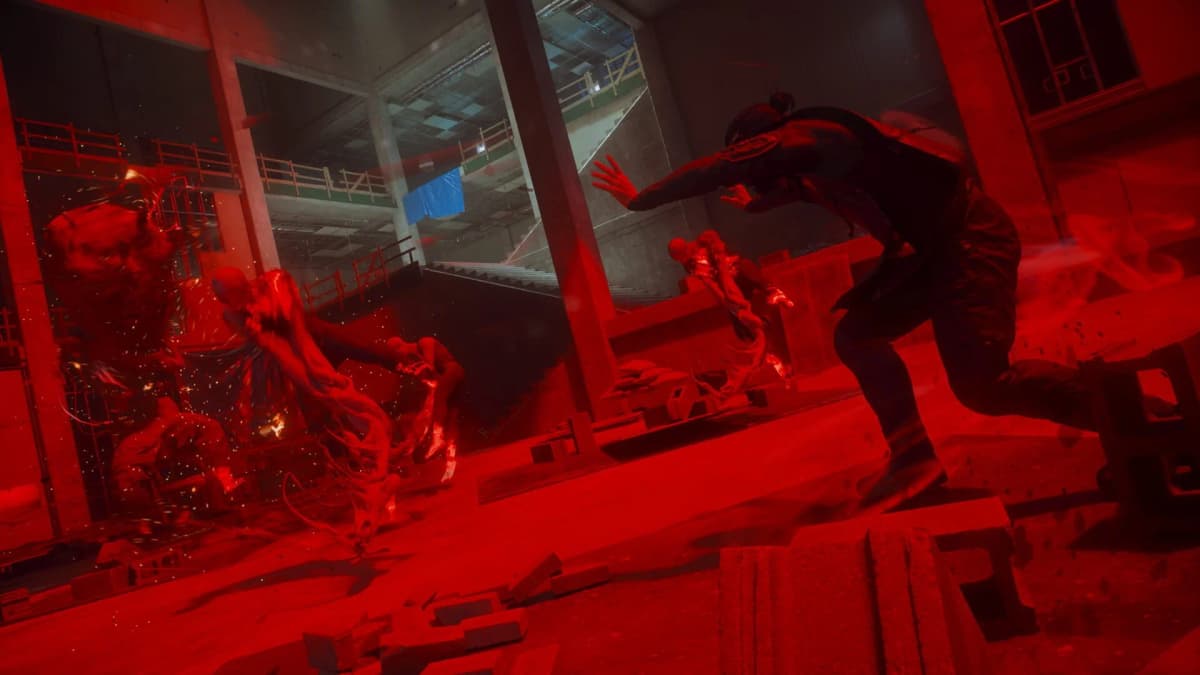
Control’s Service Weapon made Jesse Faden a devastating ranged fighter inside the Oldest House. Control Resonant takes the opposite route: Dylan Faden’s central tool is the Aberrant, a melee weapon that changes shape during combat and makes positioning, combo routing, and ability use the foundation of every encounter.
The important break from familiar action-game habits is the absence of a parry system. Remedy prototyped parries and deflects, then removed them, so Dylan is not built around waiting for a precise defensive opening. Combat instead pushes players to maintain pressure, move through enemy space, and convert attacks into stronger opportunities. The intended rhythm is closer to Devil May Cry than a cautious Soulslike duel: mobility and offensive sequencing replace reaction-based counters.
The Aberrant supports that approach through three equipped roles: a primary attack, secondary attack, and combo ender. Fast forms build pressure and restore Combat Ability resources; heavy forms emphasize burst damage and armor breaking; sweeping forms control groups. Preview examples include Flurry dual blades, the single-target Slice form, and the crowd-focused Slash, while other demonstrations have shown weapon identities resembling hammers, scythes, and whips. The loadout decision is so about assigning a job to each point in a combo, not selecting one all-purpose weapon.
That system feeds a deliberate resource cycle. Melee attacks refill Combat Ability energy, abilities can stun enemies, and executions grant a temporary melee-damage boost. Simply extending raw melee strings leaves value on the table; the stronger pattern is to generate energy, spend it to force a control window, execute, then exploit the resulting damage increase before restarting the loop.
Vertical traversal further changes the spacing game. Manhattan’s distorted arenas give Dylan routes to disengage, re-enter from another angle, and avoid being pinned down by groups. Movement skill will matter alongside damage optimization, especially when crowd-control forms compete with elite-focused finishers for a build slot.

Fault missions add the longer-term consequence: defeating Resonants can present up to three permanent, mutually exclusive power choices. Weapon upgrades, Dylan’s talent trees, and those locked selections mean a single run will not contain every option. The key preparation is learning how form choice, movement, and ability spending reinforce one another — not practicing parry timing.
FinalBoss // Gear
Level up your setup
01Top-rated gaming headsetson Amazon→02High-refresh gaming monitorson Amazon→03Gaming chairson Amazon→04Discounted game keyson Kinguin→
Affiliate links · As an Amazon Associate, FinalBoss earns from qualifying purchases.