
Table of Contents (8)
Counter-Strike 1.6 in VR: Team Beef’s CSVR Makes Classic CS Feel New
This caught my attention because converting a hyper-competitive, twitch-focused shooter like Counter-Strike into VR is both risky and tantalizing – and Team Beef’s CSVR looks like the rare mod that actually respects the original while adding VR-first controls and social features.
Key takeaways
- CSVR is a free community VR port of Counter-Strike 1.6 for Meta Quest and Pico (distributed via SideQuest); it requires you to own CS 1.6 on Steam.
- It adds full 6DoF controller tracking, local and online PvP, headset-hosted servers, team chat, and bHaptics support – the most complete CS1.6 VR effort yet.
- Server hosting from the headset and native team chat make setting up matches painless; the mod emphasizes competitive play but raises questions about input parity and anti-cheat.
- With Valve’s Steam Frame on the horizon, CSVR highlights how community-built VR support can outpace native compatibility in practice.
{{INFO_TABLE_START}}
Publisher|Team Beef (community mod)
Release Date|January 2026 (available now)
Category|VR mod / First-person shooter
Platform|Meta Quest, Pico (via SideQuest). Requires Counter-Strike 1.6 on Steam
{{INFO_TABLE_END}}
What CSVR actually is – and why it matters
At surface level, CSVR is a fan-made VR port that runs Counter-Strike 1.6 inside a Quest/Pico headset using SideQuest. Beneath that, Team Beef has wrapped the old-school FPS in modern VR affordances: six degrees of freedom for the controllers, tactile feedback via bHaptics, and both local bot play and online PvP with servers you can host directly from the headset.
That list matters. Past attempts to put classic shooters in VR often felt like tech demos — guns awkwardly mapped to controllers, flaky multiplayer, or no real social tools. CSVR focuses on the pieces a competitive community needs: smooth aiming, reliable matchmaking (or at least easy server hosting), voice and team chat, and latency-conscious design. Team Beef’s track record (they’ve already VR-ported Half-Life, Doom, Quake and Prey) shows they know how to balance nostalgia with practical VR controls.
The good: immersion, accessibility, and social play
6DoF controller tracking is the biggest gameplay upgrade here. Instead of translating mouse micro-adjustments to a gamepad stick, you physically aim and present the weapon; that makes flick shots and tracking feel tactile in ways a monitor never can. bHaptics support is a neat touch for immersion — explosions and hits can actually be felt instead of just heard.
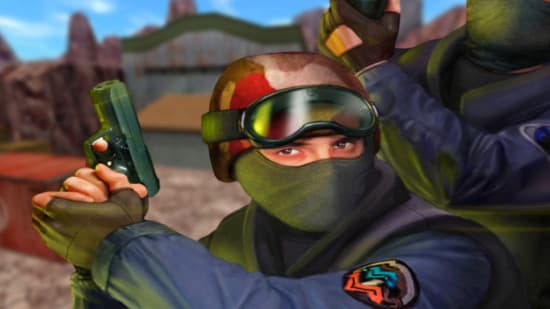
Practical accessibility matters too. Installing via SideQuest and hosting matches from the headset lowers the barrier for casual groups to play together. And because CSVR requires a legal copy of CS 1.6 on Steam, the mod keeps ties to the original game and its assets rather than reimplementing them from scratch.
Questions and caveats — competitive viability, anti-cheat, and motion
Competitive purists will rightly ask whether VR can fairly replace mouse-and-keyboard play. Input parity is the elephant in the room: VR aiming feels different (and in many cases more intuitive), but how will that affect balance against players using traditional inputs? CSVR’s headset-hosted lobbies are great for friends and community servers, but large-scale competitive ecosystems need robust anti-cheat and ranked systems — areas community mods often struggle to match.
Motion sickness is another real concern. Team Beef’s 6DoF approach and physical aiming reduce some discomfort, but locomotion options and comfort settings will determine how long players can play without nausea. For competitive play, shorter rounds and tactical movement may help, but this is still a factor for wider adoption.
Where this fits in the VR and CS landscape
Community ports like CSVR show VR’s grassroots strength: dedicated fans delivering feature-rich, playable experiences before platform-first parties do. With Valve’s Steam Frame looming as an all-purpose way to run your Steam library in a headset, CSVR demonstrates that native, game-specific VR work — tailored comfort options, custom input mappings, integrated team chat and server hosting — still wins for actual playability.
For the CS1.6 community, CSVR is a chance to relive classic maps and tactics in a new medium. For VR enthusiasts, it’s one of the clearest examples yet that competitive shooters can translate meaningfully to headsets when the port respects both the source material and VR design.
What this means for you
If you own a Meta Quest or Pico and have CS 1.6 on Steam, CSVR is worth installing to test the experience. Expect a different — not necessarily better — competitive feel: more physical aiming and presence, but questions around matchmaking and anti-cheat if you’re looking for ranked play. If you’re nostalgic for 1.6’s maps and want to experience them inside VR with friends, CSVR delivers in spades.
Finally, keep an eye on platform moves. When the Steam Frame and other PC-VR bridges arrive, compatibility will widen, but dedicated VR ports like CSVR will likely remain the gold standard for comfort and features unless developers and platform holders prioritize native VR support.
TL;DR
Team Beef’s CSVR turns Counter-Strike 1.6 into a fully playable VR experience on Meta Quest and Pico: full 6DoF, headset-hosted servers, team chat, and bHaptics make it the most complete CS1.6 VR port so far. It’s a must-try for fans, but competitive integrity, anti-cheat, and motion comfort remain open questions for broader adoption.
FinalBoss // Gear
Level up your setup
01Graphics cardson Amazon→02Gaming laptopson Amazon→03High-refresh gaming monitorson Amazon→04Discounted game keyson Kinguin→Affiliate links · As an Amazon Associate, FinalBoss earns from qualifying purchases.
Want to Level Up Your Gaming?
Get access to exclusive strategies, hidden tips, and pro-level insights that we don't share publicly.
Ultimate Gaming Strategy Guide + Weekly Pro Tips