
Table of Contents (8)
The night BLAST Open Rotterdam broke my brain (in a good and bad way)
I didn’t expect BLAST Open Rotterdam to mess with my head as much as it did.
I went into it the way I go into most early-season events now: second monitor, half-working, half-watching, waiting to see which new roster would implode first. Instead, I ended up glued to the screen watching Team Vitality roll through everyone like they’d loaded up a single-player campaign on Normal. They went undefeated, barely broke a sweat, and by the time the confetti hit the stage, the desk was already having the “are they even beatable?” conversation.
On one hand, I loved it. I’ve been playing Counter-Strike in some form since Source 1.0 turned my university PCs into LAN cafés. Seeing CS played at that level – the spacing, the utility layering, the mid-round calls that feel like telepathy – still hits me right in the brain. It’s the purest expression of why I ever queued Dust2 at 2am and wrecked my sleep for a decade.
On the other hand? By map three of the grand final I caught myself doomscrolling on my phone. I already knew how every mid-round would probably shake out. The “upset energy” you tune in for at these mid-tier LANs just wasn’t there. Vitality weren’t just winning; they were making everyone else look like they’d turned up to a job interview in pyjamas.
That’s when it hit me: Counter-Strike in 2026 might be the best it’s ever been to watch… and I’m not convinced it’s actually in a healthy place.
Vitality are the final boss we always wanted – and maybe the problem we don’t want to admit
Let’s not pretend Vitality aren’t insane right now. They ran 2025 with something like nine major trophies, rolled straight into 2026 by taking IEM Kraków, then followed it up with another big win at PGL Cluj-Napoca. Esports Insider had them back at #1 in Valve’s Regional Standings in March 2026, basically locking in their invite pipeline for IEM Cologne’s first CS2 Major.
Add in Rotterdam where they went untouched, and it’s not a stretch to say we’re watching one of the most dominant eras this game has ever seen. For context: I lived through NiP’s 87-0 in CS:GO and Astralis turning “better utility” into a religion. This Vitality core doesn’t feel like a fluke run; it feels like a fully optimized, coldly efficient championship machine.
And yet, as I watched another team crumble to the same suffocating CT setups, there was a tiny part of me that thought: is this actually fun?
Because here’s the uncomfortable truth nobody on broadcast ever wants to lean into: dominance eras are great for history, not always great for week-to-week entertainment. When NiP were farming everyone, half the Reddit threads were “please, someone, anyone, beat them.” Astralis turned entire events into a question of which poor bastard would lose 16-6 in the final. It gave us narratives, sure, but it also flattened a lot of the chaos that makes Counter-Strike magical.
Vitality right now are in that same orbit. Every time I see a “blast open rotterdam preview” style piece pop up, I know exactly how it’ll end: Vitality are the favourites, FURIA are the spicy outsider, everyone else needs “the series of their lives.” And annoyingly, it keeps being right.
Part of me loves that. I want Counter-Strike to have a final boss, a team you measure yourself against. But the other part of me is starting to feel like we’ve accidentally optimized the entire competitive ecosystem around making one org’s training arc look clean on a timeline.
BLAST Open Rotterdam as a microcosm: peak polish, weird stakes
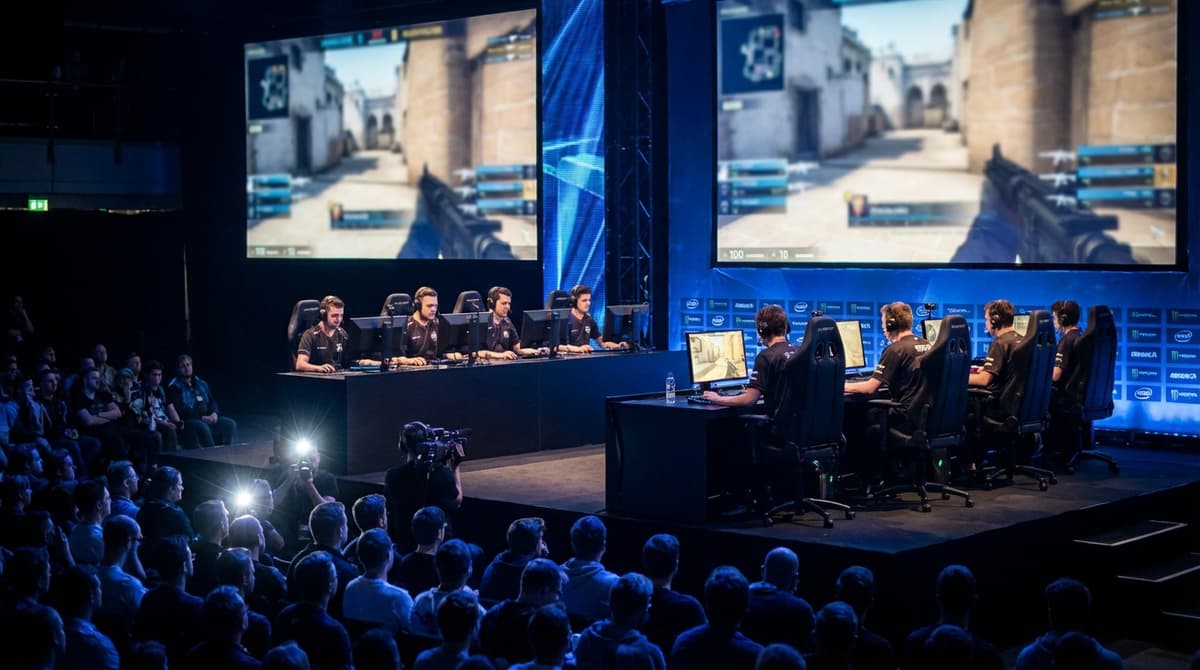
Strip Rotterdam down and it’s exactly what a modern CS2 LAN is supposed to be. High production, tight schedule, arena atmosphere that feels big without being bloated. You could see smaller squads like BIG, Alliance, M80 and the rest using it as a genuine stepping stone toward Major relevance, especially with Valve Regional Standings (VRS) looming over everything.
And that’s where it gets messy.
Valve’s VRS system is the invisible hand moving everything right now. Prize money, opponent quality, head-to-heads – it all feeds into this points machine that decides who gets to skip qualifiers, who gets invites, who gets screwed. BLAST Open Rotterdam wasn’t just a trophy; it was a calibration point for the entire year’s narrative.
You could feel it in how teams played. An underdog doesn’t just upset Vitality now “for hype”; they’re trying to rip future Major security out of their hands. A team like FURIA, who had that insane stretch in early 2025 with four trophies in two months, suddenly cares less about “nice LANs” and more about VRS density. If an event doesn’t move the needle in the standings, you can hear the scrim partners groan before invites even drop.
Rotterdam mattered, but it mattered in a very 2026 way: not as a standalone story, but as a decimal point in a spreadsheet that decides Cologne, Singapore, and everything in between.
And the wild thing is… mechanically, that’s smart. As someone who spent years flaming Valve for hands-off esports management, I can’t complain that they finally put a structure in place. But watching that structure in action around events like Rotterdam and the upcoming PGL Bucharest qualifiers, there’s a creeping feeling that we’ve traded some of the soul of Counter-Strike for a cleaner flowchart.
Valve Regional Standings: the system that fixes everything and breaks something deeper
On paper, VRS is brilliant.
It rewards teams for actually winning things instead of just farming comfortable online leagues. It factors in who you beat, not just that you placed top four in some weird eight-team event where half the bracket was academy rosters. It speeds up Tier 2 mobility – if a squad like PARIVISION or GamerLegion catches fire at the right time, they can rocket up the rankings in a way that would’ve taken a year of grind in the old invite-politics system.
But in practice? It’s turning the calendar into a minefield.
Teams now have to prioritize “VRS windows” like they’re tax seasons. IEM Atlanta in May, CS Asia Championships right after, Cologne Major in June, Esports World Cup in August, Singapore Major in November – these aren’t just events, they’re gravitational wells. If you overcommit to the wrong one, bomb a qualifier, or hit a slump at the wrong moment, your entire year’s path to relevance can vanish.
That’s brutal enough for Tier 1 staples like NAVI, FaZe, or HEROIC. But for the bubble teams – the Falcons, Auroras, the line of orgs forever labeled “dark horses” by analysts – the margin for error might as well be zero. One bad travel schedule, one stand-in forced by visa issues, and your VRS trajectory is cooked.
As a viewer, this absolutely spices up the early part of the year. Rotterdam felt heavier because everyone knew March’s Valve standings would influence Cologne invites. But as someone who actually cares about the ecosystem, about players not burning out by 25 and orgs not bailing at the first bad quarter, I’m not sure this pressure cooker is sustainable.
We’ve basically told every competitive CS2 player: “Congrats, you’re in the most meritocratic era the game’s ever seen. Also, if you whiff two LANs and Vitality doesn’t, kiss your Major dreams goodbye.”
Tier 2 is finally kicking the door in – and the door leads straight into a grinder
I love that Tier 2 in 2026 actually matters. For years CS had this ridiculous glass ceiling where you could be terrifying online, grind every qualifier, and still feel like the same eight orgs had dibs on all the real stages. VRS has cracked that open. One hot run at a tournament like BLAST Open Rotterdam can catapult you into meaningful contention. That’s fantastic.
But the price for admission is higher than it’s ever been.
When I look at teams like PARIVISION or upstart rosters clawing through Bucharest qualifiers, I don’t see plucky underdogs; I see five people gambling their entire careers on six months of flawless form. You don’t just have to beat the established elite in the server – you have to beat their support systems, their sports psychologists, their seven-figure analyst budgets, their travel comfort, their experience not choking on stage.
And unlike the Vitalitys of the world, you don’t get the same luxury of failing forward. If Vitality bombed out of Rotterdam (they didn’t, obviously), they’d still be atop VRS thanks to IEM Kraków and PGL Cluj. If a smaller squad finally gets their LAN invite and drops the ball, they go straight back into the blender of closed qualifiers and “maybe next year.”
So yeah, Tier 2 can move faster now. But the floor falling out is faster too. That’s the part I’m not sure we’ve really reckoned with as fans. We beg for new blood, then forget half the names the second they fall out of VRS relevance.
The Esports World Cup: lifeline, distortion field, or both?
Then there’s the giant oil-money elephant in the room: the Esports World Cup.
Two million dollars in player share for CS2 alone this August. That is a ridiculous amount of money. For some orgs, that’s the difference between keeping a roster and “sorry, lads, we’re pivoting to content creation.” For some players, one deep run could out-earn an entire year of salary.
From a competitive perspective, it’s fascinating. Drop that kind of prize pool in the middle of a calendar already shaped by two Majors (Cologne and Singapore) and you don’t just create “another big event”; you create an inflection point. Imagine a Tier 2 team hits god form, takes a top-four at the World Cup, rockets up the VRS, and suddenly arrives at Singapore as a genuine contender. That’s the kind of narrative injection the scene lives on.
But it also warps everything around it. Practice schedules, roster moves, org budgets – they all start to orbit this single mega-event. And unlike Valve’s Majors, where there’s at least some pretense of long-term circuit logic, the World Cup is just raw cash gravity.
I can’t pretend I wouldn’t grind my face off for that kind of payday if I were a pro. But as a fan who cares about Counter-Strike as a sport, there’s a part of me that worries we’re turning the calendar into a series of jackpot pulls rather than a coherent season.
All this polish sits on top of a messy foundation
There’s another layer to my unease that Rotterdam brought screaming back into focus.
While I’m watching Vitality micro-manage every angle on stage, I’m still solo-queueing into CS2 games at home where blatant cheaters run around with spinbots, the voice chat is a war crime, and half the lobby is alt-tabbing to check skin prices. NakeyJakey’s video about how Counter-Strike took over his life nailed it: the game is magnetic because of its design and legacy, but it’s chained to cheating, toxicity, and a weird casino economy built on skins that can sell for more than a car.
PCGamesN recently highlighted a StatTrak AK-47 Case Hardened that moved for around $1 million because of a rare “Blue Gem” pattern. A million dollars for pixels in a game where the average ranked match still feels like a social experiment gone wrong. Valve caps Steam Market listings, so a lot of the real trading happens through gray-market sites and private deals – the exact infrastructure that fuelled skin gambling scandals and underage betting in the first place.
So we’re here, in 2026, with:
- the most professionally optimized, structurally supported tier-1 scene Counter-Strike has ever had
- a calendar stitched together by Valve Majors, BLAST/ESL tentpoles, and the Esports World Cup
- a Tier 2 ecosystem that can finally break through… if it doesn’t get shredded by VRS volatility
- and a day-to-day player experience that still feels like it’s taped together with community coping mechanisms and a nine-figure skin economy
No matter how clean BLAST’s production is or how hype the Rotterdam crowd gets, I can’t fully shake the sense that the foundation is still wobbling.
Why I’m still watching everything anyway
Here’s the thing: for all this doom and gloom, I’m not going anywhere.
I’ve sunk too many hours into this game – from janky Source surf servers to sweating ESEA pugs in CS:GO to learning CS2’s weird smokes – to pretend I’m above it. When Vitality load into server at Cologne, I’ll be there. When some no-name squad dumps a favorite out of Bucharest qualifiers, I’ll be spamming messages in my group chat. When FURIA randomly remember they’re terrifying and run through a bracket, I’ll be screaming at my monitor like it’s a football final.
But BLAST Open Rotterdam forced me to admit something I’ve been side-eyeing for a while: Counter-Strike’s competitive scene has never looked better on paper, and I’m still not convinced we’re steering it in a direction that keeps it human.
The VRS era makes every map matter more and simultaneously makes failure more catastrophic. Vitality’s dominance gives us a perfect villain-hero hybrid while quietly flattening a lot of the chaos that makes this game sing. The Esports World Cup injects life-changing money while threatening to turn the calendar into a series of jackpots. And beneath all of it, everyday CS is still a wild west of cheaters, tilted teammates, and million-dollar cosmetics.
Maybe that contradiction is just what modern esports is: ruthless optimization on top, barely contained chaos underneath. Maybe in ten years we’ll look back at 2026 as the peak – the year the system finally clicked and Counter-Strike cemented itself as the forever game. Or maybe we’ll realize this was the tipping point where we pushed too hard, too fast, and squeezed out the very unpredictability that made Rotterdam worth watching in the first place.
Right now, I honestly can’t tell if we’re heading into Counter-Strike’s true golden era or quietly speedrunning the part of the story where things get stale and brittle. I just know that when the next event rolls around and Vitality load into server again, I’ll be right there, second monitor on, hoping this is the day someone finally makes the script fall apart.
FinalBoss // Gear
Level up your setup
01Graphics cardson Amazon→02Gaming laptopson Amazon→03High-refresh gaming monitorson Amazon→04Discounted game keyson Kinguin→Affiliate links · As an Amazon Associate, FinalBoss earns from qualifying purchases.
Want to Level Up Your Gaming?
Get access to exclusive strategies, hidden tips, and pro-level insights that we don't share publicly.
Ultimate Gaming Strategy Guide + Weekly Pro Tips