
Table of Contents (11)
My road back to Hallfein: a chill JRPG that got its hooks in me
I booted up Atelier Resleriana: The Red Alchemist & the White Guardian with a weird mix of anticipation and caution. I’d just come off Atelier Yumia’s bigger, more adventurous swing, and the pitch for Resleriana sounded like a rewind: closed zones, turn-based combat, and lots of classic Atelier vibes. Thirty minutes in, standing in a quiet, red-tinged street of Hallfein with a half-empty materials pouch and an empty shop ledger, it clicked-this is the series slipping on its comfy hoodie. By the end of my first night (about 4 hours), I’d unlocked the hidden Atelier, bought my first storefront upgrades, and lost an hour experimenting with the new Gift Color Synthesis system just to make a slightly better bomb. That was my first “oh no, I’m going to lose my weekend to this” moment.
Across roughly 40 hours on PS5-main story finished, most side quests done, and almost every recipe discovered-Resleriana didn’t surprise me with bold new ideas so much as it satisfied a very particular itch: make stuff, sell stuff, rebuild a town, and tinker with a battle system that’s more thoughtful than it first appears. It’s also chatty to a fault, occasionally thin in the story department, and visually a step back from Yumia. But when all its systems interlock, you get a warm, almost meditative rhythm that’s tough to quit.
Key takeaways after 40 hours
- The revised alchemy—Gift Color Synthesis—is the star. It’s tactile, puzzle-like, and wildly addictive.
- Rebuilding Hallfein through your shop turns busywork into a satisfying city-boosting loop.
- Turn-based combat starts basic, but Unity combos and timing blocks add welcome bite.
- Difficulty is lopsided: mostly cozy, with one nasty boss spike that forced me back to the cauldron.
- Big nostalgic crossover energy; fun banter if you know the series, but newcomers may miss context.
- PS5 performance is smooth, yet environments look PS4-era; art carries the day more than tech.
- No English dub and no French text; Japanese VO is great, but localization options feel thin.
Gift Color Synthesis: the alchemy puzzle I couldn’t put down
Alchemy’s back in the driver’s seat here, and it’s not just a checklist of “craft 3 bombs, move on.” The Gift Color Synthesis system looks fussy at first: each ingredient has two Gift Colors set left and right, and the recipe’s line acts like a small lane where you link those colors to pass traits along. I started by mindlessly tossing in whatever had the highest quality, but two hours in, I realized how much mileage there is in intentionally bridging colors with “stepping stone” ingredients so the right traits—Poison+, burn chance, crit rate—transfer where I wanted them.
My “aha!” moment: trying to transform a basic bomb into a Phoenix-flavored monster. The recipe hinted at a transformational outcome if I hit certain thresholds. Linking a yellow-blue into a blue-red chain let me carry both a flat damage bonus and a burn-over-time trait, and the last slot’s additive boost pushed it over the line into a transformed version. That single bomb later chained with another in combat to trigger a fiery Unity combo (more on that in a bit). The best part is how it all feels bite-sized but meaningful—you aren’t staring at a 4D spreadsheet, but you’re still making real tradeoffs about traits versus quality, and which “Gift Color” bridges to prioritize.
Two quality-of-life things I used constantly: sorting ingredients by trait and by color pairing, and the optional extra slots you can unlock to goose specific effects. One nitpick: I wish the filter let me combine multiple trait tags at once. When my inventory ballooned, I had to re-sort a few times to find poison + crit + burn in the right color alignment. Minor friction, but it adds up during long synth sessions.
Dimensional Paths: a clever dungeon crawler loop that feeds the cauldron
Resleriana splits exploration between small, self-contained zones and these Dimensional Paths—floor-based dungeons where you climb, fight, and log a win to fill a page in Slade’s otherwise blank book. Every few floors, the book coughs up secret recipes or unusual traits. It’s a neat carrot. I found myself “just doing one more floor” before bed, because the payoff is concrete. On floor 12 I ran into one of the game’s fairies—little event pop-ups that offer three pick-one buffs. I almost always picked “object trait improvement,” because those microscopic upgrades ripple through your entire synthesis tree. The HP top-up was tempting in longer stretches, but this is very much a game where investing in ingredients pays higher dividends than bracing for the next fight.
The Paths also hint at the game’s mobile DNA (this whole universe started life on a mobile title closed earlier this year), in the sense that content comes in tidy, digestible bites. I don’t mean that as a knock; it made the game easier to slot into my week. One quick dungeon, a couple crafts, a shop restock, invest into a district—save, sleep. It’s a loop that respects your time, even if it rarely swings for the fences.
Turn-based, with unity combos giving it teeth
Combat is classic turn-based with a clear initiative bar so you can see who’s up and how buffs/debuffs will land. Each character gets a basic attack, skills that drain TP, and items that do the heavy lifting if you’ve cooked them right. There’s a tiny timing element when enemies swing—nail the window and you’ll block or reduce damage, sometimes dodging status effects entirely. It’s not a rhythm game, but it keeps you awake.
The real freshness is the Unity system. Every action builds a shared gauge, and when it’s ready, you can chain characters into a multi-person sequence. The game doesn’t just stack damage; specific chains trigger bespoke effects. My favorite: double-bombing into a Phoenix blaze that roasted a mob and left them burning. Formation matters, too: front row eats hits and multiplies some effects, back row stays safer but contributes differently to Unity. I enjoyed the micro-decisions—do I spend gauge now for a clean kill, or bank it to interrupt a boss wind-up two turns away?
About that difficulty curve. For most of the campaign, it’s gentle. I switched the battle speed to “fast” and was cruising, testing new items for fun rather than necessity. Then I smacked into the notorious duo boss. Their interplay punished half-measures and item laziness. I wiped twice, sighed, and did the thing Atelier veterans know well: back to the pot. I re-synthesized my bombs with burn, poison, and a unity-boosting trait, adjusted gear for resistances, and went in with a plan. On the successful attempt, the fight flipped from slog to puzzle—interrupt here, Phoenix chain there, precise timing block on the nastiest hit. The spike is real, but also the one time the combat sang. I just wish more encounters demanded that level of intention.
The shop that makes it all click: rebuilding Hallfein
Here’s where Resleriana’s old-school sensibilities get a pragmatic makeover. Your shop isn’t just a money hose; it’s the engine for city growth. Sell your synths, turn profit into investments at city hall, and each of Hallfein’s five districts wakes back up. New vendors roll in, the streets visually brighten, and side quests sprout. It’s a feedback loop that gives context to the grind. After reinvesting in the Miners’ Quarter, ore prices dropped and rare nodes showed up deeper in the Dimensional Paths. That change altered my crafting priorities the next night. The game is full of these small cause-and-effect nudges.
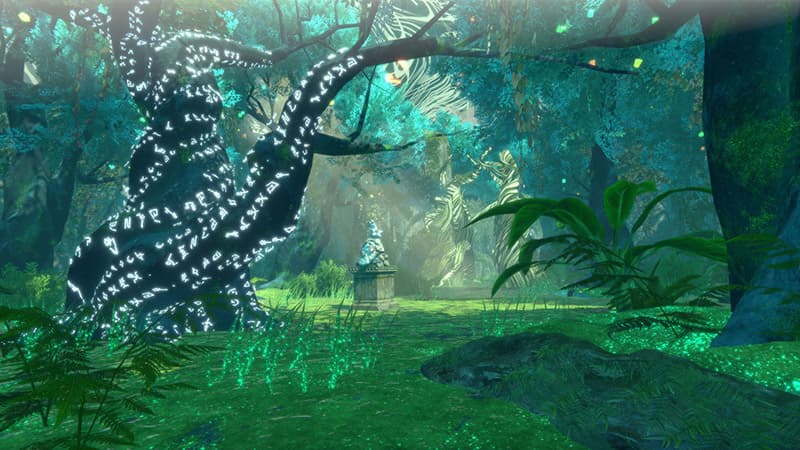
Those fairies you meet? They aren’t just event buffs. Recruit them and assign them to shop roles—cleaning, management, sales—for passive bonuses. I threw my early fairies into sales, saw a spike, then realized my stock quality couldn’t keep pace. Shuffle assignments, re-craft, check the ledger, invest again. It’s satisfying bookkeeping. If you hated the atelier-as-business angle in earlier entries, this won’t convert you. If, like me, you enjoy seeing your cauldron math reflected in a better storefront sign and fuller streets, it’s catnip.
Characters, crossover energy, and a very chatty script
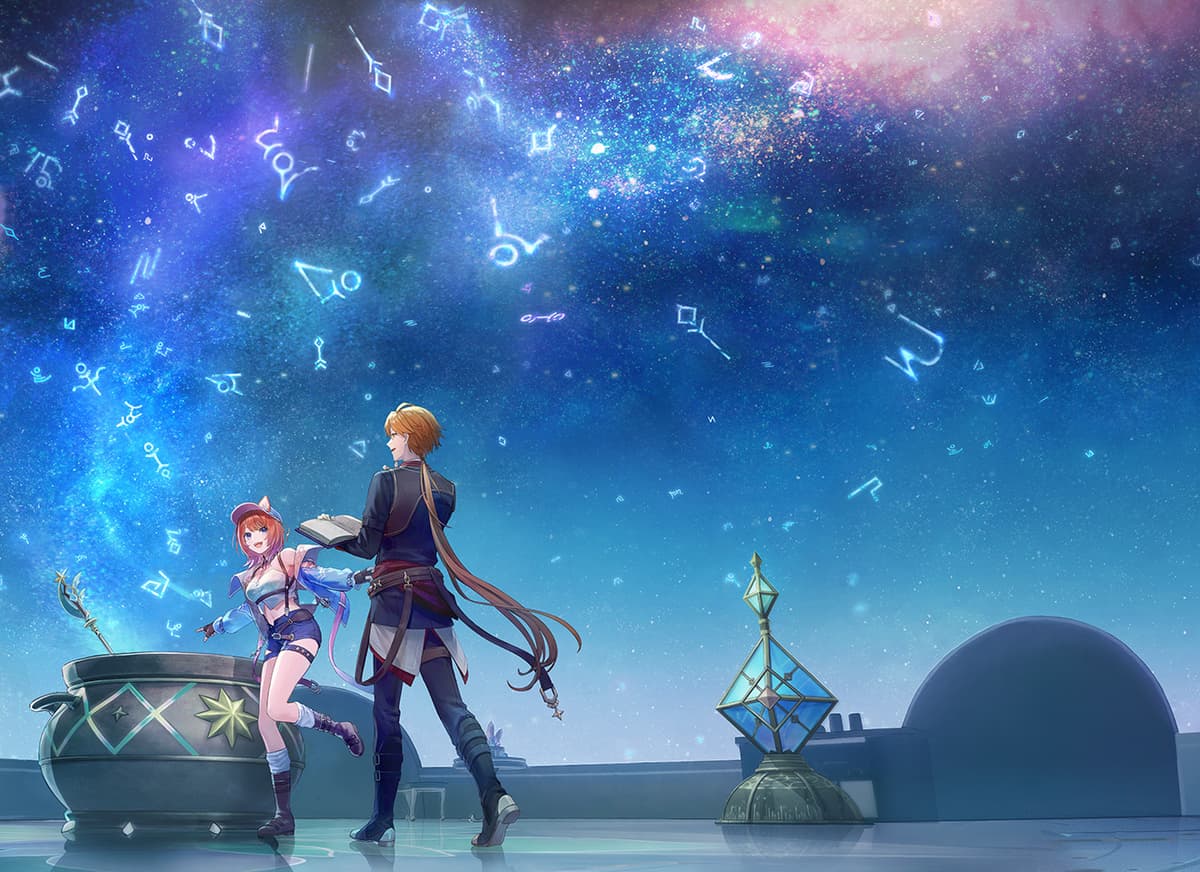
Resleriana keeps the mood light. Rias is the primary alchemist here, with Slade as the inquisitive half trying to decode his father’s relic (that Geist Core is a neat mystery hook even if it doesn’t fully pay off). Their dynamic isn’t as nuanced as Escha & Logy’s, but it’s tasty enough to carry the early hours. As the party balloons, familiar faces hop in: Wilbell smirks her way into trouble, Totori’s sweetness grounds scenes, Sophie’s warmth keeps it cozy, and Raze brings the Mana Khemia edge. The “why” of everyone being together is… let’s be honest, a polite shrug. It’s a cross-universe reunion because reunion content is fun. And yeah, it is fun—if you’ve walked these roads before.
The flip side: the script talks. A lot. I’m fine with slice-of-life, but some scenes stretch a single beat across three dialogues that say the same thing. After about 10 hours, I started skimming non-essential chatter to get back to cooking or clearing another Path floor. Newcomers could also feel like they’re missing inside jokes; the banter lands best if you know these folks. For localization, there’s solid Japanese voice acting as usual, but no English dub, and—odd choice—no French text this time, even though Yumia had it. If you need French, you’re out of luck here. English text is fine, with only the occasional stiff line.
How it runs and looks on PS5
Technically, this is a conservative step. On PS5, I saw smooth performance in battles and city scenes—nothing to complain about frame-wise—quick loads, and snappy menu transitions. But environments look a generation behind: flatter textures, simpler geometry, and a “pretty but plain” presentation compared to Yumia’s more detailed areas. Character models are still charming, with Gust’s usual expressive eyes and good costume silhouettes. The color palette carries a lot of weight; when Hallfein brightens as you rebuild, the shift lands even if the assets aren’t cutting edge.
Audio is classic Atelier. Breezy town tunes, a kick of percussion when battles start, and some lovely melodic lines during synthesis that made me linger in the menu a little longer than necessary. The lack of an English dub won’t rattle series veterans who always use Japanese VO, but it’s worth noting for folks who prefer dubs or wanted the same breadth of options Yumia offered.

Paper cuts and quirks that wore me down
- Inventory filters are good but not great. Let me multi-select trait tags to narrow down exact ingredients faster.
- The difficulty bump at that duo boss feels out of band with the rest of the campaign. Give me more mid-game fights that nudge me to re-synthesize, not just one wall.
- Dialog pacing could be tighter. Several scenes repeat info the player already knows. The tone is cozy, but economy matters.
- Exploration zones are utilitarian. You’re here to hit nodes with a spear swing and hoover materials. It works, but the spaces rarely invite curiosity.
- Formation tweaking lacks granularity mid-fight. I wanted a quick per-turn swap option for front/back rows; as is, it’s mostly pre-fight planning.
Who will love this, and who might bounce
If your favorite Ateliers are the ones where the cauldron is king and the town grows because of your spreadsheets-in-disguise, Resleriana is a warm, familiar embrace. The Gift Color puzzle at the heart of synthesis is fun to noodle with every single session, and the shop-to-city feedback loop gives everything purpose. If you primarily show up for the story’s ambition, world novelty, or a modern presentation push like Yumia’s, this will feel safe—pleasant, occasionally sparkling, but safe. Newcomers can start here, but you’ll appreciate the crossover cast more if you’ve at least toured the Sophie/Totori era.
My playstyle notes and a couple of war stories
I tend to over-invest in synthesis early, and this game rewarded that. By hour 8, I’d created a set of status-heavy bombs with burn and poison, a healing salve that over-healed just enough to bait me into risky plays, and a handful of defensive tonics carrying resistance traits across the Gift Color chain. That carried me until the duo boss humbled me around hour 18. The rematch felt like classic Atelier problem-solving: retune traits, test a different color bridge, accept that a slightly lower quality item with the right combo beats a higher quality one with the wrong colors. When the Phoenix unity chain landed and the bar slid perfectly into an interrupt, I actually said “okay, that’s the good stuff” out loud.
On the city side, I made the mistake of funneling too many early profits into the Artisan District because I wanted prettier gear fast. If I’d split that with Miners’ early, I would’ve saved time and ingredients later. Lesson learned: invest for supply lines before output. Also, recruit every fairy you can. Assigning my first three to sales looked good on paper, but moving one to management stabilized shop cycles in a way that made crafting runs more predictable.
FinalBoss // Gear
Level up your setup
01Top-rated gaming headsetson Amazon→02High-refresh gaming monitorson Amazon→03Gaming chairson Amazon→04Discounted game keyson Kinguin→Affiliate links · As an Amazon Associate, FinalBoss earns from qualifying purchases.
Want to Level Up Your Gaming?
Get access to exclusive strategies, hidden tips, and pro-level insights that we don't share publicly.
Ultimate Reviews Strategy Guide + Weekly Pro Tips