
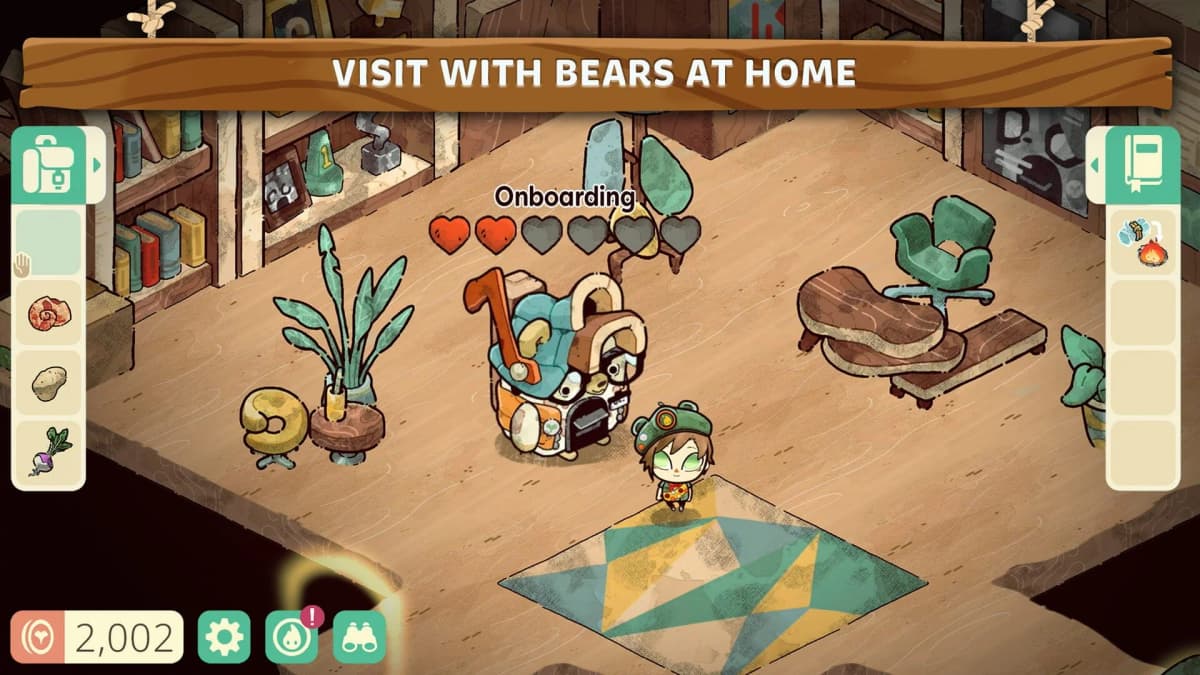
Early progression in Cozy Grove: Camp Spirit follows a dependency chain. Complete the opening Spirit Scout requests, collect Spirit Wood from bear quests, feed every earned log to Flamey, then restore the camp’s crafting and cooking functions. A blocked path, unavailable recipe, or absent quest usually points to one unfinished requirement in that chain.
The first practical route is: talk to Orsina, follow the active quest marker, turn in the required item, collect the Spirit Wood reward, feed it to Flamey immediately, and use the newly available camp services before moving on. This prevents the common early stall where several systems are unlocked but none are used to finish the next request.
Table of Contents (10)
Early Progression Order at a Glance
- Speak with Orsina and accept the opening Spirit Scout tasks.
- Use the quest marker to locate the objective, item, or bear involved.
- Complete story requests that reward Spirit Wood, also referred to as Spirit Logs.
- Give every available Spirit Wood log to Flamey.
- Use Flamey’s expansion to reach newly available bears and island sections.
- Repair the crafting machine through Mr. Kit when that task becomes available.
- Cook roasted mushrooms when the early cooking request appears.
- Check item tags before turning in crafted, cooked, or collected quest items.
- Use lamps to open the next accessible section and reveal more daily activities.
Key warning: Spirit Wood is progression currency during the opening stretch. Keeping it in storage delays Flamey’s unlocks, which delays new bears, lamps, and the requests needed to keep the island moving.
Step 1: Start With Orsina and Track the Active Request
Orsina establishes the early quest loop. Speak with her, read the current request closely, and use its marker as your route guide. The marker identifies the area or character connected to the objective; it does not always explain the final requirement. Check the request text again before returning if the hand-in does not complete.
The opening tasks introduce the usual Spirit Scout routine: investigate an area, collect or prepare an item, deliver it to the correct bear, and take the reward. Keep this loop narrow at first. Decorative placement, broad resource gathering, and unmarked exploration can wait until the camp has its basic infrastructure.
- Talk to Orsina before searching for an objective.
- Follow the active marker instead of checking every interactable object on the island.
- Return to the requesting bear once the objective is complete.
- Collect the quest reward before switching to another request.
Later bears such as Bunch, Bradley, and Kyli extend this structure with additional requests. Their presence matters because new bears create more opportunities for story progression and Spirit Wood rewards. Flamey’s expansion is what makes those bears available.
Step 2: Turn Spirit Wood Into Island Progress Immediately
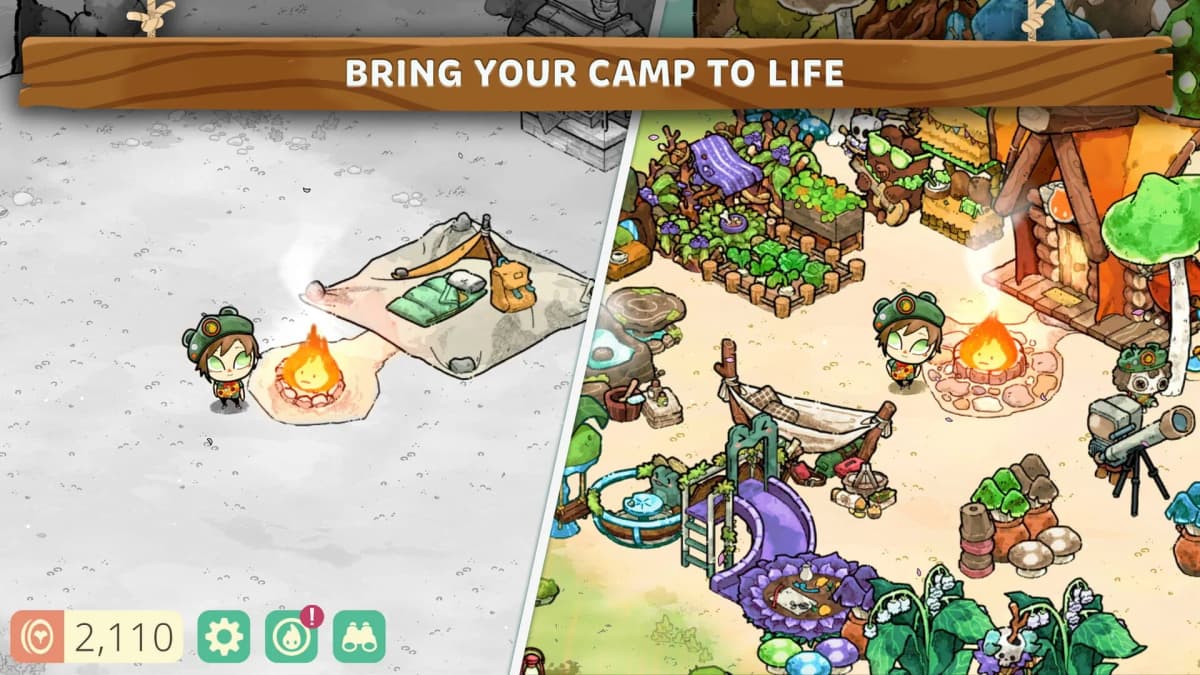
Story quests from the ghostly bears provide Spirit Wood. Once received, take it directly to Flamey and feed it to the campfire. Flamey uses the logs to expand the illuminated part of the island, opening new areas and bringing more bears into the progression loop.
This is the main early-game gate. A player can finish a request, receive the reward, and still remain unable to reach the next bear or area because the Spirit Wood has not been handed over. Check Flamey after every story turn-in rather than waiting until the end of the session.
- Quest complete, no new route available: visit Flamey and check whether you are carrying Spirit Wood.
- A new bear has appeared: speak to them promptly; their first request may unlock the next necessary system.
- Several logs are available: feed all of them before spending time on optional camp decoration.
The useful mental model is simple: bears provide requests, requests provide Spirit Wood, Spirit Wood expands Flamey’s light, and expanded light provides more bears and more requests.
Step 3: Repair the Crafting Machine Through Mr. Kit
The crafting machine is one of the first hard progression requirements. When the repair task directs you to Mr. Kit, complete it before treating crafting as optional. Subsequent bear requests can require an item that must be made rather than found, and an inactive crafting machine turns those requests into a dead end.
Use the quest marker and the current task text to identify what Mr. Kit needs for the repair. Once the machine is functional, inspect it immediately. The important outcome is knowing where crafted quest items come from before a bear asks for one.
- Prioritize the crafting-machine repair when it appears.
- Complete the marked requirement and return to Mr. Kit for the hand-in.
- Interact with the repaired machine once to confirm it is available.
- Keep crafted quest items until the relevant bear accepts them.
Mr. Kit and Kit-related services also form part of the island’s basic supply structure. When a task explicitly sends you to a seller or service character, resolve that interaction before searching elsewhere for a workaround. Early quests are designed to introduce these camp functions in sequence.
Step 4: Complete the First Cooking Task With Roasted Mushrooms
Cooking becomes a progression requirement when the roasted mushrooms request appears. Gather the required mushrooms while following your marked objectives, then use the cooking function to prepare roasted mushrooms for the quest hand-in. This task establishes that raw foraged items and completed food items are separate categories.
Do not return to the bear with plain mushrooms when the request calls for a cooked result. The quest requires the prepared item. If the delivery fails, inspect the item in your inventory and confirm that it is roasted mushrooms rather than an ingredient with a similar icon.
Cooking also changes how to read later requests. When a bear asks for food, check whether the request names a finished dish or a raw ingredient. The wording determines whether you should forage, craft, cook, or use more than one system in sequence.
Step 5: Use Item Tags Instead of Relying on Item Names
Item tags are the fastest way to resolve vague delivery requirements. Open an item’s details and check its category tags before deciding it matches the quest. A request can be looking for a specific type of cooked item, crafted object, material, or collectible rather than the first item with a similar name or appearance.
This matters most after crafting and cooking unlock. Early requests deliberately combine systems, and the wrong item can look close enough to create the impression that the quest is bugged. The tag is the deciding information.
- Read the quest wording for the required category.
- Open the candidate item in your inventory.
- Match its tags to the request before returning to the bear.
- If it does not match, trace the requirement backward: forage, craft, cook, or collect the correct category.
Common early error: using an ingredient where a cooked item is required, or carrying a broadly similar material when the bear wants a specific tagged item.
Step 6: Treat the Hose and Power Washer as Marked Tool Unlocks
The hose and later power-washing activity are introduced through the island’s quest progression. When a cleaning-related task appears, follow its marker and complete the requested interaction before searching the island for hidden uses of the tool. These unlocks expand the range of jobs the Spirit Scout can complete, but the first use is tied to the active quest chain.
Keep the current objective selected while using a newly acquired tool. This prevents a common detour: receiving the hose, exploring for unrelated targets, and leaving the actual marked cleaning task unfinished.
Step 7: Open the Next Area Through Lamps
Lamps govern access to more of the island. When the next lamp becomes part of the active route, use it to expand the lit area and reveal new space for bears, foraging, mining, and additional daily tasks. A dark section beyond the current camp boundary is a progression signal: finish the nearby quest chain and lamp requirement before expecting to cross it.
Work from the nearest available lamp outward. The island’s early layout is built around incremental expansion, so the next task, bear, or interaction is usually connected to the newest illuminated area rather than a distant unexplored edge.
- Finish the bear request tied to the current area.
- Feed any Spirit Wood gained from that request to Flamey.
- Check for newly available bears or a newly active lamp.
- Light the lamp when the quest chain permits it.
- Search the newly illuminated section for the next marked task.
Early-Game Blocker Checklist
Use this sequence when the island appears to have stopped giving you a route forward.
- No new bear or accessible area: check whether Spirit Wood is waiting in your inventory, then feed it to Flamey.
- A bear will not accept your delivery: inspect the item tags and confirm it is the finished or specific category requested.
- A crafting request cannot be completed: return to the crafting-machine repair task and Mr. Kit.
- A food request is stalled: cook roasted mushrooms or the named dish rather than delivering the raw ingredient.
- A new tool has no obvious use: reselect the associated quest and follow its marker.
- A dark island section remains closed: complete the current local quest chain and check for a lamp interaction.
- No immediate task remains after finishing the available requests: the next daily progression step follows the real-world day.
Use a Short Daily Route Instead of Clearing the Whole Island Randomly
Cozy Grove: Camp Spirit synchronizes progression across real-world days, so the opening game works best as a controlled daily loop. Begin each session by speaking with available bears, select the active request, complete tasks that advance crafting, cooking, tools, or lamps, and feed Spirit Wood to Flamey as soon as it is earned.
Foraging, mining, decorating, fishing, collections, and camp building become more useful once the next section of the island is open and the basic crafting-and-cooking path is stable. During the first stretch, the productive order remains bear quest, Spirit Wood, Flamey, infrastructure, lamp, then the next bear.
FinalBoss // Gear
Level up your setup
01Top-rated gaming headsetson Amazon→02High-refresh gaming monitorson Amazon→03Gaming chairson Amazon→04Discounted game keyson Kinguin→Affiliate links · As an Amazon Associate, FinalBoss earns from qualifying purchases.
Want to Level Up Your Gaming?
Get access to exclusive strategies, hidden tips, and pro-level insights that we don't share publicly.
Ultimate Guide Strategy Guide + Weekly Pro Tips