
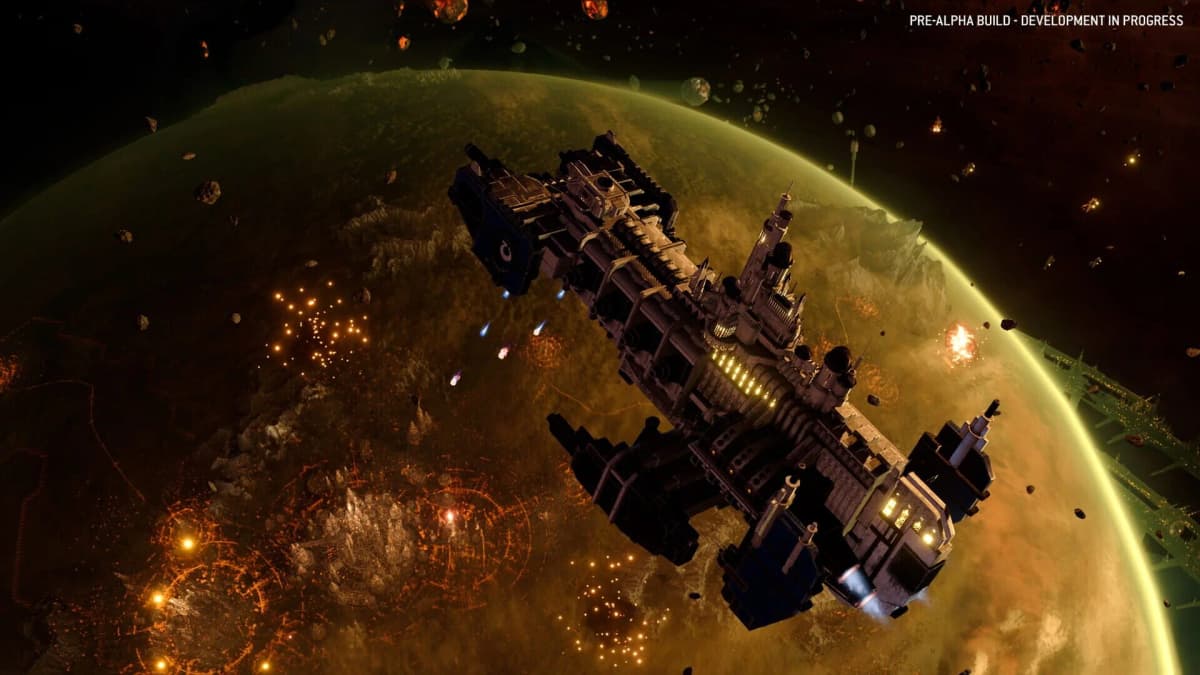
Creative Assembly says Total War: Warhammer 40K will play unlike any Total War before — here’s how
Game intel
Total War: Warhammer 40,000
Experience the brutal fusion of galactic strategy and grimdark warfare in Total War: WARHAMMER 40,000. Take command of iconic factions, customise your war mach…
Why this announcement actually matters for Total War fans
This caught my attention because Creative Assembly isn’t just slapping Warhammer 40K skins onto the Total War template – they’re promising asymmetry at a scale the franchise hasn’t tried before. The studio that made the Total War: Warhammer fantasy trilogy is swinging for something riskier: four factions that play fundamentally differently, not just with different units.
- Key takeaways: Creative Assembly will ship Space Marines, Astra Militarum, Orks, and Aeldari as playstyles that feel distinct rather than reskinned copies.
- Astra Militarum is the “classic” Total War experience – mass infantry, artillery, infrastructure and attrition.
- Space Marines and Aeldari are small, elite forces with careful unit management; Orks and Astra Militarum lean into large numbers and momentum.
- The game aims for galactic-scale consequences (including permanent planet destruction), and it’s confirmed for PC, Xbox Series X|S and PS5.
Breaking down the factions – and why each matters
Creative Assembly’s pitch is straightforward: fewer playable factions, more effort per faction. That’s a smart admission. Total War’s strength has always been breadth — dozens of factions with shared systems — but Warhammer 40K is inherently asymmetrical. The result is four factions that map to obvious 40K archetypes, but with gameplay implications.
Astra Militarum is the safe harbor for longtime Total War players. Expect queues of infantry, heavy artillery, and the usual base-and-resource loop. If you want the “Total War” template intact — build, recruit, throw bodies at problems — this is it.
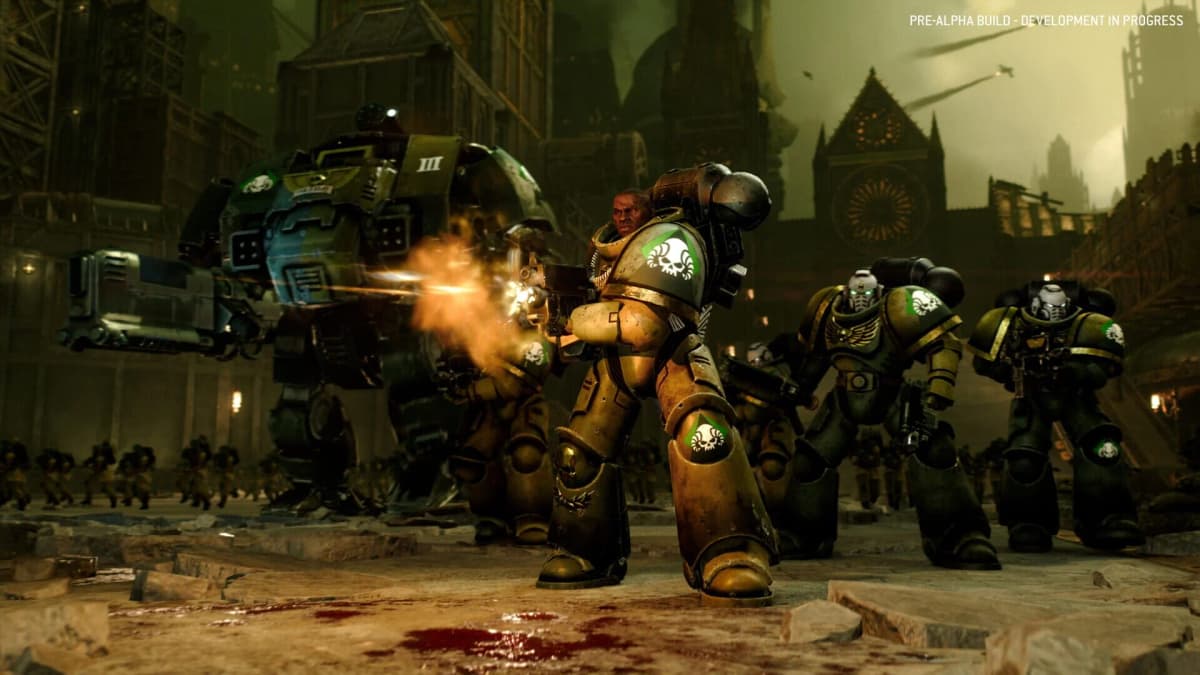
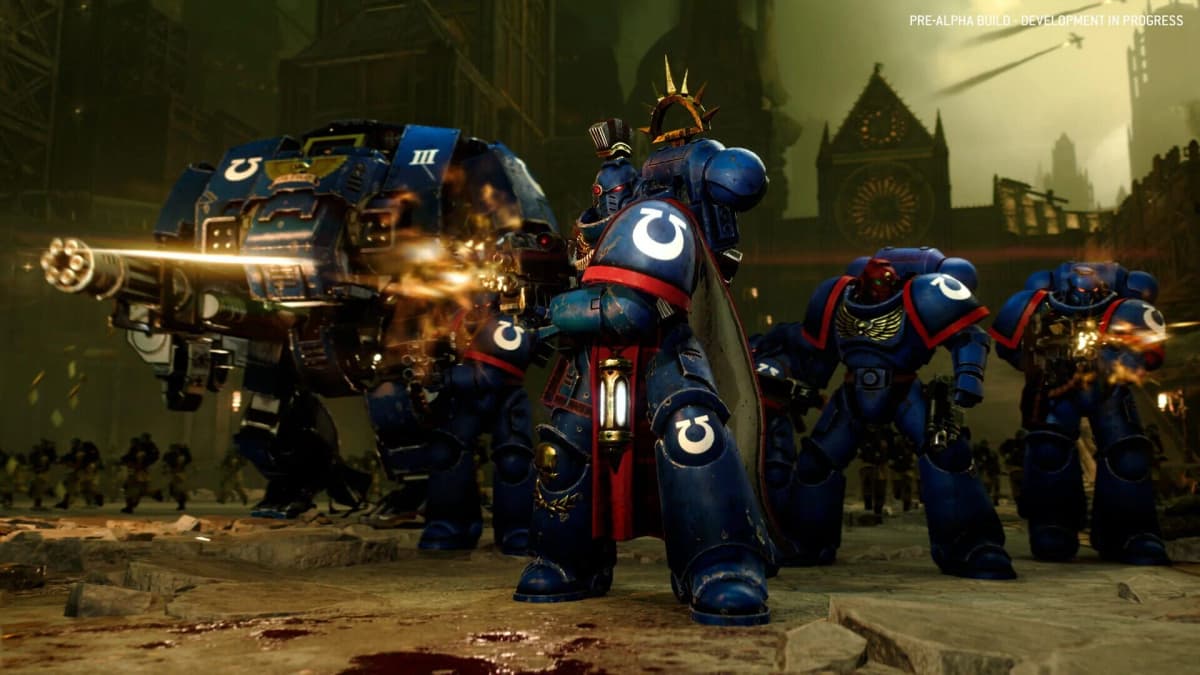
Space Marines sound like Total War’s answer to elite, low-count armies. Creative Assembly says they won’t build infrastructure like other factions and will rely on a small number of very powerful units. That mirrors tabletop design: Marines win fights with quality, not quantity. The risk here is obvious — balancing super-units on grand-campaign maps is tricky, and it changes how campaign strategy flows.
Aeldari are being teased as the most alien of the four: hidden Craftworld recruitment, hit-and-run through Webways, and objective-driven play that tries to prevent galactic threats rather than conquer everything. If implemented well, that could be the most interesting shift — a faction whose victory conditions and play loop differ, not just its army roster.
Then there are the Orks: momentum, numbers, and glorious chaos. Expect gameplay loops that reward massing units and piling into fights — with some bizarre tech to spice things up. The contrast between Orks and Astra Militarum should cover both ends of the “blob” spectrum: mindless hordes versus disciplined massed infantry.
Why now — and what the risks are
Why try this now? After Creative Assembly’s Warhammer fantasy trilogy, the studio has the lore cachet and technical chops to take bigger risks. 40K’s universe practically begs for asymmetry: elites, swarms, stealthy aliens and imperial legions all feel unique. Making fewer factions but making them deeply different is the right move to avoid shallow reskins.
But risks abound. Balancing asymmetrical factions for single-player campaign, multiplayer and AI behavior is much harder than balancing mirrored systems. There’s also the console angle — Total War has traditionally been PC-first, and translating complex UI and micromanagement to DualSense and Xbox controllers is a non-trivial design task.
Planetary scale and permanence — a bold narrative choice
One of the more striking promises is the galactic scale: you can wipe a planet off the map and it’s permanent. That’s the kind of emergent storytelling Total War thrives on, but it also raises questions about player choice and consequence. Will planet destruction be a rare narrative hammer or a commonly used tool? Creative Assembly says it won’t be frivolous — but allowing nuclear-scale decisions changes how you plan campaigns.
Want to Level Up Your Gaming?
Get access to exclusive strategies, hidden tips, and pro-level insights that we don't share publicly.
Ultimate Gaming Strategy Guide + Weekly Pro Tips
What this means for players
If Creative Assembly pulls this off, Total War: Warhammer 40K could be the franchise’s most ambitious pivot yet — a mix of classic grand-strategy and weird, faction-specific gameplay loops. Expect a learning curve, especially if you want to master Aeldari or Space Marines. Don’t be surprised if some factions feel more polished at launch than others; this kind of design invites DLC and post-launch balancing.
TL;DR
Creative Assembly is promising four very different ways to play Total War in the 40K universe: classic massed infantry, elite small forces, hit-and-run craftworlds, and Ork mass assaults. That’s exciting and risky — it could refresh the series or stumble on balance and interface issues, especially on consoles. I’m cautiously optimistic: this is the kind of bold design choice the franchise needed, but execution will be everything.