
Crimson Desert’s latest patch doesn’t just tweak numbers – it admits, out loud and in code, that a bunch of the game’s launch decisions weren’t working. Patch 1.03.00 is Pearl Abyss trying to sand down all the places you were gritting your teeth, from glacial cutscenes to UI eyestrain, without rebooting the whole RPG.
- Cutscenes can now be fast-forwarded at up to 4x speed – a blunt acknowledgement that the pacing wasn’t cutting it for a lot of players.
- All three playable characters get new and reworked skills, including Kliff’s Focused Aerial Roll and puzzle-friendly upgrades for Damiane and Oongka.
- A new Weapon Display toggle and traversal tweaks let you hide back-clutter, teleport more often, and move through the world with less friction.
- Accessibility finally shows up for real with minimum font-size options, clearer UI, and better camp/map readability – plus fresh PC graphics toys like Intel XeSS 3.0.
Table of Contents (9)
4x cutscene fast-forward says more than any dev blog
The headline change isn’t a flashy new boss or mount – it’s a button that makes the story go away faster.
Patch 1.03.00 bumps Crimson Desert’s controversial cutscene fast-forward to 4x speed. That’s not a subtle tuning pass; it’s the studio looking at the play data, seeing how many people were hammering the skip button, and effectively saying, “Fine, here, get through this faster.”
For a blockbuster RPG that sold itself on cinematic storytelling, that’s a quietly brutal self-own. You don’t add 4x story acceleration because players are riveted.
From a player perspective, though, it’s hard to be mad about. Crimson Desert’s worst sin at launch wasn’t bugs, it was bloat – exposition that dragged, scenes that took too long to say too little. Being able to chew through a slow quest chain at four times the speed turns “maybe I’ll drop this tonight” into “I’ll stick with it, but on my terms.”
The uncomfortable question I’d put to Pearl Abyss’ PR: are you going to fix the underlying pacing, or is 4x fast-forward the long-term plan? Because right now, it feels less like a creative adjustment and more like a concession: if you don’t like the story flow, just blast past it.
New skills are less about power, more about patching level design
On paper, “new skills for every character” sounds like a balance patch. In practice, 1.03.00 reads like Pearl Abyss retrofitting its exploration design so it doesn’t fight you as much.
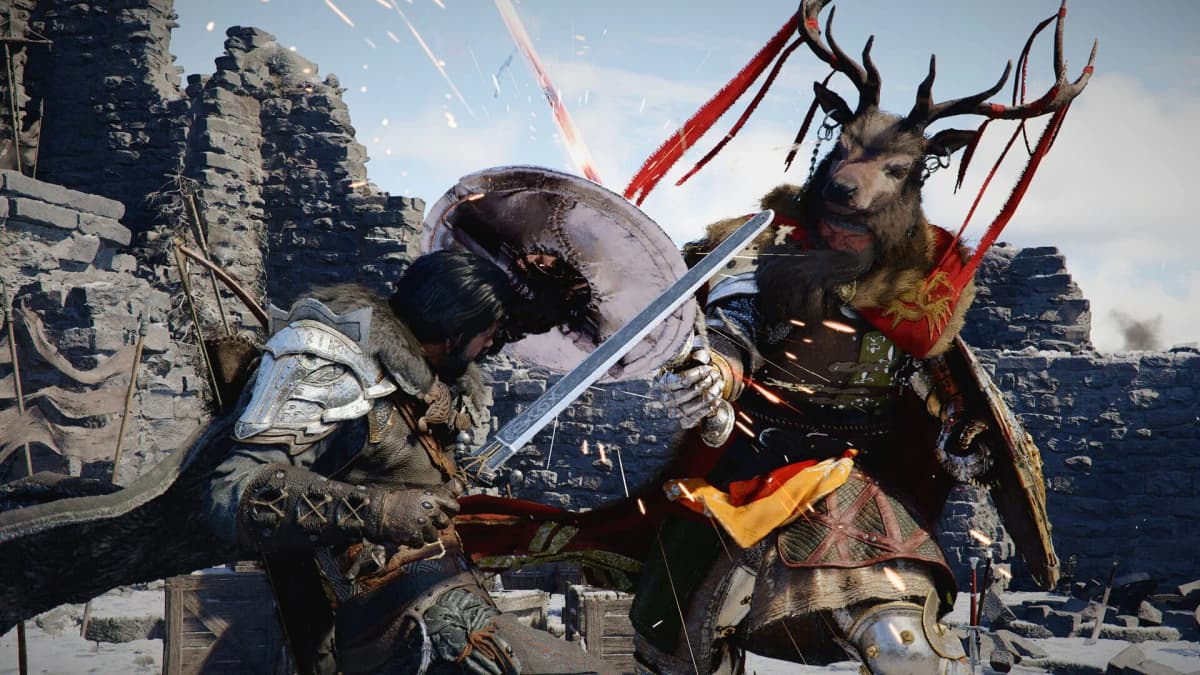
The headline addition is Kliff’s Focused Aerial Roll, a new mid-air evasive skill. It unlocks once you’ve invested into Focus and Flight (Focus Lv. 3, Flight Lv. 2 plus the existing Aerial Roll), and it’s triggered by using Focus during flight then dodging. Functionally, it gives you a proper way to slip attacks while airborne and adjust your positioning in those awkward mid-air combat moments the game loves throwing at you.
More interesting, though, is what’s happening with Damiane and Oongka. Patch 1.03.00 adds new abilities like Axiom Force and Nature’s Snare and, crucially, reworks their toolkit so things like Shield Toss and Scattershot now mimic Kliff’s Force Palm in how they interact with the environment. In plain English: more characters can now trigger those physics-based puzzle objects and exploration gimmicks that used to be Kliff-only outside of specific story beats.
That sounds small, but it solves a very real launch irritation: being locked into a character you enjoy, only to realise some glowing wall widget or puzzle plate basically forces you to swap back to Kliff to progress. It’s the kind of design that screams “we built this around one hero, then remembered we have a cast.”
Patch 1.03.00 softens that. It doesn’t turn Crimson Desert into a freeform multi-protagonist sandbox, but it does make your companion choices feel less like a self-imposed handicap in the open world. That’s Pearl Abyss walking back a piece of structure that probably sounded great in a meeting – “every hero has unique utility!” – and turned into pacing tax in the wild.
Combined with the earlier 1.01 tweaks to flight stamina and movement costs, you can see the trend: the game that launched is not the game Pearl Abyss wants to support long-term.
Weapon display toggle: small switch, big quality-of-life
Crimson Desert loves putting enormous hardware on your back. Axes big enough to have postal codes, swords that poke through three cutscene camera angles – if you’ve played more than an hour, you’ve seen your gear clipping through half the game’s cinematography.
Patch 1.03.00 finally adds a Weapon Display option, letting you toggle whether weapons are visually equipped outside combat. That means fewer immersion-breaking back-clutter moments while you’re wandering through towns, taking screenshots, or just trying to appreciate the art direction without your sword rudely photobombing every frame.
This is one of those settings that should have been there on day one. Pearl Abyss ships some of the shiniest character models in the business – see Black Desert Online – and then buried them under steel scaffolding. The toggle is late, but welcome, especially paired with earlier photo mode improvements from 1.01.
It also hints at something broader: the studio knows this game is going to live on social feeds. Making it easier to produce clean screenshots and cinematic clips isn’t just fan service, it’s marketing. And adding the option rather than ripping the visuals out entirely is the right call – players who want that “walking arsenal” silhouette still have it.
Accessibility and UI: the fixes that should never be “post-launch”
Here’s where the frustration really kicks in: the accessibility and UI changes in 1.03.00 are good, sensible, and absolutely should not have taken a major patch to exist.
The big win is a minimum font-size option for UI text. On modern TVs and monitors, Crimson Desert’s launch fonts were flirting with “squint or lean forward” territory, especially for anyone not sitting at a desk. Being able to globally bump that up is basic 2026 quality-of-life, not a luxury feature.
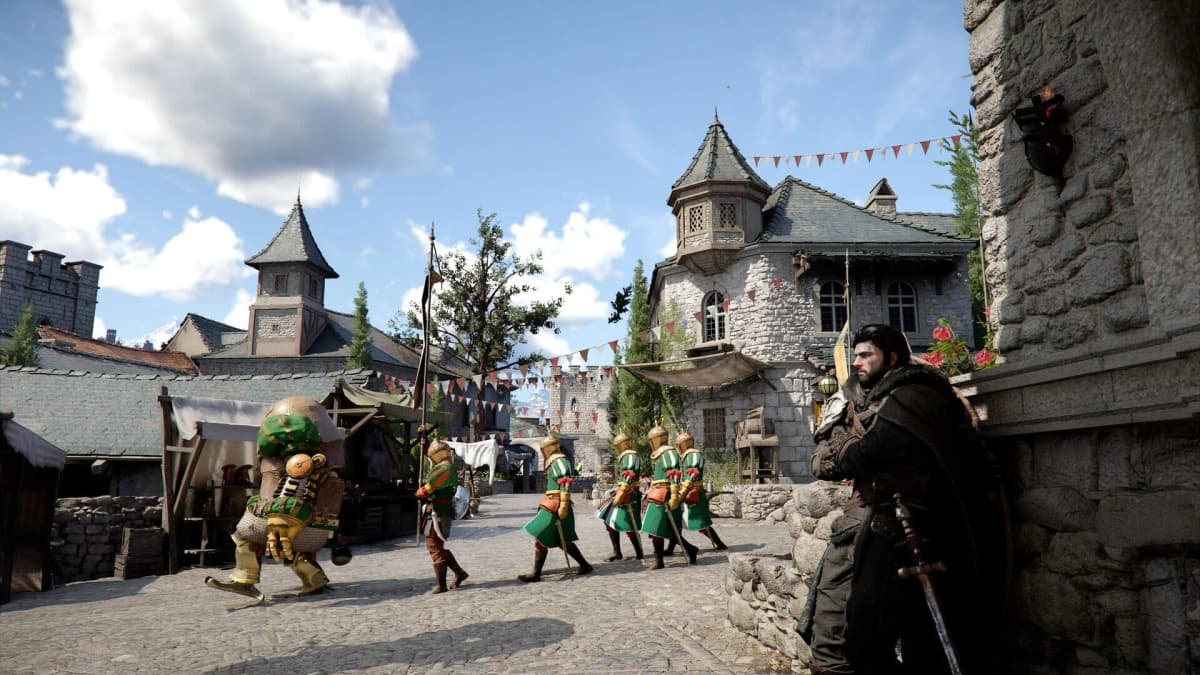
Patch 1.03.00 backs that up with broader interface clarity: cleaner map icons, better inventory readability, improved object inspection, and camp accessibility tweaks so navigating vendors and facilities at hubs like Greymane doesn’t feel like a hidden-object game. That’s on top of earlier UI smoothing from 1.01, which already trimmed some of the rough edges around menus and overlays.
None of this is revolutionary – but that’s the point. These are table-stakes features for big-budget RPGs, and Pearl Abyss is essentially catching up to where the genre has been headed for the last console generation. The fact they’re arriving this quickly post-launch, though, is a positive sign: the studio isn’t pretending the early criticism about readability and clutter didn’t exist.
If I had one follow-up for the team, it’d be this: when do we see comparable attention on control remapping, subtitle customization, and more granular visual accessibility? Minimum font size is a big step, but the bar for accessibility in 2026 is a lot higher than “I can read the quest log without binoculars.”
Traversal, camps, and the long commute problem
Fast-forwarding cutscenes is one thing. You also need to fast-forward the spaces between them.
Patch 1.03.00 leans into that with a slate of travel and camp improvements. The standout: you can now teleport while mounted or even swimming in more situations, instead of dismounting or slogging to land first. It’s a simple “stop wasting my time” fix that makes the world feel less sticky in all the wrong ways.
Camps themselves – especially key hubs like Greymane – get better accessibility and expanded utility. Farm and ranch areas have been adjusted, interacting with camp content is less fiddly, and the overall loop of dipping into camp to craft, restock, or manage your party doesn’t pull you as hard out of the adventure.
Coming off 1.01’s sweeping changes to movement cost and aerial stamina, the pattern is obvious: Pearl Abyss is systematically attacking travel friction. That’s exactly what you’d expect from a team with MMO DNA. Black Desert has been sanded and re-sanded for a decade to make its daily loops tolerable; Crimson Desert is getting the same treatment in fast-forward.
The risk, of course, is that aggressive convenience can flatten the world if you’re not careful. The next few patches will need to balance travel speed with a sense of place – cutting the dead time without turning everything into instant teleportation between menus.
Graphics and performance: Intel finally gets invited
On PC, 1.03.00 reads like the patch where Crimson Desert stops treating Intel GPU owners as afterthoughts.
The update rolls in Intel XeSS 3.0 support alongside the existing upscaling options, plus broader optimizations and compatibility improvements for Intel graphics in general. If you’ve been limping along on an Arc card or integrated graphics, this is the patch you’ll want to test before writing the port off completely.
There are also more granular visual settings, including control over displacement-map strength – essentially letting you dial how aggressively surfaces pop and deform. It’s not going to double your frame rate, but it gives PC players a bit more leverage to find that personal sweet spot between spectacle and performance.
Console players don’t get as much headline-grabbing tech talk this time, but 1.03.00 still folds in the usual stability and performance fixes across PS5 and Xbox Series X|S. Given how hard Pearl Abyss pushed visual density at launch, ongoing optimization passes aren’t optional; they’re maintenance.
If 1.01 was the “fix the obvious technical weirdness” patch with things like more reliable 4K output on PS5, 1.03.00 feels more like the “round out the options and include the platforms we snubbed” follow-up. Less dramatic, but essential if Crimson Desert wants a long life on PC.
What this patch really says about Pearl Abyss’ plan
Put 1.01 and 1.03.00 side by side and a clear picture emerges: Crimson Desert shipped as a maximalist, friction-heavy RPG, and Pearl Abyss is now methodically ripping out the friction.
Movement costs cut. Flight stamina eased. UI decluttered. Cutscenes sped up – twice. Skills retooled so character choice isn’t a punishment. Weapon visibility moved to a switch. Map and camp interfaces rethought. This isn’t balance tinkering; it’s structural rehab.
You can look at that two ways:
- Charitable read: Pearl Abyss is listening hard, moving fast, and treating Crimson Desert like a live game rather than a boxed product. That’s exactly what you want if you’ve already bought in.
- Cynical read: the game obviously needed a few more months in the oven, and paying customers are effectively beta-testing the final design while patches catch up.
The truth is probably somewhere in the messy middle. This is the same studio that turned Black Desert from a janky grindfest into a surprisingly polished MMO over years of relentless patching. They know how to iterate in public. The downside is, they also trust that process enough to ship early and fix later.
Right now, if you bounced off Crimson Desert at launch because of pacing, readability, or traversal grind, 1.03.00 is the first patch where I’d say: it’s worth another look. Not because one update magically solves everything, but because the direction of travel is consistent, and this is the first time the game’s systems, UI, and moment-to-moment experience are starting to align with the promise of that original trailer.
The verdict today: Crimson Desert is still a flawed, ambitious open world – but with 1.03.00, it finally feels like it’s moving towards the version you thought you were buying. If Pearl Abyss keeps up this pace for another couple of patches, the game could end 2026 in a very different place than it launched.
What to watch next
- Next major patch (1.04 or equivalent): If we don’t see a comparably substantial update – with deeper story pacing fixes or systemic reworks – by early summer 2026, assume this current wave of generosity was the big swing.
- Story and quest revisions: 4x fast-forward is fine, but watch for actual rewrites or structural changes to notorious slog quests. That will tell you whether Pearl Abyss cares about the narrative itself or just your ability to skip it.
- Accessibility roadmap: Minimum font size is a start. Keep an eye out for more robust control options, subtitle customization, and visual aids in the next few updates.
- PC performance on Intel hardware: Over the next couple of weeks, real-world reports from XeSS and Arc users will determine whether 1.03.00 actually makes Crimson Desert viable on a wider range of rigs.
TL;DR
Crimson Desert patch 1.03.00 adds new skills for every character, a weapon display toggle, faster traversal options, and cranks cutscene fast-forward up to 4x. It’s less a balance patch and more a quiet redesign of how much the game wastes your time, plus long-overdue accessibility and PC graphics upgrades. If you bounced off at launch over pacing and friction, this is the first update that makes a strong case for coming back – with the clear expectation that Pearl Abyss still has work to do.
FinalBoss // Gear
Level up your setup
01Top-rated gaming headsetson Amazon→02High-refresh gaming monitorson Amazon→03Gaming chairson Amazon→04Discounted game keyson Kinguin→
Affiliate links · As an Amazon Associate, FinalBoss earns from qualifying purchases.
Want to Level Up Your Gaming?
Get access to exclusive strategies, hidden tips, and pro-level insights that we don't share publicly.
Ultimate Gaming Strategy Guide + Weekly Pro Tips