
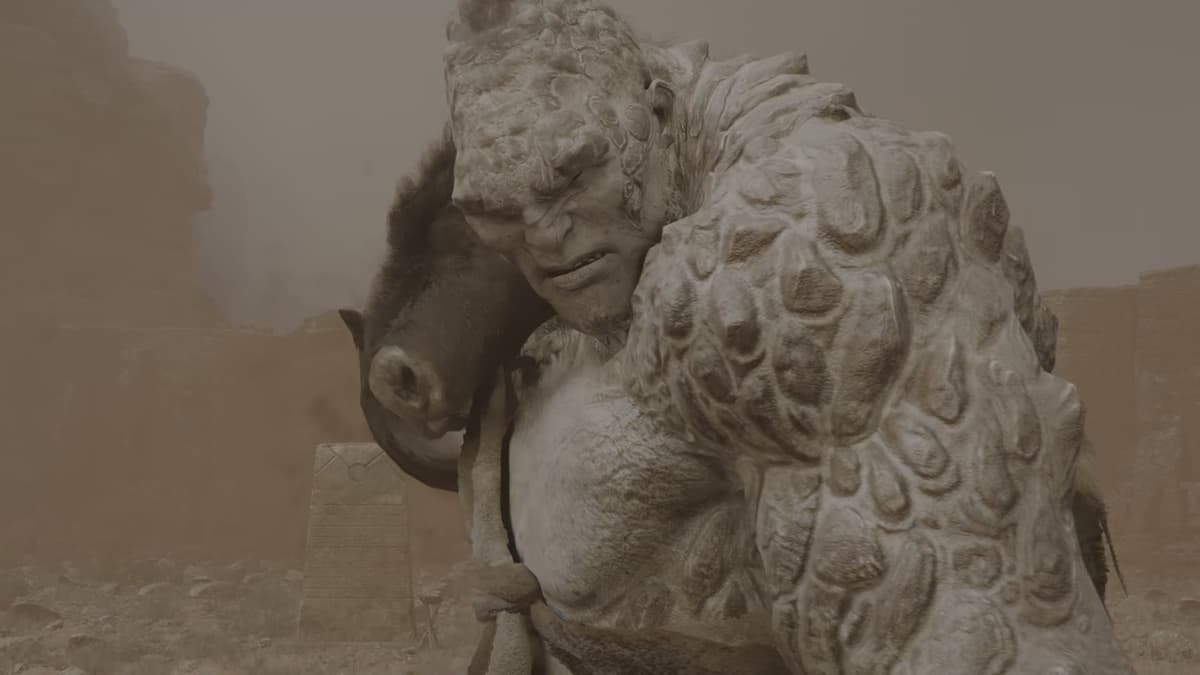
Crimson Desert hides four optional bosses that most players walk straight past, and the names get mangled constantly across guides. The four worth your time are Praevus the Ancient, Primus the Ancient (the flying boss), the Queen Bismuth Oreback Crab, and the Ogre. This guide tells you where each one is, what it drops, and how to fight it. Crimson Desert is developed by Pearl Abyss.
Table of Contents (14)
The short version
- Praevus the Ancient – Fallen Abyss, southwest of Tashkalp (Crimson Desert region). Reached through the Aeserion faction questline (The Shackled God), not by clearing another boss first.
- Primus the Ancient – the flying boss at Arrowhead Rock in Dewhaven Territory. Drops accessories: Ancient Ring, Ancient Reckoning, Sage’s Eye, and an Abyss Artifact.
- Queen Bismuth Oreback Crab – a giant oreback crab near the Well of Enlightenment that drops Bismuth Ore (around 30) plus an Abyss Artifact, and liberates the Well when it falls.
- Ogre – Desolate Megalith Altar. Rewards the Ogre’s Ring, an attack-power accessory, plus the Colossal Might Abyss Gear.
- Best all-round tool: the bow skill Focused Shot, which upgrades into Focused Charged Shot at level 3 for ranged burst on punish windows.
Prep that actually matters here
These are optional power spikes hidden in the open world, not story fights, so you can take them on out of order once your build can survive a few clean hits. Two things carry across all four.
- Build for ranged burst. The bow’s Focused Shot upgrades into Focused Charged Shot at level 3, which is the cleanest way to convert a boss’s recovery frames into damage without trading hits up close.
- Stock healing before you travel. Each of these sits well off the main route, so a failed attempt costs travel time as well as supplies.
One warning before you plan a farm route: Patch 1.05.00 added a Memory Fragment boss-rematch system (Reminisce and Resonate modes), but rematches grant no loot or material rewards — even consumables are restored to their pre-fight state when the battle ends. Treat rematches as practice, not a farm. If you want a tougher follow-up afterward, point yourself at our 9 hardest secret bosses prep route.
1. Praevus the Ancient (Fallen Abyss)
Praevus the Ancient sits in the Fallen Abyss, southwest of Tashkalp in the Crimson Desert region. The thing most guides get wrong is the unlock. There is no prerequisite boss — you do not have to beat Priscus first (Priscus the Ancient is a separate fight at the Spire of Ringing Truth in the Pailune region). Praevus is one of the three Ancients in the Aeserion faction questline, The Shackled God; once you progress that and reach his area, the encounter triggers.
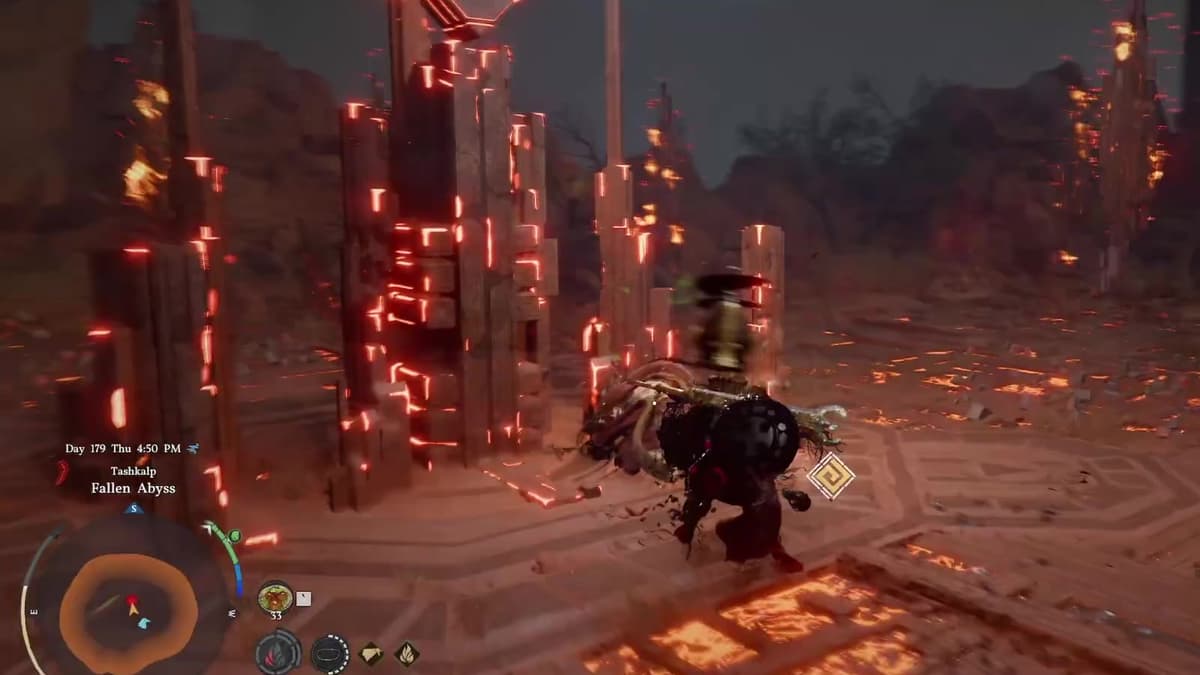
So if you sprinted to a video marker and found nothing, the boss is not bugged — you have not advanced the Aeserion quest far enough yet. Work that questline first, then return. In the fight, stay just outside the first swing, wait for the recovery, then answer with a charged bow shot rather than committing to long melee strings. Because he sits inside an Abyss space, the route in matters as much as the fight; if you want to get comfortable navigating that kind of arena, our Dimensional Labyrinth Abyss guide covers the same layout logic.
2. Primus the Ancient – the flying boss at Arrowhead Rock
The flying boss is Primus the Ancient, found at Arrowhead Rock in Dewhaven Territory (the southern part of the map, north of the Serpent Shrine). Because it flies, your real challenge is camera discipline and spacing, not raw damage. Stand directly under it and you eat tracking attacks; chase it too hard and you waste movement on bad angles.
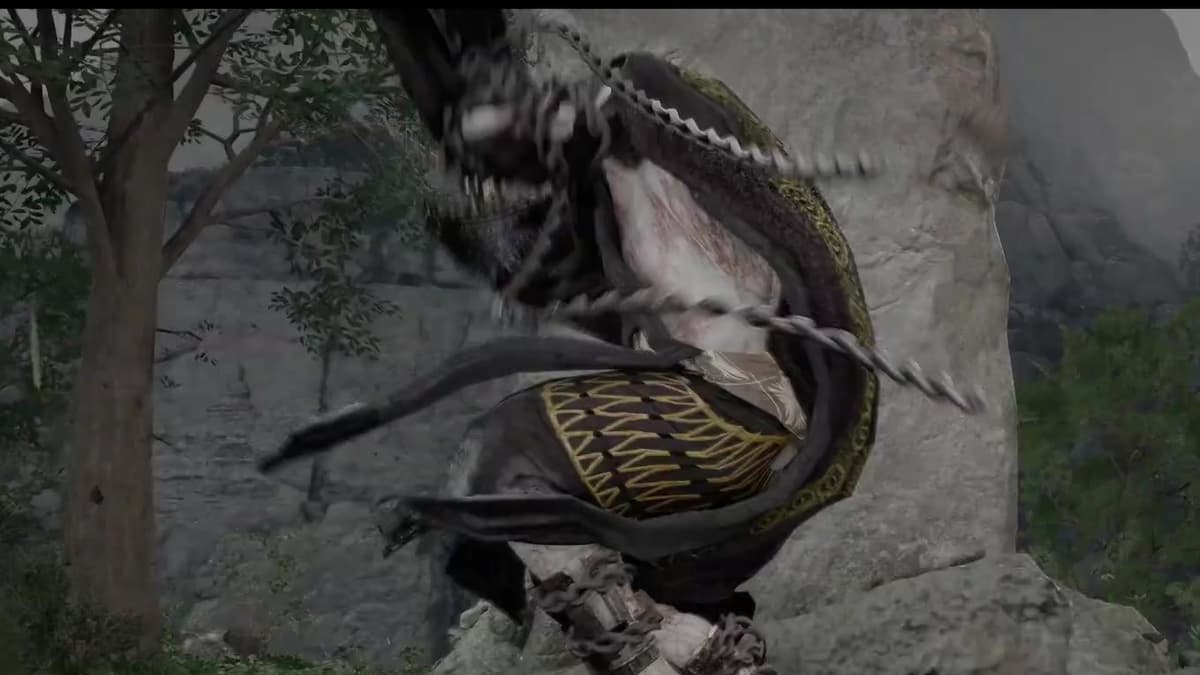
The payout is accessories, not an XP windfall — Primus drops the Ancient Ring, Ancient Reckoning, Sage’s Eye, and an Abyss Artifact. (The experience reward people sometimes attach to this fight actually belongs to a different boss, Priscus the Ancient, who hands out Delesyia contribution EXP.) Bait a pass, sidestep the committed dive, then punish the recovery with a ranged shot. Use any broken terrain near Arrowhead Rock to reset your angle instead of holding constant lock-on.
3. Queen Bismuth – the oreback crab
The Queen Bismuth Oreback Crab is a giant crystal-backed crab found near the Well of Enlightenment, south of the Forebearer’s Barrens, and its identity is its drop: Bismuth Ore for crafting (roughly 30 on the kill, plus an Abyss Artifact). Beating it also liberates the Well of Enlightenment, and the area around the arena is littered with extra Bismuth Ore deposits, which makes it a tidy farming spot. That all makes it worth doing earlier than its size suggests, because the material smooths out several later upgrades.
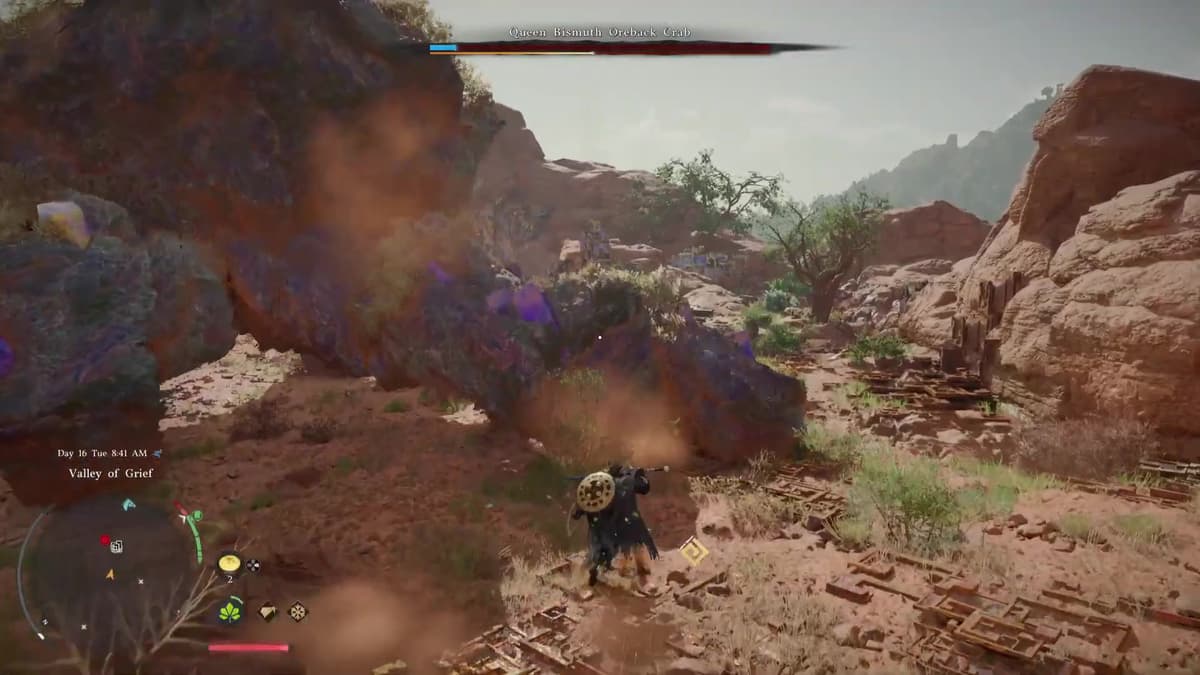
Against a crab-type enemy, frontal greed gets punished by wide pinches and awkward hitboxes. Circle, wait for the recovery after a heavy commitment, and attack from the side rather than the face. Precise, repeated hits beat mashing here.
4. The Ogre at Desolate Megalith Altar
The Ogre boss waits at the Desolate Megalith Altar, near Tashkalp in the Crimson Desert region, and it is the most obviously worth-it fight for combat power. It rewards the Ogre’s Ring — an attack-power accessory (worn in the necklace slot) — along with the Colossal Might Abyss Gear. The Ogre’s Ring gives a flat attack-power boost that climbs as you upgrade it, so it raises your damage floor across the whole game.
The arena is open, which means limited cover and plenty of room for the Ogre to force straight-line reactions. The classic trap is rolling backward until you run out of space. Instead, avoid the first big swing, step off the boss’s center line, and punish from the flank. Put this one high on your list once you can take a couple of clean hits.
Common mistakes
- Looking for a Priscus gate on Praevus. There isn’t one. Advance the Aeserion questline (The Shackled God) instead.
- Putting Primus in the wrong region. He is at Arrowhead Rock in Dewhaven Territory, not Delesyia.
- Expecting an XP reward from Primus. It drops accessories; the contribution EXP belongs to Priscus.
- Standing under Primus. That is exactly where its tracking attacks are hardest to read.
- Saving Queen Bismuth for late. The Bismuth Ore is most useful while you still have upgrades ahead of you.
- Building melee-only. Focused Charged Shot turns every recovery window into damage on all four fights.
- Grinding rematches for loot. Memory Fragment rematches grant no rewards as of Patch 1.05.00.
Practical takeaway
Do the Ogre first for the Ogre’s Ring if you want immediate attack power, and the Queen Bismuth Oreback Crab early if you want Bismuth Ore for crafting. Take Primus the Ancient at Arrowhead Rock when you want accessory upgrades and are ready to fight a flyer, and clear Praevus the Ancient once the Aeserion questline has opened his area in the Fallen Abyss. Prioritize the bosses that improve your build, lean on Focused Charged Shot, and you will clear all four without wasting a run.
FinalBoss // Gear
Level up your setup
01Top-rated gaming headsetson Amazon→02High-refresh gaming monitorson Amazon→03Gaming chairson Amazon→04Discounted game keyson Kinguin→Affiliate links · As an Amazon Associate, FinalBoss earns from qualifying purchases.
Want to Level Up Your Gaming?
Get access to exclusive strategies, hidden tips, and pro-level insights that we don't share publicly.
Ultimate Guide Strategy Guide + Weekly Pro Tips