
Crimson Desert’s latest update is less about new content and more about course correction. Patch 1.03.00 goes straight at the game’s biggest early complaints: sluggish pacing, awkward traversal, and UI that felt like it was fighting you.
On paper, it’s “just” cutscene fast-forward, better fast travel, and accessibility tweaks. In practice, this is Pearl Abyss admitting that, for a lot of players, Pywel has been a great-looking world wrapped around too much friction.
Table of Contents (9)
Key takeaways
- Patch 1.03.00 adds up to 4x cutscene and dialogue fast-forward, effectively letting you compress story downtime to almost nothing.
- Fast travel is now usable while mounted, climbing, falling, or swimming, and mounts can be pulled through the Abyss Nexus, making long-distance traversal less of a chore.
- Accessibility and UI options expand with a minimum font size slider, camera tweaks, clearer puzzle/map cues, and a weapon display toggle to hide gear on your character.
- Combat sees new skills for key characters and refined boss lock-on, while PC gets Intel Arc support, XeSS 3.0, and AMD Radeon Anti-Lag 2-though console limits remain.
This patch admits the game was wasting your time
The headline change in Crimson Desert patch 1.03.00 is simple: you can now fast-forward cutscenes and dialogue up to 4x speed. There was already a fast-forward function, but this doubles down on the idea that the game should let you crush non-interactive parts if you want to.
That matters because Crimson Desert is dense. It throws side quests, cinematics, and chatter at you constantly, in a structure that already felt like a mashup of open-world RPG, MMO tutorial chain, and prestige TV recap. When a developer adds a faster “please get me through this” button less than two months in, it’s effectively conceding that the pacing isn’t landing for a big chunk of players.
It’s also a quiet answer to the criticism that the game is a “cynical amalgam of borrowed mechanics” from other AAA hits. If players are treating the story delivery like a skippable obstacle between combat and exploration, Pearl Abyss can either double down on authorial intent, or give you tools to engage on your own terms. Patch 1.03 chooses the second option.
Crucially, this isn’t a simple “skip cutscene” toggle. Fast-forward lets you still see and hear what’s happening, just compressed. For anyone who likes the world but finds the delivery bloated, 4x speed turns story into something you can manage instead of something that manages your time for you.
Fast travel finally respects that Pywel is huge
The other major pillar of the update is traversal. Fast travel has been expanded so you can now use it while mounted, climbing, falling, or even swimming. In other words, the game stops insisting you be in a very specific “grounded and safe” state before you’re allowed to jump across the map.
On top of that, mounts can now be teleported via the Abyss Nexus system. If you’ve ever fast-traveled to a location only to discover your horse is effectively parked on the other side of the continent, this is the fix. It shifts mounts from being a semi-disposable movement buff to an actual persistent tool that follows your decisions.
Combined with earlier patches that already lowered stamina costs and loosened up movement, 1.03 continues a clear pattern: Pearl Abyss is stripping away the open-world busywork you’d expect in a grind-first MMO and steering Crimson Desert closer to a single-player RPG that lets you get to the point.
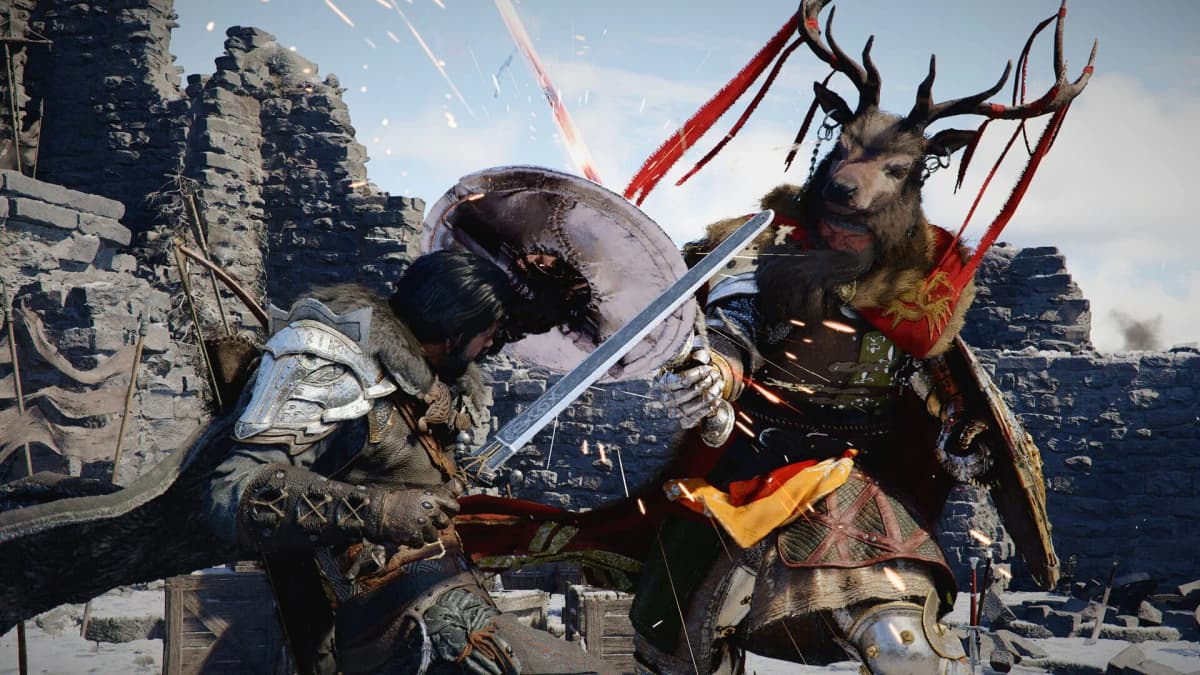
Camp systems also see usability improvements, making it less of a hassle to regroup and manage your party between long stretches. None of this is loud, trailer-ready content, but it changes the day-to-day friction of actually playing the game.
Accessibility and UI: late, but in the right direction
Crimson Desert launched with the usual AAA problem: ornate UI, tiny fonts, and lots of information delivered in ways that look good on a 4K monitor screenshot, but not necessarily from three meters away on a TV.
Patch 1.03.00 adds several small but important tools:
- Minimum font size: A proper slider to push UI and subtitle text up to a readable scale, especially useful for couch players and anyone with visual impairments.
- Camera options: More control over how the camera behaves, including potentially tuning things like shake and auto-centering to reduce motion sickness and fatigue.
- Clearer puzzle and map cues: Abyss puzzles now surface more hints and terrain adjustments, and map/UI markers do a better job of explaining what the game actually wants from you.
- Weapon display toggle: A new “Weapon Display” option lets you hide weapons and shields from your character’s back without unequipping them.
The weapon display toggle in particular is one of those tiny features that says a lot about priorities. It doesn’t change combat at all. What it does is acknowledge that players care about how their characters look, not just their stats, and that having three swords clipping through an elaborate coat isn’t everyone’s idea of immersion.
From an accessibility standpoint, Crimson Desert is still behind leaders in the space, but 1.03 is a move away from the “take it or leave it” mindset that used to define big-budget RPGs. You can tell Pearl Abyss has been reading feedback threads instead of just analytics dashboards.
Combat tuning and new skills keep the sandbox moving
Under the hood, 1.03.00 also touches combat and character kits. Kliff gets a new Focused Aerial Roll, expanding his airborne options, while companions like Damiane and Oongka receive additional skills that make them less like background noise and more like active contributors in fights.
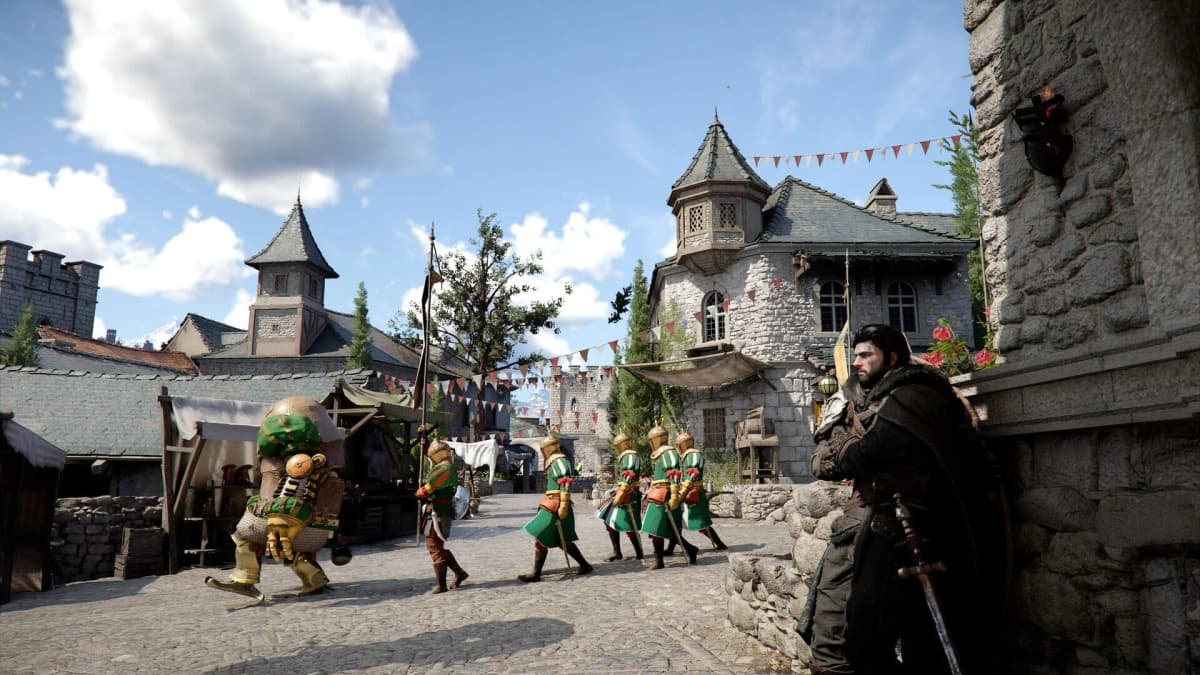
Boss encounters benefit from refined lock-on behavior. Early versions of the system were prone to snapping between targets or losing track of fast-moving enemies, turning big set-piece fights into camera wrestling matches. The new tuning aims to keep focus where you expect it, especially in arenas with multiple threats.
None of this radically rewrites how Crimson Desert plays, but it tightens the feedback loop: your inputs, your positioning, and your companions’ behavior all line up a bit more reliably. In a game already accused of stitching together systems from elsewhere, the least it can do is make those systems feel sharp.
Technical upgrades help PC most; consoles are still constrained
On PC, Crimson Desert patch 1.03.00 leans further into modern GPU tech. There’s now formal support for Intel Arc cards, plus integration of Intel XeSS 3.0 and XeSS Frame Generation. AMD users get Radeon Anti-Lag 2, aimed at tightening input latency in busy scenes.
These additions matter because the game pushes high-end hardware hard. Upscaling and frame generation can be the difference between a smooth 60 FPS and a jittery 40 in dense cities or large battles, especially if you’re not on a flagship Nvidia card. Intel owners in particular were in a gray area at launch; this patch gives them an officially supported path instead of hoping for the best.
On consoles, though, the story is more limited by hardware. Separate analysis has already shown how aggressively Crimson Desert has to scale on Xbox Series S-down to a ~720p internal resolution with big cuts just to stay playable. Patch 1.03 focuses mainly on stability and general bug fixes rather than miracle optimizations, so expectations there need to stay realistic.
Put bluntly: 1.03 is a quality-of-life and stability patch, not a full performance rewrite. If blurry visuals on lower-end consoles were your breaking point, this update doesn’t magically solve that.
What this says about Crimson Desert’s future
Taken in isolation, faster cutscenes and better fast travel look like routine patch notes. Taken alongside Pearl Abyss’s wider roadmap-boss replays, difficulty options, more systemic QoL over the next few months—they look more like a shift in philosophy.
Instead of treating Crimson Desert as a static single-player epic you play once and shelve, the studio is clearly iterating as if this were a long-term platform. Earlier updates added new mounts, changed stamina and flight costs, and expanded photo mode. Patch 1.03.00 continues that trend by sanding down anything that feels like mandatory grind or unskippable downtime.
That doesn’t erase the criticism that the game leans heavily on borrowed design. But it does mean Pearl Abyss is unusually willing, for a big-budget RPG, to pivot based on how people are actually playing. If a large enough slice of the audience is using 4x cutscene fast-forward and abusing new travel shortcuts, future content and balance will inevitably be built with that in mind.
What to watch next
There are three concrete signals that will show how serious Pearl Abyss is about this new trajectory:
- Difficulty and boss replay features: Scheduled for the April-June window, these will tell us whether combat depth and long-term replayability are getting the same attention as QoL.
- Further accessibility work: If 1.03 is the start of a steady cadence of UI, control, and comfort options—not a one-off pass—that’s a sign Crimson Desert is being treated like a modern RPG, not a flashy launch product.
- Console-specific patches: Any targeted effort to improve visual clarity or frame pacing on Series S and base consoles would show commitment beyond the PC-first crowd.
For now, Crimson Desert patch 1.03 adds cutscene fast-forward, accessibility options, and faster travel in ways that make the day-to-day experience meaningfully smoother. If you bounced off early because the game felt bloated and slow, this is the first update that directly attacks those problems rather than just adding more stuff on top.
If you were already invested and simply wanted the game to respect your time a bit more, 1.03.00 is an obvious install and a clear sign that Pearl Abyss is listening—if not always anticipating—how players actually want to inhabit Pywel.
TL;DR
Crimson Desert patch 1.03.00 focuses on quality of life, adding 4x cutscene fast-forward, more flexible fast travel (including while mounted), and better accessibility and UI options. It doesn’t overhaul performance or add major new content, but it does fix core pacing and usability problems that were dragging the game down. The next big tells will be the promised difficulty modes, boss replays, and whether console-specific performance work follows this round of clean-up.
FinalBoss // Gear
Level up your setup
01Top-rated gaming headsetson Amazon→02High-refresh gaming monitorson Amazon→03Gaming chairson Amazon→04Discounted game keyson Kinguin→
Affiliate links · As an Amazon Associate, FinalBoss earns from qualifying purchases.
Want to Level Up Your Gaming?
Get access to exclusive strategies, hidden tips, and pro-level insights that we don't share publicly.
Ultimate Gaming Strategy Guide + Weekly Pro Tips