
Table of Contents (6)
Why Crimson Desert’s size isn’t the point – it’s what you do in it
Pearl Abyss just dropped a headline stat: Crimson Desert’s playable area is “at least twice as big” as Skyrim and larger than Red Dead Redemption 2’s map. That sounds impressive on paper, but the thing that actually matters to me – and should to you – is what Pearl Abyss plans to fill all that space with. This isn’t a flex about square miles; it’s a promise of an activity-dense continent you can lose weeks in without touching the main quest.
- Massive but packed: Director Will Powers says the world’s huge, but Pearl Abyss is emphasizing interactive content over empty scale.
- Open-ended progression: The main quest is “only a percentage” of the experience — you can skip bosses and come back later.
- High‑octane combat: Think Witcher-level story scope with faster, more visceral fights — but that complexity might clash with simple controls.
- Launch details: Releases March 19. Standard $69.99 / £54.99; Deluxe $79.99 / £64.99.
Breaking down the “bigger than” claim
Numbers make headlines, but Will Powers from Pearl Abyss was careful to steer the conversation away from raw acreage: “I don’t think numbers really do it justice,” he said, while also noting “the world’s at least twice as big as the open world, the playable area, of Skyrim. It’s larger than the map of Red Dead Redemption 2.” So yes — Pywel is enormous. But Pearl Abyss kept repeating the same point: scale without content is meaningless.
What you’ll actually be doing in Pywel
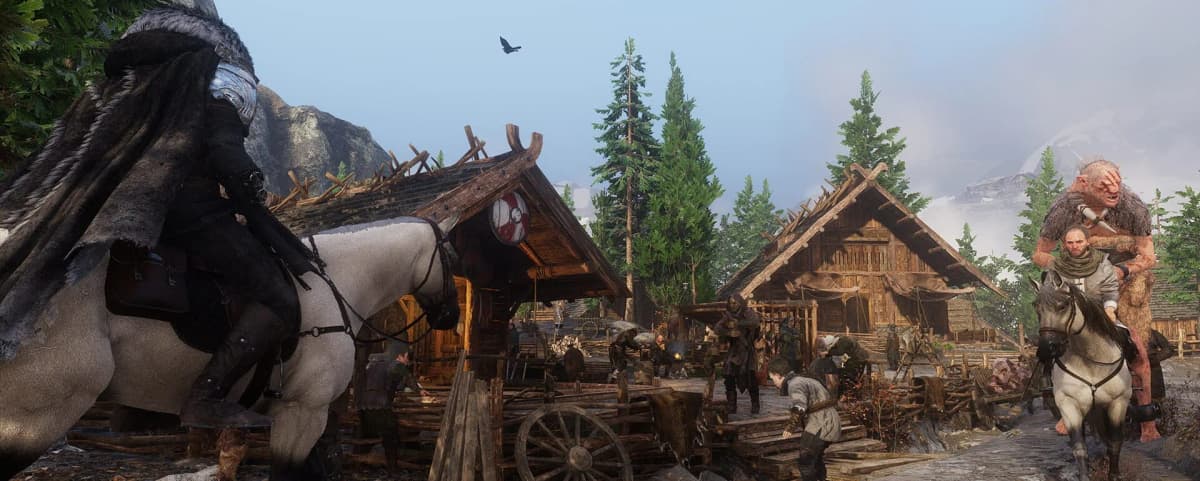
Powers framed Crimson Desert as an open sandbox where the main story is just one thread: “the main quest is only a percentage of the experience you will have, and it is not the majority.” From my hands-on time, that rings true. Early previews show everything from dragon-backed travel and jet-propelled mechs to dense towns and combat arenas. Traversal options will make the map feel smaller in practice — you won’t be trudging like Arthur Morgan across the plains.
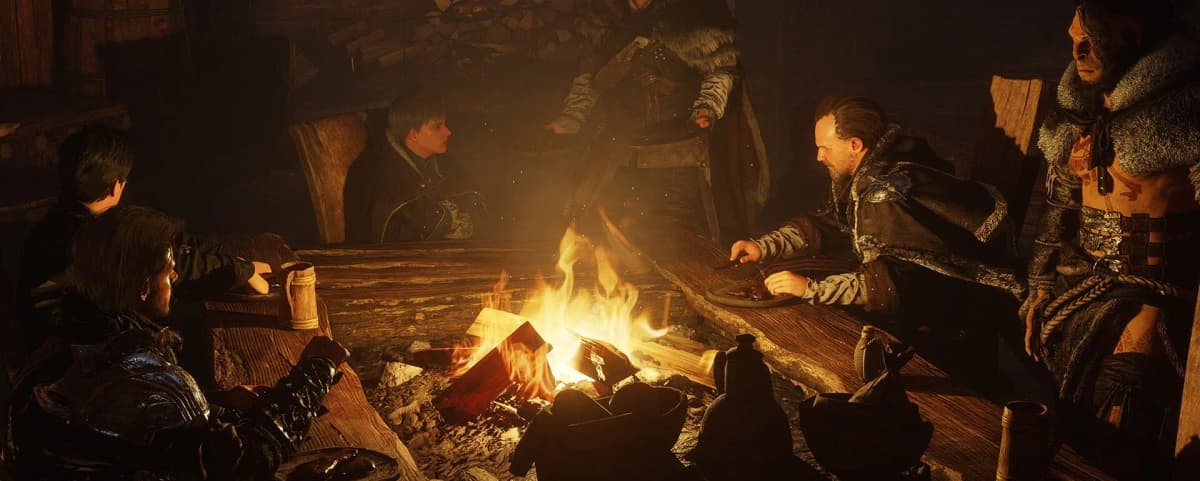
Pearl Abyss’ pedigree matters here. The studio made its name with Black Desert Online, a game built around emergent activities, player-driven economies, and countless side systems. If Crimson Desert inherits that ethos, expect hunting grounds, repeatable mini-systems, faction content, and things you uncover by wandering off the beaten path — not just one long corridor to the final boss.
Combat: rewarding, fast, and forgiving (sometimes)
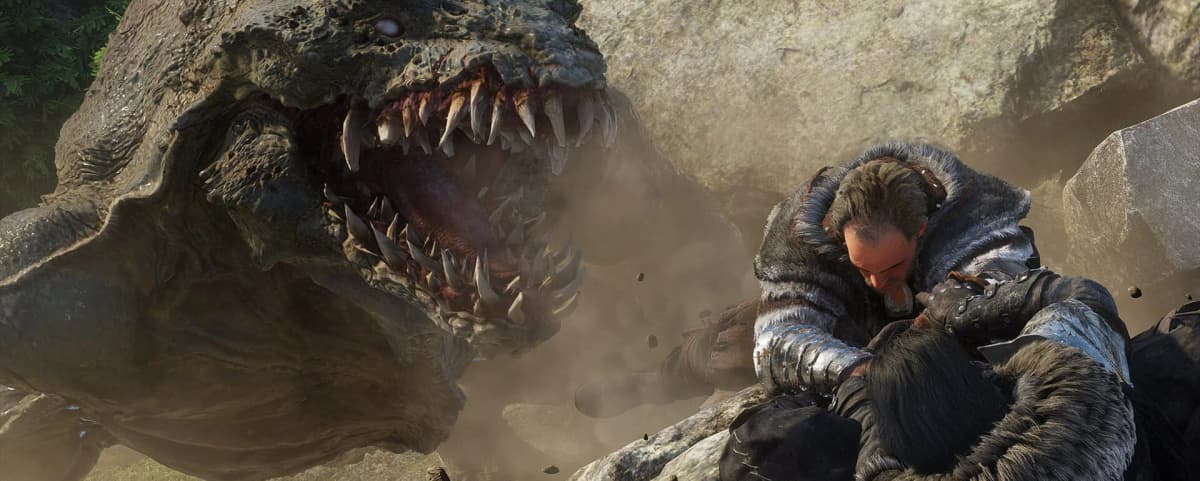
Combat is where Crimson Desert tries to set itself apart from narrative-heavy RPGs. It has the cadence and challenge of a Souls or Sekiro fight at times — I spent a frustrating hour getting owned by White Horn, a yeti-like behemoth that can throw you off cliffs — but it’s married to the freedom of an open world. If you’re stuck, you don’t have to slug it out forever: “If you’re struggling against a boss, then you can just leave that boss fight,” Powers told us. Go grind, level up, unlock skills, or simply explore other content until you’re ready.
That “leave it and come back” design reduces the typical gatekeeping frustration in action-RPGs and supports a more exploratory playstyle. It’s also smart from a live-service perspective: letting players roam and discover keeps engagement high without forcing a single correct path.
What I’m worried about — and what I’ll be watching
My biggest nagging concern is Pearl Abyss’ control and UI choices. Crimson Desert’s combat looks satisfyingly complex — combos, parries, situational tech — and that reward loop only works if the controls are crisp. From previews there’s a hint that some mechanics feel fiddly when you’re trying to do mundane tasks. If intricacy gets in the way of accessibility, you lose both new players and the momentum that makes exploration fun.
I’m also keeping an eye on how much of the content skews toward repetitive MMO-style systems versus handcrafted narrative moments. Pearl Abyss knows how to create systems that keep players grinding — that’s a strength — but the best single-player open worlds balance that with sharply written set pieces and encounters. Fingers crossed Pywel hits both marks.
TL;DR — Should you care?
Crimson Desert isn’t trying to win by being the biggest map on a billboard. It’s trying to be the biggest map that actually gives you things to do. If you love action-heavy combat, open-ended progression, and the kind of side-systems Pearl Abyss excels at, March 19 is a date to watch. If you’re after tight, story-first pacing or worry about control bloat, keep an eye on post-launch player feedback before diving in.
FinalBoss // Gear
Level up your setup
01Top-rated gaming headsetson Amazon→02High-refresh gaming monitorson Amazon→03Gaming chairson Amazon→04Discounted game keyson Kinguin→Affiliate links · As an Amazon Associate, FinalBoss earns from qualifying purchases.
Want to Level Up Your Gaming?
Get access to exclusive strategies, hidden tips, and pro-level insights that we don't share publicly.
Ultimate Gaming Strategy Guide + Weekly Pro Tips