
Crimson Desert’s first real roadmap does more than promise boss rematches and a difficulty menu. It quietly sketches the version of the game Pearl Abyss actually wants to run long term: a repeatable, system-heavy RPG that behaves a lot more like a service than a one-and-done boxed adventure.
- Boss rematches and “re-blockading” turn one-off story beats into replayable loops that look a lot like proto-endgame.
- Easy/Normal/Hard difficulty options are a post-launch admission that balance and accessibility were off at release.
- Storage tabs, pets, mounts, and cosmetic toggles ease friction now, but mirror systems Pearl Abyss has aggressively monetised elsewhere.
- The tight April-June schedule signals Crimson Desert is being positioned as a live-updated platform, not a finished product.
Table of Contents (8)
This roadmap exposes what Crimson Desert launched without
Pearl Abyss’ April-June plan is framed as a response to “global player feedback,” and the feature list backs that up. A boss replay system, a standard three-tier difficulty selector, re-blockading for recapturable territories, expanded storage categories, new skills for companions Damiane and Oongka, UI/control tweaks, optional hidden back-mounted weapons, extra pets and mounts, and a free original soundtrack release form the core of the schedule.
Looked at collectively, these additions outline the gaps in the launch version. A combat-focused RPG with heavily marketed cinematic bosses shipped without a way to re-fight them. A game criticised for erratic difficulty spikes is only now adding granularity through Easy/Normal/Hard. An open-world stuffed with loot and crafting materials launched with storage and category management so limited that “specialised storages” for food, wardrobe, gatherables and collectibles are now a headline item.
Even before this roadmap, Patch 1.01 had already started this corrective work: more mounts, cheaper movement and flight, refined UI, and weapon/armour refinement tokens that streamlined gear progression. The new plan is less about surprise features and more about finishing systems that, in most contemporary RPGs, would have been expected on day one.
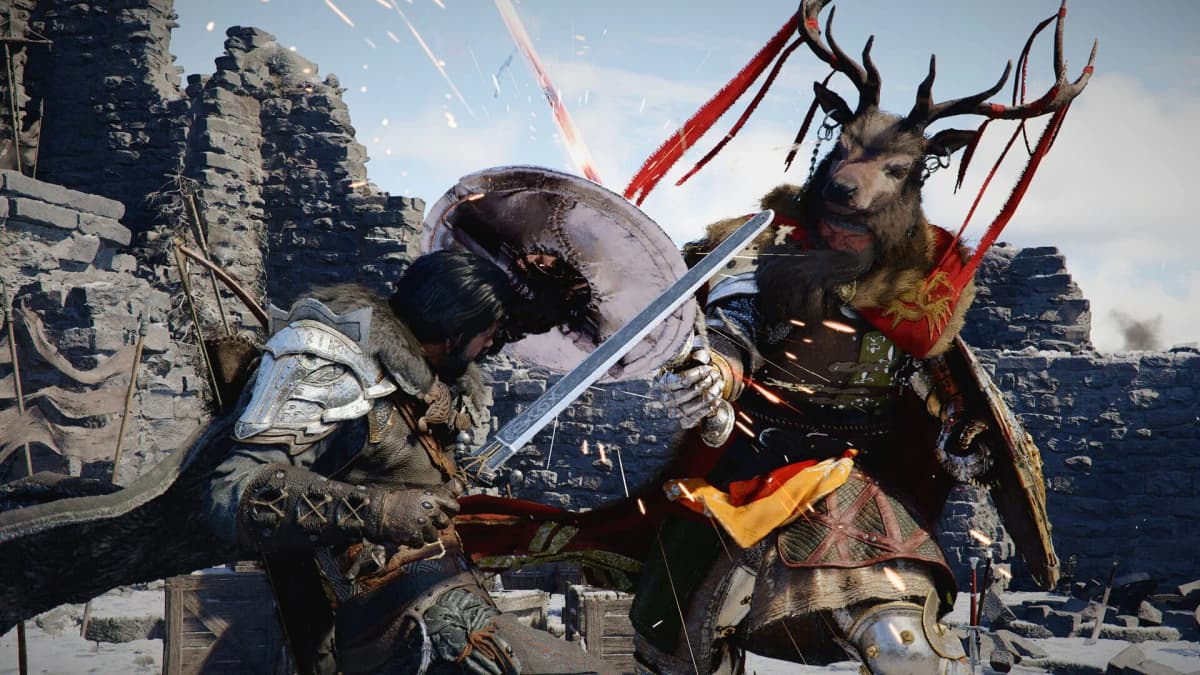
Boss rematches and re-blockading are endgame systems in disguise
The headline feature is a “boss replay” system, letting players re-challenge major encounters using different strategies. No exact date is given beyond the April-June window, but conceptually this is straightforward: turn bespoke set pieces into reusable content.
Mechanically, this matters because Crimson Desert’s best assets are its larger encounters. Packaging those as repeatable fights gives the combat system longer legs and offers a structure for build experimentation that the linear story path struggled to support. It also lays the groundwork for reward ladders: scaled loot tables, time-trial variants, or challenge modifiers layered on top of familiar fights.
“Re-blockading” does something similar at the open-world level. Areas previously held by enemies can be reoccupied, letting players liberate the same territory more than once. That effectively turns story-flavoured takeovers into respawning outposts, a familiar loop in MMO and looter design. On paper, this answers complaints that liberated regions feel static and empty later on. In practice, it is also a simple way to generate endlessly recyclable combat and resource nodes.
Together, boss rematches and re-blockading look less like isolated fixes and more like scaffolding for an endgame layer: repeatable, predictable content that can be easily tied to weekly incentives, gear caps, or progression tracks if Pearl Abyss decides to push Crimson Desert further into live-service territory.
Difficulty settings are a late-stage balance correction
The addition of Easy, Normal and Hard difficulty modes is notable precisely because they were not there at launch. For a heavily marketed AAA action RPG in 2026, omitting a basic difficulty selector is an outlier decision. The studio is now backfilling that expectation.
Crimson Desert drew early criticism for spikes that felt disconnected from average encounter tuning. Some bosses and enemy groups punished mistakes harshly, while other sections could be brute-forced. Introducing a three-step difficulty framework gives developers a tool to smooth that curve without flattening the entire game for everyone at once. Easy can target players who are there for the story and spectacle; Hard can focus on players interested in tight combat mastery and higher risk-reward structures.
Technically, this also creates a cleaner space for future balance patches. Enemy health and damage can be scaled per difficulty, loot tables can be adjusted by mode, and specific content (such as boss rematches) can gate rewards behind higher settings without retrofitting ad-hoc modifiers onto a single global balance pass. It is a systems decision as much as it is an accessibility one.
The timing matters. Implementing this within the first quarter after launch suggests Pearl Abyss accepts that baseline tuning missed the mark for a significant portion of the audience. Instead of defending that original vision, the studio is normalising Crimson Desert’s structure to match current genre standards.
Quality-of-life fixes reduce friction but reveal old design instincts
The roadmap leans heavily on quality-of-life language: more storage, better UI, improved controls, cleaner visuals. These are not minor cleanups; they touch core interaction loops.
Specialised storage categories for food, wardrobe, gatherables and collections indicate the original inventory model was overwhelmed by the volume and diversity of item types. Separating these pools will reduce menu time and decision fatigue, and it will likely soften how punishing hoarding feels in a world built around gathering and crafting. It is also, intentionally or not, the same structural move that many MMO-style games take before selling extra tabs and slots.
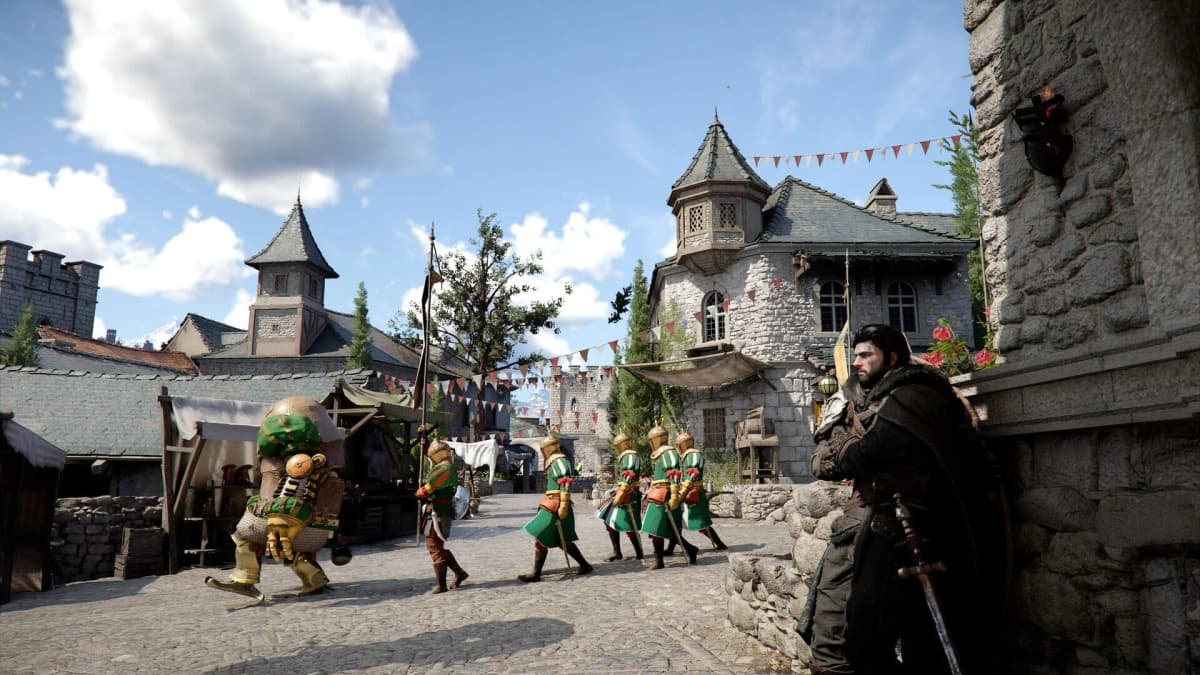
Extra pets and mounts broaden mobility and collection vectors. Patch 1.01 already added five mounts, including high-rarity drops; the new roadmap confirms that cadence will continue. For players, more options are straightforwardly positive, especially in a large world that initially felt constrained by movement costs and stamina drains that Pearl Abyss has since relaxed.
Cosmetic and UI revisions are consolidating around player preference rather than a fixed aesthetic. The ability to hide back-mounted weapons, new outfits, and broader UI/control customisation collectively move the game in a more user-driven direction. The planned visual update to distant scenery sits in the same bucket: a recognition that the initial presentation did not fully match marketing expectations for a big-budget showpiece.
Finally, additional skills for Damiane and Oongka push against another early criticism: that secondary characters felt underdeveloped mechanically relative to protagonist Macduff. Enhancing their kits gives the combat system more texture and encourages varied party compositions, a necessary step if boss rematches are expected to sustain repeat engagement.
The monetisation question is built into these systems
Pearl Abyss has not announced microtransactions or a cash shop for Crimson Desert within this roadmap. The updates are presented as free patches in response to feedback, and the inclusion of a free original soundtrack release reinforces that framing.
that said, the specific systems being enhanced mirror the studio’s longest-running revenue engines in Black Desert Online: storage and weight limits, cosmetics, pets with utility, mounts and convenience functions. In that game, expanded storage, extra pets, and many outfits sit at the core of the monetisation stack. That history makes the shape of Crimson Desert’s improvements difficult to treat as purely coincidental.
There is a structural tension here. On one hand, specialised storage, more pets and mounts, and richer cosmetic control are absolutely needed to make the current game more usable and less tedious. On the other, every one of these systems is now being formalised in a way that would make a transition to paid convenience or cosmetic sales straightforward if the publisher decides to pursue it later.
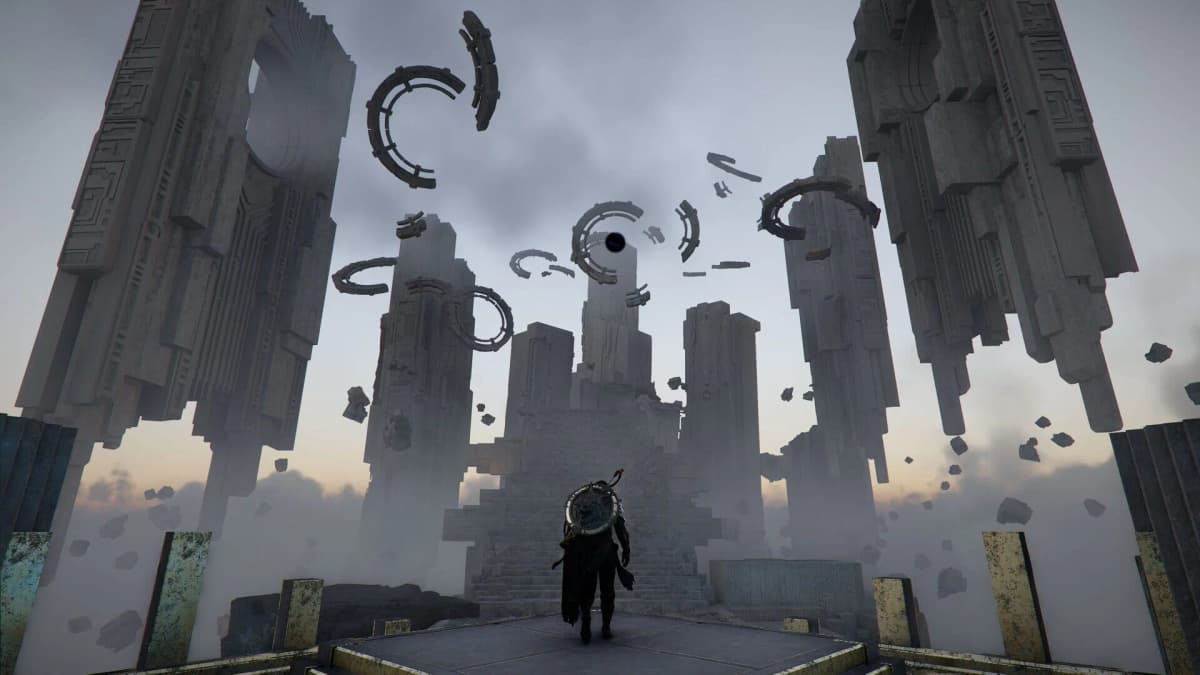
The absence of explicit monetisation in this April–June window does not resolve that tension. It simply moves the decision further down the roadmap.
This is a pivot toward a live-updated platform, not a static RPG
The most important part of the announcement is not any single feature but the cadence. Pearl Abyss is committing to a trilogy of months filled with structural updates less than a month after launch, on top of the already released 1.01 patch. That is the tempo of a team treating Crimson Desert as a platform that must retain and grow an active player base, not a standalone title that can quietly move on to DLC after a patch or two.
Boss rematches and respawning outposts create the repeatable combat and territory loops that support long-term engagement. Difficulty modes and balance tweaks give designers knobs to turn as they monitor telemetry. Storage, pets, and UI work smooth the daily experience of logging in and staying for a few hours. A free OST adds a bit of brand goodwill. None of this is accidental.
Compared to other big-budget RPGs, Crimson Desert is moving faster to retrofit itself into this shape. Cyberpunk 2077 and similar titles took much longer to transition from launch triage to structured, feature-rich patches. Pearl Abyss appears to be skipping directly to the “live pipeline” phase, informed by a decade of operating Black Desert as a constantly updated service.
The roadmap does not guarantee success. It does, however, make one thing clear: Crimson Desert is no longer just the game that shipped. It is becoming an evolving environment with systems deliberately tuned for repeat use, future balance work, and potentially more explicit forms of ongoing monetisation.
What to watch next
- Boss rematch rollout details: Patch notes will show whether rematches are purely cosmetic do-overs or tied to new loot tables, timers, or modifiers that turn them into grind anchors.
- Difficulty-linked rewards: If higher modes grant better gear or exclusive items, the difficulty selector becomes a progression gate, not just an accessibility option.
- Storage and pet limits: Future updates that expand these systems again, or introduce premium variants, will indicate whether Pearl Abyss intends to monetise them.
- Roadmap communication after June: A follow-up plan or seasonal framework would confirm Crimson Desert’s status as an ongoing service rather than a traditionally patched single-player RPG.
- Technical stability alongside features: The pace of new content will matter less if core performance and bug issues are not addressed in parallel patches.
TL;DR
Pearl Abyss’ April–June roadmap for Crimson Desert adds boss rematches, Easy/Normal/Hard difficulty, re-blockading of enemy territories, expanded storage, more pets and mounts, UI and control tweaks, companion skill upgrades, and a free OST. On paper it is a quality-of-life push; in practice it retrofits missing genre-standard features and lays down the systems needed for repeatable endgame-style loops. The key unknown now is how far the studio intends to lean into live-service structures and whether these newly formalised systems stay free of aggressive monetisation.
FinalBoss // Gear
Level up your setup
01Top-rated gaming headsetson Amazon→02High-refresh gaming monitorson Amazon→03Gaming chairson Amazon→04Discounted game keyson Kinguin→Affiliate links · As an Amazon Associate, FinalBoss earns from qualifying purchases.
Want to Level Up Your Gaming?
Get access to exclusive strategies, hidden tips, and pro-level insights that we don't share publicly.
Ultimate Gaming Strategy Guide + Weekly Pro Tips