
Table of Contents (14)
Crimson Desert Might Be the First Open-World RPG Since Cyberpunk to Really Move the Needle on PC Graphics
The first time I hit play on Digital Foundry’s Crimson Desert preview, I had that rare “oh, this is different” moment. Not the usual “nice foliage, decent RT shadows” kind of upgrade, but the feeling you get when an engine is doing something fundamentally smarter with light and physics than what we’re used to in open worlds.
We’ve seen a lot of pretty games lately, especially with Unreal Engine 5’s Lumen and Nanite flexing in every other trailer. Crimson Desert is not UE5. It runs on Pearl Abyss’s in‑house BlackSpace Engine, and from what DF showed, it’s gunning straight for the high end: per-pixel ray-traced diffuse global illumination, ray-traced reflections, and easily the best water simulation I’ve seen in an RPG… all running at native 4K with FSR on an AMD Radeon RX 7900 XTX at close to 60 FPS.
That combination is wild on paper. In motion, it looks even wilder.
This is still a preview build, captured by the developers for DF rather than direct hands-on benchmarking. We don’t have numbers across a full range of hardware, and the game isn’t out yet (it’s currently slated for a March 19 release on PC and consoles). But as a statement of intent? BlackSpace is basically walking into the room, slamming a giant ray-traced water simulation on the table, and saying: “Yeah, we’re here.”
The Preview Rig: Why Near-4K60 on a 7900 XTX Is a Big Deal
Let’s ground this in hardware before we get lost in the pretty screenshots that live in our heads. Pearl Abyss didn’t just send Digital Foundry some anonymous footage; they actually provided the exact PC spec and settings used to capture it. That matters, because it lets us frame what we’re seeing in real-world terms instead of marketing fantasy.
Specifications
The headline is simple but important: native 4K, Ultra preset, full RT GI and RT reflections, on a Radeon RX 7900 XTX, running close to 60 FPS. Not using a performance FSR mode, not dropping resolution behind the scenes, not turning off half the effects for the sake of a clean graph. FSR was enabled, but in its “native” mode – essentially acting as a high-quality anti-aliasing pass, not as a resolution cheat.
If you’ve followed RT-heavy PC games at all, you know why that stands out. Most demanding RT showcases – think Cyberpunk 2077’s RT Overdrive or a lot of current UE5 titles with fully dynamic lighting – tend to absolutely murder AMD’s current-gen cards at 4K. Nvidia’s RTX 4090 is usually the only thing that can brute-force its way to high frame rates with everything cranked.
Seeing a 7900 XTX hover around 60 FPS at 4K Ultra with real RT GI and reflections is basically Pearl Abyss saying: “We’ve built an engine for this.” It doesn’t mean every scene will behave this way in the final game, but it sharply contrasts with the “beautiful at 30 FPS” compromise we’ve been quietly accepting in big-budget open worlds.
Per-Pixel Ray-Traced Diffuse GI: The Lighting That Changes Everything
The star of the show is BlackSpace’s per-pixel ray-traced diffuse global illumination
Most games – even very good-looking ones – rely heavily on “baked” GI or cheap approximations like probes and screen-space tricks. They precompute how light bounces around an environment and store that in low-resolution data structures. It works, but it’s static and often coarse. Change the time of day, open a door, light a torch, and the lighting doesn’t always react in a convincing way, because the underlying GI was never really built for that kind of dynamism.
In Crimson Desert, DF confirmed with Pearl Abyss that the game is using ray-traced diffuse GI that appears to be evaluated per pixel, not just through big, low-res probes. You can see it in almost every shot. Outdoor scenes feel naturally lit, sure, but the real magic is indoors:
- Walk into a chapel-like interior at midday and sunlight streams through the windows, hits stone pillars, and softly fills the corners with indirect light instead of leaving them unnaturally flat or crushed.
- Watch a time-lapse of the sun moving and you see the entire mood of the room shift dynamically – not just the direct sun patches sliding across the floor, but the bounced light gently fading from the walls and ceiling.
- At night, when torches are lit, the same GI system kicks in. Those local light sources actually contribute to the diffuse lighting, filling the room with warm bounce instead of just painting some harsh orange hotspots.
The effect is similar to what we’ve seen in Ubisoft Massive’s Snowdrop engine in Avatar: Frontiers of Pandora and the upcoming Star Wars Outlaws, where interiors and exteriors feel physically connected by light. But here, it’s wrapped around a grimy medieval fantasy world that leans hard into darkness. DF pointed out something I absolutely love: nighttime is actually dark. No weird blue-wash fake brightness, no “we lit the shadows to keep people from complaining.” You want to see? Get a light source.
It sounds small, but this is where the technology quietly bleeds into game design. When lighting is fully dynamic and physically grounded, designers can lean on it to convey danger, safety, mystery. A torch-lit dungeon isn’t just art direction; it’s a real visibility handicap you feel in your bones. That’s the sort of thing you can’t really fake convincingly with old-school prebaked GI.
Ray-Traced Reflections That Don’t Tank the Frame Rate
GI isn’t the only ray tracing trick BlackSpace is running. Crimson Desert also features ray-traced reflections, again without blowing the performance budget in the preview build.
The implementation looks hybrid. On bodies of water, you can see a mix of screen-space reflections (SSR) – those nice, sharp highlights from stuff that’s currently on-screen – combined with a ray-traced fallback that fills in missing information, especially for off-screen geometry and far distances. It’s not just water either; DF highlighted an indoor scene with polished stone floors where the reflections clearly go beyond what SSR can handle. You can see the environment reflected at angles and distances that scream “RT, not screen-space hack.”
What impressed me isn’t just that these reflections exist – a bunch of games do RT reflections now – but how companionable they feel with the RT GI system. Both effects are clearly tuned to work together without dragging performance through the mud. That’s important, because RT features are usually where AMD cards struggle the most compared to Nvidia’s RTX lineup.
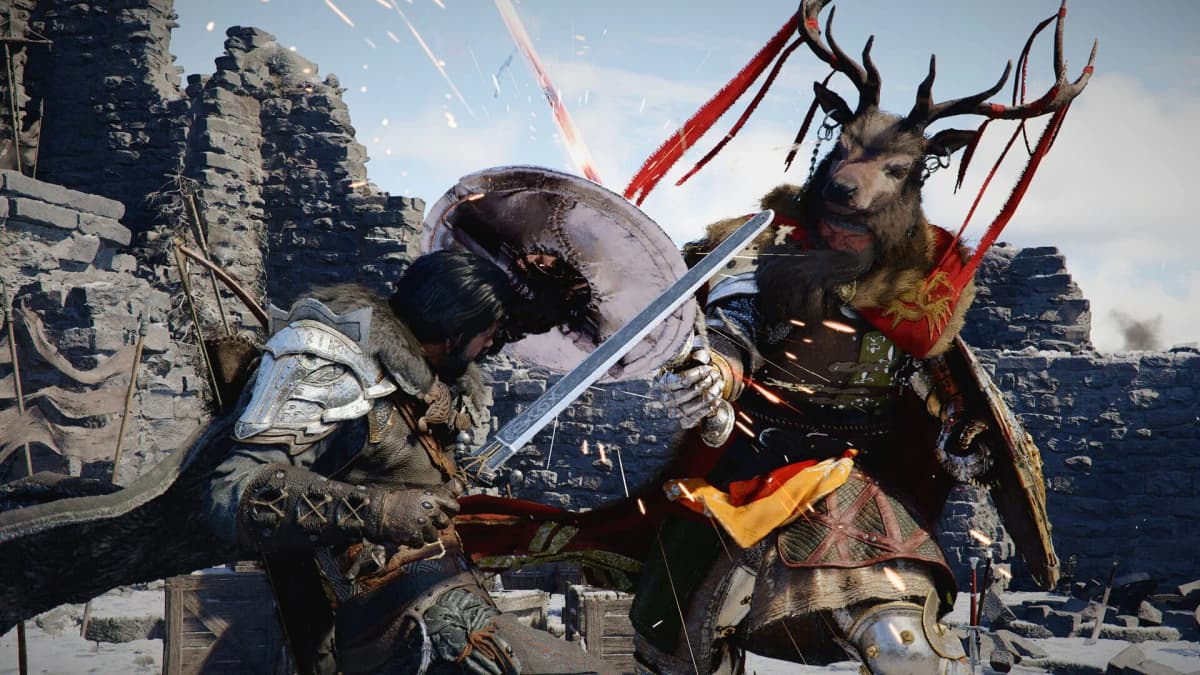
Yet here we are, looking at a last-gen AMD flagship handling per-pixel RT GI + RT reflections at 4K Ultra around 60 FPS. If BlackSpace can scale that experience reasonably to lower presets and resolutions – say, 1440p on a 7800 XT with a mix of High/Medium plus upscaling – this could be one of the more RT-friendly big-budget RPGs for Radeon owners in years.
The Wildest Water Simulation I’ve Seen in an Open-World RPG
The moment that really made me sit up wasn’t a lighting shot though. It was the water.
Most games cheat shorelines and streams. They throw a nice normal map on a flat surface, maybe add some particle foam, and call it a day. If you’re lucky, you get a height-based displacement system – waves go up and down, you see some ripples around your character, and that’s about it. It looks fine until you’ve stared at it for too long.
Crimson Desert’s water looks like someone at Pearl Abyss got genuinely obsessed with 3D water displacement and volume and refused to stop until it felt right. DF describes, and the footage shows, a simulation where water isn’t just moving vertically; it appears to have a sense of filling and emptying space. Waves don’t just rise and fall – they push against the shore, roll over rocks, and then recede back on themselves with convincing volume.
You see waves hit the coast, bulge up over stone, then collapse and slide back in a way that looks disturbingly close to real footage. That “receding back” behaviour is what most games fake with particles and meshes. Here it feels systemic. And Crimson Desert doesn’t reserve this just for the open sea; the same tech appears to extend to rivers, streams, and waterfalls, where flowing water interacts with rocks and level geometry instead of just scrolling a flat texture downhill.
It’s not just a visual flex either. The water reacts to characters and physicalised objects. Other preview coverage has already shown Crimson Desert leaning into systemic interactions – think elemental effects that freeze water into traversable ice, physics-driven debris, destructible scenery. Tying that kind of gameplay to a water system that actually “knows” about volume and flow has huge potential for cool emergent moments.
“Next-gen water” has been marketing speak for nearly two decades. This is the first time in a while I’ve looked at an RPG and thought: yeah, okay, that might actually deserve the label.
Systemic Open World + Advanced Lighting: Why This Combo Matters
All this fancy rendering tech would be less interesting if Crimson Desert were a corridor shooter. It isn’t. Pearl Abyss keeps stressing that this is a systemic open-world action RPG (they’ve called it action-adventure in some messaging, but the RPG DNA is clearly there), and that’s where BlackSpace really starts to matter.
Digital Foundry’s folks likened parts of the world design to Dragon’s Dogma – big medieval towns, dangerous countryside, a proper day/night cycle that actually changes how you move and fight. Other creators who’ve played hands-on slices over the last couple of years have compared some of the environmental interactions to Breath of the Wild and Tears of the Kingdom: elemental physics, traversal tools, climbable monsters, and world systems that feel built for experimentation rather than just checklist content.
Put those pieces together and the engine choice starts to make sense. If you’re building:
- A large, fully open world with changing time-of-day and weather
- Interiors and exteriors stitched together without loading screens
- Elemental interactions (fire, ice, lightning) that can alter the environment
- Physics-driven objects and destructible set-pieces using a single consistent simulation
…then baked lighting and cheap GI start to seriously get in your way. They force compromises in how reactive your world can be. BlackSpace’s per-pixel GI and RT reflections are basically Pearl Abyss saying: “We want to simulate a living, changing world, and the lighting has to keep up.”
The best part is that the tech enhances the fantasy instead of just ticking a feature box. Storm clouds rolling in don’t just darken the skybox – they actually choke off skylight, plunging alleyways into gloom. A torch-lit village at midnight feels dangerous in a way that matches the gameplay systems people have described: bandits are harder to see, archers can hide in darkness, the whole mood changes. That’s the point where rendering, design, and atmosphere stop being separate silos.
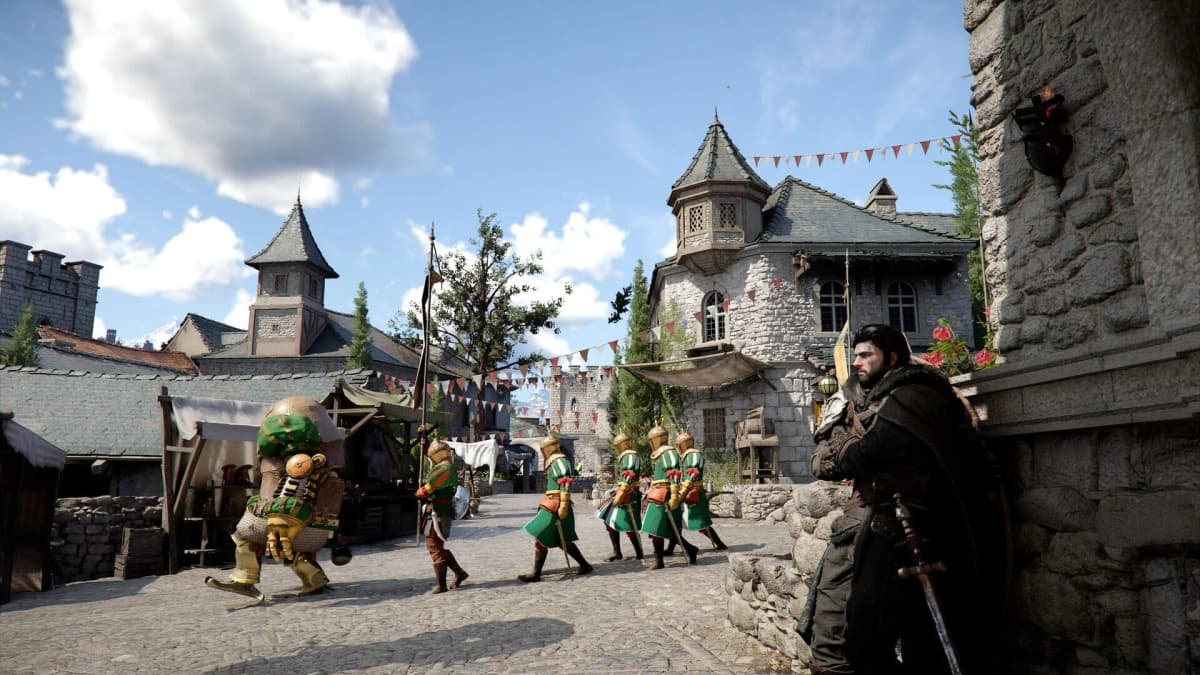
How Big a Win Is This for AMD GPU Owners?
There’s another quietly interesting angle here: this entire preview was on an AMD GPU. Not just any AMD GPU, but a last-gen RX 7900 XTX, and it was clearly chosen as a showcase. AMD is already bundling Crimson Desert codes with some of its newer cards, positioning it as a “4K 60” flagship experience. That tracks pretty neatly with what DF saw.
Historically, if you cared about ray tracing, you bought Nvidia. Full stop. AMD hardware could brute force rasterisation performance, but heavy RT workloads exposed architectural weaknesses. Many UE5 titles and RT-heavy PC games end up either scaling RT way back on AMD or essentially targeting Nvidia first and foremost.
BlackSpace flips that narrative, at least in this preview slice. Instead of shipping an off-the-shelf engine tuned primarily for RTX, Pearl Abyss built their own tech and seems to have optimised the ray tracing side very aggressively for AMD’s architecture. The fact that they’re running:
- Per-pixel ray-traced diffuse GI
- Ray-traced reflections
- Native 4K with FSR Native
- Ultra preset on a big open-world slice
…on a 7900 XTX at ~60 FPS without obvious visual shortcuts is big news if you’re sitting on a high-end Radeon and tired of being the “raster king, RT peasant.”
Of course, that doesn’t magically guarantee smooth sailing on mid-range cards. We don’t know yet what the experience looks like on, say, a 7800 XT, a 6700 XT, or Nvidia’s RTX 4070/4060 class GPUs. I’d be shocked if there weren’t robust settings to dial RT GI and reflections down or off entirely, but the question is: how gracefully does the game degrade? Do you get a still-coherent lighting model, or does it become one of those titles where turning off RT snaps you back to 2014 visuals?
We’ll only know that when we can test a range of configs. But as a tech preview, this is probably the most flattering RT showcase AMD has had tied to a major open-world game in a long time.
PC Features, FSR, and What We Still Don’t Know
One nice detail I appreciated from the DF breakdown: Pearl Abyss didn’t just hardcode everything into a “cinematic preset, deal with it” situation. Crimson Desert has a full range of options – from Minimum up through Low, Medium, High, Ultra, and a top-end Cinematic mode. The preview build ran Ultra, not Cinematic, despite the already impressive image quality.
That suggests there’s headroom for people with monster rigs to push things even further (higher GI quality, longer RT reflection distances, denser foliage, who knows), while everyone else can drop a preset or two and lean on FSR in a true upscaling mode. FSR’s exact version and feature set haven’t been detailed publicly in the context of this preview, but it’s safe to assume some form of FSR upscaling will be key for mid-range GPUs targeting high frame rates at 1440p and 4K.
On the PC side you can also expect the usual niceties Pearl Abyss has shown off in other demos and events: ultrawide support, multiple camera modes (including first-person for exploration), and reasonably granular graphics toggles. This isn’t a bare-minimum “console port with three settings” situation; it’s clearly being treated as a proper PC flagship alongside the console versions.
But we’re still in preview-land, so there are big unanswered questions:
- CPU scaling: The demo PC had a modern 12-core Ryzen 9. How well does the game behave on 6-core or older CPUs, especially in crowded cities or large battles?
- RT on consoles: We know the game is launching simultaneously on consoles, but we don’t yet have clear info on whether PS5/Series X will run RT GI, RT reflections, or some pared-down hybrid mode at 30 or 60 FPS.
- Streaming and traversal: Open-world games live and die on asset streaming. How does BlackSpace handle sprinting on horseback through dense areas? Do we see stutter, traversal hitching, or aggressive LOD popping?
- VRAM footprint: 4K Ultra + RT + high-res assets can demolish 8GB cards. We don’t have a VRAM usage figure yet, but it’s something to watch for closer to launch.
Those are the pragmatic concerns that sit behind all the pretty footage. This is exactly the kind of game that will expose weaknesses in PC builds – whether it’s not enough VRAM, a CPU bottleneck, or a drive that can’t keep up with streaming.
The Hype Problem: Can the Game Match Its Engine?
There’s another elephant in the room: hype. Crimson Desert has been floating around showcases and expos for a few years now, with every new trailer trying to outdo the last. Beautiful vistas, chaotic combat, explosive assassinations, elemental tricks, mini-games, you name it. Some creators who’ve played limited demos over the years have come away impressed, others a bit skeptical – praising the combat depth while wondering if the open-world structure and side content will hold up under the weight of its ambitions.
Digital Foundry’s preview deliberately focuses on the tech, and on that front the verdict is pretty clear: BlackSpace looks seriously strong. But gorgeous rendering doesn’t automatically guarantee a great RPG. We’ve all been burned by visually stunning, mechanically shallow open worlds before.
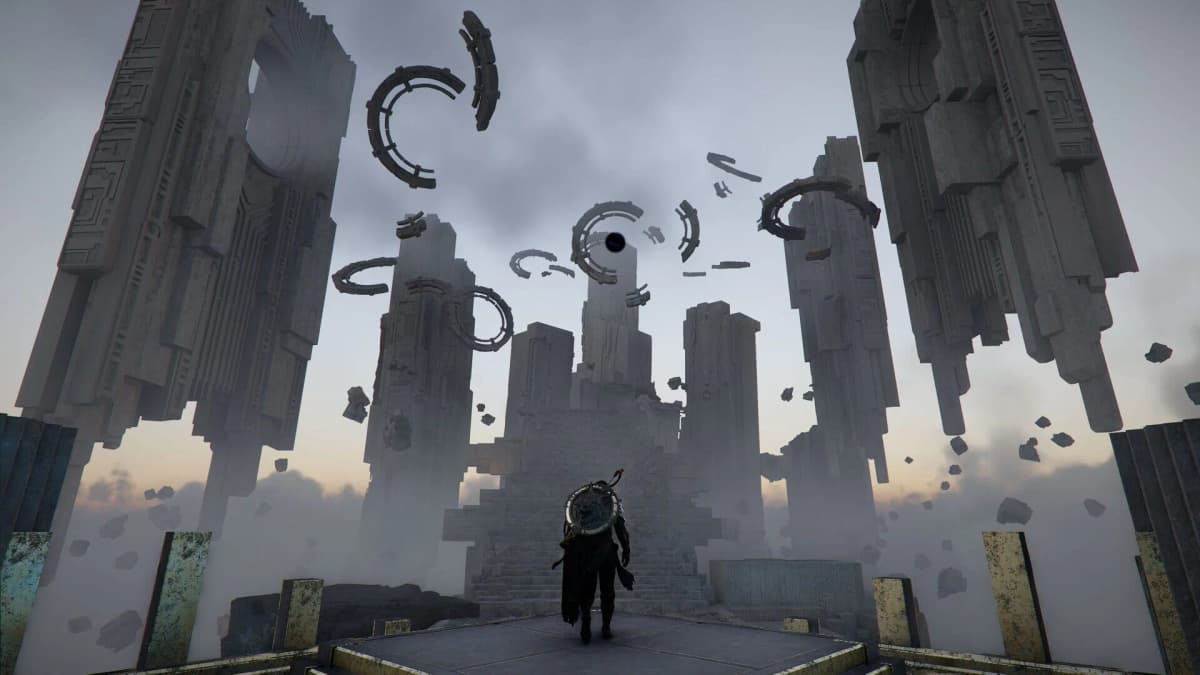
It’s worth keeping that in mind precisely because the engine is so good. When the lighting, water, and physics all scream “next gen,” your brain starts to expect similar depth from quest design, story pacing, AI behaviour, and progression systems. If those don’t keep up, the contrast stings even more.
From what’s publicly known, Crimson Desert is leaning into:
- High-skill, timing-heavy combat with stagger and finisher systems
- Systemic features like bounties, arrests, destructible environments, and physics-driven chaos
- Elemental interactions that let you creatively abuse the environment (freezing water to cross, setting up explosive chains, etc.)
All of that pairs beautifully with an engine like BlackSpace. But until we actually play the full game and see how those systems come together over dozens of hours, it’s healthy to file our excitement under “cautiously optimistic.”
Who Is Crimson Desert Actually For?
Based on this preview, Crimson Desert is shaping up to be a very specific kind of game: the one you show your friends when you want to justify your expensive PC… and the one that will absolutely punish you if your rig is behind the curve.
If you’re the sort of person who:
- Values cutting-edge lighting and RT tech as much as narrative
- Upgrades your GPU for a couple of “benchmark” games each generation
- Loved the systemic chaos of Breath of the Wild or Dragon’s Dogma and wants that energy in a darker, more grounded fantasy
- Runs a 4K or high-refresh 1440p display and actually cares about hitting 60 FPS with everything maxed
…then Crimson Desert is basically aimed directly at your wallet.
For more casual players on mid-range hardware, the pitch is a bit different. The tech still benefits you – RT GI doesn’t just look good at 4K; it also makes a 1080p scene feel richer and more cohesive. But you will almost certainly be living in a world of tuned presets, FSR upscaling, and some compromises on RT quality. The key question – and the one I’m most interested in answering at launch – is whether those lower-end configs still feel like they’re running the same vision, just at reduced fidelity, or a noticeably different, flatter version of the game.
On consoles, expectations are different again. A 30 FPS RT mode with solid image quality and a non-RT performance mode at 60 would be the obvious split. If Pearl Abyss manages something smarter – like a 40 FPS RT mode on VRR displays, or some hybrid RT GI with clever upscaling – that’ll be icing on the cake. Just don’t expect the console versions to match a well-tuned high-end PC; this preview pretty much confirms Crimson Desert is being built to stretch current PC hardware hard.
✓ PROS
+
Per-pixel ray-traced diffuse GI that completely transforms indoor/outdoor lighting
+
Ray-traced reflections integrated smartly with SSR without nuking performance
+
Advanced 3D water displacement that actually simulates volume and flow
+
Running near native 4K60 with RT on an RX 7900 XTX in the preview build
+
Custom BlackSpace Engine built specifically for this systemic open world
+
Strong synergy between rendering tech and systemic, physics-driven design
✗ CONS
–
All performance impressions are from developer-captured preview footage, not independent benchmarks
–
Unknown scalability to mid-range GPUs and 8GB cards
–
Console RT modes and frame-rate targets are still a mystery
–
Visual fidelity sets sky-high expectations for quest design and world depth
–
Complex tech stack could translate into heavy CPU, VRAM, and storage demands on launch builds
My Take After Watching DF’s Footage on Repeat
After a couple of loops of the DF breakdown, I had that thought I only get every few years: “If this ships even 80% as shown, this is going to be one of those ‘you need to see it on a good PC’ games.” We said that about Crysis, about The Witcher 3, about Red Dead 2, about Cyberpunk 2077 (post-patches and RT). Crimson Desert is lining up to be that game for this generation of open-world RPGs.
The moment it really clicked for me wasn’t the obvious “hero shot” vistas. It was watching the time-of-day timelapse in a cramped interior as clouds rolled in outside and torches began to matter more than the sky. That single clip sells everything BlackSpace is trying to do: dynamic, physically motivated light, bleeding into spaces in ways precomputed probes just can’t replicate.
Add the absurdly good water, the fact that AMD hardware is actually being treated as a first-class RT citizen, and the systemic world design we’ve seen in various gameplay demos… and you’ve got the makings of something genuinely special. Not just another pretty UE5 clone, but a distinct PC-first engine with its own ideas.
Of course, the caveats remain: this is all preview footage, carefully captured, running on high-end hardware. We still need to see how it behaves in messy, unscripted play. We need to see how it scales down. And we need to see whether the RPG itself – the quests, the writing, the pacing – can stand next to the tech without wilting.
But from a pure rendering and engine perspective? BlackSpace just put Crimson Desert on the short list of games I absolutely plan to use as a PC benchmark the moment it hits my SSD.
Too early for a score, but as a PC graphics showcase it’s already a frontrunner for 2026.
VERDICT
Digital Foundry’s first look at Crimson Desert makes one thing crystal clear: Pearl Abyss isn’t just chasing a pretty open world, they’re building a full-blown PC tech flex. With per-pixel ray-traced diffuse GI, smart RT reflections, and some of the best water simulation we’ve seen in an RPG, all running near native 4K60 on an RX 7900 XTX, the BlackSpace Engine is suddenly one of the most exciting pieces of rendering tech in the industry. If performance holds up outside curated demos and the systemic gameplay matches the visuals, Crimson Desert could be the rare open-world RPG that pushes both your GPU and your imagination in equal measure.
FinalBoss // Gear
Level up your setup
01Top-rated gaming headsetson Amazon→02High-refresh gaming monitorson Amazon→03Gaming chairson Amazon→04Discounted game keyson Kinguin→Affiliate links · As an Amazon Associate, FinalBoss earns from qualifying purchases.