
Table of Contents (8)
Expansion and Erosion, Side by Side
Patch 12.1 is landing the week of July 7, 2026, and Blizzard is pitching it as the next big beat for the Midnight expansion cycle. Three new delves. The Curse of Ula’tek. More housing through the Neighborhoods system, which is explicitly designed to pull guilds and friend groups back inside World of Warcraft instead of letting them fragment across Discord servers and external apps. On the surface, this is what healthy live-service growth looks like: new content, social features, a roadmap. But while the official game is busy expanding, the space around it is contracting. Private servers-Project Ascension, Turtle WoW, and others that spent years curating vanished rulesets-keep getting dismantled by legal teams doing exactly what intellectual property law allows them to do. And that contradiction is what makes the current moment feel so disorienting. We are watching WoW get bigger and smaller at the exact same time.
The Legal Right Nobody Is Debating
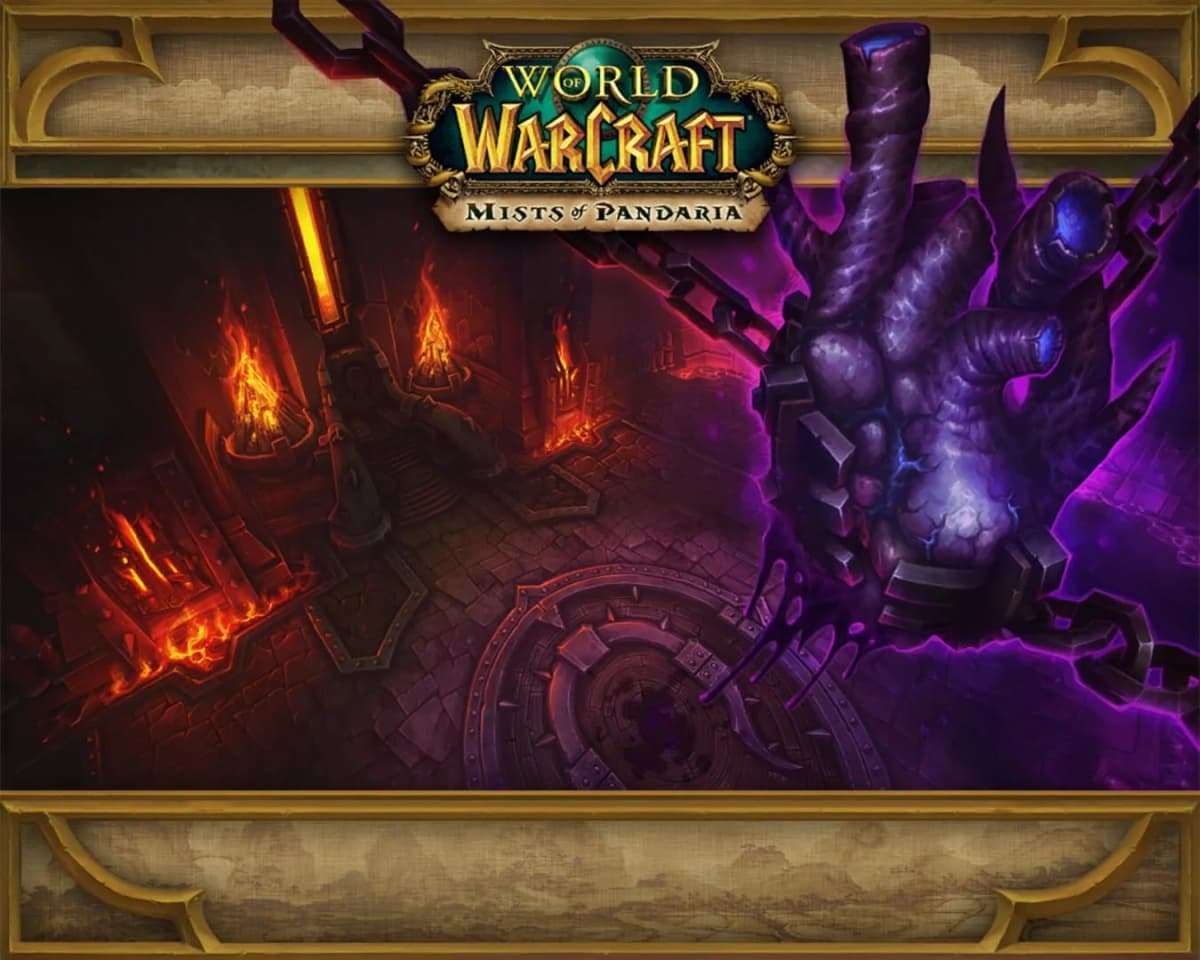
Let’s get the obvious out of the way first. Blizzard owns World of Warcraft down to the last line of code, and that includes the specific historical state of Mists of Pandaria during the Siege of Orgrimmar era. If the company wants to send a cease-and-desist to a private server recreating that exact patch cycle, it has every legal right to do so. I am not interested in staging a courtroom drama here. The servers are operating without a license, full stop. But acknowledging that reality is not the same as feeling good about it, and it definitely is not the same as pretending the player-facing outcome is neutral. Something valuable is being removed from the ecosystem every time one of these projects gets vaporized, and what we are losing is more complicated than a free alternative to a subscription game.
These private servers function as preservation engines. They keep vanished rulesets playable. They curate specific historical states-whether that is a vanilla snapshot, a Wrath of the Lich King timeline, or the Siege of Orgrimmar endgame—that the official live service abandoned years ago. In any other medium, we would call that archival work. In gaming, we call it infringement, and the consequence is that entire eras of MMO design are being memory-holed because the current owner of the IP would rather they stay buried. That is a creative cost, not just a legal one, and it is getting harder to ignore as the broader MMO industry stumbles through layoff cycles and shrinking production runways.
Demand Signaling in Its Rawest Form
Here is what corporate surveys and beta feedback forms will never capture as clearly as a packed private server: raw, unfiltered demand for a specific kind of MMO experience. When thousands of players voluntarily flock to a painstakingly recreated Mists of Pandaria ruleset, they are not just dodging a monthly fee. They are voting with their time for slower progression, stronger class identity, and a version of the game where the social contract felt different than it does in modern retail WoW. That is demand signaling in its purest form, and it is often more honest than any forum post or quarterly player satisfaction metric.
Blizzard eventually noticed the appetite for old WoW and gave us WoW Classic. But Classic is still a managed product. It moves on Blizzard’s schedule, with Blizzard’s priorities, and when it advances into an expansion players do not want, there is no alternative timeline offered. The private server ecosystem, by contrast, is curated by players who know exactly which year, which patch, and which raid tier they want to inhabit. When those curators get shut down, the signal gets lost. The publisher learns less about what its audience actually craves, and the audience learns that its own history is off-limits unless the owner decides otherwise.
When Enforcement Becomes a Proxy for Stagnation
Private server shutdowns are legally defensible, but in the current industry climate, they feel like something else entirely. They feel like a proxy for MMO stagnation. We are living through an era of risk-averse live-service design, where limited new ideas get recycled across shrinking production runways and where genuine experimentation is treated like a luxury the genre can no longer afford. If the MMO space were actually brimming with bold new worlds and revolutionary mechanics, players would not be retreating to decade-old rulesets in such overwhelming numbers. The fact that they are—and that those retreats keep getting legally torched—suggests a genre that is contracting inward rather than evolving forward.
The evidence is right there in Blizzard’s own patch cadence. Patch 12.0.5 launched with widespread bugs less than two months after the Midnight expansion went live, and the memory of that shaky release still stings. The argument for throttling back the pace of updates is not just about developer sanity; it is about giving players time to adapt to new systems and giving QA cycles room to actually function. But the live-service treadmill demands velocity above all else. More patches. More delves. More seasons. And if the official product is being rushed out the door half-baked while fan-run preservation projects of older, better-tested eras get extinguished, what exactly are we defending? A conveyor belt of content that moves fast but thinks small?
Midnight’s Neighborhoods and the Social Engineering Problem
Blizzard’s new Neighborhoods housing in Midnight is built to reduce dependence on external platforms by steering guilds and friend groups back into the client. On paper, that is a healthy evolution. The genre has spent too long outsourcing its social life to third-party apps, and trying to reclaim that energy inside the game world makes sense. But there is a gap between designing for community and actually capturing it. Players are experts at routing around design they find inconvenient, and if the in-game tools feel restrictive, the Discord servers will stay open. The real test is whether Blizzard treats this as a first step toward genuine community-official collaboration or just another content feature to tick off the expansion box.
A genre that is evolving would look at how players actually socialize and build bridges. A genre that is retreating would build a walled garden and hope nobody notices the doors are locked. Neighborhoods could go either way, and that uncertainty is exactly what makes the current moment so frustrating. We are being offered the illusion of a more connected world while the actual connections—the player-curated servers that kept historical communities alive—are being severed.
Classic Plus and the Identity We Cannot Balance
Then there is Classic Plus, which carries its own unresolved contradiction. The push to preserve and expand strong class identity—actual class quests, unique rewards, mechanical distinctions that make a druid feel different from a paladin in ways retail has long since flattened—is exactly the kind of player-facing respect the genre needs. It honors the idea that WoW’s older eras were not just content pipelines but distinct design philosophies. But balance remains an open problem. How do you maintain those sharp class edges without creating a world where half the raid slots are dictated by rigid optimization? No one has fully answered that yet, and the tension mirrors the larger private-server debate. We want the past preserved, but we also want it to function in the present. And the modern live-service infrastructure does not always know how to hold both truths at once.
The unanswered question of Classic Plus balance is, in microcosm, the same problem facing the entire genre. Preservation and progress are not natural enemies, but the industry keeps treating them like they are. Studios act as if acknowledging an older ruleset’s value somehow undermines the current product, when in reality the two could coexist. A healthy MMO ecosystem would have official avenues for historical curation alongside the new delves and housing systems. Instead, we get a split reality: official WoW marching forward on its patch treadmill, and fan-run museums of its own history getting shuttered for daring to keep the lights on.
The Signals That Separate Evolution from Retreat
So how do you tell if the MMO genre is actually evolving or just dressing up a retreat? I have started looking for three specific signals, and I think every player should do the same.
- Community-official tools that actually work. Not vanity features that look good in a press release, but systems that meaningfully integrate player behavior into the game without stripping away autonomy. Neighborhoods is a start; whether it ends up as a genuine social layer or a ghost town depends on follow-through.
- Preservation-minded policies. Does the studio treat its own history as an asset or a liability? A genre that is evolving finds ways to let players experience vanished rulesets through official channels—legacy servers, curated sandboxes, mod support—rather than treating every historical snapshot as a competitor to the current patch.
- How replacements are treated. When a private server gets shut down, does the rights holder offer any alternative, or is it pure enforcement? First-class support for historical continuity does not have to mean endorsing piracy. It can mean official legacy realms, open-sourced server tech for dead games, or at minimum a recognition that preservation has cultural value beyond the balance sheet.
Right now, the signals are mixed. Patch 12.1 brings new delves and a continuation of the Midnight story. Classic Plus is flirting with expanded class identity. Those are green shoots. But the steady drumbeat of private server shutdowns, combined with rushed patches like 12.0.5 and an industry-wide contraction in MMO development, makes it hard to call the genre healthy. It feels like we are being sold the idea of evolution while the actual ecosystem is being aggressively pruned.
The Uncomfortable Question We Are Left With
I look at the calendar for July 7, 2026, and I feel the familiar pull of anticipation. New delves to run. New loot to chase. A housing neighborhood to decorate with the guild. World of Warcraft is still capable of generating that specific hunger. But I also look at the graveyard of private servers—those curated little worlds that kept the Siege of Orgrimmar era breathing, that held class identity sacred, that proved players would grind for years in a ruleset Blizzard abandoned—and I feel the hunger shrink. Not because the official game is bad, but because the space around it is getting so much smaller.
Blizzard is allowed to protect what it built. That right is not in question, and I am not going to pretend otherwise. The part that gnaws at me is whether the MMO genre is slowly narrowing its own definition until the only valid way to play is whatever the current live-service patch demands. If the future is just an endless cycle of new delves, faster seasons, and social features designed to keep us off Discord, while the history that made these worlds meaningful is treated as disposable IP, then the retreat is not just happening in server rooms. It is happening in the design philosophy itself. We may wake up one day to a genre that is technically alive but culturally hollow, and by then, the private servers that could have reminded us what we lost will already be gone. The real question is whether we will even notice the world getting smaller—or if we will just call it a more manageable neighborhood.
FinalBoss // Gear
Level up your setup
01Graphics cardson Amazon→02Gaming laptopson Amazon→03High-refresh gaming monitorson Amazon→04Discounted game keyson Kinguin→
Affiliate links · As an Amazon Associate, FinalBoss earns from qualifying purchases.
Want to Level Up Your Gaming?
Get access to exclusive strategies, hidden tips, and pro-level insights that we don't share publicly.
Ultimate Gaming Strategy Guide + Weekly Pro Tips