
What changed here is not that another Dracula game exists. Games have been strip-mining gothic horror for decades. The interesting part is that Dracula: The Disciple appears to be built as a first-person systemic puzzle game where the castle itself, your experiments, and your gradual transformation are the progression loop. That is a narrower and riskier pitch than the trailer’s blood-and-candles packaging suggests, and it matters because Cyanide is not chasing the obvious version of this concept.
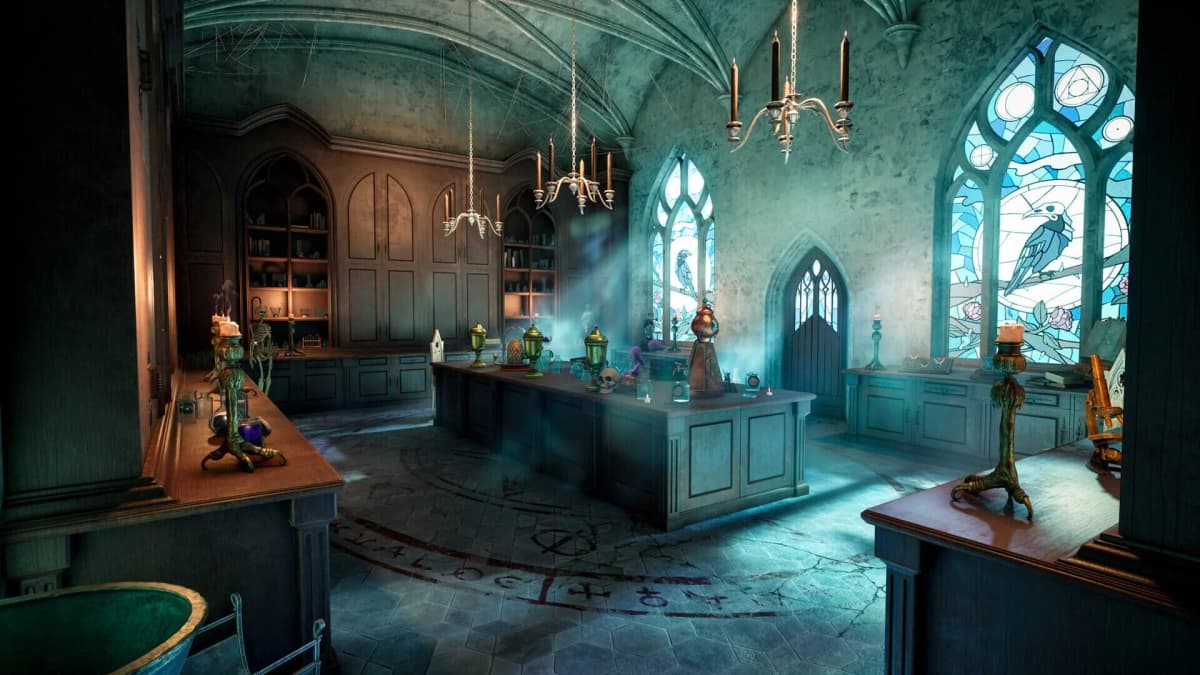
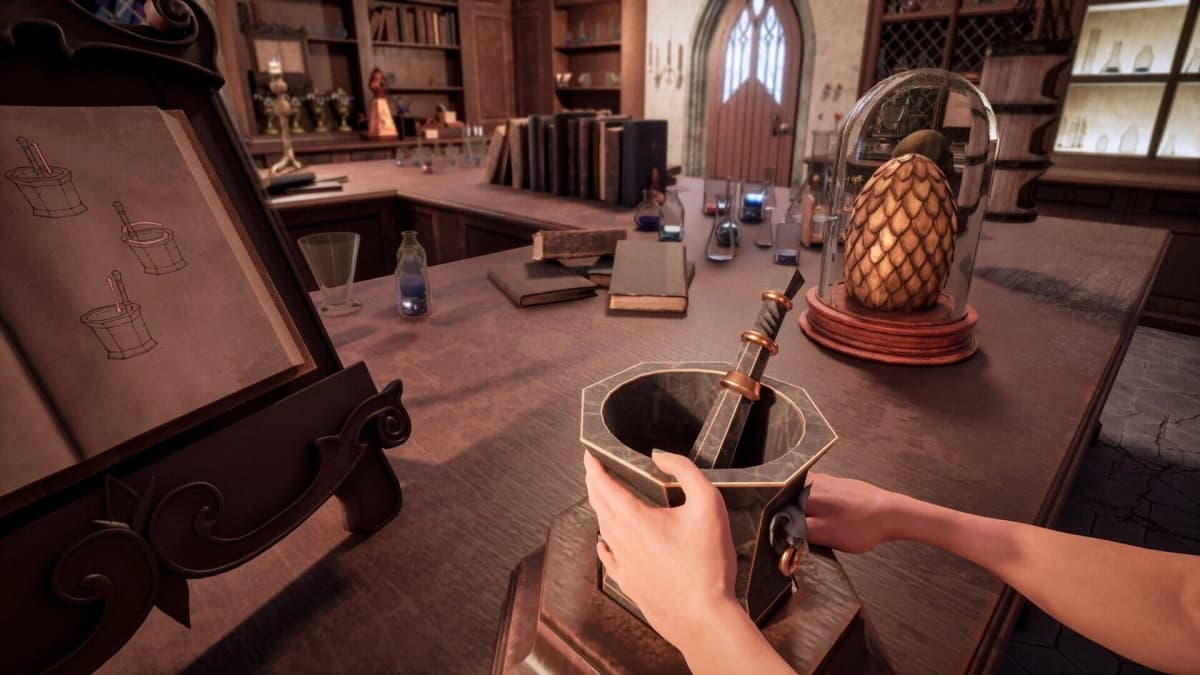
Nacon and Cyanide Studio unveiled Dracula: The Disciple during Nacon Connect 2026 as a first-person puzzle adventure for PS5, Xbox Series, and PC. The setup is straightforward enough: in 1866 Transylvania, players control Emile Valombres, a terminally ill French archivist who enters Dracula’s castle looking for a cure and ends up pulled into the Count’s occult machinery. The more useful details are mechanical. This is being framed around object inspection, alchemical mixtures, ritual drawing, environmental interaction, and a castle that changes across a day-night cycle while new vampiric abilities open previously blocked paths.
Table of Contents (5)
This is less “horror game” than “immersive puzzle box”
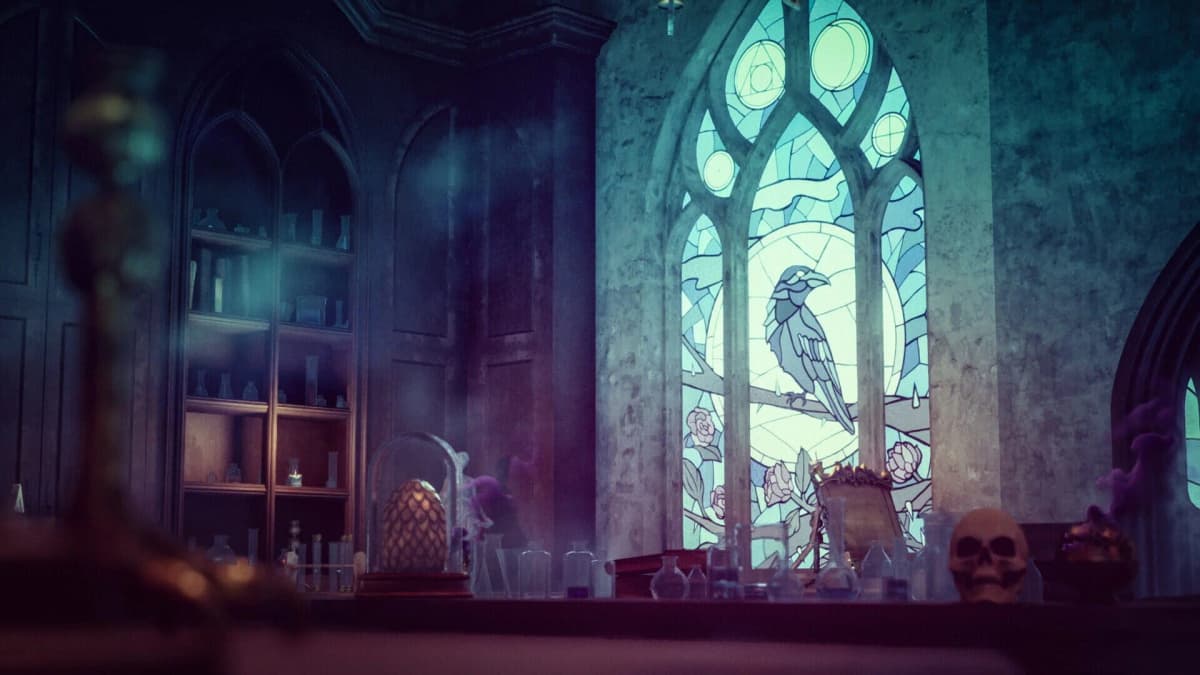
The announcement material sells atmosphere first, which is predictable. Fog, stone corridors, immortality monologues, the usual gothic inventory. What deserves more attention is the design language underneath. Cyanide is talking about free interaction with objects, experimentation through physics, and puzzle-solving that seems tied to systems rather than one-note lock-and-key gating. That puts the game closer to a compact immersive sim or a first-person adventure in the The Witness and Amnesia: Rebirth neighborhood than to anything most players would call a conventional Dracula game.
Some coverage has reached for the term “Puzzlevania,” which is not entirely wrong but does need translation into plain English. The apparent hook is not combat-driven metroidvania structure. It is ability-gated exploration inside a single dense location, where knowledge, rituals, and transformation function as the equivalent of traversal upgrades. If that lands, the castle becomes the real protagonist: a space you learn, reinterpret, and revisit with new tools. If it does not, then “Puzzlevania” is just a cute label pasted over backtracking.
Cyanide is making a smarter bet than its reputation usually gets credit for
Cyanide is not a studio that gets automatic trust from players, and that is earned. Its catalog is uneven. But it has spent years building games around strong conceptual hooks rather than maximalist polish, and the Styx series in particular showed a real understanding of how spaces can be designed around player observation and layered navigation. That history matters here. A Dracula game centered on castle logic, route unlocking, and systemic puzzle interactions makes more sense coming from this studio than from a team known only for cinematic spectacle.
The more cynical read is that this is also a budget-conscious way to make a distinctive gothic game without entering direct competition with AAA horror. A puzzle-forward first-person structure is cheaper to pitch than building a combat-heavy action epic with boss fights, lavish creature animation, and the full prestige-horror production stack. That is not a knock by itself. Constraints often force cleaner design. The question is whether Cyanide is using those constraints to sharpen the experience or merely to disguise scope limits.
That is the uncomfortable observation the reveal does not answer: how much of this game is systemic problem-solving, and how much is curated first-person adventure theater with occasional recipe mixing. The trailer gives tone. It does not prove depth.
The transformation mechanic is the part worth watching, not the Dracula branding
The premise hinges on Emile seeking a cure and instead sliding into vampirism. That could be just narrative garnish. It could also be the entire design spine. If becoming a vampire changes how you perceive clues, access rooms, manipulate objects, or survive different times of day, then the game has a real internal engine. If transformation merely unlocks a few doors and gives the marketing team a clean bullet point, then the concept is thinner than it sounds.
This is where the Dracula license, if you want to call it that, almost becomes secondary. Plenty of games use the Count as a mascot for atmosphere and then do nothing interesting with the underlying myth. What would actually justify this reinterpretation is making the player’s corruption function as both narrative escalation and puzzle grammar. Learn a ritual, lose a piece of your humanity, gain a new way to navigate the castle. That trade-off is more interesting than another reverent retelling of Bram Stoker through cutscenes and diary pages.
The greenhouse, laboratory, dungeons, and astronomy tower mentioned in the early material are also a quiet tell. Those are not random spooky rooms. They suggest specialized puzzle domains with distinct rulesets: cultivation, experimentation, confinement, observation. A castle laid out that way can support meaningful progression if each space teaches a different way of thinking. It can also become a museum of disconnected gimmicks. Again, the reveal stops before the useful proof.
The biggest missing number is how big and how replayable this thing actually is
There is a familiar industry pattern here. Announce a stylish first-person concept, imply systemic freedom, show just enough interaction to trigger immersive-sim comparisons, and leave unanswered the scope question that determines whether the game feels rich or slight. Players have seen this movie before. A contained castle can be excellent if it is dense enough. It can also be five hours of elegant wallpaper.
There is also a small but notable uncertainty around timing. Several early reports peg the game for 2027, while at least some coverage emphasized wishlist availability without a clearly locked date. That is not unusual for announcement-day reporting, but it does matter. A project selling environmental systems and progression-driven puzzles needs time in the oven. Better to land in 2027 with real mechanical coherence than arrive early as another attractive first-person curiosity that players stop thinking about a week later.
If there is one question a PR rep should have to answer next, it is simple: what can players do here besides solve authored puzzles in the intended order? Because that is where the genre bet lives. Not in the fog. Not in the voiceover. In whether systems can surprise the player.
What to watch next
- A raw gameplay demo, not another cinematic trailer. The game needs to show a full puzzle chain from discovery to experimentation to unlock.
- Proof that vampiric abilities meaningfully alter exploration and problem-solving rather than acting as simple progression keys.
- Clarity on release timing. If 2027 is real, Nacon should say so cleanly. If not, that ambiguity should be taken as a sign the project is still settling.
- How large the castle actually is and whether revisiting spaces creates new solutions or just extends playtime.
Right now, Dracula: The Disciple looks promising for one reason that has nothing to do with brand recognition: it is trying to make a single location, a transformation arc, and a set of occult systems carry the entire game. That is a harder design problem than making a loud Dracula action game. It is also the better one.
FinalBoss // Gear
Level up your setup
01Top-rated gaming headsetson Amazon→02High-refresh gaming monitorson Amazon→03Gaming chairson Amazon→04Discounted game keyson Kinguin→Affiliate links · As an Amazon Associate, FinalBoss earns from qualifying purchases.
Want to Level Up Your Gaming?
Get access to exclusive strategies, hidden tips, and pro-level insights that we don't share publicly.
Ultimate Gaming Strategy Guide + Weekly Pro Tips