
- Jambô’s Brazilian Daggerheart matches the original’s world-class print quality.
- Card-driven design accelerates play but demands extra table space and setup.
- Duality Dice and Holofotes spotlight mechanics push narrative over rote rolls.
- Localization shines, yet expansion timing and premium pricing risk fracturing fans.
- Critical Role branding fuels initial buzz; long-term Brazilian adoption remains to be seen.
Table of Contents (8)
The day a Critical Role box landed on my Brazilian table
The immediate rush wasn’t pure hype. It was a mix of excitement and a tiny, nagging “oh no, they got me again.” I’ve been around Brazil’s RPG scene since the era of photocopied D&D 3.5 PDFs in binders, 3D&T rulebooks taped at the spine, and smoky LAN-house Tormenta sessions. Back then, a full-color, hardback Critical Role system, properly localized into Portuguese and printed in the same factory as the original? Total fantasy.
Fast-forward to Q4 2025: I’m slicing the seal on Jambô Editora’s Brazilian Daggerheart box — magnetic lid, 366-page hardback, and a fat sleeve of 279 illustrated cards. This isn’t a budget paperback with washed-out art. It looks and feels like it rolled off Darrington Press’s own line and into my mailbox here in São Paulo.
But as I lifted that box, two thoughts collided. One: this is exactly the top-tier edition I’ve pleaded for – no import roulette, no praying the courier doesn’t ruin it. Two: do I really need another shelf-hogging prestige box competing for space next to my existing collection?
A premium box that’s both thrilling and overwhelming
Make no mistake: Jambô didn’t skimp. This edition delivers:
- A 366-page, full-color hardcover rulebook matching the original print specs.
- A sturdy, magnetic-lid sleeve-style box for the rulebook and cards.
- 279 full-art cards integral to gameplay — not a side gimmick.
That level of quality matters. Brazilian fans have long seen imported English editions as the “real deal.” Now we can walk into a local store or order from a Brazilian site and get the exact same package. No more paying import fees or risking damage in transit.
Yet high-end physical editions have a downside: they raise the entry bar. When your “core” system comes in a box that looks like a Kickstarter deluxe pledge, the unspoken message shifts from “grab some dice and jump in” to “hope your wallet is ready.”
Jambô launched pre-orders in June 2025, aiming for an October-December release after delays pushed back an original late-February ship date. Boxes only started arriving months later, stretching hype like bubblegum. Now that they’re here, I ask: are we celebrating real accessibility, or just importing the worst aspects of premium collector culture?
Card-driven design: brilliant or boardgame bloat?
Daggerheart’s unique selling point is its 279 cards. They cover ancestries, classes, narrative prompts, conditions, and more — all designed to replace rifling through a 300-page rulebook mid-session. In my first test run, players unfamiliar with complex RPG rules grasped options in seconds by laying cards on the table. It felt more like learning a modern board game than wrestling with a weighty RPG manual.
That “instant clarity” is fantastic, especially for new or casual players. But cards introduce physical friction: you need space, sorting trays, sleeves, and time to shuffle and organize. In cramped apartments or busy game stores — common in Brazilian cities — that can be a real challenge. My São Paulo group nearly ran out of table real estate once laptops, snacks, and character sheets joined the party.
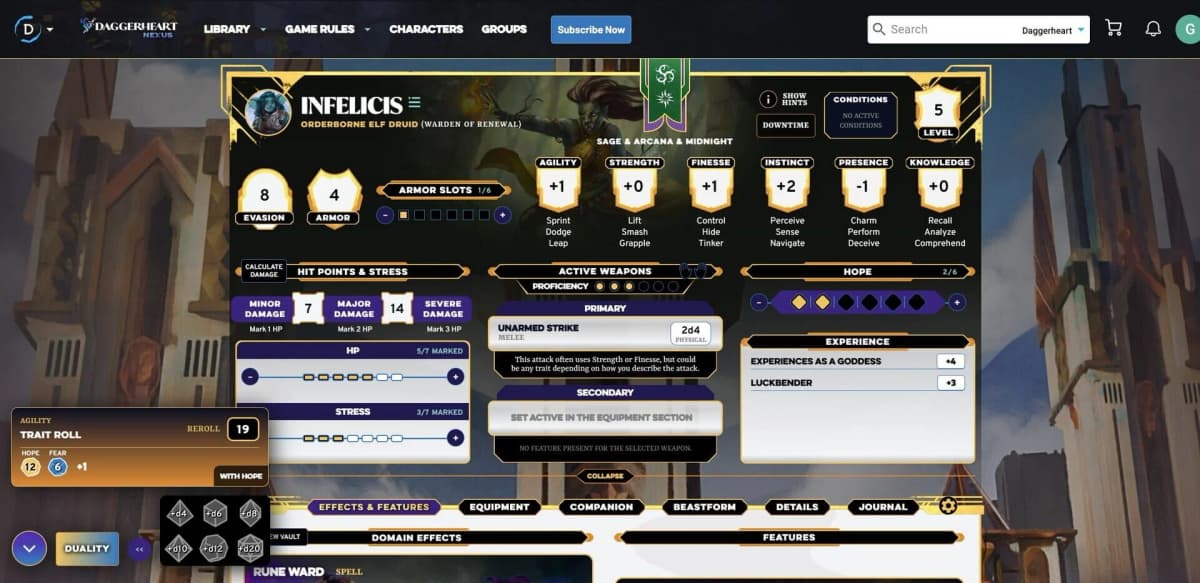
Cards do what they promise: they make abstract narrative permissions concrete. But they also drag tabletop sessions toward boardgame logistics. For some groups, that’s a welcome change. For old-school players who thrived on “book + sheet + a handful of dice,” piling cards into the mix might feel like unnecessary bloat.
Mechanics that push you to tell a story
Beyond production, Daggerheart’s core appeal is its mechanical philosophy. At its heart are Duality Dice — a Hope die and a Fear die, both d12s. You roll to succeed at actions, but a high Fear result can pivot the scene’s focus, turning a triumphant strike into a tense twist. It’s less about “did you hit?” and more about “what happens next in the story?”
Then there’s Holofotes (spotlight), letting the Narrador (GM) flexibly choose whose turn it is based on narrative flow, not initiative order. You can run scenes fluidly, passing focus to whoever’s got a compelling arc, without worrying about action-economy minutiae.
Having run both 5e and Pathfinder, I know how hard it is to sustain roleplay momentum when every rule drags you back to “my turn, your turn.” Daggerheart leans into the rhythm most of us developed by watching Critical Role: talk first, roll when it counts, then fuel that roll into creative outcomes.
At my table, players leaned into dramatic failures instead of groaning. They expected cool complications when Fear spiked, because the system had already trained them to see setbacks as story fuel. That shift alone made me sit up and take notice.
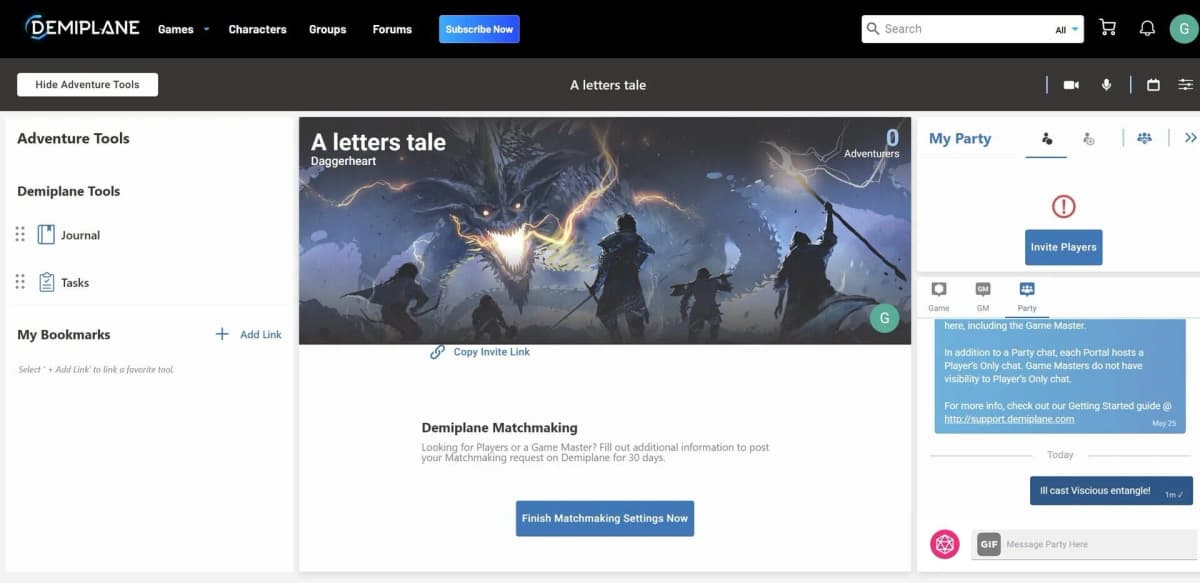
Still, there’s an irony here: Critical Role’s main show isn’t using Daggerheart. Campaign 4 rolled out on D&D’s new 2024 ruleset, not this system. We can speculate about business or comfort factors, but the result is clear. The game engineered to bottle “Critical Role-style play” isn’t its own flagship show’s engine. That disconnect matters when you’re asking players to switch systems.
Can Daggerheart carve out space in Brazil?
Whenever a splashy new RPG arrives in Brazilian stores, someone yells “D&D killer!” I’ve heard it for Pathfinder, Tormenta 20, Ordem Paranormal, and more. Spoiler: D&D endures, now on its 2024 update.
Daggerheart has advantages — global launch May 20, 2025; social-media buzz; beta rules showcased on streams; now a premium local edition after months of delay. But buzz doesn’t guarantee cultural impact.
Critical Role is huge among seasoned hobbyists, but casual players who pick up Tormenta off a bookstore shelf often don’t know Matt Mercer’s homebrew world. To them, Daggerheart is “that pretty new box with a tough-to-pronounce name.” It’s not an automatic default.
Optimists will say: removing language and import hurdles lets Daggerheart truly compete in Brazil. Pessimists will note: premium price and shelf footprint keep it niche. Without actual sales figures, long-term campaigns, or a groundswell of Portuguese-language content, “rapid adoption” remains speculation.
Localization: spot-on work, pipeline questions
Where Jambô nails it is translation and editing. Terminology like Narrador for GM, Holofotes for spotlight, and the Hope/Fear phrasing feel natural in Portuguese. The layout is faithful, art vibrant, and cards don’t look like late-stage rescales. You can tell the team plays games, not just translates them.
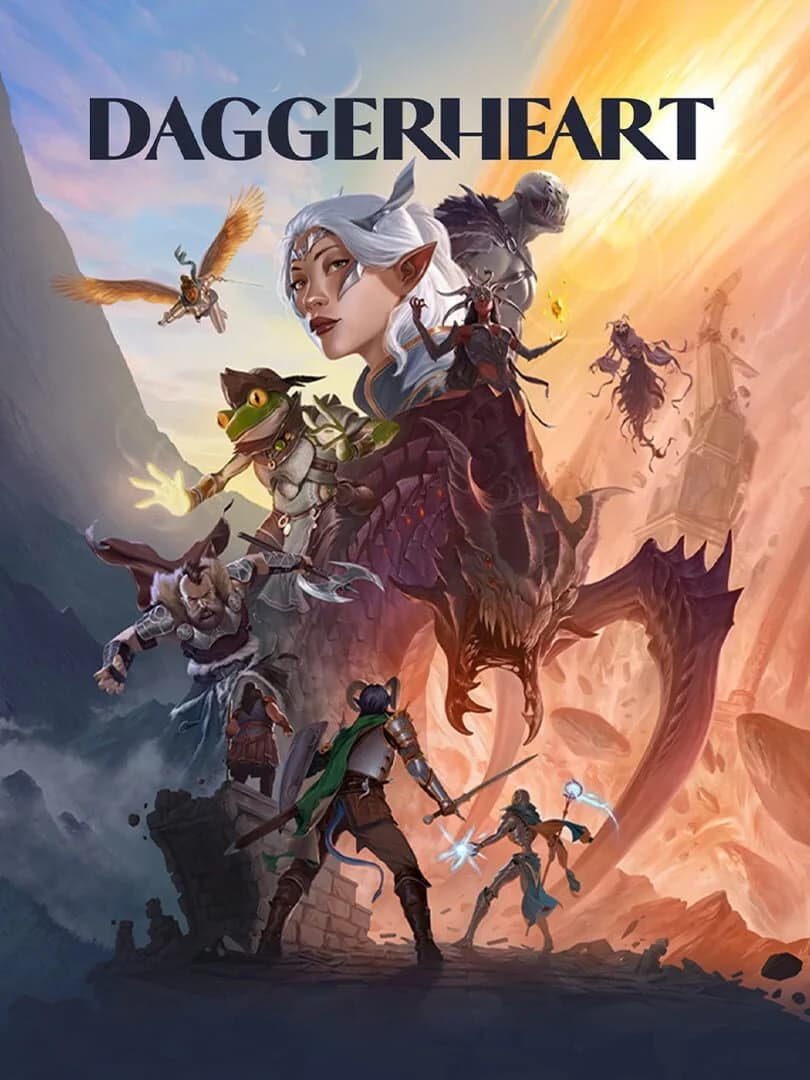
But beyond the core box lies the question of expansions. Daggerheart: Hope & Fear debuted internationally to expand classes, adversaries, and tools. Brazilian fans will crave that content — but only if it arrives on a reasonable schedule. If expansions lag, communities may split: import in English or stick to the base game. That fragmentation can kill momentum faster than any translation glitch.
Critical Role branding vs. local RPG identity
Brazil has a thriving RPG culture of its own: Tormenta’s novels and comics, indie designers on Itch, homegrown hits like Ordem Paranormal. Yet the moment a Critical Role-branded box drops, discourse shifts to “this will finally make RPGs big in Brazil.” As if they weren’t already vibrant—just not in U.S.-style packaging.
Daggerheart explicitly bottles the Critical Role vibe: narrative beats, Hope/Fear duality, spotlight rules that echo the show. Brilliant design-wise, but if it dominates Brazilian tables, it imports a play culture that wasn’t born here.
And since Critical Role’s flagship show still runs on D&D, we’re essentially buying a tie-in game for a system the show itself isn’t using. That feels awkward when I decide where to invest time, money, and group energy.
Conclusion
Jambô’s Brazilian Daggerheart edition is a triumph in production and localization, and its mechanics genuinely push sessions toward richer story moments. Yet its premium price, physical footprint, dependency on a complex supply chain, and tie-in branding raise valid concerns about accessibility and cultural fit. Will it sit proudly beside Tormenta and D&D on our tables? Or fade into the backlog of ambitious rulebooks we adore but rarely revisit? In that duality of hope and fear, maybe Daggerheart’s greatest trick is teaching us to expect both outcomes at once.
FinalBoss // Gear
Level up your setup
01Top-rated gaming headsetson Amazon→02High-refresh gaming monitorson Amazon→03Gaming chairson Amazon→04Discounted game keyson Kinguin→Affiliate links · As an Amazon Associate, FinalBoss earns from qualifying purchases.
Want to Level Up Your Gaming?
Get access to exclusive strategies, hidden tips, and pro-level insights that we don't share publicly.
Ultimate Gaming Strategy Guide + Weekly Pro Tips