

Map size is the coward’s shortcut to selling an open world. Put a giant landmass on a feature list, scatter icons across it, promise hundreds of activities, and hope players confuse geographical bulk with a place worth remembering. Bully remains a sharp rebuke to that entire mindset. Bullworth Academy works because every hallway, classroom, faction, and petty rule feels like part of the same hostile little ecosystem.
Dan Houser’s reflections on Bully get to the heart of why the game still has a grip on people. He highlighted its art direction, music, memorable characters, unique setting, and the way all those pieces came together. That sounds obvious until you look at how many open worlds still treat those ingredients as separate departments. One team builds the map, another fills it with errands, another writes some jokes, and the whole thing arrives feeling like a shopping mall with quests attached.
Bully has a stronger idea. Its world has social texture. Every part of Bullworth tells the player who has power, who wants power, who is afraid of power, and who will happily make a miserable day even worse. The map has a purpose beyond providing square footage. It creates pressure.
Table of Contents (6)
Bullworth Feels Like a Place Because It Has Rules
The magic of Bully lives in the fact that Bullworth Academy never feels like a neutral playground. It feels like an institution. It has routines, punishments, cliques, reputations, and adults who are often as ridiculous as the students they are supposed to control. The player enters a social hierarchy already in motion and has to learn how to survive inside it.
That is a far more compelling fantasy than being handed limitless power in an empty sandbox. Jimmy Hopkins has room to cause trouble, but the world pushes back. A prank against a teacher has consequences. Picking a fight can trigger a larger conflict. Crossing into a different group’s territory changes the temperature of the space. Bullworth gives every act a context, and context is what turns a game world into a world with a pulse.
Houser’s point about the game’s tone matters here. Bully was built around school politics and the outsider experience, with Jimmy positioned as tough, flawed, and constantly navigating a culture built to humiliate people. That framing kept the game from becoming a hollow cruelty simulator. The player’s behavior has bite because the setting has rules, and the jokes land because Bullworth is already absurd before Jimmy starts stirring the pot.
That balance is harder to pull off than it looks. A school setting can slide into bleakness fast. It can become a parade of miserable authority figures and one-dimensional tormentors. Bully avoids that trap through comedy, exaggeration, and a willingness to make the entire institution look faintly ridiculous. The cruelty is present, but satire keeps it from swallowing the game whole.
Art Direction Does More Work Than a Bigger Map Ever Could
Houser specifically praised the art direction associated with Stephen Olds, and he was right to do so. Bullworth is readable almost immediately. The academy looks rigid, old-fashioned, imposing, and faintly rotten around the edges. It communicates its values before anyone gives the player a lecture about them.
That is what good art direction does in an open world. It saves the player from having to decode a setting through menus and lore dumps. The environment carries the message. Bullworth’s spaces tell you that status matters. Its architecture tells you the school values discipline over care. Its visual identity makes the setting feel like a pressure cooker built for adolescent drama.
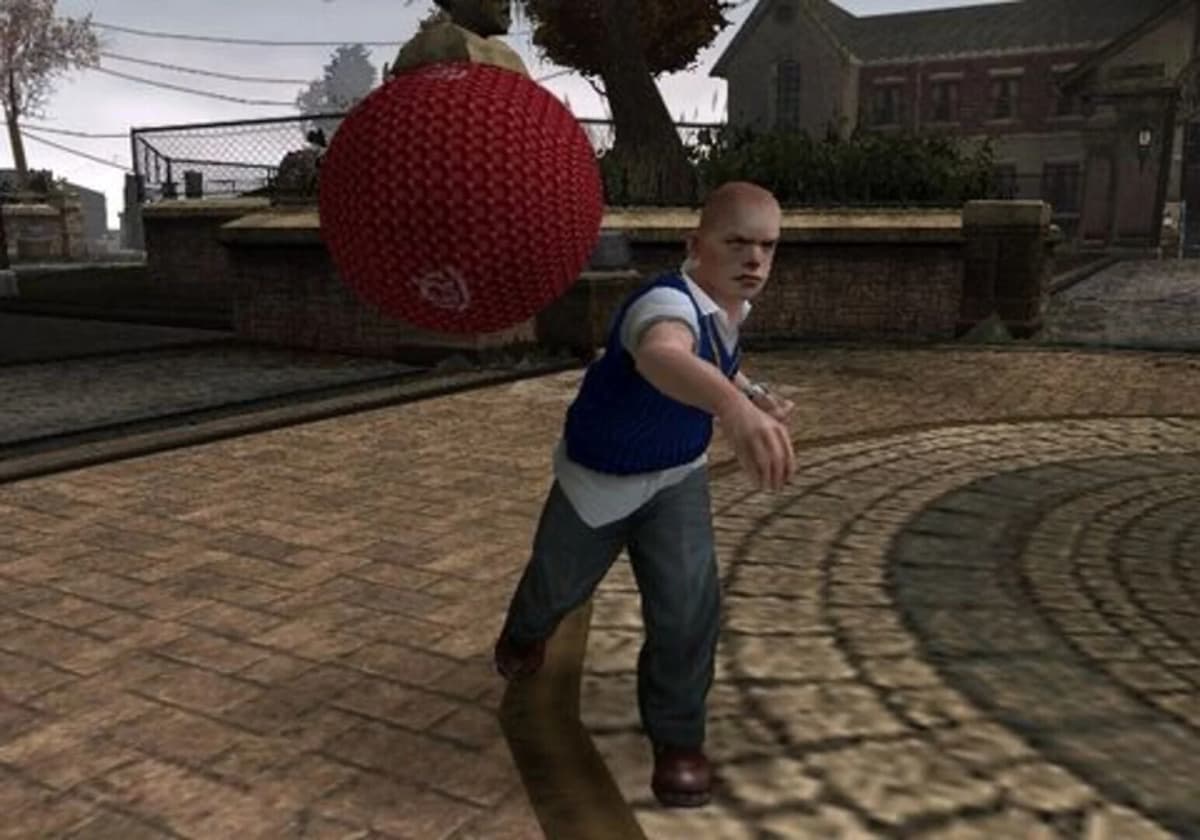
Too many open worlds chase realism so aggressively that they sand away their own personality. Every street, building, and shop becomes technically impressive while leaving no emotional fingerprint. I can admire that kind of production work, but I rarely remember it. Bullworth is memorable because it has a point of view. It wants to feel like a warped version of school memories, where every humiliating rule, stupid rivalry, and social disaster has been pushed one step past reality.
That choice gives the player something more valuable than visual scale: instant orientation. You understand the vibe of Bullworth before you understand every system. You know the kind of trouble that belongs there. You know how the game wants you to interpret a teacher, a classroom, a dormitory, or a confrontation in the street. The setting is doing narrative work every second the player is moving through it.
Memorable Characters Need a Social Role
Bully also understands a basic truth that plenty of expensive games still miss: memorable characters require more than loud dialogue and a strange haircut. They need a role in the world’s social machinery.
Bullworth’s characters are exaggerated, but they never feel randomly dropped into the game to deliver a gag. They belong to its pecking order. Their behavior makes sense within the school’s warped culture of status, discipline, insecurity, and rebellion. The exaggeration gives them comedy. Their social position gives them weight.
That is the crucial difference. A weird character can be entertaining for five minutes. A weird character who embodies a specific pressure inside the setting becomes part of the game’s identity. Bully uses people to explain Bullworth. The player learns the school through its personalities, grudges, posturing, and shifting alliances.
Houser called out the game’s memorable cast because the cast is one of the reasons Bullworth feels populated rather than merely filled. There is a massive gap between an NPC existing near the player and an NPC making the player understand a place. Bully consistently aims for the second one.
The Schoolyard Mechanics Carry the Entire Theme
The mechanics deserve more credit than they usually get. Bully builds its identity around schoolyard tools, pranks, faction trouble, and the constant risk of getting caught. Its conflict has a different flavor because it comes from the setting. The player is dealing with social punishment as much as physical danger.
That is why Houser’s example of pranking a teacher while avoiding consequences says so much. It is a tiny fantasy, yet it contains the game’s whole design philosophy. The action is mischievous. The authority figure matters. Getting away with it matters. The comedy matters. Every layer supports the same tone.

Strip away that thematic connection and the mechanics become generic tasks. Keep it intact and even a small act of rebellion feels specific to Bullworth. The player is not simply completing an objective. The player is participating in a ridiculous social war inside a school that has made everyone a little bit feral.
- The art direction makes Bullworth readable at a glance.
- The characters make the social hierarchy feel populated and personal.
- The music reinforces the setting’s mischievous, unstable mood.
- The mechanics turn school politics into player behavior.
- The comedy keeps the critique sharp without making the whole experience exhausting.
That is the complete package Houser was pointing toward. No single element carries Bully. The setting, sound, writing, mechanics, and tone all pull in the same direction. The game feels authored because it is relentlessly specific.
Rockstar’s Best Priority Is Readability, Not Acreage
The bigger lesson from Houser’s comments is that Rockstar’s strongest design instinct is world readability. A player should be able to enter an area and quickly feel its character. The best spaces have their own behavior, their own social rules, and their own emotional temperature. They give the player a reason to remember a corner of the map after the mission marker disappears.
That is the standard I want applied to every future Rockstar world. I do not care how enormous the map is if its regions blur together into a long commute between errands. I care whether a location has an identity. I care whether the people inside it behave as though they belong there. I care whether the game’s systems reinforce the story the environment is already telling.
Bullworth proves that density beats bloat. A smaller world with clear social boundaries can feel richer than a massive one built around distance, filler, and forgettable activity loops. A hallway can hold more dramatic energy than an entire district when the player understands who controls it, what behavior it rewards, and what trouble waits for anyone who steps out of line.
That is player texture. It is the sense that every space carries history, friction, and consequence. It is what makes a player linger after the objective ends. It is what fuels the stories people tell years later: the strange encounter, the humiliating punishment, the perfect prank, the sudden escalation, the little corner of the world that felt alive for reasons the map never needed to explain.
Bully Is the Rockstar Blueprint Worth Protecting
Bully endures because it understands that an open world needs an attitude. Bullworth has one in every brick, every joke, every musical cue, every faction conflict, and every stupid rule waiting to punish the player. Houser’s praise for the game’s art direction, characters, music, setting, and tone lands because those elements never operate in isolation.
The verdict is simple: Rockstar should protect the design instinct that made Bully work. Build worlds with social pressure. Give every region a personality. Make mechanics express character. Let comedy sharpen the setting instead of sitting on top of it. A giant map can impress for an afternoon. A place with texture can live in a player’s head for years.
FinalBoss // Gear
Level up your setup
01Top-rated gaming headsetson Amazon→02High-refresh gaming monitorson Amazon→03Gaming chairson Amazon→04Discounted game keyson Kinguin→Affiliate links · As an Amazon Associate, FinalBoss earns from qualifying purchases.
Want to Level Up Your Gaming?
Get access to exclusive strategies, hidden tips, and pro-level insights that we don't share publicly.
Ultimate Gaming Strategy Guide + Weekly Pro Tips