
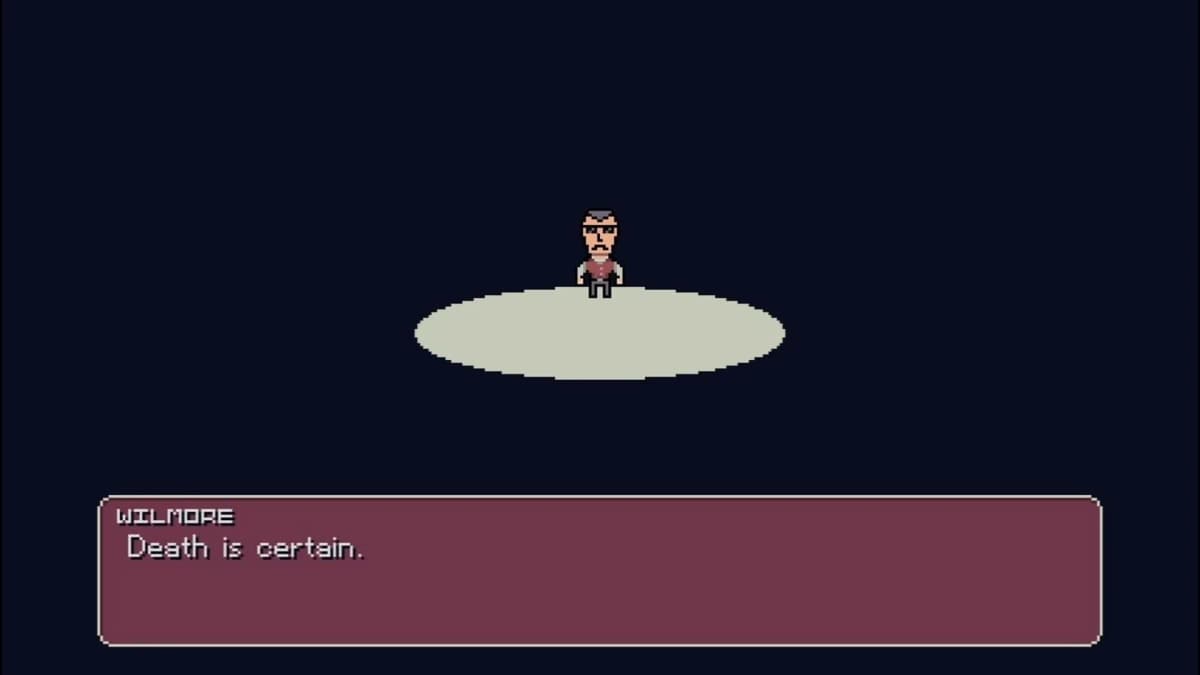
Dance of Cards makes poker frightening. I sat at the table as Martin, watched the shared cards land, counted the ways a single hand could collapse, and felt the game turn a familiar Texas Hold’em decision into a survival problem with bodies attached to it. Chips are never merely chips aboard the Magnific. A bad night can strip away lives, allies, leverage, and the fragile sense that I had any control over this lethal cruise.
That pressure is Dance of Cards’ best trick. I expected a poker game draped in a mystery story; I got a tightly structured seven-day death game where poker drives the plot, the social tension, and the moment-to-moment panic. The blend holds together because GoodMorningMrFrog treats the card table as the center of the ship’s cruelty rather than a diversion between dialogue scenes.
Table of Contents (8)
Key Takeaways
- I found the poker rules clear and strategically satisfying, with Texas Hold’em-style hands built from personal and community cards.
- I relied on character Talents, card-swapping moves, disruption tactics, and alliances to change the rhythm of rounds that standard poker alone could not solve.
- I stayed invested in the shipboard mystery because each day uncovered more about the Magnific, its automaton crew, and the passengers trapped in the game.
- I loved the post-loss “save lives” challenge for making defeat dangerous without making it instantly final.
- I found the game demanding and luck-heavy enough that anyone who fundamentally dislikes poker will feel the full weight of every drawn card.
Poker Carries the Entire Game, and It Holds
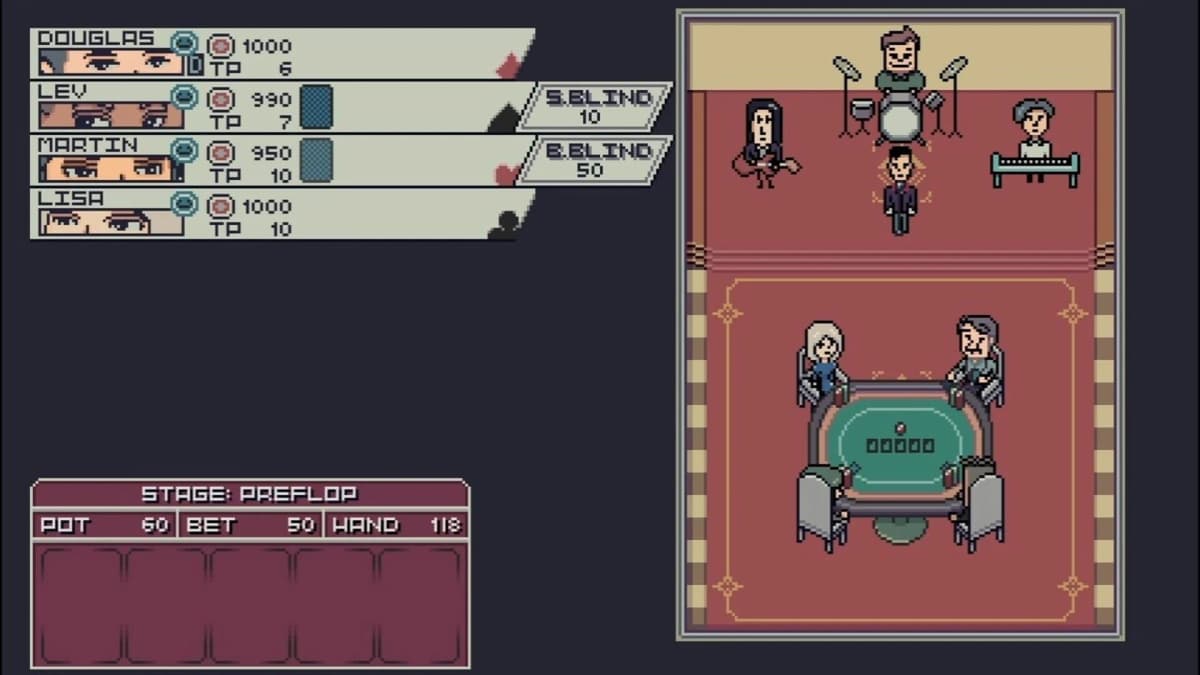
I spent most of Dance of Cards at a poker table, and that fact defines the recommendation. The game uses a recognizable Texas Hold’em framework: I received my private cards, watched the community cards arrive, judged my hand against the table, and decided how much risk I could stomach. The rules never became muddy for the sake of role-playing flavor. I could read the hand, understand the odds in front of me, and feel exactly why a fold, call, or aggressive push mattered.
Then Dance of Cards turns that clean rule set cruel. A weak pair is no longer an annoying result that costs me a few imaginary chips. A weak pair can shove Martin and his fellow passengers closer to death. That shift changes my relationship with every conservative decision. Folding can be sensible poker, but aboard the Magnific it can also feel like surrendering ground to people whose survival depends on mine failing.
The game’s seven-day structure keeps the stakes from diffusing. I had limited time to understand the ship, identify the people around me, and survive the nightly games enforced by the automaton crew. Each day fed into each evening. Information gathered away from the table gave the card games narrative bite, while the nightly stakes made every daytime conversation feel urgent instead of decorative.
That rhythm gives Dance of Cards a sharp identity. I never treated the story as a reward for clearing a card-game obstacle, because the poker itself was where the story exerted force. The Magnific demanded results. The cards decided who retained a future long enough to learn why this voyage had become a slaughterhouse.
Talents Keep the Table From Becoming Pure Mathematics
Dance of Cards earns its tactical label through Talents. Martin and the other characters can bring special actions to the table, and those abilities matter because they interrupt poker’s usual rhythm. Swapping cards, disrupting opponents, creating an opening at the right moment, or protecting a plan from collapsing gave me options beyond praying that the next community card would save me.
I liked that these moves did not erase the tension of poker. I still had to know whether my hand was viable. I still had to read the danger of committing too much when the table could punish me. Talents altered tempo; they did not hand me a clean escape from the game’s core uncertainty. That distinction matters. Dance of Cards would have lost its nerve if special actions simply overruled a bad hand whenever the story needed me to win.
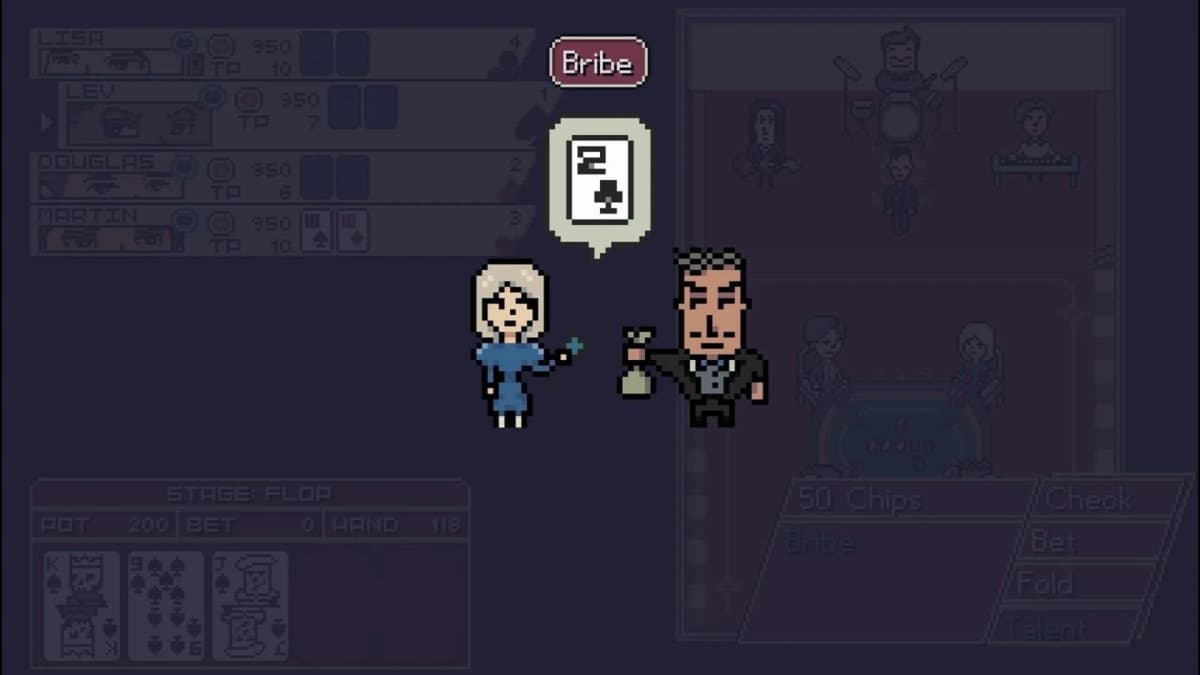
The social layer also lands because alliances have a practical edge. I constantly weighed who could help me through a round, who might be manipulating the table, and whose survival served my own immediate interests. Those calculations fit the setting perfectly. A group of passengers trapped in a deadly cruise cannot afford simple friendships, and Dance of Cards understands that trust becomes another resource once every night ends in somebody paying the price.
The result feels less like a simulation of a quiet poker night and more like a pressure cooker where every participant has brought a hidden blade. I found the ordinary card-game logic easy to grasp, yet I never found the confrontations routine. A Talent used at the right moment could twist my plan. An opponent’s disruption could make a strong hand feel suddenly exposed. That instability gave the game its pulse.
The Magnific Is More Than a Stage
I would not have stayed so locked into Dance of Cards if the ship existed only to provide a spooky backdrop. The Magnific works because its mystery keeps tightening around the poker. Martin is a magician traveling toward the New World, only to find himself caught in a lethal contest alongside passengers who were selected for reasons the game deliberately withholds at first.
The revelation that the ship’s crew consists of automatons gives the voyage an unsettling, artificial chill. I walked through the days trying to understand why these mechanical hosts had trapped everyone in this ritual of cards and death, then returned to the table at night with the same questions hanging over every bet. The ship’s secrets gave me a reason to care about more than survival. I wanted to know what kind of machine could turn a voyage into a judgment.
The mystery also gives the game a welcome sense of forward motion. Every answer pushed me toward another ugly implication. I kept moving because Dance of Cards knows how to make information feel dangerous: learning more about the Magnific never made me comfortable. It made the situation stranger, more personal, and harder to escape.
“Save Lives” Makes Losing More Interesting
The smartest design choice arrives after things go wrong. When I lost, Dance of Cards did not always slam the door and send me back to a clean reset. It offered an additional “save lives” card challenge, a desperate chance to claw something back from the consequences of defeat.
I valued that second layer because it changed the emotional shape of failure. A lost poker game hurt, but it also created a new decision under different pressure. The rescue sequence carries more chaos and less certainty than the main table, which made it feel like exactly what it should be: a scramble to salvage lives after the careful plan had already broken apart.
That system gives Dance of Cards real resilience. I never wanted to lose, obviously, but I also never felt that one ugly outcome drained all drama from the night. The game wrings suspense out of the aftermath. I had to keep making choices when I was already rattled, and that is where the survival framing proves it has more ambition than a simple win-or-lose poker tournament.
Luck Still Has Teeth, and the Pace Can Drag
I cannot recommend Dance of Cards to anyone hoping Talents will transform poker into a fully controllable tactics game. They will not. The deck can still betray me. A carefully measured plan can meet a bad draw, an opponent’s interference, or a hand that refuses to become what I need. I accepted that volatility because the game builds its entire identity around gambling with a life-or-death price tag, but the frustration is real.
The seven-day setup also has a slow-burn quality that occasionally eases off the accelerator too much. I enjoyed the ship’s conversations and clues, yet I felt the pacing sag whenever the mystery held information too close for too long. The final stretch carries the weight of so much buildup that its payoff needed a cleaner, harder landing than I got.
Those flaws never broke the game for me, but they clarify who should board the Magnific. I recommend Dance of Cards to players who enjoy studying hands, living with uncertainty, and treating failure as part of the story’s tension. I would steer away anyone who finds poker’s basic probabilities exhausting or resents a game that lets luck remain powerful even after it gives them clever tools.
Bottom Line: A Rare Card Game With Actual Nerve
Dance of Cards is a real contender because it refuses to use poker as a costume. I lived inside its rules, manipulated its tempo with Talents, protected alliances when they served me, and felt every loss reverberate through the ship’s shrinking circle of survivors. The Magnific’s mystery gives the card play purpose, while the “save lives” challenge makes defeat part of the drama instead of dead air between attempts.
I wanted a sharper payoff from the story and more protection from the occasional brutality of the draw, yet those complaints sit beside a game with a strong, distinctive center. Dance of Cards understands that poker becomes thrilling when a bluff costs more than chips. It made me feel that cost every night.
TL;DR
I recommend Dance of Cards for players who want poker with genuine narrative stakes. Its Texas Hold’em foundation stays readable, its Talents and disruption tactics keep rounds volatile, and its seven-day mystery aboard the Magnific gives every night a grim purpose. Luck can sting and the story’s final payoff does not fully match its buildup, leaving one lingering tension at the heart of the game: how much uncertainty can a survival strategy game embrace before its cruelty becomes the point?
FinalBoss // Gear
Level up your setup
01Top-rated gaming headsetson Amazon→02High-refresh gaming monitorson Amazon→03Gaming chairson Amazon→04Discounted game keyson Kinguin→Affiliate links · As an Amazon Associate, FinalBoss earns from qualifying purchases.
Want to Level Up Your Gaming?
Get access to exclusive strategies, hidden tips, and pro-level insights that we don't share publicly.
Ultimate Reviews Strategy Guide + Weekly Pro Tips