
This caught my attention because a team built by original Diablo creators is promising not just tighter combat and loot loops, but a living ARPG world you can literally reshape – and they already put a playable pre‑alpha in players’ hands. That’s the kind of ambition that can either produce something fresh or run headlong into technical and design complexity.
Table of Contents (5)
Darkhaven – Ex‑Diablo devs push for a persistent, destructible ARPG
- Pre‑alpha demo now available on Steam: free, lets you level a Witch to 8 across three distinct skill trees.
- Moon Beast Productions (led by Diablo veterans) launched a Kickstarter aiming for $500,000 to accelerate development toward early access in Q4 2026.
- Core selling point: a persistent, procedurally generated world where environmental destruction and player actions leave permanent scars and alter replayability.
- Big questions remain around technical scope, multiplayer persistence, and how “permanent” world changes will be balanced against long‑term gameplay.
{{INFO_TABLE_START}}
Publisher|Moon Beast Productions
Release Date|Feb 2026 (pre‑alpha demo)
Category|ARPG
Platform|PC (Steam)
{{INFO_TABLE_END}}
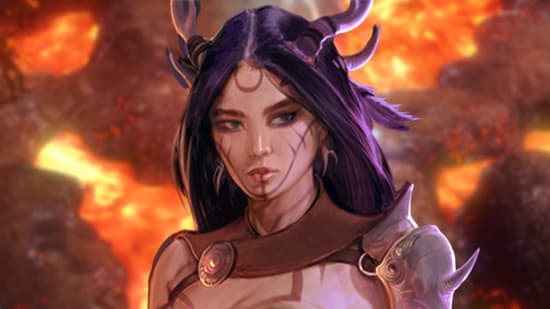
Moon Beast’s pitch is straightforward and bold: take the addictive progression and itemization that made Diablo an ARPG template, then fold in a sandbox‑style world that evolves – and erodes — in response to players. The studio published a “pre‑alpha” demo on Steam that’s explicitly raw rather than a polished vertical slice. Players can test the Witch class up to level 8, experiment across mobility, positioning, and resource‑management skill trees, and poke at the team’s early world systems.
Erich Schaefer, one of the studio co‑founders and a key creative force behind the original Diablo, frames the demo as a double test: prove they can retain classic ARPG satisfaction while showing how a world that isn’t reset every patch could unlock new types of replayability. The headline mechanic is world manipulation — breaking terrain, draining lakes, redirecting rivers — and Moon Beast says major events will “leave permanent scars.”
Why this matters — and where caution is warranted
The promise of destructive, persistent maps is rare in ARPGs because it multiplies technical and design problems. Procedural content generation already struggles with meaningful variety; adding durable player changes introduces state‑synchronization challenges for servers, saves, and matchmaking. There are concrete risks: performance hit on older PCs, griefing (players intentionally wrecking content for others), and a long tail of balancing headaches as the meta adapts to players reshaping the world.
On the flip side, if Moon Beast nails the engineering, this could change what “replayability” means for loot games. Permanent environmental change creates a living narrative: a flooded valley, a carved canyon, or a redirected river could become landmarks that inform player stories and emergent encounters in ways repeatable, static maps can’t.
Comparisons to Diablo are inevitable and partly intentional — the team wants that lineage — but the road from a tight, instanced ARPG to a persistent, mutable open world is long. Other studios have tried persistent worlds with mixed results; Darkhaven’s success will depend on network architecture, rollback/snapshot systems for world state, and smart design constraints that make permanence fun rather than punitive.
Kickstarter and timeline — realistic or optimistic?
The Kickstarter targets $500,000 with a stretch to an early access launch in Q4 2026. For an indie team, half a million dollars can materially accelerate development, but it’s modest for the scope Moon Beast is promising if they intend to ship a large‑scale persistent experience with multiplayer infrastructure. That suggests Kickstarter is meant as lift and community confidence rather than the sole funding source. Backers should watch the roadmap, milestones, and how the studio plans to use funds (servers, netcode, QA, content).
What this means for players
Try the pre‑alpha if you want to see the foundations: the demo is free on Steam and is explicitly early. If you care about world‑shaping mechanics, evaluate whether the demo’s systems feel meaningful or gimmicky. If you’re interested in supporting development, the Kickstarter is a way to get in early — but approach it like funding a bet on vision, not buying a finished product.
For ARPG fans who want something beyond loot treadmill iterations, Darkhaven is one of the more interesting experiments right now. Its pedigree lends credibility, and the demo is a promising signal that Moon Beast prefers showing work over selling promises. That said, pulling off persistent, destructible worlds at scale is a tough technical hill to climb — expectations should be tempered with healthy skepticism.
TL;DR
- Darkhaven’s free pre‑alpha demo on Steam is worth a short play if you follow ARPGs — it shows combat fundamentals and early world tools.
- Moon Beast’s vision of permanent, player‑driven world change is exciting but technically ambitious and raises valid questions about balance, griefing, and infrastructure.
- The $500k Kickstarter can accelerate progress, but backers should treat it as supporting scope rather than guaranteeing a finished product by Q4 2026.
FinalBoss // Gear
Level up your setup
01Top-rated gaming headsetson Amazon→02High-refresh gaming monitorson Amazon→03Gaming chairson Amazon→04Discounted game keyson Kinguin→Affiliate links · As an Amazon Associate, FinalBoss earns from qualifying purchases.