
Table of Contents (9)
2v8 Is Back-and Behaviour Finally Tackled the Boredom Problem
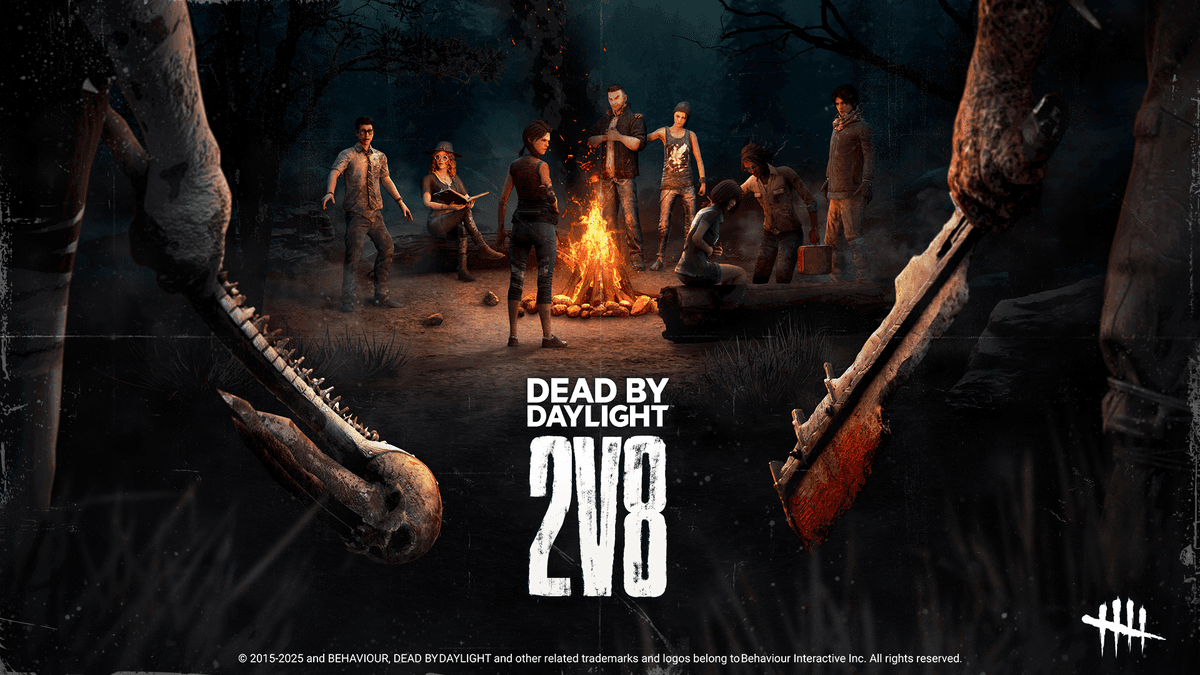
Dead by Daylight’s most chaotic experiment is back on August 19: 2v8, the limited-time mode that doubles the cast and the carnage. What actually caught my attention isn’t just the return-it’s the fix to one of the mode’s biggest headaches. Behaviour is adding the ability to queue as a Survivor while you wait for your Killer match to pop, and if you’re duo-queuing as a Killer pair, you can hop into the same Survivor game together in the meantime. Less lobby limbo, more trials. It’s a rare quality-of-life change that feels designed around how people actually play DBD.
Key Takeaways
- 2v8 returns August 19 with new matchmaking flexibility: play as Survivor while waiting for Killer queues.
- Update 9.1.2 is live now, re-enabling Blood Rush, rebalancing Fog Vial (max 2 charges), and fixing a slew of bugs.
- Mode-specific tweaks: buffs to Shadow and Escapist classes, a Legion rework, and a new Guide skill that sets generator traps.
- Three maps join the 2v8 pool: Treatment Theatre, The Shattered Square, and Greenville Square.
Why This Matters Now
2v8 is crowd-pleasing chaos, but the last two runs had a practical problem: downtime kills momentum. Killer queues in 2v8 can skew long and inconsistent, especially if you’re trying to tag-team with a friend. Letting would-be Killers jump into a Survivor match while they wait is the right kind of compromise-no separate mini-mode, no idle time, and importantly, a way to keep players engaged without fracturing the player base across a dozen playlists. The big question is implementation: will the game pull you out mid-trial the moment your Killer match is ready, or only after your Survivor round ends? Behaviour hasn’t spelled out the exact handoff flow, so we’ll be watching how respectful it feels to the match you’re in.
Breaking Down Update 9.1.2
The patch is live now and does some housekeeping that needed doing. Blood Rush is back after a brief Kill Switch—good news for players who rely on its perk utility and bad news for tunnel vision—while Fog Vial gets capped at two charges to rein in edge-case nonsense. Beyond that, there’s a chunky slate of bug fixes, including a small but welcome audio tweak that turns down Michonne Grimes’ running grunts. In a game where audio is intel, volume balance matters more than it sounds; this kind of polish helps both immersion and fairness.
2v8 Balance: Less Spam, More Mind Games
Mode-specific changes aim to make the spectacle feel less like a mosh pit and more like DBD with a twist. The bespoke Shadow and Escapist Survivor classes get positives nudges, which should help eight-player Survivor squads avoid devolving into either instant steamrolls or farm fests. The Legion rework is the standout on the Killer side. In standard DBD, Legion’s Feral Frenzy is all about chain pressure; in 2v8, that can explode into total map collapse without careful tuning. A rework here suggests Behaviour is serious about keeping the mode’s pace threatening but not oppressive.
Then there’s the Guide skill overhaul for all Survivors: being able to set temporary traps on generators that trigger when a Killer tries to damage one is a genuinely interesting wrinkle. It adds an information trap to the usual gen kick mind game—think “you kick, we get a momentary advantage.” If it’s tuned right, it means Killers must think twice about casual regression and consider committing to chases or pathing differently. If it’s overtuned, expect Killers to ignore kicks entirely and double down on slug pressure. The balance here will define whether 2v8 becomes more strategic or just more stun-locky.
Three Maps, Three Different Flavors of Chaos
Bringing Treatment Theatre, The Shattered Square, and Greenville Square into the pool is a smart way to reshape match tempo. Treatment Theatre’s tighter indoor lanes favor coordinated body blocks and sneaky rotations—expect Survivors to swarm hooks and Killers to punish clumps. Shattered Square is more open with readable sightlines, which should help Killers herd the pack and make information perks matter. Greenville Square adds fresh routing that could either spread the herd or funnel them into predictable loops. The variety should stop 2v8 from feeling solved in a weekend.
The Gamer’s Perspective
This caught my attention because 2v8, when it works, nails that horror-movie set piece DBD usually only hints at: multiple chases colliding, rescues happening under pressure, and two Killers trading tempo across the map. But it needed friction removed, and queue-as-Survivor while you wait is exactly the kind of friction. I’m also cautiously optimistic about the Legion rework; if any Killer could turn 2v8 into a clown car of chain hits, it’s Legion. The generator trap mechanic might be the sleeper hit here—DBD’s best moments come from mind games, and this adds a new one without rewriting fundamentals.

My concerns? Performance and clarity. Ten-player trials test visibility, comms, and pathing in ways the base game wasn’t built for. If audio priorities or VFX still get muddy at scale, the mode risks feeling like a highlight reel you’re not fully in control of. And the queue handoff needs to respect the match you’re currently in—nobody wants to be yoinked mid-escape because the Killer lobby popped.
Looking Ahead
This is the third run for 2v8, and it feels like Behaviour is listening. Less waiting, smarter balance targets, and more map variety give the mode a real shot at sticking the landing. If the queue-while-you-wait system plays nice and Legion doesn’t dominate, this could be the version that keeps people queuing after the novelty wears off.
TL;DR
DBD’s 2v8 returns August 19 with a smart queue fix letting Killers play Survivor while they wait, plus balance tweaks and three maps. It’s the right mix of QOL and tuning—now it just needs clean implementation and stable performance to shine.
FinalBoss // Gear
Level up your setup
01Top-rated gaming headsetson Amazon→02High-refresh gaming monitorson Amazon→03Gaming chairson Amazon→04Discounted game keyson Kinguin→Affiliate links · As an Amazon Associate, FinalBoss earns from qualifying purchases.
Want to Level Up Your Gaming?
Get access to exclusive strategies, hidden tips, and pro-level insights that we don't share publicly.
Ultimate Gaming Strategy Guide + Weekly Pro Tips