
Table of Contents (8)
Getting Lost in Grief on a Six-Inch Screen
The first time I booted up Death Howl on Switch, I told myself I’d just test a run on the couch before bed. Half an hour, tops. Two and a half hours later, my hands were cramping, the room was pitch black except for the Switch screen, and I was still chasing my own corpse through a spirit swamp, trying to recover the “Death Howls” I’d dropped in a stupidly greedy fight.
I’d already played Death Howl on PC earlier this year, so I knew what I was getting into: a strategic roguelike deckbuilder rooted in Scandinavian folklore, where you guide Ro, a grieving mother, through a haunted spirit world in search of her dead, stolen son. But something about having it in my hands, in that near-monochrome palette, with the sound barely whispering through headphones while the rest of the house slept… it hit very differently.
This Switch port doesn’t just run well; it quietly makes the case that Death Howl was always meant to be played this way-curled up, screen inches from your face, dipping in and out of grief-soaked runs whenever you can steal a few minutes.
So What Actually Is Death Howl?
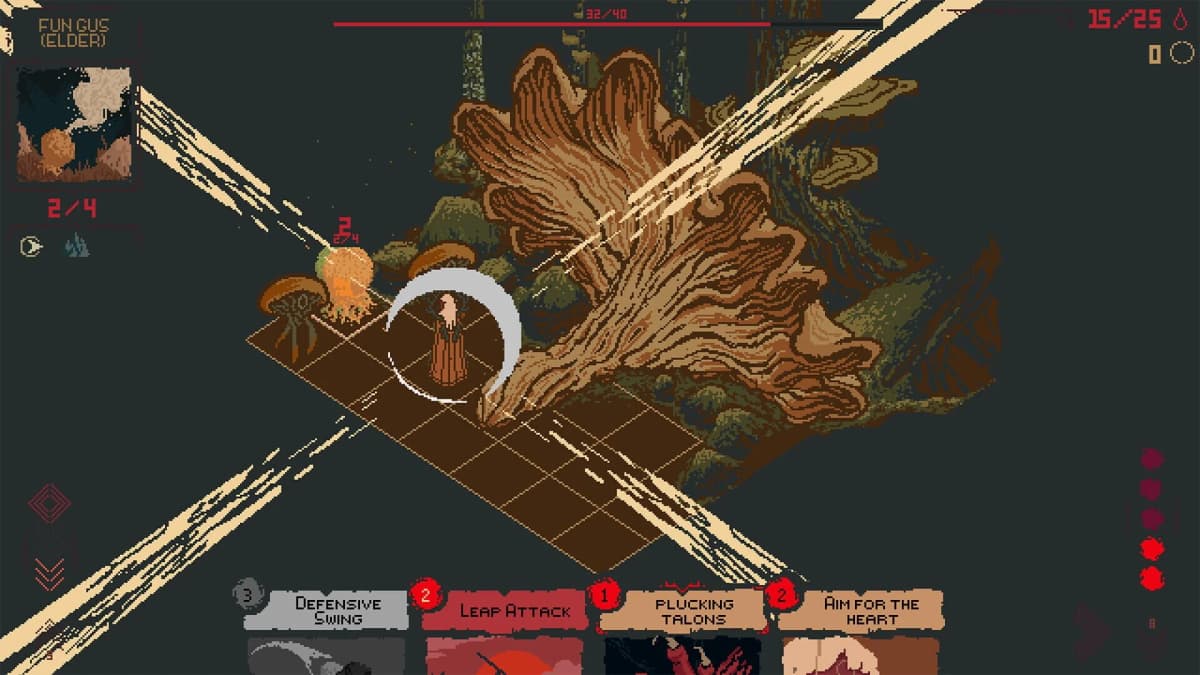
On paper, Death Howl sounds like someone smashed together Slay the Spire, a grid-based tactics game, and a moody indie about grief. You control Ro across four distinct spirit realms, each with its own limited color palette and especially nasty enemies. Fights take place on an isometric grid where every action is a card drawn from your deck: movement, attacks, debuffs, totem summons, defensive stances-everything is a card with a cost and a consequence.
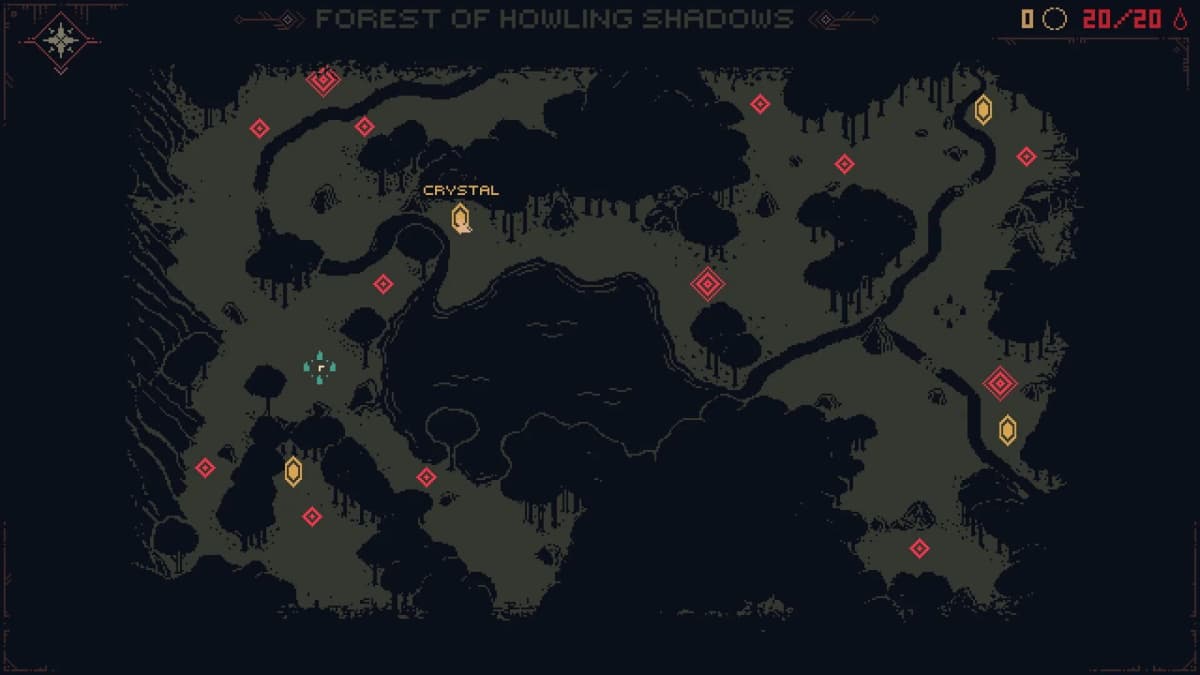
The “roguelike” part comes from how runs are structured and how death works. Each region has branching paths of encounters, shrines, NPCs, and bosses. When you die-and you absolutely will—you drop a resource called Death Howls on the spot. Those are the currency you use back at camp to unlock new cards, upgrade existing ones, and bind new totems. You can earn them again by making the risky trek back to where you fell and surviving long enough to reclaim them.
It’s very soulslike in that specific way: every death stings, but you always know why it happened. I never felt the game was cheating me, even when a mispositioned step let a stag-knight charge me across half the grid and one-shot Ro. That felt like my hubris talking, not an unfair encounter.
Outside combat, you’re wandering sparse overworld routes, having short, sharp conversations with spirits and shamans, and piecing together Ro’s fragmented understanding of what actually happened to her son, Olvi. Choices occasionally matter, but not in a big “branching paths” way—it’s more about shading Ro’s emotional state and nudging how she interprets what she’s seeing.
Why Death Howl Feels Tailor-Made for Switch Handheld Play
The PC version convinced me Death Howl was good. The Switch version convinced me it’s special.
Roguelikes naturally fit handhelds—one more run on the train, in bed, waiting for food, whatever. But this one benefits from more than just short-session structure. First, the UI. This game is text-heavy: card descriptions, passive effects, status debuffs, lore snippets. On a small screen, that could’ve been a disaster. Instead, the Switch port leans hard on high-contrast fonts and smart color blocking. Even in handheld mode, I could read every card clearly without leaning in and squinting, which I can’t say for every deckbuilder on the system.
I played predominantly in handheld on a standard Switch (not OLED), and the nearly monochrome art actually makes legibility better. Cards don’t drown in noisy backgrounds. The grayscale palettes give the UI designer a lot of room to use a couple of accent colors for things like enemy attacks or status effects, and your eye just naturally goes where it needs to. The only times I had trouble were rare moments where two similar buffs shared close icon silhouettes, but hovering over them gives a clear text breakdown anyway.
Controls also translate extremely well. The PC version already supported controllers, and that work carries over cleanly here. Using the left stick to move the cursor across the grid, shoulder buttons to flick between targets or cards, face buttons to confirm and cancel—after twenty minutes, it was pure muscle memory. I never felt like I was fighting the interface just to do something precise, which matters when one misplaced tile step can literally lose you an entire run.
The thing that surprised me most, though, was how much the Switch’s sleep mode transformed my relationship with the game. On PC, sitting down for Death Howl felt like committing to an hour or more. On Switch, I’d chip away at a run in five or ten minute bites, pausing mid-dungeon to go do something else and snapping right back into it later. The story’s slow drip-feed of revelations really benefits from that—Ro’s grief and anger start to feel like this background radiation that just lives with you throughout the day.
A Grief Story That Clings to You
Death Howl is not subtle about its themes. Ro is a mother whose son is dead and possibly stolen, and she is furious—at the stag figure tied to his disappearance, at the spirits who failed to help, and especially at Death itself. Every conversation, every monster design, every tiny shrine seems to orbit that core.
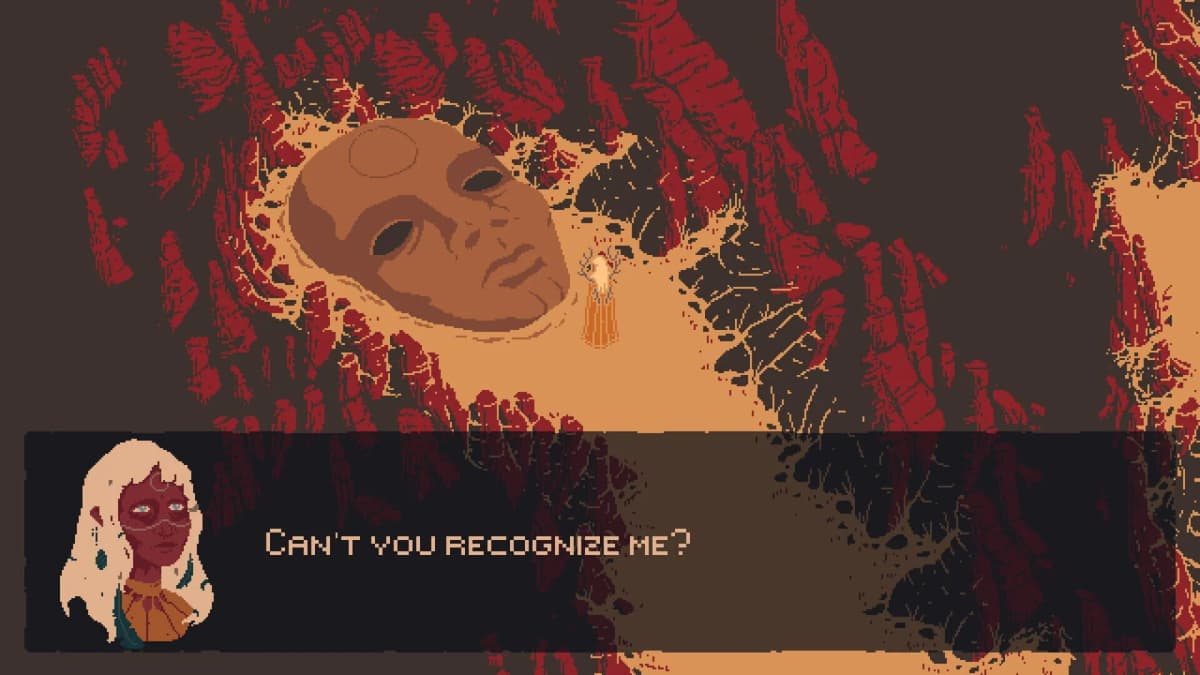
What keeps it from feeling like a one-note misery parade is the way the game leans into Ro as an unreliable narrator. Environments sometimes shift in ways that don’t make logical sense but make emotional sense. NPCs contradict each other. Important events are hinted at in symbols rather than spelled out. As I got deeper into my second and third full runs, I started feeling less like I was uncovering objective truth and more like I was peeling back Ro’s coping mechanisms, one bloody card at a time.
There’s a moment early on that sold me completely. I walked into a grove dominated by this giant, skeletal stag totem—clearly linked to the creature Ro blames for Olvi’s death. The dialogue gave me a set of choices that all felt wrong in their own way: lash out, bargain, beg. I picked something out of spite, because I was angry after a rough string of fights, and the game quietly stashed that away. Hours later, in a completely different biome, a spirit echoed the wording of that choice back at me in a way that made Ro look small and desperate. That’s when it clicked how much the game is quietly tracking your emotional fingerprints.
Playing on Switch intensified that connection for me. There’s no big monitor pushing distance between you and Ro’s spiraling mental state. Her lines and the spirits’ cryptic replies are right there in your hands, and it’s very easy to just tilt the Switch slightly closer and fall into that world the way you might sink into a book. It becomes a very personal little haunted object.
Combat, Cards, and That “One More Run” Pull
The strategic core of Death Howl is deceptively rich. You’re building and tweaking a deck, sure, but positioning on the grid matters just as much as what’s in your hand. Every card is a little risk-reward puzzle. A heavy-hitting axe swing might root Ro in place, leaving her exposed next turn. Summoning a totem can block a choke point, but it might also ruin a perfect line-up for your area-of-effect spell. End your turn one tile too far forward, and suddenly that harmless-looking wisp can chain you into a stun-lock courtesy of the beefy spirit warrior behind it.
Runs start relatively constrained—basic strikes, simple movement, a couple defensive options. As you progress, you unlock a huge spread of cards and passive upgrades. I gravitated toward a bleed-focused deck on my first Switch playthrough, using cards that inflicted stacking wounds and then detonating them with a single howl that did damage based on total bleed. On paper it was busted; in reality, it only worked when I played really clean with movement, because most of those cards were expensive and left me open.
Another run, I went hard into totems—stationary summons that buff, debuff, or block tiles. That build turned fights into weird zone-control puzzles: wall off the melee brutes, funnel the ranged spirits into kill lanes, and then kite the bosses while chipping away with free reactive damage. It felt almost like playing a tiny tower defense game inside a roguelike.
What I appreciated is that the game rarely feels like it’s forcing one “correct” way to play. Some card synergies are obviously stronger than others—there were a few combos that made me chuckle at how hard I’d just slammed a boss—but enemies evolve as you push into new biomes. The deck that carried you through the swamp will absolutely betray you in the frozen wastes. Switching up strategies isn’t just encouraged; it’s often mandatory.
That said, this is a punishing game. If your only frame of reference for deckbuilders is Slay the Spire on “easy-ish” ascension levels, Death Howl will feel like a slap. Enemies telegraph their moves clearly, but the margin for error is tiny. A couple of times, I lost twenty-plus minutes of slow, careful progress to a single greedy turn where I tried to go for the big play instead of stabilizing. On Switch, that sting is softened a bit by how easy it is to just… start again. Put the console to sleep, walk it off, come back later. The runs are long enough to feel meaningful but short enough that a wipe doesn’t ruin your night.
Art Direction That Belongs in a Folklore Book
Death Howl’s monochrome, linocut-inspired pixel art is the first thing that grabs you, and the Switch port does it justice. Each of the four realms uses a tight palette—one might lean into harsh whites and deep blacks, another into murky grays with sickly green or red accents. That restraint gives the whole game this carved-into-wood feeling, like every screen could’ve been ripped off a page from some ancient Scandinavian myth collection.
On a handheld screen, that style is gorgeous. Sprites are crisp, silhouettes are readable, and the limited colors keep everything clean even during busy turns where half a dozen effects go off. The little animation flourishes—Ro’s cloak whipping when she howls, the subtle jitter of a boss as it enters an enraged phase, the way certain spirits “unfold” into their true forms mid-fight—hit harder when they’re filling your entire field of view at arm’s length.
The audio direction leans into that same minimalism. There isn’t a big, bombastic soundtrack constantly playing in the background. It’s mostly low drones, distant creaks, and the occasional mournful motif cutting through. In handheld with good headphones, every shuffled card and distant wail feeds into this low-level tension. It’s not jump-scare horror; it’s the kind of quiet dread that makes you realize you’ve been clenching your jaw for an entire encounter.
Port Quality: Performance, Docked Play, and Little Annoyances
Mechanically and artistically, the Switch version feels right at home. Technically, it holds up well too.
Performance-wise, I didn’t see any meaningful frame drops in handheld mode. This isn’t a twitch action game, so even minor dips wouldn’t break it, but combat and overworld movement stayed smooth. Load times between areas are there, but short enough that I never reached for my phone. Think a few seconds rather than full coffee-break territory.
Docked on a TV, the game obviously loses a bit of that intimate feel, but it’s still perfectly playable. The UI scales sensibly; card text is still readable from a normal couch distance, though the aesthetic is less striking when blown up large. This really is one of those rare titles that feels definitively better handheld than docked, which is not something I can say about every Switch port.
It’s not flawless. The isometric camera occasionally makes tight spaces feel fiddly. There were a couple of maps where a single tile was partially hidden behind environmental art, and I had to nudge the cursor around to be sure where Ro would actually move. It never cost me a run, but it did get a small sigh out of me during tense turns.
My other minor gripe is menu density. The camp hub screens, where you manage cards, totems, and upgrades, cram a lot of information into a small space. The developers made smart use of tooltips and button prompts, but the first hour or two on Switch I caught myself pressing the wrong shoulder button or backing out of menus by accident while my brain adjusted to the layout. Once it clicked, it was fine, but expect a small learning curve.
Who Should Play Death Howl on Switch?
If you’re into strategic roguelikes or deckbuilders that demand you pay attention, Death Howl is an easy recommendation on Switch. It scratches a similar itch to games like Slay the Spire, Inscryption, and even the more tactical side of Into the Breach, but wraps it all in a darker, more personal story than most of those attempt.
You’ll probably vibe with it if:
- You like slowly mastering difficult systems and don’t mind dying a lot along the way.
- You appreciate strong art direction and are cool with a mostly monochrome, moody aesthetic.
- You prefer games that respect your time—runs that can be meaningfully advanced in 15-30 minute handheld sessions.
- You’re interested in narrative experiments with unreliable narrators and heavy emotional themes.
On the flip side, you might want to skip or be cautious if:
- You’re sensitive to themes of death, grief, and child loss. The game doesn’t exploit those themes cheaply, but they’re absolutely central.
- You want a power fantasy. Ro is powerful, but this is not the kind of game that lets you steamroll everything after a few upgrades.
- High difficulty and losing progress easily frustrate you. Even with its fair design, Death Howl doesn’t pull punches.
FinalBoss // Gear
Level up your setup
01Best-selling Switch 2 gameson Amazon→02Switch 2 accessorieson Amazon→038BitDo controllerson Amazon→04Discounted game keyson Kinguin→Affiliate links · As an Amazon Associate, FinalBoss earns from qualifying purchases.
Want to Level Up Your Gaming?
Get access to exclusive strategies, hidden tips, and pro-level insights that we don't share publicly.
Ultimate Reviews Strategy Guide + Weekly Pro Tips