
Table of Contents (9)
Carrying Kojima across the platform divide
I finished Death Stranding 2 on PS5 last year, walked away conflicted, and honestly thought I was done with it. I loved the original’s stubborn weirdness, and this sequel felt like it had sanded off some of that personality in exchange for a smoother, more action-focused ride. So when the PC version was announced, my first reaction was, “Do I really need to do another 40+ hours of courier therapy?”
Then I saw the technical breakdown: native ultrawide all the way up to 32:9 with adjusted camera work, unlocked framerates, ray tracing debuting in Decima, support for DLSS/FSR/XeSS and a new in-engine upscaler called PICO. As someone who’s watched Sony flirt with and then seemingly pull back from PC releases, I got curious. If this really is part of the “last wave” of PlayStation games coming to PC for a while, I wanted to see how hard they’d go.
I ended up replaying a big chunk of the game on PC, mostly on a 1440p ultrawide monitor with a Ryzen 7 and an RTX 4080, and dipping into a 4K display in the living room. What I found is almost the perfect microcosm of the game itself: as a port, Death Stranding 2 on PC is wildly impressive, sometimes even fascinating. As a sequel, I still think it’s better to play than the first, but less likely to stick with me once I put the controller down.
First boot on PC: the “oh, they cared” moment
The first 30 minutes on PC gave me one of those rare “OK, someone really obsessed over this” feelings. Before I even continued my old save, I spent way too long in the settings menu. There’s the usual buffet-resolution scaling, shadow quality, texture detail, multiple upscaling options-but the two standouts hit me immediately:
- The bespoke ultrawide handling, including for 21:9 and 32:9.
- PICO, Decima’s own integrated upscaler with optional frame generation and framerate-targeted scaling.
On my 21:9 monitor, cutscenes didn’t just slap black bars on top and bottom. Shots were reframed. In scenes I remembered from PS5, the PC version would subtly pull the camera back or shift composition so that characters and visual gags still landed properly. It didn’t feel like a lazy crop or a “just show more of the sides” hack; it felt like someone at Kojima Productions went through and actually massaged those shots for wider ratios.
It sounds like a tiny thing. It isn’t. When you’re spending hours hiking through sweeping valleys and staring down at the ocean from rusted-out walkways, that extra horizontal canvas sells the feeling of space in a way the PS5 simply can’t. If you own an ultrawide, this is one of those games that instantly justifies it.
PICO vs DLSS vs the old-fashioned “just brute-force it”
I went in assuming I’d flip on DLSS and never look back. That’s been my pattern with most big PC releases. Death Stranding 2 disrupted that habit, which, in 2026, is kind of a big deal.
Here’s the setup I ended up using most of the time:
- 1440p ultrawide (3440×1440) at “Very High” settings
- Unlocked FPS, G-Sync on
- PICO in “Quality” mode, with frame generation off to avoid latency weirdness
With that, the game mostly sat in the 90-120 FPS range while I was out in the world, dipping a bit in dense weather and big combat setups. Flipping over to DLSS Quality, I did notice a hair sharper image on fine details-cables on Sam’s backpack, some foliage in the mid-distance—but the performance headroom shrank. In motion, on my screen, the trade-off didn’t feel worth it. PICO’s whole trick is that it’s built into Decima instead of behaving like a bolt-on post-process, and you can feel that in how stable it looks in heavy rain or around particle effects.
The part that really sold me wasn’t the raw FPS bump, though. It was the framerate-targeted scaling. You can tell PICO, “I want 120 FPS,” and the game will quietly juggle between native, Quality, Balanced and Performance scaling to try and hold that. During a long session where I was rebuilding roads and testing vehicles across different regions, I basically forgot I had a scalar on. No obvious resolution pumping, no nasty artifacting spikes when the BTs turned everything into a soup of particles.
To be clear: if you’re obsessed with pixel counting and playing at 4K on a huge panel, DLSS still has the edge in reconstruction quality. PICO can’t cheat physics and suddenly invent sub-pixel detail that isn’t there. But as an everyday “set it and forget it” solution, it’s one of the few in-house tech solutions that doesn’t feel like a second-class citizen next to Nvidia’s magic box.

There’s also frame generation for people who want to chase absurd numbers, and it works broadly as expected. Personally, in a game about careful footing and precise timing on climbs, I preferred the native frames. But the fact that you can stack generative frames on top of smart scaling, while retaining a consistent visual profile, shows how far Nixxes and Kojima Productions went to make this thing scale from a GTX 1660 up to modern flagship cards.
Ray tracing: nice shadows, not a new game
This is the first time we’ve seen ray tracing in a Decima-powered game, so I spent a while toggling it on and off in the same areas. I wish I could say it transformed Death Stranding 2, but in practice it’s more “tasteful seasoning” than a new meal.
The big win is in shadows. Forests and rocky outcrops feel more grounded, and some interiors look less flat thanks to softer, more accurate shadow detail. It’s the kind of thing you notice more when you switch it off after an hour with it on. Reflections, on the other hand, are more subtle than you might expect if you’re coming from something like Cyberpunk’s path-traced mode. Wet surfaces and rivers don’t suddenly become mirror worlds; the game was clearly authored to look strong without relying on RT, and that comes through.
Performance-wise, ray-traced shadows do bite off a noticeable chunk of your framerate. On my machine at 1440p, enabling them with PICO still felt playable, but once I moved up to 4K on the TV, I didn’t like the tradeoff. The game is already gorgeous at “Very High” without RT, and the whole point of this PC version, for me, is the mix of fluid motion and vast landscapes. So I largely left RT off after my testing binge.
From stubborn art piece to smoother, more “normal” game
If you somehow skipped both PS4 and PS5, here’s the quick version: the original Death Stranding was a delivery simulator wrapped in an art film about connection, loneliness, and the end of the world. It was often awkward and deliberately hostile to traditional action-game expectations, and that was exactly why some of us fell in love with it.
Death Stranding 2 is still about hauling absurd packages across impossible terrain, building networks of structures with other players, and navigating around terrifying BTs. But from the moment I replayed the early hours on PC, I was reminded how much more approachable it is:
- Movement is more forgiving; it’s harder to completely wreck a run with one bad step.
- Combat is more present and more capable, veering closer to a proper action game in spots.
- Equipment and vehicles come online earlier and more liberally.
On PS5, I initially appreciated that. After another run on PC, I’m more sure of how I feel: Death Stranding 2 is a better video game moment-to-moment. It’s easier to recommend to friends. There are more “cool” set-pieces, more toys to play with, less of that early-game slog where you’re just a dude with a backpack and bad shoes.
But that ease comes at a cost. The raw tension of hauling your life’s work over a ridge in the rain feels dulled. The game nudges you towards violence and spectacle more often, and some of that first game’s strange, stubborn refusal to be anything but itself has been trimmed away. When I cranked the difficulty up with the new “To the Wilder” mode and limited myself to simpler gear, I could still taste that old brutality—but it felt like I was fighting against the grain of the sequel’s design rather than playing it the way it “wants” to be played.
Story and characters: impressive, loud, and less haunting
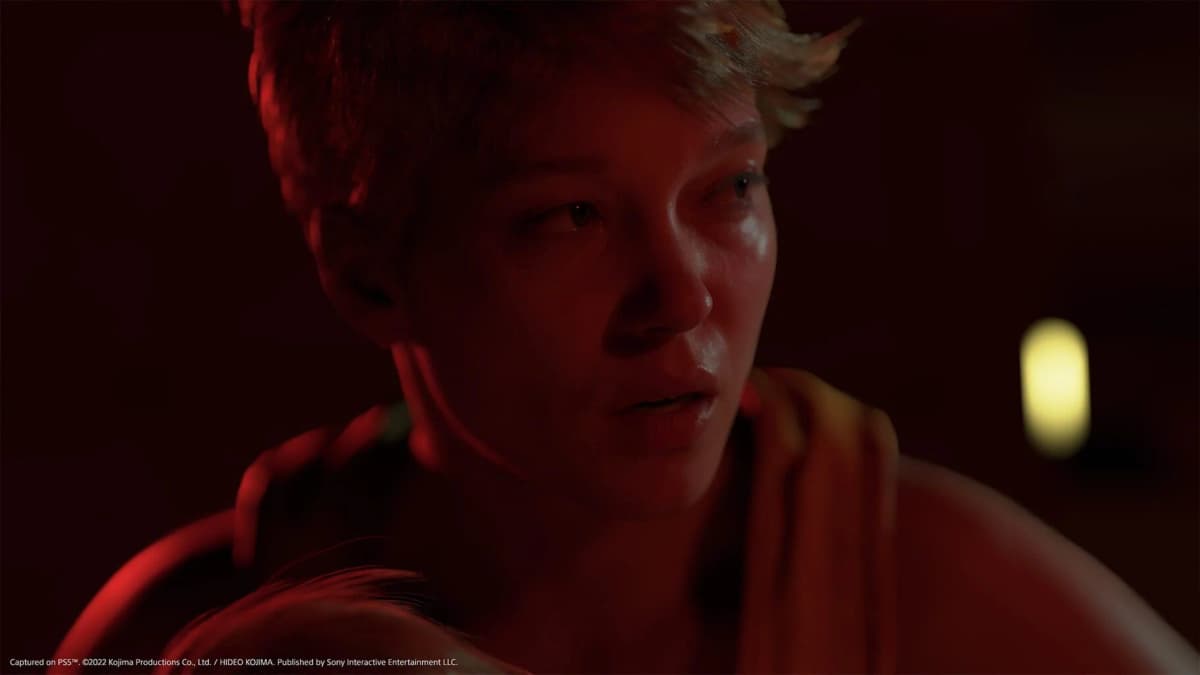
Technically, the storytelling is stunning: the facial capture, the performances, the mix of in-engine and restored live-action fragments that the PC version includes—all of that is top-tier. Kojima still knows how to stage a scene so that it burns into your brain for a night or two. And those new nightmares for Sam, plus the extra live-action beats, flesh out the world in ways fans will appreciate.
But taken as a whole, the narrative just doesn’t hit as hard as the original’s. Coming back to it with fresh eyes on PC only reinforced that feeling. The plot is more predictable, the themes less sharply focused, and several characters slide into “a bit too much” territory—broad, histrionic, memorable in the moment but not necessarily in a good way.
When the credits rolled on PS5, I remember sitting there and feeling… fine. Satisfied, even. But I didn’t have that stunned “I just played something I’ll be thinking about for years” vibe that the first Death Stranding gave me. The PC revisit didn’t change that. If anything, being able to play in longer, smoother sessions made some of the story beats blend together more, softening what impact they had left.
It’s still a wild, very Kojima story that most blockbuster games wouldn’t dare try. It’s just not the lightning-in-a-bottle moment the first game was, and no amount of ultrawide framing or pristine PICO upscaling can fix that core issue.
Tiny additions, same core game
Content-wise, don’t go in expecting some massive “Director’s Cut”-style overhaul just because it’s on PC. The additions are real but modest:
- The punishing “To the Wilder” difficulty mode from the start, aimed at veterans.
- Repeatable boss fights once you’ve unlocked them, which is great if you enjoy the more action-y facets.
- New nightmares and restored live-action sequences that add texture to Sam’s headspace.
- A handful of new items and a very silly, very Kojima touch in the form of a chiral cat for Sam’s private room.
It’s enough to justify a replay if you already liked the game and want a stricter challenge or a bit more lore, but this is fundamentally the same Death Stranding 2 that hit PS5. The PC version doesn’t try to reframe the experience beyond how you see and feel it technically.
Why this port matters in the PlayStation-on-PC drama
The backdrop to all of this is Sony’s wavering commitment to PC. Depending on which earnings call you read or which rumor mill you believe, PlayStation exclusives on PC are either the future, a side hustle, or something they’re quietly backing away from.

Death Stranding 2’s PC version makes a strong argument for why it shouldn’t be the end of that experiment:
- It isn’t a bare-minimum port. The ultrawide reframing, the native PICO integration, and the deep scaling options all show intent.
- It treats PC as a first-class platform. You can feel that in the way the controls, settings, and performance profiles are laid out and tuned.
- It leverages PC to actually extend the game’s identity—vast vistas, long hikes, asynchronous multiplayer structures—rather than just slapping “4K/60” on the box.
Playing this on a good PC made me slightly angry at the idea that we might be getting fewer of these. It’s proof that when Sony hands a big internal engine to a team like Nixxes and gives them time, magic can happen. PICO is more interesting precisely because it’s woven into the DNA of Decima instead of being an external black box. Ultrawide works better because somebody bothered to re-stage shots. These are the opposite of cynical decisions.
If PlayStation really is slowing down its PC strategy, Death Stranding 2 ends up feeling like a bittersweet showcase: a demonstration of just how good these ports can be, shadowed by the nagging thought that we might be getting fewer of them.
Who should play Death Stranding 2 on PC?
After living with both versions, here’s how I’d break it down:
- If you loved the first Death Stranding for its atmosphere and hiking sim vibes: You’ll find a more streamlined, less abrasive version of that here. You might miss the raw weirdness, but the core loop is still recognizably “walk, plan, build, connect.” On PC, the higher framerate actually makes that meditative rhythm hit harder.
- If you bounced off the first game because it felt too slow or punishing: This is the one you should try, and PC is the best way to try it. The more responsive controls, better performance, and extra combat focus make it easier to embrace. Start on normal difficulty, let the systems breathe, and you may finally “get” what Kojima was doing.
- If you primarily care about a tight, focused story: I’d still point you to the original first. Death Stranding 2 is good, sometimes great, but not as singular. The PC bells and whistles don’t change that.
- If you’re a tech nerd with a strong rig: This is a playground. Tweaking PICO, DLSS, ray tracing and ultrawide on a calibrated display is half the fun. It’s one of the rare ports where just tuning it feels rewarding.
FinalBoss // Gear
Level up your setup
01Best-selling PS5 gameson Amazon→02DualSense controllerson Amazon→03PS5 SSD upgrades (M.2 NVMe)on Amazon→04Discounted game keyson Kinguin→
Affiliate links · As an Amazon Associate, FinalBoss earns from qualifying purchases.
Want to Level Up Your Gaming?
Get access to exclusive strategies, hidden tips, and pro-level insights that we don't share publicly.
Ultimate Reviews Strategy Guide + Weekly Pro Tips