
Nearly 970,000 in-game miles in 10 days sounds like one of those Kojima stats designed to make half the internet laugh and the other half roll its eyes. That is exactly why it works. Death Stranding 2 players collectively walked 969,703 miles between April 1 and April 10, 2026, which put them roughly 270,000 miles ahead of NASA’s Artemis 2 lunar flyby distance of 700,237 miles over the same span. It’s a ridiculous comparison. It’s also a useful one, because it shows just how many people are still willingly buying into a game loop most studios would have been too scared to build around in the first place: walking, carrying stuff, and making that feel meaningful.
Table of Contents (7)
Key takeaways
- Death Stranding 2 players logged 969,703 miles on foot from April 1 to April 10, 2026, across PS5 and PC.
- That total is about 269,466 miles more than the 700,237 miles covered by NASA’s Artemis 2 mission in the same 10-day period.
- The important detail is that this stat covers walking only, not vehicle travel, which makes it a cleaner read on how much players are engaging with the game’s core idea.
- Kojima’s NASA comparison is obvious marketing, but it also underlines a bigger point: Death Stranding’s weirdest mechanic is no longer a novelty. It’s a proven audience draw.
This stat matters because it measures the one thing most games try to skip
Traversal in most big-budget games is treated like dead air. Fast travel exists to erase it. Mounts, grappling hooks, wing suits, boost packs, and autorun systems are all there to get you past the boring part and back to the “real game.” Death Stranding always made the uncomfortable counterargument that movement itself could be the real game if you built enough friction, consequence, and texture around it.
That’s why the walking number is more interesting than a generic player-count brag. If Kojima Productions had posted a milestone about downloads or hours played, fine, nice for the investor deck. But nearly 970,000 miles walked on foot tells you players are engaging directly with the design thesis. They are not just booting the game, poking around for an hour, and bouncing. They are doing the thing. The slow thing. The thing that sounded like a joke back when the first Death Stranding was marketed as a prestige delivery simulator with ghosts.
And yes, the PC launch on April 1 almost certainly juiced the number. New platform launches always create a burst of curiosity, and Death Stranding has long had the kind of reputation that practically dares PC players to finally test whether the “walking game” slander was ever fair. Even with that in mind, the detail that matters is that the stat excludes vehicle travel. Players could have taken easier routes. Plenty clearly didn’t.
The NASA flex is marketing, but not empty marketing
If I were in a press Q&A, the question I’d ask is simple: how many players does this actually represent, and what’s the split between PS5 and PC? Because a big cumulative number is still a curated number. Kojima knows exactly what he’s doing when he frames the comparison as “SAMs vs ARTEMIS II.” It’s playful, meme-friendly, and built for headlines. Nobody should confuse that with a scientific equivalency between a crewed space mission and a lot of exhausted digital couriers falling down hills in post-apocalyptic America.
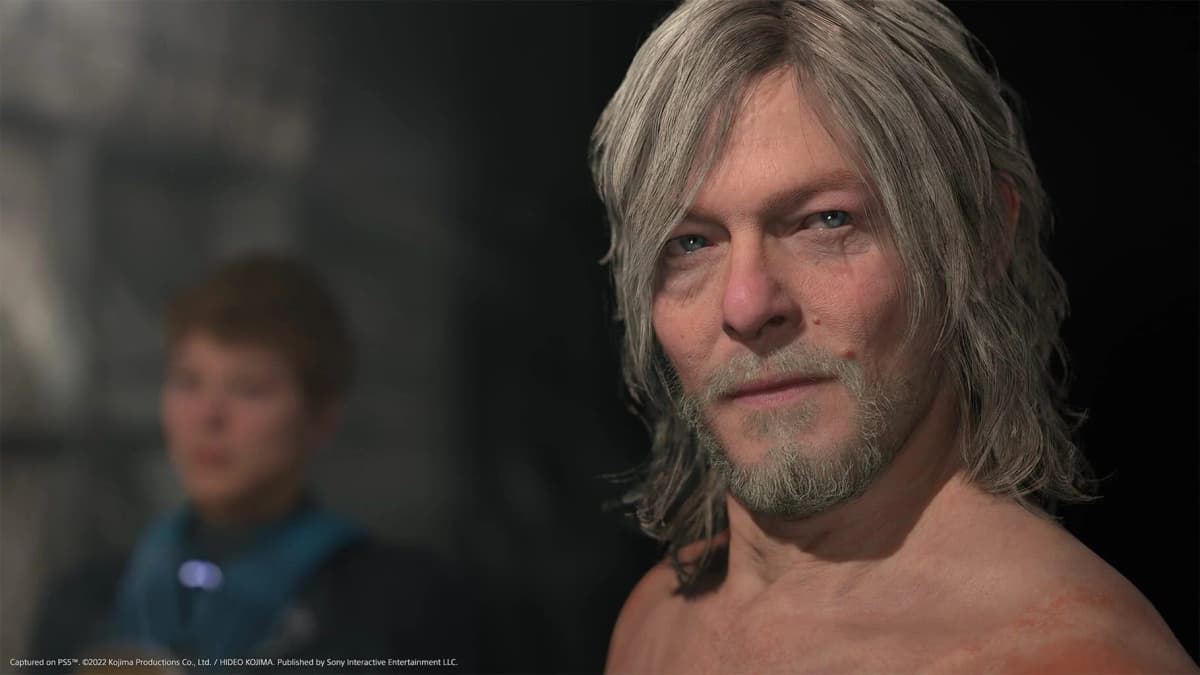
But the comparison is smarter than a throwaway gag because it uses a real-world benchmark people instantly understand. Seven hundred thousand miles is an abstraction until you anchor it to something concrete. Suddenly the scale of collective player behavior becomes legible. This is the same basic trick live-service games use when they announce the community has killed 4 billion zombies or fired 900 million arrows. The difference is that Death Stranding 2’s number actually reflects its identity. This isn’t just “look how large our audience is.” It’s “look how many people bought into our strangest idea.”
That distinction matters. A lot of publishers still chase engagement through systems that feel like chores because chores are easy to quantify. Battle pass tiers. login streaks. daily currencies. Death Stranding’s trick is nastier and more elegant: it turns effort itself into texture. Walking is not filler here. It is tension, planning, failure, problem-solving, and eventually routine. The stat works because it’s counting the right thing.
Kojima was mocked for this once. That part of the argument is over.
There was a time when “walking simulator” was used as a dismissal, and Death Stranding got hit with that harder than most because it had blockbuster production values attached to a loop that sounded deliberately anti-mainstream. The first game spent years being treated like either misunderstood genius or an expensive prank. In practice, it was both more coherent and more influential than its early discourse gave it credit for.

You can see the broader shift across the industry. More developers now understand that friction is not automatically bad design. Slow systems are not inherently outdated. Deliberate movement, environmental storytelling, and asynchronous social features all have more room now than they did in 2019. Death Stranding didn’t single-handedly cause that change, but it absolutely helped legitimize it for big-budget development.
So when players rack up almost a million miles on foot in 10 days, the real story is not that gamers “beat” Artemis 2. Obviously they didn’t. The real story is that a design philosophy once treated as commercial suicide now has enough mainstream pull to generate a stat like this at all. That is a bigger win than the meme.
The number is impressive, but the missing metric is retention
Here’s the part PR would rather keep fuzzy: launch-window engagement spikes are the easiest numbers to make look dramatic. New platform, fresh audience, lots of curiosity, lots of social media chatter. Great. What matters next is whether those players stick around once the novelty wears off and the game asks them to commit to its rhythm.

That’s what I’m watching for. Not another meme stat. Not another screenshot of Sam Porter Bridges outpacing human spaceflight. I want follow-up data that shows whether this momentum carries past the first ten days, and whether PC players are converting from tourists into long-haul players. Death Stranding 2 is the kind of game people love to try. The harder question is how many love to stay.
There’s also a practical design read here. If foot travel alone generated this much engagement despite the game offering vehicles and other mobility options, Kojima Productions has evidence that the series’ foundational loop still works without being heavily diluted for speed. That is not a small thing in an industry obsessed with sanding off every rough edge in pursuit of broader appeal. Sometimes the friction is the product.
What to watch next
- Whether Kojima Productions shares a 30-day or 60-day engagement update instead of another short launch-window flex.
- Any platform split between PS5 and PC, because that will tell us how much the PC release actually changed the game’s reach.
- Whether future stats continue to focus on walking rather than broader playtime, which would signal confidence in the core loop rather than a pivot to safer vanity metrics.
- How quickly the conversation moves from “funny NASA comparison” to actual sales and retention data, because that is where the business story starts.
TL;DR
Death Stranding 2 players walked 969,703 miles on foot in 10 days, about 270,000 miles more than Artemis 2 traveled in the same period. The joke is good, but the real takeaway is better: players are heavily engaging with the exact mechanic the industry once mocked. The next meaningful number is not another distance meme, but whether that launch-window momentum turns into real retention.
FinalBoss // Gear
Level up your setup
01Top-rated gaming headsetson Amazon→02High-refresh gaming monitorson Amazon→03Gaming chairson Amazon→04Discounted game keyson Kinguin→
Affiliate links · As an Amazon Associate, FinalBoss earns from qualifying purchases.
Want to Level Up Your Gaming?
Get access to exclusive strategies, hidden tips, and pro-level insights that we don't share publicly.
Ultimate Editor's Pick Strategy Guide + Weekly Pro Tips